
Sports
Eden Gardens – a venue with fond memories for Sri Lankans

Rex Clementine
in Calcutta
After the T-20s were witnessed by packed crowds – all exceeding 30,000 in Bombay, Rajkot and Pune – the first ODI in Guwahati was bit of a disappointment as only half the stadium was full. India’s latest cricket ground with a 40,000 capacity had staged a game in October as well when South Africa toured India and three months later to get another game is highly unusual.
India has five main cricket centers – Bombay, Delhi, Calcutta, Madras and Bangalore. It is those centers that used to get regular fixtures until recently but newer grounds are favoured nowadays maybe due to the change of political landscape in cricket.
Jay Shah, cricket’s most powerful man is from Ahmedabad and that venue gets games frequently nowadays and Guwahati is climbing up the ladder maybe because the Joint Secretary of BCCI Devajit Saikia is from this city.
 There are plenty of activities to do in Guwahati and one of the must go places is the place of worship known as Kamakhya Devalaya, built in the eighth century. Yes, Devalaya is the name given for place of worship in this part of India. The temple dedicated to Lord Ganesh gets packed by noon so an early visit is the safest bet. According to the Kalika Purana, Kamakhya Devalaya ‘denotes the spot where Sati used to retire in secret to satisfy her amour with Shiva’.
The temple is some eight kilometers from the city but it takes more than 40 minutes as this place is in a hilly area. But the trouble is fully worth as you feel spiritually nourished after the visit.
Our next stop Calcutta is just a short one hour flight from Guwahati. The cheapest mode of transport is train but it takes you some 16 hours to cover the distance of 1080 kilometers and when you have back to back games, that’s out of the equation. Otherwise, train is the best mode of transportation in India. Clean, cheap and on time.
Although flying time is just one hour to Calcutta from Guwahati, sometimes you end up being on air for an hour and half. It all depends on what time you travel. If you are travelling during peak hours and if the air traffic control can not give you clearance to land, then you spend the extra half an hour as the aircraft circles around the same range of mountains.
Calcutta is okay, but in Bombay almost every flight lands some 20 minutes behind schedule as India’s commercial capital is a busy place.
Calcutta’s airport is named after Subash Chandra Bose, a freedom fighter. Fondly known as Netaji (Respected Leader). Bose was at one point a leader of the Congress party. While Mahatma Gandhi believed in principles of non violence, the British educated Bose wanted a more aggressive approach for India’s path to freedom.
His legacy was tainted somewhat after showing support to Japan and Germany prior to the 2nd World War. He died aged 48 in 1945 in a plane crash before India had gained independence.
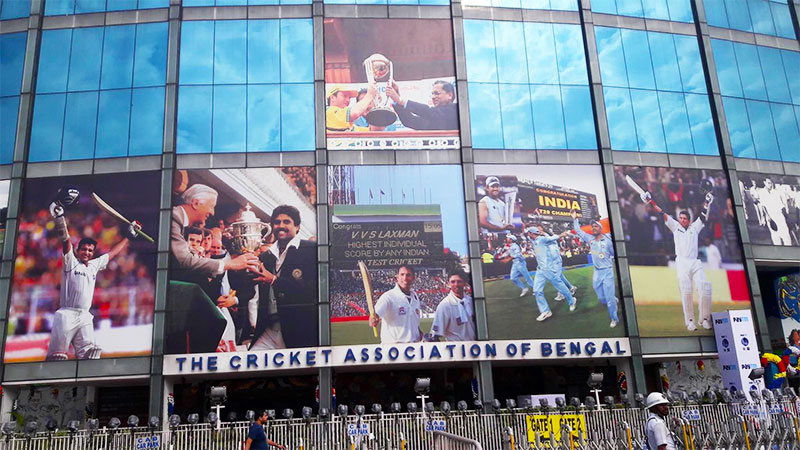
The iconic Eden Gardens is the pride of Calcutta having hosted a World Cup final and a semi-final. For Sri Lankans the place is so special as it was here that they defeated India in the 1996 semi-final.
The most famous cricketer from Calcutta of course is former captain Sourav Ganguly, who went onto become the President of the Indian cricket board. Geoffrey Boycott in his commentary called Ganguly ‘Prince of Calcutta’ when he first came onto the scene. After Ganguly had become captain of India, someone suggested that he better now call Ganguly the ‘King of Calcutta’. Boycott refused to do so for there is only one king of Calcutta – the ever versatile Jagmohan Dalmiya.
It is Dalmiya who broke the England and Australia stronghold in cricket. It is he who made cricket in India a profession by paying the players big money having signed up big television companies.
Dalmiya’s family business was construction and he was a practical man. He was the head of the organizing committee of the 1996 World Cup and faced a storm when Australia and West Indies refused to play in Colombo due to security reasons. After Colombo promised security provided to heads of state, still the two teams were not changing their stance. In order to show that Colombo was safe for cricket, he quickly arranged a joint India – Pakistan team to play a friendly match against Arjuna’s side.
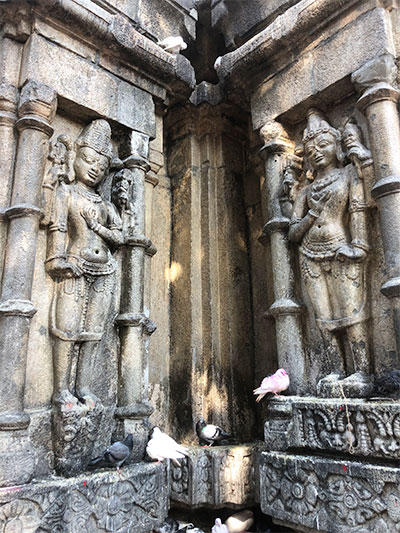
Kamakhya Devalaya in Guwahati was built in the 8th century.
Dalmiya had to deal with several problems. He knew that for Pakistan captain Wasim Akram to play under Indian captain Mohammad Azharuddin or vice-versa was impossible. So he first picked a manager for the team. He chose former Pakistan captain Intikhab Alam. Then he made Intikhab understand what a priviledge for him to be managing this side filled with superstars. As a happy Intikhab started to leave the room, he threw the dice.
“You see Intikhab now that Pakistan has got the Manager’s position, it is not fair to give the captaincy too to Pakistan. So, Azhar will lead the team. As Manager, it is your responsibility to convince Wasim that he’s got to play under Azhar,” Problem solved.
Dalmiya ruled cricket with an iron fist. Most of it during his tenure as Secretary of BCCI. He became the ICC President before becoming President of BCCI. He was responsible for taking the ICC headquarters out of Lord’s to the current location in Dubai.
Although some people have a few unsavoury things to say about Dalmiya, he was a friend of Sri Lanka and always helped SLC whenever India’s support was needed. Such men are rare these days.





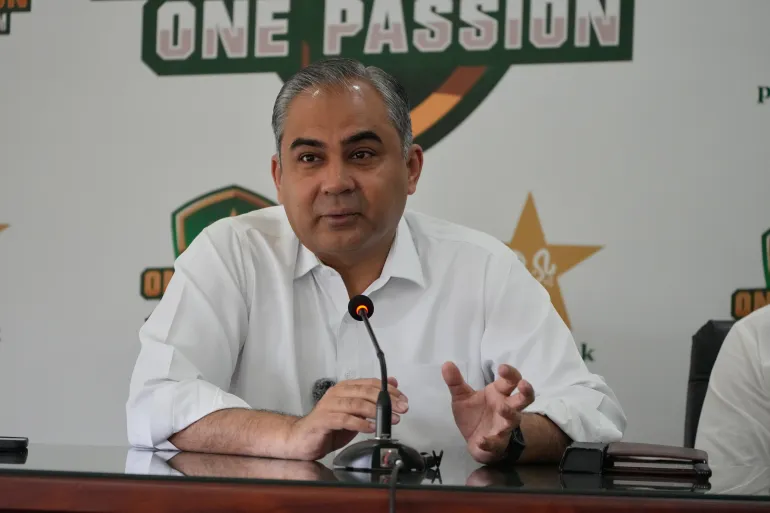
Pakistan’s premier domestic T20 league will take place in empty stadiums due to the recent spike in oil prices, says a top official of the Pakistan Cricket Board (PCB).
The franchise-based Pakistan Super League, set to kick off on Thursday, also cancelled its opening ceremony in Lahore, PCB chairman Mohsin Naqvi said on Sunday, citing a fuel shortage caused by the conflict in the Middle East.
The league was set to be played in six cities, but now only Lahore and Karachi will be hosting the games, with the opening encounter set to be played at Gaddafi Stadium in Lahore.
Pakistan has faced soaring oil prices prompted by the United States-Israel war on Iran and the subsequent spread of the conflict across the region. Pakistan’s government has asked its citizens to restrict their movements due to rising fuel prices.
“We don’t know how long this war will continue,” Naqvi said.
“We can’t ask people to restrict their movements and then have 30,000 people in stadiums every day. We decided that as long as this [oil] crisis is ongoing, we will not have crowds at matches. This was a difficult decision, but it needed to be made. The opening ceremony will also be cancelled.”
Naqvi said the PCB will issue refunds for all sold tickets within 72 hours and will also compensate franchise owners for the loss of revenue from gate receipts.
Naqvi apologised to the four cities – Rawalpindi, Faisalabad, Multan and Peshawar – that will no longer host PSL games this season. “We have to restrict our movements, and we do not want to waste our resources,” he said. “I especially apologise to Peshawar, which was due to host PSL games for the first time, [but] there will be no crowds anyway, so there was no reason to go to those cities.”
Naqvi said he consulted Pakistan’s Prime Minister Shehbaz Sharif, who is also the PCB patron, and the eight franchises before finalising the decision to stage the games in empty stadiums.
Several foreign players have pulled out of PSL due to personal reasons, including Australians Jake Fraser-McGurk and Spencer Johnson, South African Ottneil Baartman and Gudakesh Motie of the West Indies.
[Aljazeera]
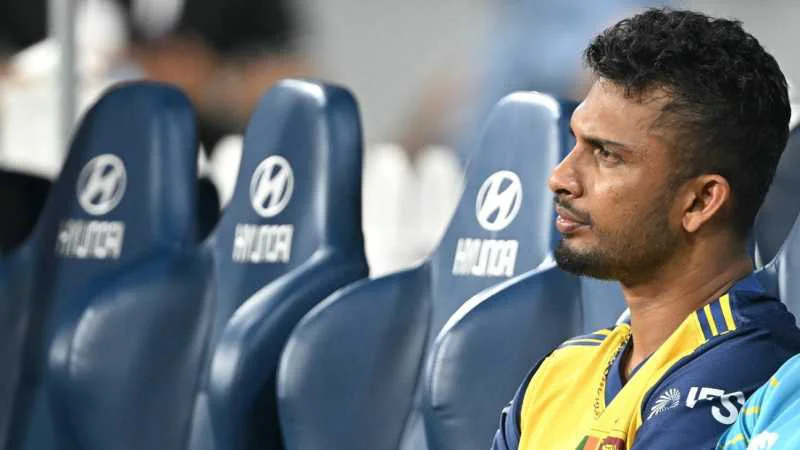
Dasun Shanaka has replaced the injured Sam Curran at Rajasthan Royals (RR) for IPL 2026 and has informed his PSL team, Lahore Qalandars, of his decision.
Shanaka will join RR for INR 2 crore (US$ 214,000 approx.).
”Sam brings immense value with both bat and ball,” Kumar Sangakkara, director of cricket and head coach, RR, said. “However, we are pleased to have found an ideal replacement in Dasun Shanaka, a finisher with the bat and a quality all-rounder who helps maintain the balance of our side.”
Curran, who was part of a pre-auction trade between Chennai Super Kings (CSK) and RR in which CSK acquired Sanju Samson and RR also got Ravindra Jadeja, has a groin issue, which has ruled him out of the IPL.
Qalandars, meanwhile, are replacing Shanaka with Australia allrounder Daniel Sams. PCB chief Mohsin Naqvi recently also said the board will be taking action against players such as Shanaka and Blessing Muzarabani who have been opting out of the PSL for IPL deal.
Shanaka, a lower-order batter and medium-pace bowler who led Sri Lanka at the recent T20 World Cup in India and Sri Lanka, comes in with good batting form: he hit a 20-ball 50 against Oman and 76 not out in 31 balls against Pakistan. He has played one season of the IPL in the past, in 2023, when he played three games for Gujarat Titans (GT) with unspectacular returns.
He becomes the second player to walk away from his PSL team to join an IPL franchise in the past few days after Muzarabani opted out of his deal with Islamabad United once Kolkata Knight Riders (KKR) reached out to him to be a replacement for Mustafizur Rahman, who the team had to release on instructions from the BCCI because of geopolitical tensions between India and Bangladesh.
For RR, Shanaka joins a strong list of overseas players, the others being Shimron Hetmyer, Lhuan-dre Pretorius, Donovan Ferreira, Jofra Archer, Nandre Burger, Kwena Maphaka and Adam Milne.
RR, who finished one off the bottom last season, begin their IPL 2026 campaign next Monday, March 30, in Guwahati against CSK. (cricinfo)

Today is a red-letter day for Rangiri Dambulla International Cricket Stadium. Exactly 25 years ago, to this very day, the venue hosted its maiden international, Sri Lanka locking horns with England and in the quarter-century since, the ground has grown from a bold gamble into one of the country’s prized cricketing possessions.
From Sachin Tendulkar’s silken drives to Dale Steyn’s thunderbolts, the game’s greats have left their imprint here. Dambulla has seen it all, high-octane contests, spin clinics and finishes that have gone down to the wire.
The brainchild of former SLC President Thilanga Sumathipala, Dambulla was not built on a whim but on a clear game plan. Sri Lanka, weary of rain playing spoilsport and washing games down the drain, needed a venue in the dry zone. A study into the country’s driest regions pointed squarely to Dambulla, centrally located, easily accessible and, crucially, less at the mercy of the weather gods.
If location was the first box ticked, aesthetics were the icing on the cake. Perched along the Colombo – Sigiriya road, the ground offers a view that can take your breath away. Climb up to the main stand and you are greeted by a sea of green, with the serene Ibbankatuwa Tank glistening in one corner. Sunsets here are straight out of a postcard. In another corner looms the historic Dambulla Rock, where King Valagamba, in exile, regrouped before marching back to reclaim his kingdom from south Indian invaders. Cricket here, quite literally, is played in the shadow of history.
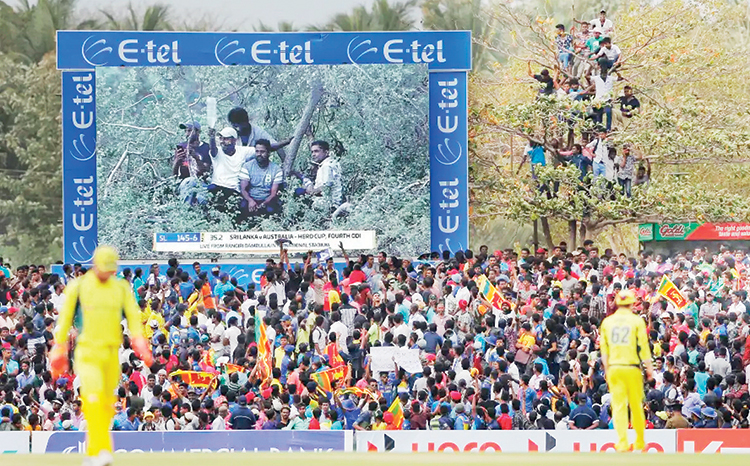
Dambulla isn’t just a cricket ground. This is part of Thilanga’s visionary thinking. He wanted the game to trickle down to the grassroots, to take cricket out of Colombo’s comfort zone and into the heartland. The response has been overwhelming. Whenever the big boys roll into town, the stands are packed to the rafters and when space runs out, fans perch on nearby trees just to catch a glimpse, a reminder that cricket, in this part of the country, is more than a game; it is a way of life.
The stadium itself was built in double-quick time, a project fast-tracked with military precision. Former captains Bandula Warnapura and Duleep Mendis, then part of the SLC set-up, oversaw the construction, ensuring the ground was ready to host top-flight cricket without missing a beat. Sujeewa Godaliyadda, now SLC Treasurer, has been part of the furniture here from day one, guarding the venue like the apple of his eye.
Back in 2001, the surrounding area was little more than a quiet outpost. Fast forward to today and the landscape has changed beyond recognition, hotels, restaurants and supermarkets have sprung up, proof that cricket has been a catalyst for economic growth. The ripple effect has been unmistakable; livelihoods have improved and the region has been put firmly on the map.
Of course, the journey has not always been smooth sailing. At times, Dambulla was left out in the cold, sidelined due to petty politics while other venues were given the nod. Hambantota’s Suriyawewa had its moment in the sun, but when rain threatens to play havoc, Dambulla remains the trump card. Unlike some white elephants, this ground delivers when it matters.
In recent years, the venue has come back into its own. Floodlights have been upgraded, state-of-the-art training facilities have been added and Dambulla is now being groomed as a Centre of Excellence. A new media centre is in the pipeline, while expansion plans are on the drawing board to meet the ever-growing demand from fans eager to soak in cricket in this picturesque setting.
by Rex Clementine

Referendum defeat leaves Italy’s Meloni looking more vulnerable

Pakistan T20 cricket league to be held in empty stadiums amid oil crisis

Showers expected in the Western, Southern, Uva and Sabaragamuwa provinces and in Kandy and Nuwara-Eliya districts after 2.00 pm.

Tehran says Trump’s peace talk claims are ‘fake news’

SJB: China, India taking advantage of Lanka’s unregulated oil market

SL to redevelop Trinco tank farm expeditiously

‘Dates have the highest sugar content to fight Coronavirus’

Sunday Island 27 December – Headlines

#SundayIsland 17th December – Headlines

Sunday Island – 28th March

Sunday Island Headlines – 21 March

Sunday Island – 21st February – Headlines
-

 News6 days ago
CIABOC questions Ex-President GR on house for CJ’s maid
-
 News5 days ago
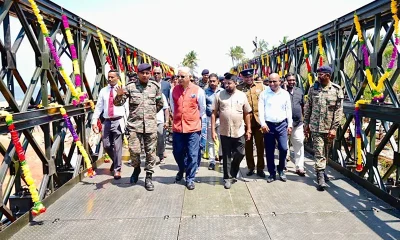
Bailey Bridge inaugurated at Chilaw
-

 News5 days ago
Pay hike demand: CEB workers climb down from 40 % to 15–20%
-
 News4 days ago
CIABOC tells court Kapila gave Rs 60 mn to MR and Rs. 20 mn to Priyankara
-

 Features1 day ago
Trincomalee oil tank farm: An engineering marvel
-

 Editorial6 days ago
Couple QR-based quota with odd-even rationing
-
 Features4 days ago
Science and diplomacy in a changing world
-

 News3 days ago
Colombo, Oslo steps up efforts to strengthen bilateral cooperation in key environmental priority areas