
Business
EDB and Australia High Commission share ideas to promote SL Education sector

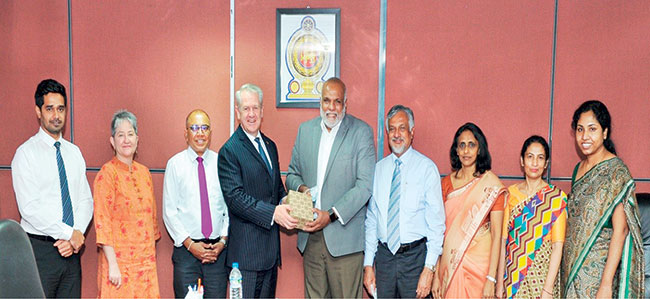
A discussion was held between the senior representatives of the Australia High Commission in Sri Lanka and the Sri Lanka Export Development Board (EDB) on March 2 to share ideas and strategies to promote Sri Lanka’s education sector among international students.
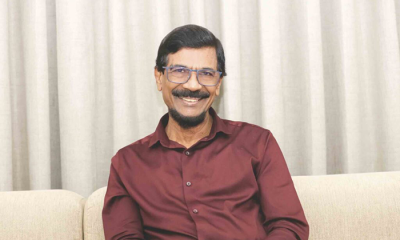
During the meeting, EDB Chairman Suresh D de Mel pointed out that the government had taken several initiatives to promote Sri Lankan education services internationally with the view of attracting foreign students to study in Sri Lanka and that plans are underway to position Sri Lanka as an education hub.
EDB Director – Export Services, Ms. Indumini Kodikara mentioned that a number of webinars were conducted to create awareness about opportunities available in Sri Lanka for foreign students who wish to pursue studies in Higher Education services not only from Accounting, Management, ICT, Marketing but also Healthcare training programmes such as Nursing , Wellness, Biomedical science, Physiotherapy and Buddhist Education services. in collaboration with the Sri Lankan missions in Australia, the Maldives, Myanmar, Nepal, Bangladesh, Pakistan, South Korea, the UAE, Vietnam and China.
Expressing his views, EDB Education Advisory Committee Chairman – Captain Ajith Pieris observed that the government wants to attract foreign universities into the country to create opportunities for higher studies not only for local students but for students from countries in the region such as Pakistan, the Maldives, and Bangladesh. He stated that discussions had been initiated with the Department of Immigration and Emigration to streamline visa procedures to facilitate the arrival of foreign students to the island.
Taking part in the discussion, High Commissioner of Australia to Sri Lanka His Excellency David Holly shared valuable insights on developing education as an export-driven field. “Due to the COVID-19 experience, Australia has recognised the importance of having transnational education hubs because of disruptions to higher-education activities. Australian education institutes have invested close to US$ 200 million in Sri Lanka through partnerships and independent ventures”, the High Commissioner remarked.
He underscored the importance of having a proper regulatory environment and visa policy to develop higher education as a foreign exchange-earning sector drawing on the Australian experience. The High Commissioner also emphasized the importance of preventing exploitation of students by unscrupulous parties via a continuous audit and grading system similar to CRICOS code of Australia.
Deputy High Commissioner of Australia to Sri Lanka, Ms. Amanda Jewell, Education Director of Australian Trade and Investment Commission – Kanishka Padidilian, Co-founder, International Institute of Health Sciences (IIHS) – Dr. Kithsiri Edirisinghe and officials of the EDB Export Services division also took part in the discussion.




Oil prices have fallen sharply amid tentative hopes for a deal to end the US-Israel war on Iran.
Brent crude, the primary benchmark for global oil prices, fell about 5 percent on Sunday as US President Donald Trump gave mixed signals on the prospects for a permanent end to the conflict.
Brent futures for July stood at $98.47 a barrel as of 01:05 GMT, down about 9 percent from a month ago but still up by more than a third compared with before the start of the war.
Japan’s benchmark stock index, the Nikkei 225, surged more than 3 percent in morning trading, hitting an all-time high after closing at a record peak on Friday.
Trump said in a social media post on Sunday that negotiations with Tehran were proceeding in an “orderly and constructive manner”, but he had instructed officials “not to rush into a deal”.
“Both sides must take their time and get it right. There can be no mistakes!” Trump wrote on Truth Social.
Trump’s remarks came after he raised hopes for a breakthrough on Saturday by announcing that a deal had been “largely negotiated,” with the terms including the reopening of the Strait of Hormuz.
“Fundamentally, there is no change to the underlying picture, where 10-11 million barrels per day of crude oil continue to be shut-in for every day the Strait of Hormuz remains shut,” June Goh, a senior oil market analyst at Sparta in Singapore, told Al Jazeera.
“However, markets are expecting a gush of 100 million barrels of crude oil from the stranded ships to flow out once the deal is in place.”
Goh said markets are likely to remain on edge for some time after any deal is finalised.
“Sparta estimates still about three to six months required to get everything back to status quo, including time to bring production and refineries back online,” Goh said.
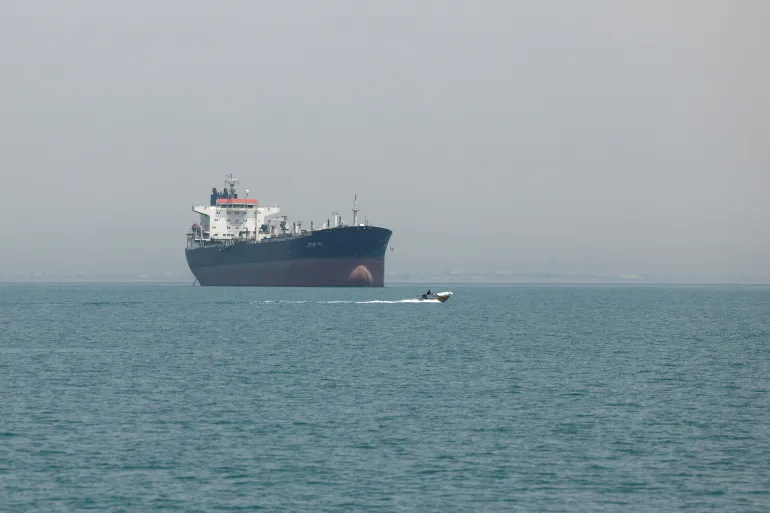
Iran has effectively blockaded the strait since the start of the war in late February, disrupting about one-fifth of the global oil trade.
The US has imposed its own blockade of Iranian ports since mid-April, further disrupting commercial shipping in the waterway.
In his Truth Social post on Sunday, Trump said the US blockade would remain “in full force and effect until an agreement is reached, certified, and signed”.
[Aljazeera]


Investor appetite for Sri Lanka’s government securities strengthened sharply during the week ending May 22, with the Treasury Bill auction attracting bids amounting to about 1.7 times the offered volume, while secondary market transactions in Treasury Bills and Bonds surged 22.8 percent from the previous week, according to the latest weekly report of the Central Bank of Sri Lanka.
The renewed demand for government securities appears to reflect a growing preference among investors for safer and more liquid assets at a time when several segments of the economy are showing signs of uncertainty despite the broader macroeconomic recovery.
A market analyst told The Island Financial Review that the rise in demand for Treasury securities is likely driven by a combination of factors including rising inflation expectations, weakening equity market sentiment, currency depreciation pressures and investors may be attempting to lock in currently attractive yields before any further decline in market interest rates.
“The National Consumer Price Index-based headline inflation accelerated to 4.7 percent in April from 2.4 percent in March, while core inflation also rose to 4.4 percent. Such inflationary pressures may have encouraged institutional investors to lock into relatively attractive government yields before any future market volatility emerges,” he said.
At the same time, the Colombo stock market came under pressure during the week, with the All Share Price Index falling 4.26 percent and the S&P SL20 Index declining 3.55 percent.
The analyst said that part of the funds flowing into government securities may have shifted away from equities as investors sought more predictable returns.
“Another important factor supporting government securities is the persistent surplus liquidity in the banking system. The outstanding market liquidity remained in surplus at Rs. 141.27 billion by May 22, although slightly lower than the previous week’s Rs. 156.8 billion. Excess liquidity typically pushes banks and large institutional investors toward government debt instruments, particularly when private sector credit expansion remains subdued,” he noted.
“According to the data, foreign holdings of Treasury Bills and Bonds declined by 3.32 percent during the week. This suggests the recent demand surge was driven largely by domestic investors rather than foreign inflows, underscoring strong local institutional confidence in government-backed instruments,” he added.
In conclusion, he noted that the strong oversubscription at Treasury auctions reflects growing market confidence that Sri Lanka’s domestic debt market remains one of the few relatively stable investment avenues amid external vulnerabilities and domestic realities.
By Sanath Nanayakkare
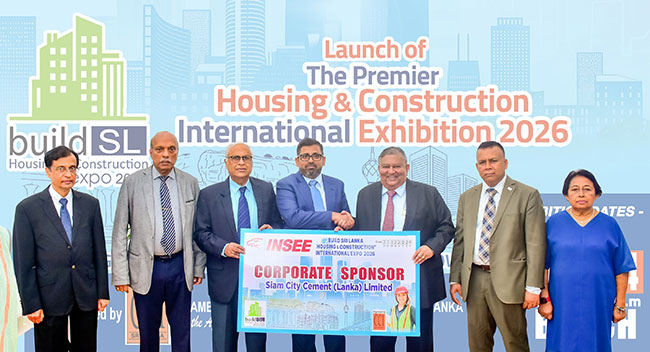
INSEE Lanka, Sri Lanka’s fully integrated cement manufacturer and market leader, took center stage as the Corporate Sponsor of the Build Sri Lanka Housing & Construction Exhibition 2026, organised by the Chamber of Construction Industry of Sri Lanka (CCI). The partnership showcases INSEE’s commitment to advancing the country’s construction sector through quality, sustainability, and industry collaboration.
The exhibition was held from 22-24 May 2026 at BMICH. Stakeholders representing different sectors of the Construction Industry and international participants will be present.
As Sri Lanka’s construction sector enters a new era, the need to unite, innovate, and collaborate has never been greater. Build Sri Lanka is recognized as one of the industry’s most influential events and brings together the full construction value chain including manufacturers, suppliers, architects, engineers, developers, and homeowners into one dynamic platform.
Build Sri Lanka also plays a vital role in bridging industry knowledge with public understanding, enabling informed decision‑making for the construction ecosystem.
For INSEE Lanka, the exhibition is an opportunity to showcase capabilities to contribute to shaping the future of construction in Sri Lanka. Participation also highlights a dedication to drive progress to benefit the sector and the country, creating lasting value for communities and the environment.

Attacks on Ebola centres intensify in eastern DRC amid outbreak fears

Oil prices fall amid mixed signals on US-Iran peace deal

Kuldeep and Rahul help Delhi Capitals sign off with big win

Trump tells US negotiators ‘not to rush’ into deal with Iran

Showers will occur at times in the Western, Sabaragamuwa and North-western provinces and in Galle, Matara, Kandy and Nuwara-Eliya districts

No PC polls this year, says Tilvin

‘Dates have the highest sugar content to fight Coronavirus’

Sunday Island 27 December – Headlines

#SundayIsland 17th December – Headlines

Sunday Island – 28th March

Sunday Island Headlines – 21 March

Sunday Island – 21st February – Headlines
-

 Features6 days ago
Octopus, Leech, and Snake: How Sri Lanka’s banks feast while the nation starves
-
 Sports6 days ago
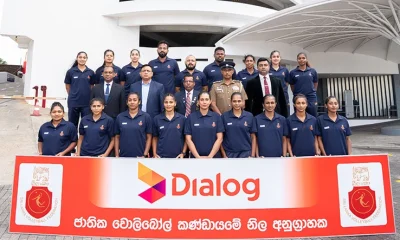
Sri Lanka women’s volleyball team ready for Central Asian challenge
-
 Opinion5 days ago
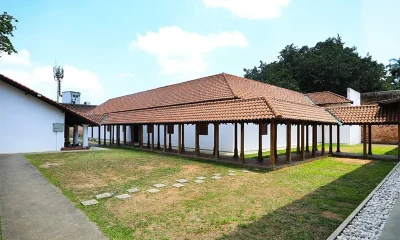
Murder of Ehelepola family, Bogambara Wewa and Sightings of Wangediya
-
 News5 days ago
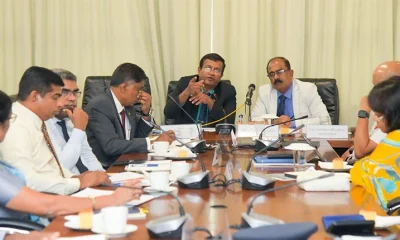
Steps underway to safeguard Sri Lanka’s maritime heritage
-

 Features2 days ago
The NPP’s pivot to the past
-

 Editorial5 days ago
A play without its protagonist
-

 Opinion4 days ago
The need to reform Buddhist ecclesiastical order
-
 Midweek Review6 days ago
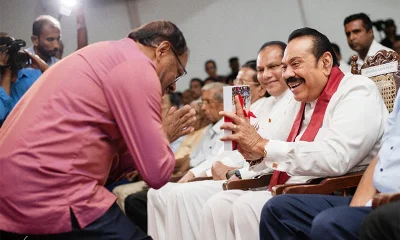
Overall SLPP failures stressed in new Aragalaya narrative