
Features
EARLY CAREER AND LONDON DEGREE


CHAPTER 8
I cannot say why I specialized in Banking and Currency – I think it was a hunch and perhaps literature was more readily available in Ceylon. (From an undated document (c.1950) in N.U. Jayawardena Personal Files. NU seemed to have an instinct for perceiving things that would become important in the economic and commercial development of Sri Lanka, as persons who watched his career over the years would observe. This would be only the first of such “hunches.”)
(N.U. Jayawardena reminiscing in the 1950s on why he selected this subject for his B.Sc. (Econ.) degree in 1931)
The 1930s were transitional years in NU’s career, when he added to his academic knowledge of economics in its practical and operational aspects. During this period, his abilities were recognized by persons of standing under whom he worked. This helped greatly in his development. What is more, his marriage gave him a certain degree of financial security and a congenial environment in which, while employed, to pursue his studies. NU in later years, often spoke with deep gratitude of the support and encouragement that his wife Gertrude gave him in his studies.
NU, even after entering the Clerical Service, did not relinquish hopes of studying for a degree. The circumstances in which he realized them were in part accidental. Shortly after he passed the London Matriculation in the First Division, he received a letter from Wolsey Hall, the well-known Correspondence College in Britain, enclosing a prospectus of study for degrees including the B.Sc. Economics. It also suggested that a knowledge of economics was greatly advantageous for public servants, especially those in colonial countries. Spurred on by this letter, NU registered for the course while working as a clerk. According to NU, if not for the Wolsey Hall letter, he never would have thought of studying economics. He had always wanted to be a doctor or lawyer but could only aspire to the clerical service. The letter from Wolsey Hall placed him on a path that would take him to heights far beyond what he then could have imagined.
Wolsey Hall, Oxford, was founded by J. William Knipe in 1894, at a time when access to a higher education – which had been largely the preserve of the elite – was beginning to become more widely available to other classes in society. Catering to this increasing demand
for education, Wolsey Hall offered tuition by correspondence for British university degrees and other examinations, especially for persons holding jobs, as well as others unable to study on campus for one reason or other. It also was a great boon for those in the colonies who wanted to qualify through external studies. Such correspondence courses and external examinations were a type of social revolution, which gave those who were poor and underprivileged, the chance for a higher education.

Montage of correspondence related to NU’s Economics degree
After four years, while working as a clerk in the Public Works Department, NU completed his B.Sc. (Econ.) degree. The degree was divided into the Intermediate, Parts I & II, and the Finals. Parts I & II included Economics, Economic History, British Constitution, Geography, Mathematics, Logic, and a language (French or German). ( According to notes in his Personal Files, NU studied both German and French. As part of its course requirements, the LSE required B.Sc. (Econ.) candidates to learn one of the two languages. The 1930 Calendar of the LSE B.Sc. (Econ.) stated that the Intermediate Part I examination would require candidates to read from works in either French, German and Italian and that they would pass the examination only if they proved able to read “with intelligence” French or German or Italian. NU’s grounding in Latin would certainly have helped him in learning French and German.) The final part consisted of Economics, Banking and Currency,
Economic History, English Law, and Statistics. Several months after his final examination in June 1931, NU was informed by Wolsey Hall that he had passed with Second Class Honours and that he was the only overseas candidate to be awarded an honours degree at the External B.Sc. (Econ.) examination. (Letter from the Registrar of Wolsey Hall, dated 11 November 1931 (N.U. Jayawardena Personal Files). NU now was also the only person in the Ceylon Clerical Services to hold a B.Sc. (Econ.) degree.
Aiming for a Higher Degree
NU’s desire for higher education did not end with this achievement. Even before he received his results, he made direct inquiries to London University about the possibility of doing externally a Masters degree in Economics from the London School of Economics (LSE). He began correspondence with some of its lecturers about the courses available and the required reading. He wrote to the Advisory Service for External Students of the University of London, and registered for the postgraduate M.Sc. (Econ.) degree in 1931.
At the same time, NU asked the local Director of Education in Sri Lanka, to inquire if this examination could be held locally, a request that was eventually granted. NU also asked for written course material. This, he was told, was not possible, but the University Correspondence College could provide the services of a tutor to help devise a list of course material, that would cost 7 shillings an hour, with a minimum fee for 4 hours. NU scribbled in the margin of this letter, “too expensive!”
Excerpt from the letter
Copious correspondence followed between NU and the University to decide on both his general and special subjects. In the end, NU and his LSE advisor settled on “Organisation of Monetary and Banking Institutions” as his general subject, and significantly, “Central Banks” as his special subject. It is remarkable that NU should have chosen Central Banks as a special subject, given the relatively undeveloped banking sector existing at that time in Sri Lanka.
The cost of books and the difficulties in securing them were a hurdle.( In a letter to his father-in-law, NU estimated the cost for the required books to be Rs.125 (N.U. Jayawardena Personal Files). His LSE advisor probably mistook NU’s delay in resolving this dilemma as indecision on his part. A letter from the External Department conveys what his advisor felt about NU’s interminable inquiries:
This student appears to be asking innumerable questions to postpone making up his own mind. I sympathize with the very real difficulty he must have in procuring books, but he must face the facts and realize that the M.Sc. Examination… must necessarily call for more intensive reading.
Not to be beaten, NU inquired about borrowing books from the University Library, but was told that it was against the rules for books to be sent out of Britain. Many important economic works were written in French or German, and according to his advisor, few translations were available. In deciding which subjects would be the most feasible for an external student, his advisor observed that:
The General subject of the ‘Organisation of Monetary and Banking Institutions’ with ‘Central Banks’ as a special subject would offer certainadvantages in the way of available literature.
Among the subjects available, he suggested that “Monetary Theory… might be of greater practical value to a person engaged in Government Service.”( Letter from the Secretary of the LSE External Department to NU, dated 12 September 1932 (N.U. Jayawardena Personal Files).

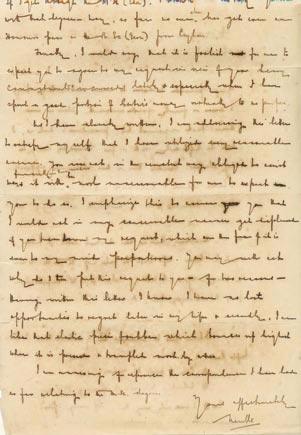
Page from NU’s appeal to his father-in-law
NU persisted in trying to find the means to pursue his goal. In December 1931, in a moving four-page letter, he turned to his father- in-law for financial assistance. He did so “with a certain amount of diffidence.” There were three things, he wrote, that made for success in the examination: “a good brain; a strong will and money to carry on the studies.” “I believe,” he added, “I have got the first two, but am lacking the third.” NU estimated the cost of the M.Sc. (Econ.) to be a total of Rs. 548, and added that he would only be able to bear some of the cost if he got “a better appointment,” or if rubber prices improved, enabling “us to get something from the estate,” which was part of his marriage settlement. He added that, if successful in the M.Sc. (Econ.) examination, he would be “the only Ceylonese with that degree.
” He ended the letter, disarmingly, saying he would understand if his “preposterous” request was turned down, but reasoned why he had to make this request. It was to ensure that he would have “no lost opportunities to regret later in my life,” and because, in his own words: “I am like that elastic piece of rubber which bounces up highest when it is pressed and trampled most” (Letter to Norman Wickramasinghe, 19 Dec. 1931). These last words would prove to be prescient. NU’s request was granted, and his letter returned to him with the emphatic words: “I would gladly comply with your wishes to enable you to take up the higher exam!” written in blue pencil at the top of the letter. However, for reasons unknown, NU did not take up his studies.
From his protracted correspondence with the university, it appears that he had managed to postpone the examination until 1935. He was, in fact, compelled to do so. Rubber prices had crashed in the early 1930s, and much of his father-in-law’s wealth came from his holdings in rubber. Two other factors may have contributed to his decision. One was an increasing workload, especially connected with the Banking Commission of 1934 (see Chapter 9); and the other was the births of his sons, Lalith (Lal) in 1934 and Nimal in 1936. However, NU’s ambition to continue his studies would be realized in 1938, when he was given a scholarship to attend the London School of Economics (LSE) to study Business Administration.
Early Interest in Central Banking
Even though NU did not formally study for the M.Sc. (Econ.) degree, it is interesting to take note of the advice and reading list his advisor had sent and the latter’s comments about Central Banking, which was a newly emerging area of study at the time (Letter from the Secretary of the LSE External Department to NU, dated 12 September 1932 (N.U. Jayawardena Personal Files).
Central Banking policy is in the centre of modern theoretical discussions, and acquaintance with and understanding of these is essential for the candidate. Keynes’ Treatise and Hayek’s Prices and Production are perhaps the most important recent contributions. (N.U. Jayawardena personal files)
NU was also advised that, “in the study of modern central banks” he should “concentrate chiefly on England, USA, Germany and France,” but to also give some attention “to other countries… where the organization of commercial banks is less developed – and to countries which have at present no central bank but are thinking of establishing one” (Letter from the Secretary of the LSE External Department to NU, dated 12 September 1932 (N.U. Jayawardena Personal Files).).
The exhaustive reading list sent by the advisor for the degree included documents and books on central banking in England, France, Germany and the United States. For the United States he recommended studying the annual reports of the Federal Reserve Board, as well as the Senate Banking and Currency Subcommittee report covering the operation of the national and Federal Reserve banking systems. He also advised him to read the Economist magazine, to “keep abreast of current events” (Letter from the Secretary of the LSE External Department to NU, dated 12 September 1932 (N.U. Jayawardena Personal Files). This NU was to do inhis later years, also ordering the Economist Diary annually.
For a full-time internal student, the requirements for a London M.Sc. were daunting enough. Textbooks were rare at the time, and LSE students – according to one of them – had to study “an enormous number of primary sources, books and articles” (B.K. Nehru, quoted in Dahrendorf, 1995, p.190). Works also had to be read in their original languages. For an external student separated by distance, with no direct access to specialist libraries and tutors, one can only imagine how much more daunting the challenge would have been.
It is interesting to speculate that NU, who seized every opportunity and tenaciously pursued his goals, may have begun to acquaint himself with some of these recommended works, even after he was unable to take up his M.Sc. (Econ.) studies. In this context, one can better appreciate why NU often said with much pride throughout his life, “if to be educated means to be taught, then I am an uneducated man.”
Temporary Disappointments
With his degree in Economics, NU had applied for posts in which he could put his newly acquired knowledge into use. A letter of recommendation written in January 1932 by the Director of Public Works, H.B. Lees, sums up NU’s qualities at this point in time:
Mr. Jayawardena is a very promising officer and has by his own exertions succeeded in obtaining by private study good academic qualifications in Economics… He has carried out his duties… with marked efficiency and
conscientiousness… his conduct… has been exemplary. (N.U. Jayawardena personal files)
NU first applied for the post of Probationary Assessor in the Department of Inland Revenue and was interviewed by J. H. Huxham, who a few years later became the Financial Secretary. Unfortunately, NU was not selected. He then applied for the post of Assistant Accountant in the Labour Department. Here again he was not taken, apparently due to his lack of accountancy qualifications. These failures, far from discouraging him, made him more determined to press on. Apparently, during this period he took a correspondence course in Accountancy from Bennett College in Sheffield, England and “served… [his] articles under N. Sabamoorthy, an Indian who had an office in Sea Street” (N.U. Jayawardena, interviewed by”Eriq,” The Island, 25 Feb. 1998).
Constitutional Reforms and New Vistas for NU
The political situation in the country had moved forward with the Donoughmore Reforms, and the first general election was held under universal franchise in 1931. These reforms provided the country with a greater degree of autonomy and training towards self-governance and democracy. Under the Donoughmore Constitution, a “State Council” (as the legislature was known) was set up. It was composed of 50 elected members and 6 members nominated to represent minorities and special interests. There were also three “Officers of State,” the Financial Secretary, the Legal Secretary and the Chief Secretary – all British – and a Governor, with controlling powers. Each State Council member was assigned to one of seven committees, chaired by a Minister.
Several capable and dedicated Sri Lankans were selected as Ministers, including Peri Sunderam, who was the first Minister of Labour, Industries and Commerce. Peri Sunderam recognized NU’s capabilities, and over the next several years, provided him the opportunities
to apply his knowledge and to excel. Like NU, Peri Sunderam had also risen from humble origins. He had his secondary education at Trinity College, Kandy, then graduated from Cambridge University, and also qualified as a barrister in London. After returning to Sri Lanka, he won the Hatton seat, uncontested in the State Council, in the election of 1931. As Minister, he scouted for intelligent persons for his Ministry. Although NU’s application to the Labour Department had been turned down, Peri Sunderam took note of his qualifications and wanted NU at the Registrar General’s Office, which was under his Ministry. NU was transferred there in July 1932.
The Commercial Intelligence Unit
The Ministry of Labour, Industries and Commerce would be the initial training ground for NU during the 1930s and the first few years of the 1940s. The varying capacities in which he served over this period provided him with many opportunities to develop a solid grounding in commercial activities, trade, administrative and banking matters. In his work, he displayed his usual perseverance and industry. Peri Sunderam, who served as Labour Minister from 1931 to 1936, recognized the need to strengthen trade links with India. In 1932 he led the first Ceylon Government Delegation to attend the Annual Sessions of the Chamber of Industries in New Delhi, and took NU and a civil servant with him. This was NU’s first trip abroad. On his return, he reported on the need for a commercial intelligence agency.
During this period, NU served under L.J.B. Turner, who was the Registrar General. Turner was in the process of setting up a Commercial Intelligence Unit within the Ministry. Peri Sunderam suggested that NU be assigned to write up the report. On the basis of the recommendations that NU made in his report, the new unit was set up. NU was full of admiration for Turner, whom he described as “a fine civil servant,” from whom he learnt “the necessity of being terse in language, the importance of accuracy, to never print any statistic without double checking and dating all papers and correspondence” (Roshan Pieris, 1988). Turner, it may be noted, who had been in charge of the Census of 1921 and had analysed the data and authored the Report.
Turner was succeeded by J.C.W. Rock as Registrar General, who acknowledged NU’s contribution to setting up the new department. Rock stated in 1943: “N.U. Jayawardena… and two clerks formed the nucleus from which the present Department has developed and
it was he who assisted me throughout in shaping its design and
growth” (N.U. Jayawardena Personal Files).
NU, who had not only worked on the report on the Commercial Intelligence Unit, but had also advised on its creation and organization, had hoped to be appointed Assistant Director of the new unit. Much to NU’s disappointment, E.C. Paul, a barrister, was appointed instead. NU, determined to move forward, applied for other posts. On 6 September 1933, Rock wrote a letter of recommendation for NU, whom he said “possesses ability above the average and has a well-formed grasp of economic problems,” adding, “I am sorry to be losing him” (N.U. Jayawardena Personal Files).
However, NU remained in the department and, a short time later, at the age of 26 in November 1934, was promoted to the post of Commercial Assistant to J.C.W. Rock. His new duties included finding markets abroad for local products, making trade investigations, dealing with changes in tariffs and trade agreements, and supplying commercial intelligence – in short, to look after the interests of Sri Lankan trade. The Sri Lankan government at this time had two trade commissioners abroad, in London and in Bombay. The Department of Commerce functioned on the lines of the Department of Overseas Trade in the UK (N.U. Jayawardena Personal Files). NU held this post until 1942. In assessing NU’s performance
as his assistant, in 1938, Rock noted that:
[NU] has acquired a very thorough knowledge of the trade and the industries of Ceylon… [and] has a sound knowledge of economics, both in its theoretical and applied aspects, and he has been of the greatest assistance
to me in carrying out the work of this Department… [He] has shown a high degree of industry, initiative and executive ability. His work is of a character requiring considerable research. (J.C.W. Rock, recommendation
dated 30 March 1938)
Shortly before his promotion, NU was to receive an even bigger break – enabling him to gain a comprehensive overview of the existing problems in banking and credit in Sri Lanka. This landmark event was his appointment by Peri Sunderam in April 1934 to the Banking Commission as its Assistant Secretary. The Commission was established to examine the deficiencies in the island’s banking system. His work in the Commission would not only provide NU with insights into the economic realities of Sri Lanka in the 1930s, but also propel his career forward. (N.U. JAYAWARDENA The First Five Decades Chapter 7 can read online on )
(Excerpted from N.U. JAYAWARDENA The first five decades)
By Kumari Jayawardena and Jennifer Moragoda ✍️

Features
Mannar’s silent skies: Migratory Flamingos fall victim to power lines amid Wind Farm dispute

By Ifham Nizam
A fresh wave of concern has gripped conservationists following the reported deaths of migratory flamingos within the Vankalai Sanctuary—a globally recognised bird habitat—raising urgent questions about the ecological cost of large-scale renewable energy projects in the region.
The incident comes at a time when a fundamental rights petition, challenging the proposed wind power project, linked to India’s Adani Group, remains under examination before the Supreme Court, with environmental groups warning that the very risks they highlighted are now materialising.
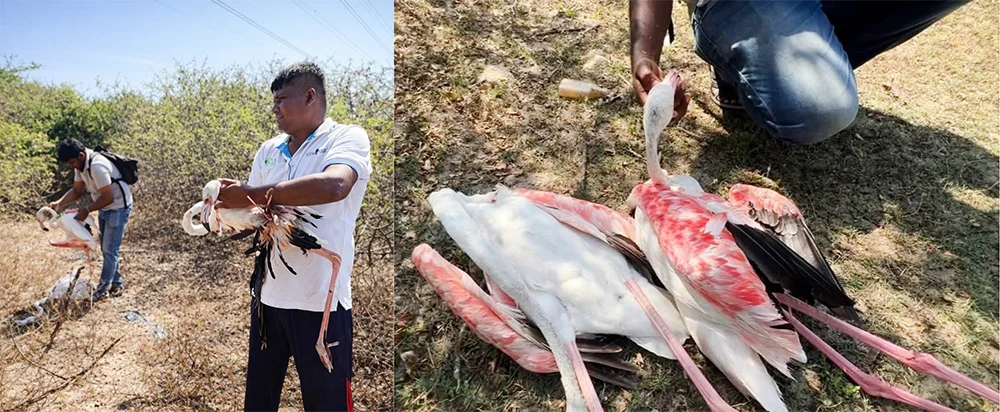
At least two flamingos—believed to be part of the iconic migratory flocks that travel thousands of kilometres to reach Sri Lanka—were found dead after entanglement with high-tension transmission lines running across the sanctuary. Another bird was reportedly struggling for survival.
Professor Sampath Seneviratne, a leading ornithologist, expressed deep concern over the development, noting that such incidents are not isolated but indicative of a broader and predictable threat.
“These migratory birds depend on specific flyways that have remained unchanged for centuries. When high-risk infrastructure, like poorly planned power lines, intersect these routes, collisions become inevitable,” he said. “What we are witnessing now could be just the beginning if proper mitigation measures are not urgently implemented.”
Environmentalists argue that the Mannar region—particularly the Vankalai wetland complex—is one of the most critical stopover sites in South Asia for migratory waterbirds, including flamingos, pelicans, and various species of waders. The sanctuary’s ecological value has also supported a niche with growing eco-tourism sector, drawing birdwatchers from around the world.
Executive Director of the Centre for Environmental Justice, Dilena Pathragoda, said the incident underscores the urgency of judicial intervention and stricter environmental oversight.
“This tragedy is a direct consequence of ignoring scientifically established environmental safeguards. We have already raised these concerns before court, particularly regarding the location of transmission infrastructure within sensitive bird habitats,” Pathragoda said.
“Renewable energy cannot be pursued in isolation from ecological responsibility. If due process and proper environmental impact assessments are bypassed or diluted, then such losses are inevitable.”
Conservation groups have long cautioned that the installation of wind turbines and associated grid infrastructure—especially overhead transmission lines—within or near sensitive habitats could transform these landscapes into lethal zones for avifauna.
An environmental activist involved in the ongoing legal challenge said the latest deaths validate earlier warnings.
“This is exactly what we feared. Development is necessary, but not at the cost of biodiversity. When projects of this scale proceed without adequate ecological assessments and safeguards, the consequences are irreversible,” the activist stressed.
The debate has once again brought into focus the delicate balance between renewable energy expansion and biodiversity conservation. While wind energy is widely promoted as a clean alternative to fossil fuels, experts caution that “green” does not automatically mean “harmless.”
Professor Seneviratne emphasised that solutions do exist, including rerouting transmission lines, installing bird diverters, and conducting comprehensive migratory pathway studies prior to project approval.
“Globally, there are well-established mitigation strategies. The issue here is not the absence of knowledge, but the failure to apply it effectively,” he noted.
The timing of the incident is particularly worrying. Migratory flamingos typically remain in Sri Lanka until late April or May before embarking on their return journeys. Conservationists warn that if hazards remain unaddressed, larger flocks could face similar risks in the coming weeks.
Beyond ecological implications, experts also highlight potential economic fallout. Wildlife tourism—especially birdwatching—contributes significantly to local livelihoods in Mannar.
Repeated reports of bird deaths could deter eco-conscious travellers and damage the region’s reputation as a safe haven for migratory species.
Environmentalists are now calling for immediate intervention by authorities, including a temporary halt to high-risk operations in sensitive zones, pending a thorough environmental review.
They stress that protecting animal movement corridors—whether elephant migration routes or avian flyways—is a fundamental pillar of modern conservation.
As the controversy unfolds, one question looms large: can Sri Lanka pursue sustainable energy without sacrificing the very natural heritage that defines it?
Pathragoda added that for now, the sight of fallen flamingos in Mannar stands as a stark reminder that development, if not carefully planned, can carry a heavy and irreversible cost.
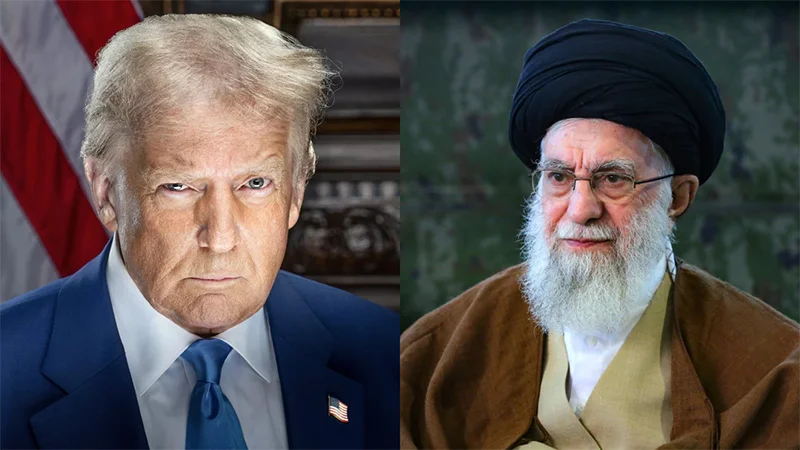
 A picture of US President Donald Trump apparently being prayed for by supporters, appearing in sections of the international media, said it all loud and clear. That is, religion is being flagrantly leveraged or prostituted by politicians single-mindedly bent on furthering their power aspirations.
Although in the case of the US President the trend took on may be an exceptionally graphic or dramatic form, the ‘weaponizing’ of religion is nothing particularly new, nor is it confined to only religiously conservative sections of the West. For example, in South Asia it is an integral part of politics. The ‘South Asian Eight’ are notorious for it and it could be unreservedly stated that in Sri Lanka, the latter’s ethnic conflict would be more amenable to resolution if religion was not made a potent weapon by ambitious politicians of particularly the country’s South.
The more enlightened sections of Christian believers in the US may not have been able to contain their consternation at the sight of the US President apparently being ‘blessed’ by pastors claiming adherence to Christianity. Any human is entitled to be blessed but not if he is leading his country to war without exhausting all the options at his disposal to end the relevant conflict by peaceful means.
More compounded would be his problem if his directives lead to the death of civilians in the hundreds. In the latter case he is stringently accountable for the spilling of civilian blood, that is, the committing of war crimes.
However, the US along with Israel did just that in the recent bombings of Iran, for instance. The majority of the lives lost were those of civilians. If the US President is endowed with a Christian conscience he would have paused to consider that he is guilty of ordering the taking of the life of another human which is forbidden in the teachings of Jesus Christ.
Moreover, the ‘pastors’ praying over the US President should have thought on the above lines as well. May be they were in an effort to curry the President’s favour which is as blame-worthy as legitimizing in some form the taking of civilian lives. Apparently, the realisation is not dawning on all Christian conservatives of the US that some of these ‘pastors’ could very well be the proverbial false prophets and the latter are almost everywhere, even in far distant Sri Lanka.
However, the political reality ‘on the ground’ is that the Christian Right is a stable support base of the Republican Right in the US. Considering this it should not come as a surprise to the seasoned political watcher if the Christian Right, read Christian fundamentalists, are hand-in-glove, so to speak, with President Trump. But it is a scathing indictment on these rightist sections that they are all for perpetrating war and destruction and not for the fostering of peace and reconciliation. Ideally, they should have impressed on their President the dire need to make peace.
That said, political commentators should consider it incumbent on themselves to point out that religion is being ‘weaponized’ in Iran as well. Theocratic rule in Iran has been essentially all about perpetuating the power of the clerical class. The reasons that led to the Islamic Revolution in Iran are complex and the indiscreet Westernization of Iran under the Shah dynasty is one of these but one would have expected Iran to develop from then on into a multi-party, pluralistic democratic state where people would be enjoying their fundamental rights, as enshrined in the Universal Declaration of Human Rights, for example.
Moreover, Iran should have taken it upon itself to be a champion of world peace, in keeping with its Islamic credentials. But some past regimes in Iran had vowed to virtually bomb Israel out of existence and such regional policy trajectories could only bring perpetual conflict and war. Considering the current state of the Middle East it could be said that the unfettered playing out of these animosities is leading the region and the world to ‘reap the whirlwind’, having recklessly ‘sowed the wind’.
However, religious fundamentalism-inspired conflict and war has spread well beyond the Middle East into almost every region since 1979, the year of the Islamic Revolution in Iran. So much so, knowledgeable opinion now points out that religious identity has come to replace nationalism as a principal shaper of international politics or “geopolitics”, as quite a few sections misleadingly and incorrectly term it.
Elaborating on the decisive influence of religious identity, the well known and far traveled Western journalist Patrick Cockburn says in his authoritative and comprehensive book titled, ‘The Age of Jihad – Islamic State and the Great War for the Middle East’ at page 428 in connection with the war in Chechnya ; ‘If nationalism was not entirely dead, it no longer provided the ideological glue necessary to hold together and motivate people who were fighting a war. Unlike the Islamic faith, it was no longer a belief or a badge of identity for which people would fight very hard.’ (The book in reference was published by VERSO, London and New York).
In his wide coverage of Jihadist Wars the world over Cockburn goes on to state that today a call from a cleric could motivate his followers to lay down no less than their lives for a cause championed by the former. The 9/11 catastrophe alone should convince the observer that this is indeed true.
However, as often pointed out in this column, there is no alternative but to foster peace and reconciliation if a world free of bloodshed and strife is what is being sought. Fortunately we are not short of illustrious persons from the East and West who have shone a light on how best to get to a degree of peace. Besides Mahatma Gandhi of India, who was the subject of this column last week, we have former President of Iran Mohammad Khatami, who made a case for a ‘Dialogue of Civilizations’ rather than a ‘Clash of Civilizations’.
The time is more than ripe to take a leaf from these illustrious personalities, for, the current state of war in the Middle East has raised the possibility of a war that could transcend regional boundaries. The antagonists are obliged to exhaust all the peaceful options with the assistance of the UN system. Besides, war cannot ever have the blessings of the sane.
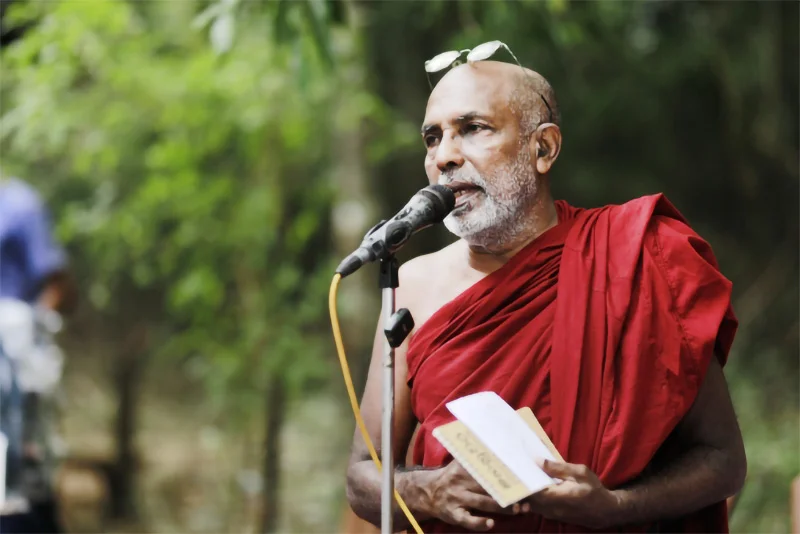
It was 35 years ago, on March 28, 1991, that Venerable Rahula Thera, then a young monk, embarked on a journey to the Na forest in Ulpathagama, Palagama, in the Anuradhapura District. Today, three and a half decades later, this mission stands as living proof of the enduring bond between Buddhist philosophy and the natural world.
Marking the 35th year of this green mission, Rahula Thera’s relentless dedication has transformed the National Namal Uyana into an environmental landmark admired not only across Sri Lanka but around the globe, as well.
When studying the life of Venerable Rahula Thera, one cannot ignore the profound connection between Buddhism and the environment. Buddhism is a philosophy deeply attuned to nature. The historical use of the sacred “Na Ruka” by all four Buddhas: Mangala Buddha, Sumana Buddha, Revata Buddha, and Sobhita Buddha — for enlightenment —demonstrates that from time immemorial, Buddhism has maintained a sacred bond with the Na tree. From the birth of Siddhartha to his enlightenment, the propagation of the Dharma, and even the great Parinirvana, all of these milestones unfolded in verdant, living landscapes.
Venerable Rahula Thera did not embark on the Namal Uyana mission seeking government support or personal gain. His commitment sprang from a deep devotion to the Buddha’s teachings on grove cultivation. A grove cultivator is one who spreads compassion for nature. As the Vanaropa Sutta teaches:
Venerable Rahula Thera reclaimed Namal Uyana which was then under the control of timber smugglers and treasure hunters. The term “Wanawasi” does not merely mean living in a forest; it signifies finding rest and enlightenment through nature, free from the destructive roots of greed, sin, and delusion.
Another defining aspect of Venerable Rahula Thera’s 35-year mission is the purification of the human mind. He has consistently taught the thousands who visit Namal Uyana that a person who loves a tree will never harm another human being. As the Dhamma proclaims:
It is important to remember that Venerable Rahula Thera devoted his life, without fear, speaking the truth and taking necessary action, tirelessly advancing the national mission he began. From 1991 to the present, he has worked with every government elected by the people, maintaining impartiality and independence from political ideology. Yet, he never hesitated to raise his voice fearlessly against any individual, of any rank or party, who committed wrongdoing.
Religious and Social Mission
The National Namal Uyana is not merely a forest; it is a magnificent heritage site, dating back to ancient times. Scattered across the landscape are boundary walls, the remains of ancient monastery complexes, and stone carvings believed to date back to the reign of King Devanampiyatissa. In earlier centuries, this sacred land had served as a meditation sanctuary for hundreds of monks. The name “National Namal Uyana,” by which this ecological and archaeological treasure is known today, was introduced by Venerable Rahula Thera in 1991. The government’s later recognition of the site as the National Namal Uyana stands as a significant achievement for both religion and national heritage.
Venerable Rahula Thera is a monk who has lived a life of renunciation. A striking example of this is his decision not to assume the position of Chief Incumbent of the National Namal Uyana Viharaya, instead entrusting the temple to the Ramanna Nikaya and its trustees. In doing so, he set a precedent for the contemporary Sangha. The Thera himself stated that he was merely the trustee of Namal Uyana, not its owner.
Legacy and Continuing Inspiration
The 35th anniversary of Venerable Wanawasi Rahula Thera’s arrival at Namal Uyana is not merely the commemoration of a period of time; it is a message of nature to future generations. Through his work, the Thera revived the ancient Hela tradition of loving trees and venerating the environment as something sacred. This religious and environmental mission remains unforgettable.
The revival experienced by Namal Uyana, after the arrival of Venerable Wanawasi Rahula Thera, is beyond simple description. Some of the major accomplishments achieved under his leadership include:
* Securing and protecting the largest Rose Quartz (Rosa Thirivana) reserve in South Asia.
* Restoring the Na forest spread across hundreds of acres, providing shelter to numerous rare plants and animal species.
* Transforming the area into a living centre for environmental education, offering practical learning experiences for thousands of schoolchildren and university students.
* Drawing the attention of world leaders and international environmentalists to Sri Lanka’s unique environmental heritage.
In recognition of his immense contribution to environmental conservation, Venerable Rahula Thera was honoured with the Presidential Environment Award and the Green Award in 2004—a significant moment in his life. Yet the Thera himself has always remained devoted to the work rather than the recognition it brings, making such appreciation even more meaningful.

A strong Technical and Vocational Education and Training (TVET) system equips individuals with practical, relevant, and future-oriented skills helping to innovate responsibly towards a greener and sustainable future – PM

PM reviews progress of the committee appointed for the establishment of a National Nursing University

UN votes to recognise enslavement of Africans as ‘gravest crime against humanity’

Meta and YouTube found liable in landmark social media addiction trial

Showers expected in the Western and Sabaragamuwa provinces and in Galle and Matara districts after 2.00 pm.

Heat Index at ‘Caution level’ in the Western, Sabaragamuwa, Southern and North-western provinces and in Anuradhapura, Mannar, Vavuniya and Monaragala districts

‘Dates have the highest sugar content to fight Coronavirus’

Sunday Island 27 December – Headlines

#SundayIsland 17th December – Headlines

Sunday Island – 28th March

Sunday Island Headlines – 21 March

Sunday Island – 21st February – Headlines
-

 News2 days ago
Senior citizens above 70 years to receive March allowances on Thursday (26)
-

 Features4 days ago
Trincomalee oil tank farm: An engineering marvel
-

 News7 days ago
CIABOC tells court Kapila gave Rs 60 mn to MR and Rs. 20 mn to Priyankara
-
 Features7 days ago
Science and diplomacy in a changing world
-

 Features4 days ago
The scientist who was finally heard
-
 News2 days ago
Japanese boost to Sri J’pura Hospital, an outright gift from Tokyo during JRJ rule
-

 News2 days ago
CEB Engineers warn public to be prepared for power cuts after New Year
-

 News6 days ago
Colombo, Oslo steps up efforts to strengthen bilateral cooperation in key environmental priority areas