
Opinion
E PLURIBUS UNUM – (OUT OF MANY, ONE)

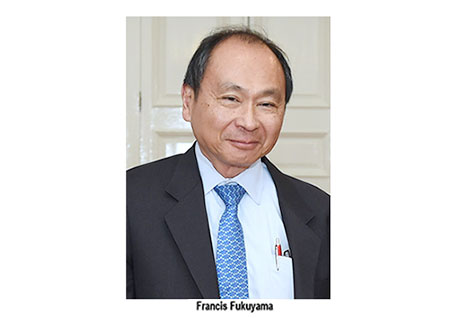
Liberal democracy is rooted in the rights of individuals and not the rights of groups or fixed communities.
According to Francis Fukuyama, liberal democracy cannot exist without a national identity that defines what citizens hold in common with one another. Given the de facto multiculturalism of contemporary democracies, that identity needs to be civic or creedal. That is, it needs to be based on liberal political ideas that are accessible to people of different cultural backgrounds rather than on fixed characteristics such as race, ethnicity, or religion.
Human beings have a fundamental need to belong—a need that their collective identities, be they racial, ethnic, religious, regional, or national, often satisfy. Such affiliations, which psychologists call “social identities,” serve multiple psychological functions. These include, for example, the need for a sense of safety, which social identities satisfy by reducing uncertainty and providing norms that help people navigate everyday life.
Some social identities also offer rituals and customs to aid with loss, mourning, and other significant challenges that occur during the course of one’s life. ( This relates to the Sri Lankan governments ignoring international guidelines on COVID-19 death disposal and mandating ONLY cremation in Sri Lanka for COVD dead). This caused the social identity of a group of Sri Lankan’s to be ignored based on contested scientific evidence thus scarring the psyche of Sri Lankan Muslims for generations to come.
At times, identities provide a sense of purpose and meaning and a basis for esteem and regard that is larger than people’s individual selves. Identities efficiently satisfy the human need for respect and dignity.
The concept of “identity,” builds on a universal aspect of the human psyche that Plato labelled thymos, the demand for respect for one’s inner dignity. But there is a specifically modern expression of thymos that emerged after the Protestant Reformation and that values the inner self more highly than society’s laws, norms, and customs and insists that society change its own norms to give recognition to that inner self. The first major expression of modern identity politics was nineteenth-century European nationalism, when cultural groups began to demand recognition in the form of statehood. Fukuyama argues that identity politics is eroding national unity in the United States and Europe, undermining the kind of civil discourse essential to the maintenance of liberal democracy.
I believe that much of modern Islamism is similarly driven by identity confusion among Muslims in modernizing societies who feel neither Western nor traditional and see a particular form of politicized religion as a source of community and identity. We saw this in the movement which led to the Easter Sunday Carnage of 2019 in Sri Lanka. The ideological, political and social infrastructure which gave rise to the Easter Sunday Carnage is still not only existing but thriving in Sri Lanka thanks to identity politics of the majority and minority Muslim Community. The prime reason for this situation is the current Sri Lankan constitution which calls for proportional representation at a threshold of 5% of the votes polled. If this situation persists the identity politics and all that it leads to Will continue to persist and thrive in Sri Lanka. Politicians to clergy and all in between will exploit this situation for their individual expectations at the cost of national issues.
I believe Identity, in the recent past has begun to focus on the rise of right-wing nationalist populism or vice versa. This development threatens liberal democracy because populist leaders seek to use the legitimacy they gain from democratic elections to undermine liberal institutions such as courts, the media, and impartial bureauc-racies which minorities rely on for a sense of equity and all citizens rely on for fairplay
The contemporary Middle East, like the Balkans before it, is an extreme example of out-of-control identity politics and what ultimately happens to countries that do not invest in integrative national identities. We must take all precautions not to go down this path in Sri Lanka.
We in Sri Lanka have an unparalleled and unique opportunity to exploit. With the election of the populist SLPP which used identify politics of the majority ( thus reverse engineering the traditional interpretation of identity politics often associated with politically marginalised minority groups) to establish a politically stable governing environment, the state should use this platform to solidify liberal democracy in Sri Lanka by working towards creating a national identity that defines what citizens hold in common with one another. Not doing so at this point of time will lead to a situation of identity politics going on steroids!!!!!
I conclude by once again quoting Fukuyama who warns that ‘fragmenting into segments based on ever-narrower identities, threatening the possibility of deliberation and collective action by society as a whole‘. If we go down the current path of identity based politics we in Sri Lanka are most likely to fulfill this prophecy.
People will never stop thinking about themselves and their societies in identity terms. But people’s identities are neither fixed nor necessarily given by birth. Identity can be used to divide, but it can also be used to unify. That, in the end, will be the remedy for the populist politics of the present.
We need a national level effort and programme to address these issues in a Sri Lankan manner and I firmly believe that a state-led Declaration of a Year of Tolerance will be a good starting point and foundation to use identity as a tool to unite all Sri Lankans to become one, out of many.
Please consider extending your considerable influence as a Sri Lankan towards this end
Dr Ruvaiz Haniffa
Consultant Family Physician



By Lilani (Appadurai) Jayatilaka
Yesterday, we received the sad news that Professor Thiru Kandiah had passed on. In a letter that he had been crafting to my husband Tissa, but which remained unsent in his drafts folder until his daughter Shivanthi shared it with us today, he had referred to Dylan Thomas’ moving poem to his ageing father ‘Do not go gently into that good night’. Though Prof Kandiah acknowledged the innate desire to ‘rage, rage against the dying of the light’, he accepts that such an attitude to ageing and death, could be both a ‘blessing’ and a ‘curse’ and that ‘the more sensible course would most likely be to recognize it as simply inevitable and learn to live with it’. Perhaps that is true, but it is a truth that is hard to accept, especially when we know that the world is that much smaller, that much poorer with the passing of this gentle, intellectual giant.
I first met Prof Kandiah in my first year as a student of English at Peradeniya. At the time he was a relatively young lecturer and he seemed to fill the lecture room with his presence. He was never still; he never sat down. He strode from one end of the room to the other as he delivered his first lecture. That first lecture was on the Word Stock of English. Almost 50 years later, I can remember every word of that lecture along with the diagram he drew on the blackboard to illustrate the relationship between core words and borrowed or constructed words in the English language.
As someone whose special area of expertise was linguistics, he had, in my opinion, the driest of topics to handle. But Prof Kandiah was so engaged with the topics he had to teach, that he was able to make them interesting to us as well. And his concern for the welfare of his students did not end in the lecture room at the end of the day. Both he and Prof. Halpe took a lively interest in our welfare and in our performance as their students. We were invited several times to Prof. Kandiah’s home during the four years we were at Peradeniya, when both he and Mrs. Kandiah made us welcome and treated us to some delicious home-cooked meals. As we were away from home and subject to the vagaries of indifferent cooks at our halls of residence, these dinner invitations were greatly appreciated.
Prof Kandiah’s areas of interest extended well beyond the sphere of linguistics. As the lecturer in charge of the MusicSoc and DramSoc at Peradeniya, we were all roped into the activities of these two societies. When Edward Albee’s play, ‘Who’s Afraid of Virginia Woolf?’ was brought to Peradeniya from Colombo with (I believe) the McIntyre duo taking lead roles, we were ferried by Prof Kandiah across campus grounds to sell tickets for the play. I was President of the DramSoc that year and was in charge of seeing that the stage set was ready for the actors. A crucial prop for this play was a sofa which I had failed to procure in time for the performance. Panic stricken, I coerced my bemused aunt who lived in Kandy to part with hers, so that the play could run smoothly. Throughout this fiasco, Prof Kandiah remained calm and comforting, a rock amidst the chaos, never uttering a single word of blame, though I well deserved it.
But linguistics was his passion and he was so invested in teaching it, that he would continue to teach even when he was beset by migraines. We could see that his eyes were screwed up in pain, but he would carry on nevertheless. Apart from linguistics, he also taught us practical criticism on occasion, when he, in the manner of F.R Leavis, would dissect a poem word by word until he had extracted its essence and its every nuance.
My friends and I were inspired and excited by the intellectual stimulation provided by the English Department, and somehow, the very environs of Peradeniya seemed to enhance our understanding and appreciation of English literature. We were dazed and dazzled by all that Peradeniya had to offer: intellectual stimulation of the formal kind in lecture halls and of the less formal kind in debates and discussions late at night with close friends in the privacy of our halls of residence; plays and musical performances to be watched on stage or at the Wala, sitting on the damp steps of the open air theatre surrounded by flares while we watched a performance of ‘Maname’ or ‘Sinhabahu’; trekking half way uphill to the Anglican church for Sunday services or further uphill on Mahasivarathri for an all- night vigil of sorts at the Hindu Kovil; bathing in the nearby Mahaweli river – an action that was strictly forbidden by university authorities and thereby all the sweeter; watching movies at the American Centre in town; or taking the bus into town for a welcome respite from hall food at Lyons’ Café. The list is endless and its joys cannot be quantified.
In sampling all that Peradeniya had to offer, I had spread myself thin and Prof. Kandiah became concerned that I might be losing focus. He called me home to give me a gentle ‘talking to’ which had the desired effect. In the years since, my husband Tissa and I, along with some of my closest friends, have maintained a close relationship with Prof and Mrs. Kandiah. Whenever they visited Sri Lanka, they made it a point to meet us for a meal. Through the years, he has continued to hold our attention with his intellectual prowess, his facility with the language and his knowledge.
Nothing had changed. When he wrote to us, we could be sure that there would be one or two words that we had never come across before; when he spoke to us, we would listen spell-bound as he declaimed on various topics of interest. His letters were specially crafted missives -compassionate and warm, yet intellectually stimulating and thought provoking. The last time he visited Sri Lanka was to attend his brother- in -law’s memorial service, and though we chatted briefly after the service, we were not able to share a meal as was our usual wont. But on his previous visit, we watched as Prof Kandiah, older, slightly stooped and noticeably frailer than before, walked away holding Mrs. Kandiah’s hand for support. It is a tableau that haunts us to this day, for we could clearly see the ‘dying of the light’ in his physical deterioration and we could not but ‘rage’ at its inevitability.
by Sampath Perera
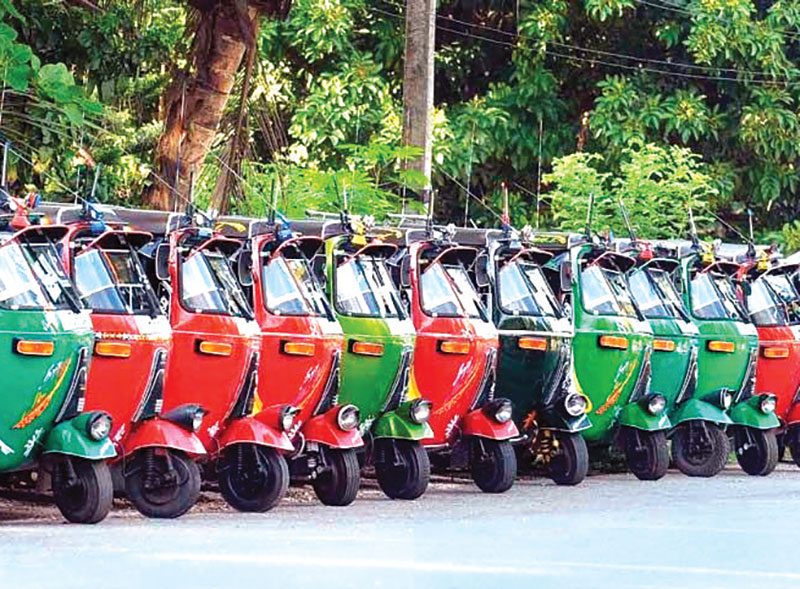
An ordinary journey through Colombo raises uncomfortable questions about road discipline, passenger safety and our tendency to judge motorists by the vehicles they drive.
It was a little past noon when I finished attending a court matter and remembered that I had to visit a nearby bank before returning to my other work. The bank was hardly a kilometer away, a distance I would normally have walked without giving it much thought. However, anyone who has walked through Colombo in formal court attire under the scorching midday sun would appreciate why I was reluctant to do so. Taking my own vehicle was not particularly appealing either, as finding a parking space near a bank during business hours can sometimes take longer than the transaction itself.
After considering my options, I decided to take a three-wheeler, a perfectly ordinary decision that unexpectedly left me reflecting on the way we judge those who drive them. Within minutes, I was seated in the rear, travelling through the usual Colombo traffic. It was convenient, reasonably priced and saved me the trouble of searching for parking or arriving at the bank drenched in sweat. As we approached a busy junction, however, a car suddenly cut across our path without any indication. Its driver appeared determined to squeeze into a narrow gap, apparently unconcerned about the vehicles already occupying the road. Our three-wheeler driver immediately applied his brakes, throwing me slightly forward in my seat. Fortunately, he reacted quickly enough to avoid a collision, while the car continued on its way as though nothing unusual had happened.
The incident itself was hardly extraordinary by Colombo’s standards, but it made me consider how differently we might have reacted had the situation been reversed. If a three-wheeler had suddenly cut across a car in the same manner, the driver would probably have been subjected to angry horns, harsh words and the familiar accusation that three-wheeler drivers have no respect for road rules. Yet when someone driving a comfortable, air-conditioned car behaves just as irresponsibly, we tend to treat it as another unpleasant encounter in traffic. It seems that, in our public discussions about road discipline, the seriousness of an offence sometimes depends not so much on what a driver does, but on the vehicle he happens to be driving.
This is not an attempt to portray three-wheeler drivers as innocent victims of unfair criticism. Anyone who regularly travels on Sri Lankan roads knows that some drivers behave recklessly, stopping without warning, making dangerous U-turns, disregarding traffic signals and squeezing through gaps that sensible motorists would avoid. Such conduct deserves criticism and, where appropriate, legal action. Nevertheless, it would be equally dishonest to pretend that these practices are confined to three-wheelers. A few minutes spent observing traffic at a busy Colombo junction would reveal expensive cars changing lanes without indicating, SUVs obstructing pedestrian crossings, motorcycles weaving dangerously between vehicles and buses stopping wherever passengers signal them to do so.
What is troubling is our tendency to turn the misconduct of an individual three-wheeler driver into an indictment of an entire profession. A badly parked three-wheeler becomes another example of everything wrong with the industry, while a luxury car obstructing a pavement is generally treated as the irresponsible conduct of its particular driver. Perhaps this difference in perception has become so familiar that we rarely question it. Yet the law makes no distinction between an illegally parked vehicle costing several million rupees and one purchased through a modest leasing arrangement. Both can obstruct traffic, inconvenience pedestrians and create dangerous situations for other road users.
There is also considerable irony in our relationship with three-wheelers. We complain about their presence on the roads, accuse them of contributing to congestion and criticise the behaviour of their drivers, but the moment we need to reach somewhere quickly, avoid a parking problem or transport an elderly relative to a nearby hospital, we often turn to the very vehicles we complain about. In many rural communities, where public transport remains inadequate, three-wheelers provide an essential connection between homes, hospitals, markets and bus routes. Their contribution to everyday mobility is difficult to dismiss, particularly for people who cannot afford private vehicles or have limited transport alternatives.
The driver who took me to the bank that afternoon was simply earning his living. For him, the three-wheeler was not a symbol of traffic disorder or a subject for public debate, but a means of supporting himself and possibly a family. He had provided a useful service and, when confronted with another motorist’s carelessness, demonstrated the kind of defensive driving that we should expect from everyone using our roads. By the time I paid the fare and stepped out near the bank, I found myself wondering whether our criticism of three-wheelers sometimes says as much about our own prejudices as it does about genuine concerns over road safety.
That question becomes particularly relevant when we consider one of the strongest arguments made against three-wheelers: passenger safety. There is no denying that a conventional three-wheeler offers considerably less protection in a collision than a modern passenger car equipped with airbags, seat belts and a reinforced passenger compartment. Its lightweight construction and limited structural protection expose occupants to risks that should never be underestimated. But acknowledging those limitations is quite different from suggesting that such vehicles have no legitimate place on our roads. If the absence of a protective passenger compartment is sufficient reason to question a vehicle’s acceptability, we must also consider motorcycles and bicycles, whose riders are even more exposed to the consequences of a collision.
A motorcyclist has little protection beyond a helmet and appropriate riding equipment, while a cyclist has neither airbags nor a surrounding metal structure to absorb the impact of an accident. Pedestrians are more vulnerable still, particularly on roads where pavements are obstructed or entirely absent. Yet nobody would seriously argue that walking or cycling should be discouraged simply because these activities involve greater physical exposure. The sensible response is to improve road conditions, regulate speeds, strengthen vehicle standards and ensure that motorists respect vulnerable road users. The World Health Organization has consistently emphasised this broader approach to road safety, recognising that pedestrians, cyclists and motorcyclists account for a substantial proportion of road traffic deaths worldwide.
The comparison does not mean that all vehicles are equally safe, nor should it be used to minimise the genuine risks associated with three-wheelers. Different vehicles offer different levels of protection, and their safety depends on design, maintenance, speed, road conditions and the circumstances of a collision. However, there is something fundamentally flawed in assuming that a vehicle becomes unacceptable merely because it cannot provide the protection available in a modern car. If that were the standard, we would have to reconsider the place of several widely used forms of transport. More importantly, we would risk overlooking the responsibility of drivers whose behaviour can turn an otherwise ordinary journey into a dangerous encounter.
There is an equally questionable assumption that travelling in a larger or more expensive vehicle somehow reflects greater responsibility on the road. A modern car may provide better protection to its occupants, but its safety features cannot compensate for the arrogance or carelessness of the person behind the steering wheel. An SUV equipped with advanced braking systems and multiple airbags can still be driven recklessly, and its greater weight may increase the danger to pedestrians, cyclists and smaller vehicles in certain collisions. Road safety cannot therefore be measured solely by how effectively a vehicle protects its occupants. It must also consider the risks that vehicle presents to everyone else sharing the road.
Perhaps what we need is a more balanced understanding of road safety, one that recognises the limitations of three-wheelers without turning their drivers into convenient villains. There is every reason to demand better vehicle standards, responsible driving and stronger enforcement, but those expectations must apply equally to motorists operating cars, buses, motorcycles and commercial vehicles. A reckless driver does not become less dangerous because he is seated inside an expensive car, just as a responsible three-wheeler driver should not be treated with suspicion merely because his vehicle has one wheel fewer.
The experience of that afternoon reminded me that our roads are shared public spaces, not a hierarchy determined by the price, size or appearance of the vehicles using them. The three-wheeler that took me to the bank served a practical purpose, while the driver of a more expensive vehicle created the only dangerous moment of the journey. It would be unreasonable to draw conclusions about all car drivers from that single incident, just as it would be unfair to judge an entire profession by the misconduct of a few three-wheeler drivers. If we genuinely want safer roads, perhaps we should begin by judging people according to how they drive rather than what they drive.
——————————————
Sampath Perera, LL.M. (UK), is an Attorney-at-Law and former Commissioner of the Office on Missing Persons (OMP). He has served as Legal Adviser to the Ministry of Justice and the Ministry of Higher Education.
by Bishop Duleep de Chickera
The Valiant
Centuries ago, the intervention of a Persian king, restored a degree of balance of power in the West Asian region. In the 6thc, BCE, Cyrus the Great of Persia, put a stop to the aggressive expansionism of the Babylonian empire and set the exiled Jews free.
After Cyrus’s death, his successor Darius was made aware of his predecessors’ plans to do even more. Commissioning some competent Jews, he fulfilled Cyrus’s intentions by restoring the ravaged city of Jerusalem and its venerated temple.
The Jews were overwhelmed. They would remember the valiant one who revived the essence of their nationhood. And so, the story of Cyrus the Persian, acknowledged as the ‘Anointed Deliverer’, the ‘Messiah’, came to be etched in the Jewish Scriptures (The Bible-Ezra 1- 6:15, Isaiah 44: 28, 45: 1-13).
Empire and Empires
This stirring story impacted Christianity as well. As former Jews, the earliest Christians were familiar with the hardship experienced under Babylonian imperialism. This led to the secret identification of the then brutal Roman Empire, as ‘Babylon’. The pseudonym worked so well that some Christian writings and communities applied it to other marauding forces that crushed peoples and looted their lands.
Vain politics
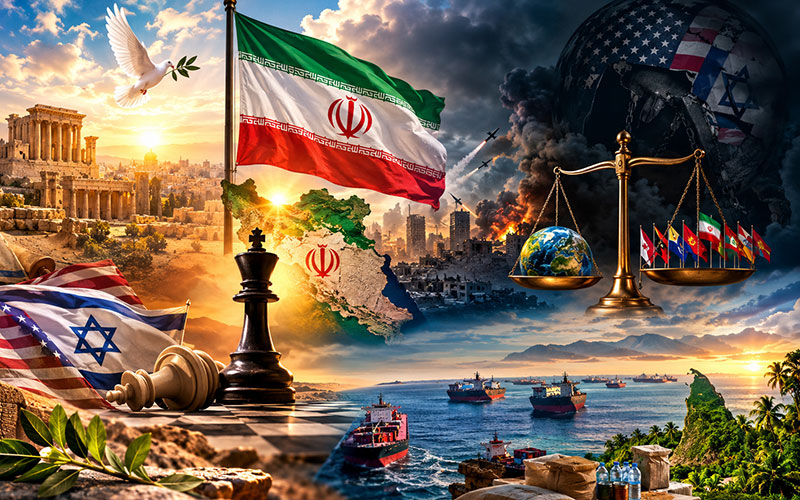
Today the world witnesses an ironic alliance of relentless bullying between the progeny of ‘Babylon’ and Jew. Together the US and Israel do to others what Babylon did to the Jews, and what their Book tells the Jews they are never to do to others.
The alliance’s agenda is straightforward. While one randomly ridicules and threatens sovereign nations, the other is quick to fabricate evidence that leads to the decimation of infants, children and unarmed civilians; all on the pretext of self-defence. Thereafter, security zones carved out on other people’s property mock what is left of International law, ‘friendly’ nations are intimidated into buying killing devices at thumping profits and military bases emerge on these territories in exchange for protection. The war with Iran, Cyrus’ Persia of today, is integral to this agenda.
Enter the villain
Iran, one of the most ancient and advanced civilisations of the world, has since its Islamic revolution of 1979 come under a despotic theocratic governance. It has crushed internal dissent and the clamour for participatory governance among its own people, prevented the growth of democratic institutions, trained and financed para-military forces to resist Israel’s settler colonialism and challenged the influx of western interests in the region. In return Iran has been relentlessly caricatured as global villain and subject to the wrath of the western mind- set and its propaganda industry.
The campaign to demonise Iran has been so clever that many of her neighbours who share a long cultural history, stand shoulder to shoulder today with vain intruders bent on crushing the only nation it cannot subdue, in a region they have no business to meddle in.
The nerve to be
Wars do strange things. They slaughter good men and women on all sides, cause chaos and misery wherever it spreads and never stops to explain to the children who survive, that this madness was simply to satisfy the egos of the vain.
But wars also change human perception. And there are signs that the current war on Iran, (It must never be the ‘Iranian war’, as it should never have been the ‘Korean war’, the ‘Vietnam war’, the ‘Afghanistan war’ and so on), is changing global perception.
Slowly, the devious stereotype of global saviours versus regional villain, is being redefined. While the hard questions on participatory, good governance must remain to haunt and transform Iran, the villain is now being acknowledged, however grudgingly, as the one nation that refused to back down in the face of global bullying. This too at tremendous personal cost to the lives of its people, infra-structure and future stability. In a world of cowardly political expediency, costly resistance attracts attention; even admiration.
There is more. The resilience of the vilified villain in the current war appears to have strengthened the nerve of the repeatedly humiliated European and British allies of the alliance, who at last learnt to say ‘no’. A first, to an ‘order’ to join an unprovoked and senseless far away war, backed with a second, when pressed to police the Straits of Hormuz. Typical of handling the playground bully, all it takes is for one little girl to hold her ground.
It does not stop here. Sheer desperation at Iran’s unsettling tenacity shamelessly drove Babylon into the arms of other neutral powers that it repeatedly ridicules and badgers with threats of tariffs and more tariffs. Regardless of a sudden demonstration of charming diplomacy, these nations would have no part in twisting Iran’s arm. Some instead, seized the opportunity to address Babylon on its arbitrary violation of International Law and warned it to refrain from global bullying. Since then, there have been less threats on the annexation of Greenland and interference in Cuba’s internal affairs.
The right balance
Like war does, resistance to war also does strange things. While the refusal to yield stimulates active defiance among some, and strongly worded objections from others, the outcome of the current conflict is hugely unpredictable. An independent, safe and stable region, made up of independent, safe and stable nations, is many, many courageous interventions and many, many wise negotiations away.
But one thing is clear. Isolated from its traditional allies, subject to straight talk from neutral nations and under growing pressure from saner elements at home, the vain find themselves uncomfortably seated as equals at one table. Here, Iranian geo- political strategies coupled with a measured readiness to return to arms in the event that table agreements are violated, will hold them; but for a while.
Given this footpath to a balance of power that Cyrus’s Persia of today has paved, it is now left to all who value the sovereignty and dignity of all nations, theirs included, and the indispensability of International law, to step out and help steer this momentum.
In the event that this happens, dismantling the visible acts of global bullying alone, will not be enough. The impulse of this crime, flourishing brazenly in the big businesses and assembly halls in the big cities of the world, and more subtly tucked away in the fabric of reputed places of learning, religiosity and leisure, will also have to be called out and neutralised.
Postscript
At the time of writing, a humanitarian crisis looms over Lanka’s southern seas. Historically renowned for her spontaneous hospitality even in the worst of times, Lanka finds herself constrained from responding to the desperate cries for supplies; water, food and fuel, from a stranded fleet of Commercial ships, simply because they fly the Iranian flag. Regrettably, Babylon’s typical threat of sanctions appears to be driving our economically vulnerable Island nation, to the brink of compromising our time tested right to be humane.
With peace and blessings to all

Showers or thundershowers will occur in most parts of the island after 1.00 p.m

CTU: Teacher shortage casts doubt on govt.’s education reforms

Norochcholai to remain offline for several days after blackout

President links businessman held with arms to politicians

CID probe sought into tusker’s death amid fears of elephant-killing syndicate

Bill to allow remote witness testimony in courts

‘Dates have the highest sugar content to fight Coronavirus’

Sunday Island 27 December – Headlines

#SundayIsland 17th December – Headlines

Sunday Island – 28th March

Sunday Island Headlines – 21 March

Sunday Island – 21st February – Headlines
-

 Latest News6 days ago
Nissanka’s return headlines Sri Lanka’s Test squad against Pakistan
-

 News5 days ago
Sri Lanka, India caught in US-Iran ship crisis
-
 Latest News6 days ago
Imran Khan’s PTI braces to fight federal takeover of Khyber Pakhtunkhwa
-

 Latest News5 days ago
Kusal Mendis’ unbeaten 87 hands Sri Lanka consolation win
-

 Latest News5 days ago
Missiles intercepted near Riyadh after Saudi coalition hits Yemen fuel depot
-
 News6 days ago
Mahinda and Shiranthi hospitalised
-

 News6 days ago
Presidential pardons: Govt. studying Justice Thurairaja’s recommendations – Minister
-
 News2 days ago
Asgiri Mahanayake calls for immediate release of Gnanasara Thera