

Life style
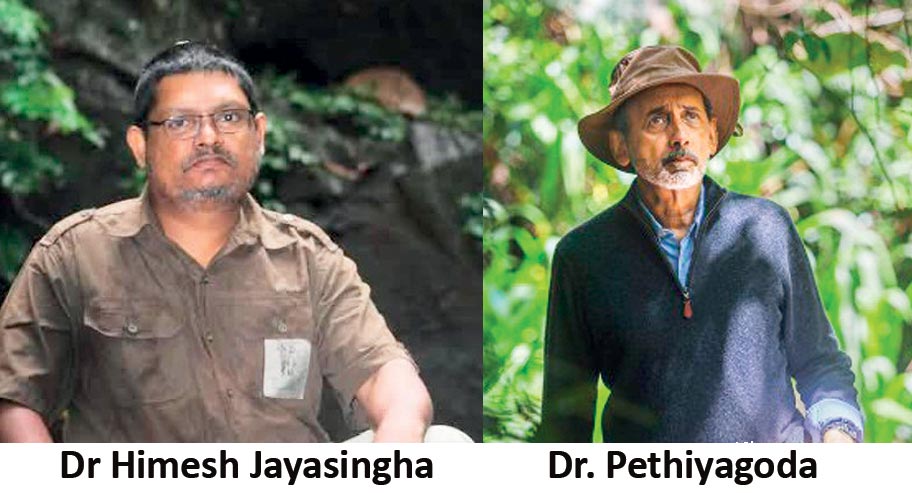
Dr. Himesh Jayasinghe’s landmark discovery and the voice of Dr. Rohan Pethiyagoda

Unveiling nature’s hidden wonders:
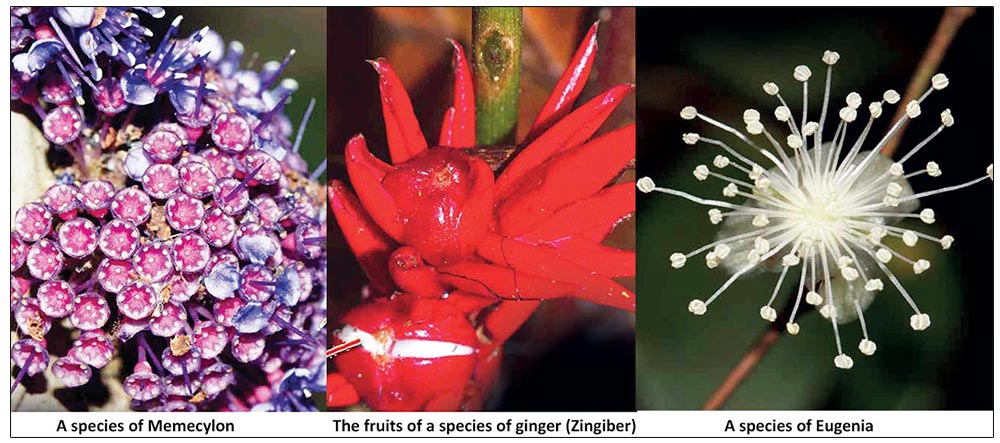
In a dazzling chapter for Sri Lanka’s scientific community, 210 previously undocumented plant species have now been formally recognised as additions to the nation’s floral inventory—thanks to years of painstaking research and fieldwork by Dr. Himesh Jayasinghe of the National Institute of Fundamental Studies (NIFS). These remarkable discoveries have been brought together in a groundbreaking new publication titled Additions to the Flora of Ceylon”.
Weighing nearly 3.5 kilogrammes and spanning 692 pages, this richly illustrated book features over 4,000 full-colour photographs of wildflowers—many shown in full-page glory. Published by Dilmah Conservation, which supported much of the fieldwork, the book is already being hailed as one of the most significant botanical achievements in the island’s recent history.
Biodiversity expert and renowned conservationist Dr. Rohan Pethiyagoda, who assisted in editing and guided in the compilation of the book, said the contribution is nothing short of monumental.
Speaking to The Island, he added: “This is the biggest contribution to our knowledge of Sri Lanka’s biodiversity published in the last century,”
Dr. Pethiyagoda further said: “It represents years of work, both in the field and in the lab. What Himesh has achieved here is absolutely unparalleled.”
Why “Ceylon” and Not “Sri Lanka”?
Some might find the use of the word “Ceylon” in the book’s title curious. But Dr. Pethiyagoda clarifies that this is rooted in scientific tradition.
“The first flora of Sri Lanka was titled Musaeum Zeylanicum, published in 1717 by Paul Hermann,” he explained. “Since then, every comprehensive flora—including the monumental 15-volume Revised Handbook to the Flora of Ceylon produced between 1980 and 2006—has adhered to this historic naming convention. Botanists continue to use ‘Ceylon’ as a technical term for the flora of the island.”
This sense of continuity serves as a bridge between generations of naturalists who have studied the island’s rich biodiversity for over three centuries.
What Exactly has been discovered?
The 210 new entries include about 150 species believed to be entirely new to science. Many are expected to be endemic—found only in Sri Lanka—though some may also occur in southern India. In addition, around 50 species are now recorded in Sri Lanka for the first time, having previously only been known from Indian territory. A further 20 species had previously been named but lacked the validation required for formal recognition—until now.
“Thanks to extensive descriptions in the literature and specimens in the National Herbarium, we can say with confidence which species are truly new,” Dr. Pethiyagoda said. “The herbarium collections, some dating back to the 1840s, are incredibly comprehensive and invaluable for comparative research.”
This work pushes Sri Lanka’s known number of indigenous flowering plant species from around 3,090 to nearly 3,300—a significant leap for a country already recognised as a global biodiversity hotspot.
Rediscovering the lost
The backdrop to these discoveries is a broader ecological concern: the erosion of Sri Lanka’s forest cover and the increasing vulnerability of endemic flora.
U “The 2012 National Red List classified five plant species as extinct, two as extinct in the wild, and 177 as ‘possibly extinct’ because they hadn’t been seen for more than a century,” Dr. Pethiyagoda recounted.
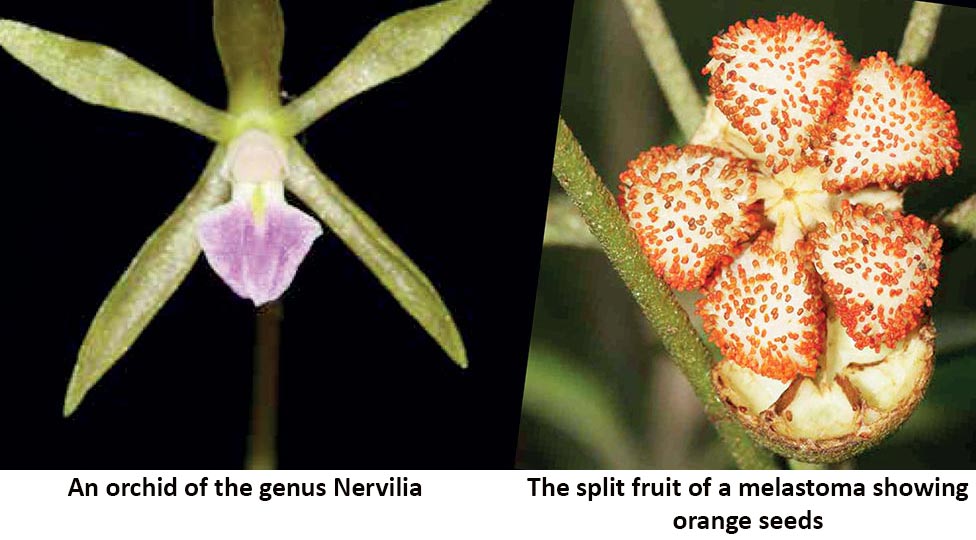
Yet, there’s reason for hope. In the course of his fieldwork, Dr. Jayasinghe was able to rediscover three of the five extinct species, both that were believed to be extinct in the wild, and more than 100 of the ‘possibly extinct’ species—plants that had evaded scientists’ eyes for over 100 years.
> “It’s an incredible achievement,” said Dr. Pethiyagoda. “But even more remarkable is that the book is not about rediscoveries—it’s about entirely new additions. That’s what makes it so historic.”
How Did These Plants Evade Discovery for So Long?
Given Sri Lanka’s rich history of botanical study, one might wonder how so many species managed to remain undocumented until now.
“The difference lies in methodology,” Dr. Pethiyagoda said. “Most previous botanical work was based on random surveys. Himesh conducts targeted surveys. He revisits a plant repeatedly—observing it as it flowers, fruits, and leafs—until he can collect all the data required for accurate identification.”
This persistence has paid off. Dr. Jayasinghe has deposited over 3,500 specimens in the National Herbarium, and he has photographed more than 2,500 flowering plant species in Sri Lanka. And this figure doesn’t even include grasses and bamboos—categories he has yet to focus on.
The Plant That Beat the Printer
Among the many tales in this journey is one that illustrates the fluidity of science. Just as the book was going to press, Dr. Jayasinghe explored the Ambagamuwa Forest and made an astonishing rediscovery.
“He found Rungia apiculata, a beautiful flowering plant last seen in the 1840s,” said Dr. Pethiyagoda, chuckling. “Ironically, in the book, he had written that it hadn’t been seen since the 19th century. He had to issue a correction even before the book hit the shelves.”
Such moments of serendipity highlight both the wonder and humility involved in field science.
Science for All: Data and Access
One of the most commendable aspects of the project is its openness. Recognising the importance of collaboration, Dr. Jayasinghe has placed all his data in the public domain.
“Anyone can access the data and specimens,” Dr. Pethiyagoda confirmed. “The only detail withheld is the exact GPS locations of rare plants, to prevent exploitation by illegal collectors. But maps provided in the book, and detailed information at the National Herbarium, will suffice for serious researchers.”
This ensures that the work lives on beyond its pages—informing conservation, education, and further discovery.
A Book for the Nation, not just for experts
Despite being a world-class scientific document, the book has been priced with accessibility in mind.
“Dilmah Conservation was very clear on this,” said Dr. Pethiyagoda. “This is a big book—expensive to produce—but they agreed to offer it at a pre-publication price of just Rs. 6,900, which is 40% off the retail price. That’s a gift to anyone who loves this country’s flora.”
Inspiring the next generation
At its heart, Discovery: Additions to the Flora of Ceylon is more than just a taxonomic catalogue—it’s a celebration of beauty, curiosity, and the resilience of nature. The hope is that this will spark a new wave of interest in botany, especially among Sri Lanka’s youth.
“Plants are not just beautiful—they are foundational,” Dr. Pethiyagoda reflected. “They give us food, medicine, timber. They support every ecosystem. And their beauty is just breathtaking. That’s why we’ve included full-page photographs. Anyone flipping through these pages will feel awed by what this island still holds.”
In an age of environmental anxiety and ecological uncertainty, Dr. Pethiyagoda believes the book serves as a timely reminder: there is still so much left to discover—and protect.
By Ifham Nizam ✍️

A Flower Returns From Silence:
Nearly half a century after it slipped into botanical silence, a ghost flower of Sri Lanka’s misty highlands has returned—quietly, improbably, and beautifully—from the folds of the Knuckles mountain range.
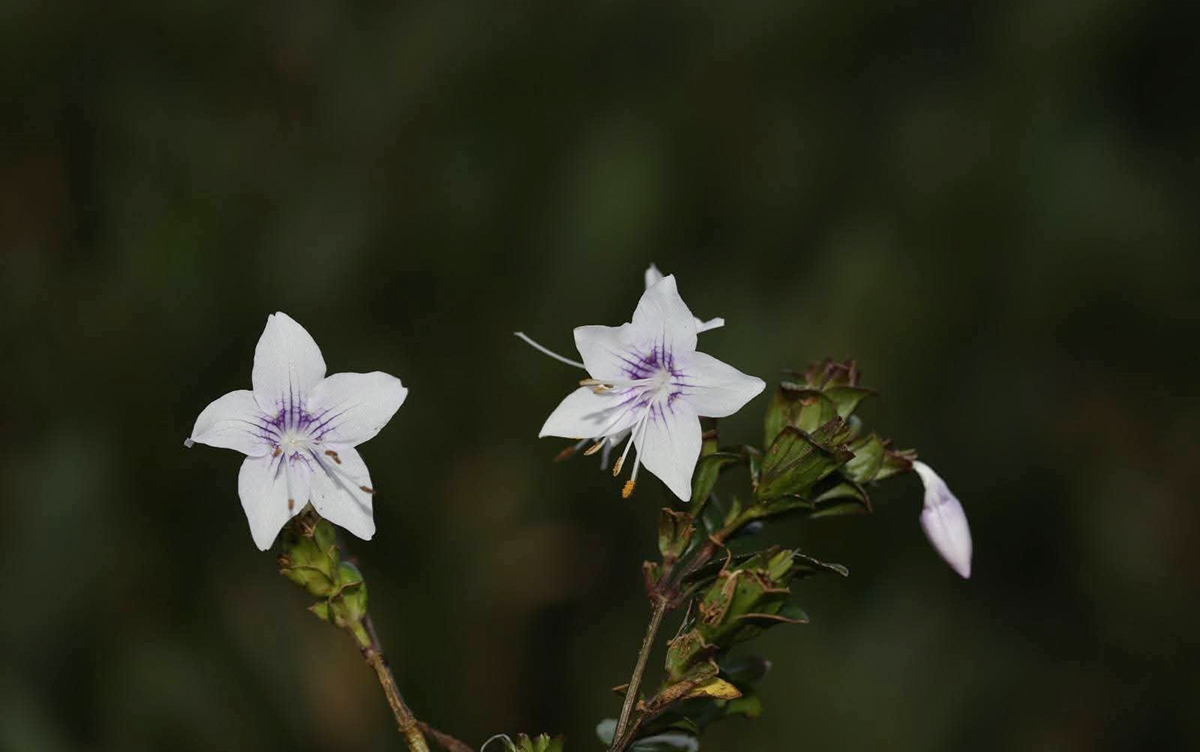
In a discovery that blends patience, intuition and sheer field grit, Strobilanthes pentandra, one of Sri Lanka’s most elusive endemic flowering plants, has been rediscovered after 48 years with no confirmed records of its existence in the wild. For decades, it lived only as a name, a drawing, and a herbarium sheet. Until now.
This rare nelu species was first introduced to science in 1995 by renowned botanist J. R. I. Wood, based solely on a specimen collected in 1978 by Kostermans from the Lebnon Estate area. Remarkably, Wood himself had never seen the plant alive. The scientific illustration that accompanied its description was drawn entirely from dried herbarium material—an act of scholarly faith in a plant already vanishing from memory.
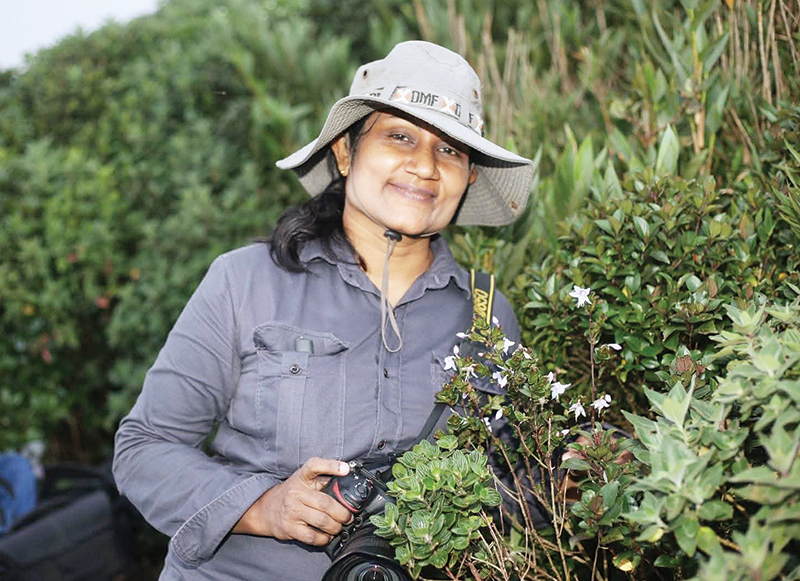
Renuka
From then on, Strobilanthes pentandra faded into obscurity. For 47 long years, there were no sightings, no photographs, no field notes. By the time Sri Lanka’s 2020 National Red List was compiled, the species had been classified as Critically Endangered, feared by many to be lost, if not extinct.
The turning point came not from a planned expedition, but from curiosity.
In October 2025, Induwara Sachinthana, a fourth-year medical student at the University of Peradeniya with a sharp eye for plants, stumbled upon an unfamiliar flowering shrub while trekking in the Knuckles region.
Sensing its importance, he photographed the plant and sent the images for verification, asking a simple but crucial question: Could this be the recently described Strobilanthes sripadensis, discovered from the Sri Pada sanctuary in 2022?
At first glance, the resemblance was striking. But something didn’t quite add up.
Based on the location, morphology, and subtle floral traits, the initial response was cautious: it was neither S. sripadensis nor S. pentandra—or perhaps something entirely new. Yet, as the pieces slowly aligned, and as the habitat details became clearer, the possibility grew stronger: this long-lost species had quietly persisted in the rugged heart of Knuckles.
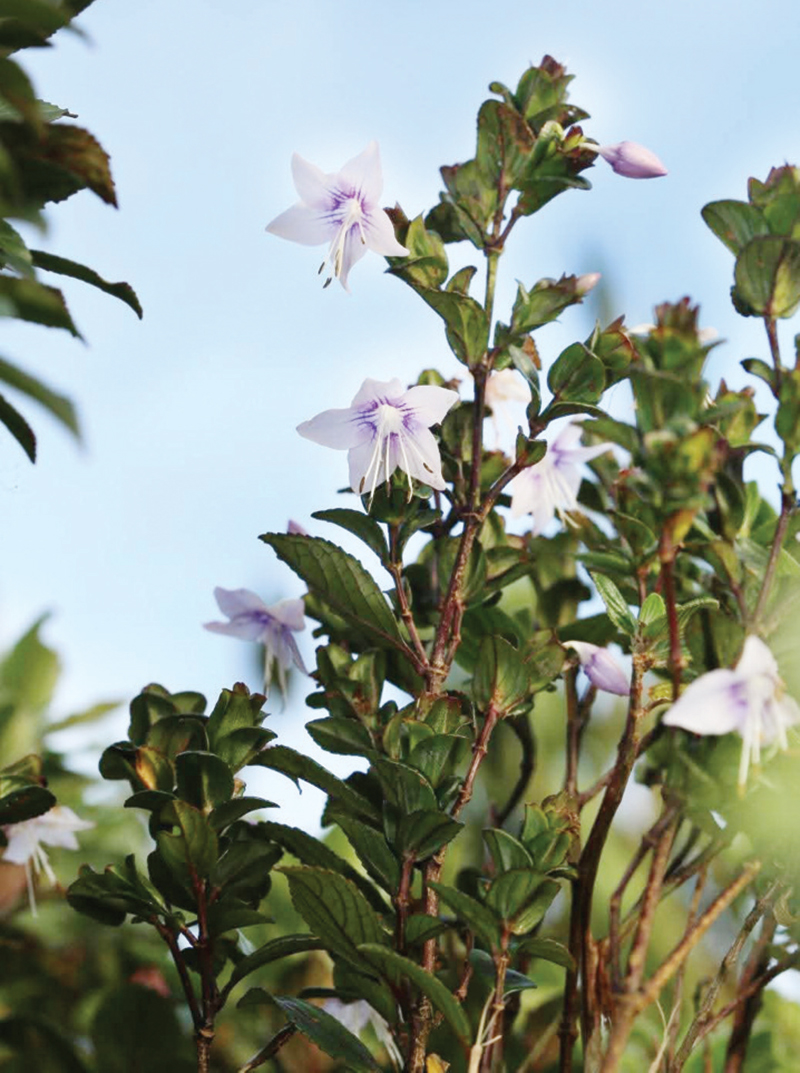
Strobilanthes pentandra
The confirmation followed through collaborative expertise. Leading Strobilanthes specialist Dr. Renuka Nilanthi Rajapakse, together with Dr. Himesh Dilruwan Jayasinghe and other researchers, carefully examined the evidence. After detailed comparison with historical descriptions and herbarium material, the verdict was clear and electrifying: this was indeed Strobilanthes pentandra.
What followed was not easy.
A challenging hike through unforgiving terrain led to the first live confirmation of the species in nearly five decades. Fresh specimens were documented and collected, breathing life into what had long been a botanical myth.
Adding further weight to the rediscovery, naturalist Aruna Wijenayaka and others subsequently recorded the same species from several additional locations within the Knuckles landscape.
The full scientific credit for this rediscovery rightfully belongs to Induwara Sachinthana, whose curiosity set the chain in motion, and to the dedicated field teams that followed through with persistence and precision.
Interestingly, the journey also resolved an important taxonomic question. Strobilanthes pentandra bears a strong resemblance to Strobilanthes sripadensis, raising early doubts about whether the Sri Pada species might have been misidentified.
Detailed analysis now confirms they are distinct species, each possessing unique diagnostic characters that separate them from each other—and from all other known nelu species in Sri Lanka. That said, as with all living systems, future taxonomic revisions remain possible. Nature, after all, is never finished telling her story.
Although the research paper is yet to be formally published, the team decided to share the news sooner than planned. With many hikers and locals already encountering the plant in Knuckles, its existence was no longer a secret. Transparency, in this case, serves conservation better than silence.
This rediscovery is more than a scientific milestone. It is a reminder of how much remains unseen in Sri Lanka’s biodiversity hotspots—and how easily such treasures can vanish without notice. It also highlights the power of collaboration across generations, disciplines and institutions.
Researchers thanked the Department of Wildlife Conservation and the Forest Department for granting research permissions, and to the many individuals who supported fieldwork in visible and invisible ways.
After 48 years in the shadows, Strobilanthes pentandra has stepped back into the light—fragile, rare, and reminding us that extinction is not always the final chapter.
Sometimes, nature waits.
By Ifham Nizam ✍️

 A conversation about intimacy, belonging and relationships with Dr Yasuni Manikkage
In an age where relationships are shaped as much by emotional awareness as by digital connection, conversations about sexual health are finally stepping out of the shadows.
As Dr. Yasuni Manikkage explains, sexual health is not just a medical issue but a lived experience woven through communication, consent, mental wellbeing and self-respect. Many couples share a home, a bed, even children, yet still feel like “Roommates with responsibilities” rather than lovers, which often signal a lack of emotional safety rather than a lack of physical contact. When desire shifts, they may panic, blame themselves or fear the relationship is dying, instead of recognising that changes in desire are common, understandable, and often transformable with knowledge, honest dialogue, and small daily acts of connection.
Q: Why did you decide to talk about sexual desire and connection now?
A: Because so many couples quietly suffer here. They love each other, share a home, raise children, but feel like “roommates with responsibilities” rather than lovers. They rarely talk about sex openly, so when desire changes, they panic, blame themselves, or assume the relationship is dying. I want people to know shifts in desire are common, understandable, and often treatable with knowledge, communication, and small daily changes.
Q: You say there is an “education gap” in sexual health. What do you mean by that?
A: Most women have never been properly taught about their own sexual anatomy, especially where and how they feel pleasure. Many men, on the other hand, have been left to “figure it out” from pornography, jokes, and guesswork. That’s a terrible training manual for real bodies and real emotions. This gap affects how easily women reach orgasm, how safe they feel in bed, and how satisfied both partners feel in the relationship.
Q: We hear about the “orgasm gap.” Is it really not biological?
A: There are biological factors, yes, but the main gap we see between men’s and women’s orgasm rates in heterosexual relationships comes from communication, knowledge, and what I call “pleasure equity.” In many bedrooms, the script is focused on penetration, speed, and the man’s climax. Women’s pleasure is often treated as optional or “extra.” When couples learn anatomy, slow down, focus on both bodies, and talk about what feels good, that gap narrows dramatically.
Q: Most people think desire should be spontaneous. Is that a myth?
A: It’s one of the biggest myths. Movies show desire as a spark that appears out of nowhere: one glance across the room and suddenly you’re tearing each other’s clothes off. That kind of spontaneous desire does happen, especially early in a relationship. But for many people, especially women, desire is often “responsive”. That means they start feeling desire after some warmth, touch, emotional closeness, or stimulation, not before.
So, if you’re waiting to “feel like it” before you touch or connect, you may wait a very long time. For many, desire comes “after” they start, not before.
Q: How would you scientifically describe sexual desire?
A: Desire is not just a physical urge. It’s a blend of attraction to your partner’s body and personality, emotional connection and feeling cared for, a sense of self-expansion or growth, learning, feeling alive with them, trust and safety, both emotionally and physically. It’s contextual: it changes with stress, health, life stages, and relationship quality. It’s relational: it lives between two nervous systems, not just in one body. And for many, it’s responsive: you get in the mood “after” a hug, a joke, a shower together, not randomly at 3 p.m. on a Tuesday.
Q: You mentioned an “updated sexual response cycle.” What does that look like in real life?
A: Older models suggested a straight line: desire, arousal, orgasm and resolution. That’s tidy, but human beings are messy and complex. Modern understanding is more like a circle or loop. You can enter the cycle at different points: maybe you start with touch, or a feeling of closeness, or even just a decision to connect. Desire doesn’t always come first; sometimes it shows up halfway through.
For example, you may feel tired and not “in the mood,” but you agree to cuddle and share some gentle touch. As you relax and feel appreciated, arousal builds, and then desire appears. That’s normal, not fake.
Q: Are there real gender differences in how desire works?
A: There are common patterns, though individuals vary a lot. Many women tend to enter through emotional intimacy: feeling heard, understood, and safe. Physical touch then wakes up arousal, and desire follows.
Many men more often start with physical attraction or arousal. They may feel desire quickly in response to visual or physical cues, and emotional intimacy can deepen later.
Both patterns are healthy and normal. The problem starts when each partner assumes the other should work exactly like them, and if they don’t, they must be “cold” “needy” or “broken.” Understanding these differences turns conflict into curiosity.
Q: How does desire change as a relationship ages?
A: Think of three broad stages.
stage 1 – Early Attraction (0-6 months): High novelty, strong chemistry, lots of dopamine. You’re discovering each other; desire often feels effortless. stage 2 – Deepening Intimacy (6 months-2 years): You know each other better. The high settles. Desire becomes more linked to emotional closeness. Frequency may drop, and that is “normal”.
stage 3 – Maintenance and Maturity (2-10+ years): Life arrives -work, kids, money, health. Desire usually doesn’t feel automatic. It needs conscious attention, novelty, and emotional safety.
A common mistake is comparing stage 3 desire to Stage 1 and assuming, “we’ve failed.” Actually, you’ve just moved into a different phase that requires new skills.
Q: What are some main things that influence desire?
A:We can think in three layers.
Biological: hormones (testosterone, estrogen), brain chemicals (dopamine, serotonin), medical conditions like diabetes, heart disease, cancer, chronic pain, sleep problems, menopause, and genital issues such as vaginal dryness or pelvic floor pain.
Psychological: negative early sexual experiences, trauma or abuse, body image concerns, low self-esteem, anxiety, depression, and certain mental health conditions.
Relational and social: how safe and respected you feel, attachment style, quality of communication, power imbalances, work and financial stress, caregiving burdens, privacy, and cultural messages that centre on penetration over pleasure. Desire is never “just in your head” or “just in your hormones” – it’s all three interacting.
Q: What tends to kill desire in long-term relationships?
A: Several patterns show up again and again:
Resentment and unresolved conflict – small hurts that never get repaired.
Lack of emotional safety – fear of being judged, rejected, or punished for being vulnerable.
Poor communication – avoiding difficult topics, sarcasm instead of honesty.
Body image shame – feeling unattractive, “too old,” “too fat,” or “not enough.”
Power imbalance -one partner controlling decisions, money, or sex.
Sexual guilt or religious shame messages that sex is dirty, selfish, or only for reproduction.
Stress, burnout, depression -when your nervous system is in survival mode, it doesn’t prioritise pleasure.
You can’t expect desire to flourish in an environment that feels unsafe, unfair, or constantly tense.
Q: And what actually builds desire?
A: Desire thrives in a combination of safety and aliveness.
Emotional intimacy: feeling seen, heard, and valued.
Nervous system calm: your body is relaxed enough to feel pleasure, not just guard against danger.
Open communication: you can talk about wants, limits, and fantasies without mocking or shutting each other down.
Continued growth: doing new things together, seeing new sides of each other, evolving as a team.
I often say: stagnation is desire’s enemy; growth is its ally. Even small adventures -trying a new cafe, dancing in the living room, travelling a different route-can reawaken curiosity.
Q: Can you give couples a simple framework to reconnect?
A: Yes, I often share a six-step framework that’s practical and gentle.
1. Check in: Ask, “How connected do we feel lately?” Not just “How often are we having sex?”
2. Non-sexual touch: Hugs, stroking hair, holding hands – without expecting sex at the end.
3. Novelty: Try something new together: a class, a walk in a different place, a game, a shared hobby.
4. Appreciation: Tell your partner what you notice and value about them, including non-sexual qualities.
5. vulnerability: Share one fear, one hope, or one truth you usually hide.
6. Initiation: Don’t wait for desire to fall from the sky. Gently invite connection; sometimes the mood follows the movement.
You don’t need to do all of this perfectly. Even one or two steps, done consistently, can shift the energy between you.
Q: How can someone tell if their desire problem needs more attention or professional help?
A: some warning signs include:
You feel emotionally distant, even though you still love each other.
Desire has dropped sharply and is tied to stress, shame, or unspoken conflict.
You feel unable to talk about sex without fighting or shutting down.
sex is used to avoid real intimacy, or to keep the peace, rather than to connect.
You feel afraid or ashamed to say what you truly want-or what you don’t want. In these situations, talking to a doctor, a sexual medicine specialist, or a therapist can be very helpful. You are not “broken” for needing support.
Q: Many couples say, “We love each other but there’s no spark.” What do you tell them?
A: I often say, “Let’s first normalise where you are.” If you’ve been together for years, maybe raising children and navigating financial pressures, it’s normal that your desire doesn’t look like the early days. That doesn’t mean your relationship is dying.
usually, you’re in the maintenance phase. Desire is quieter but can be reawakened with intentional effort: scheduling time for each other, bringing in novelty, and rebuilding emotional safety. It’s less about chasing fireworks and more about tending a fire so it doesn’t go out.
Q: what about couples with mismatched desires – one wants sex often, the other rarely?
A: This is extremely common. The mistake is to frame it as “the pursuer is demanding” and “the less-desiring partner is rejecting.” underneath, there are often two different nervous systems trying to feel safe.
one partner might use physical closeness to feel secure and loved. The other might need emotional safety first before their body can relax into physical intimacy. When couples understand this, they stop seeing each other as enemies and start cooperating: “How can we meet ‘both’ our needs, instead of arguing about who is right?”
Q: Many people, especially women, say sex feels like an obligation. What does that signal to you as a doctor?
A: It’s a red flag – not that the person is broken, but that something important is missing. sex should be about connection, pleasure, and mutual choice. when it becomes a duty, I look for:
Emotional disconnection or resentment.
Fear of conflict or abandonment if they say no.
Lack of felt safety or freedom to express preferences.
The solution is not to “force yourself more.” It is to rebuild emotional safety, renegotiate consent and expectations, and often to have very honest conversations about what feels missing or painful.
Q: If you could leave couples with a few key messages about desire and connection, what would they be?
A: I’d highlight four truths:
Desire and emotional intimacy are deeply connected. When you feel safe, loved, and seen, desire has space to grow.
Desire changes across life and relationship stages. That’s normal, not evidence of failure.
Safety is the foundation. without trust and a calm nervous system, no technique or position will fix desire.
You have agency. Through communication, intentional connection, and sometimes professional help, it is possible to revive and reshape your sexual relationship. If you are reading this and thinking, “This sounds like us,” my invitation is simple: start with one honest conversation. Ask your partner, “Where do you naturally enter the cycle -through emotions, touch, or arousal? What helps you feel desire? What do you need from me to feel safe and wanted?”
Those questions, asked with kindness and curiosity, can quietly change the entire trajectory of a relationship.
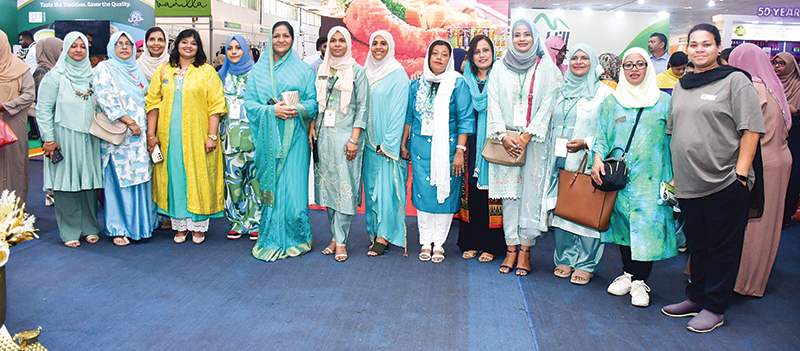
At Muslim Ladies College
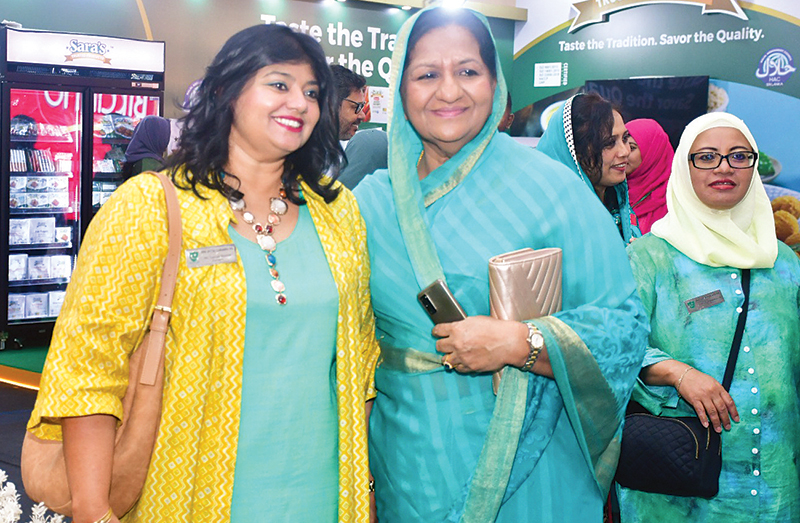
The spirit of Ramadan came alive at the Muslim Ladies as the much-awaited pre-Ramadan sale “Marabha” organised by MLC PPA unfolded at SLEC the event drew students, parents and old girls to a colourful celebration filled with the aromas of traditional delicacies and the buzz of excitement from the buzzling stalls
Behind the seamless flow and refined presentation were Feroza Muzzamil and Zamani Nazeem. Whose dedication and eye for detail elevated the entire occasion. Their work reflected not only efficiency but a deep understanding of the institution’s values. It was an event, reflected teamwork, vision and a shared commitment to doing things so beautifully. The shoppers were treated to an exquisite selection of Abayas, hijabs and modern fashion essentials, carefully curated to blend contemporary trends with classic elegance. Each stall offered unique piece from intricately embroidered dresses to chic modern designs. The event also highlighted local entrepreneurs a chance to support homegrown talent. Traditional Ramazan goods and refreshment added a delighted touch, making it as much a cultural celebration as a shopping experience.
-

- Endless deals,endless possibilities
-
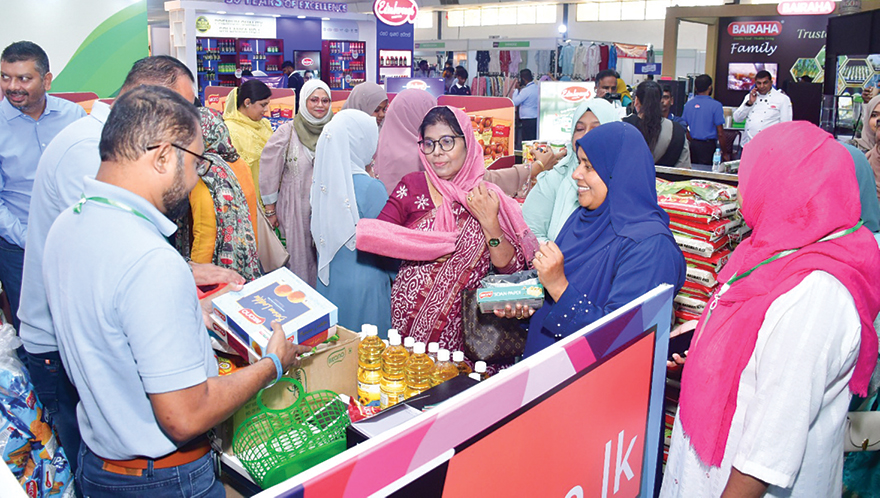
- Goods at reasonable prices
-
- Zamani and Feroza setting the bar high

Muzarabani returns as Zimbabwe opt to bowl against Oman

Munsey and Leask spoil Italy’s T20 World Cup debut2

Italy captain Wayne Madsen injures shoulder in T20 World Cup opener

Canada look for early splash against favourites South Africa

Italy opt to bowl; Scotland play Brad Wheal

Zimbabwe look to hit the ground running vs Oman

‘Dates have the highest sugar content to fight Coronavirus’

Sunday Island 27 December – Headlines

#SundayIsland 17th December – Headlines

Sunday Island – 28th March

Sunday Island Headlines – 21 March

Sunday Island – 21st February – Headlines
-

 Features1 day ago
My experience in turning around the Merchant Bank of Sri Lanka (MBSL) – Episode 3
-

 Business2 days ago
Zone24x7 enters 2026 with strong momentum, reinforcing its role as an enterprise AI and automation partner
-

 Business6 days ago
SLIM-Kantar People’s Awards 2026 to recognise Sri Lanka’s most trusted brands and personalities
-

 Business1 day ago
Remotely conducted Business Forum in Paris attracts reputed French companies
-

 Business1 day ago
Four runs, a thousand dreams: How a small-town school bowled its way into the record books
-

 Business6 days ago
API-first card issuing and processing platform for Pan Asia Bank
-

 Business2 days ago
HNB recognized among Top 10 Best Employers of 2025 at the EFC National Best Employer Awards
-

 Business1 day ago
ComBank and Hayleys Mobility redefine sustainable mobility with flexible leasing solutions