
News
Dr. Godahewa warns govt. over its IMF strategy

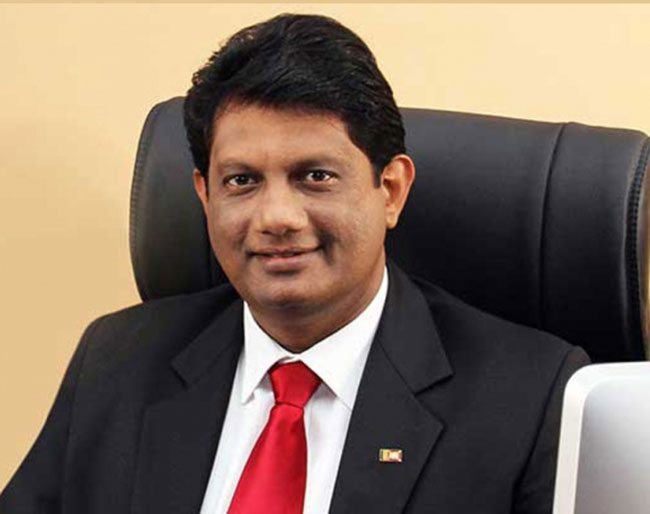
‘Current crisis has given us an opportunity to rectify wrong decisions’
By Shamindra Ferdinando
SLPP lawmaker and one-time prominent Viyathmaga activist Dr. Nalaka Godahewa says the government has not been able to bring talks with the International Monetary Fund (IMF) to a successful conclusion for want of a cohesive action plan to reduce expenditure and increase revenue.The former Minister said so when The Island sought the former mercantile executive’s response to the current status of government negotiations with the IMF.
“The issue at hand is that we haven’t been able to convince the IMF of our plans to address the daunting task. The government cannot sidestep contentious issues as the IMF expects us to come up with a clear action plan to enhance income and reduce expenditure,” the Gampaha District MP said.
Responding to another query, Dr. Godahewa warned the government that finalization of an agreement with the IMF wouldn’t be possible as long as the government delayed presenting a proper plan. The lawmaker questioned the validity of the presentation made by the Finance Ministry to the IMF delegation. Had the government convinced the IMF and as well as other lenders an agreement could have been reached during the recently concluded talks in Colombo.
Participating in a discussion arranged by a group of Kelaniya undergraduates over the weekend, Dr. Godahewa explained the responsibility on the part of the government to reveal how it intended to repay debt.
Instead of repeatedly giving excuses and warnings of further deterioration of the economic status, the government should without further delay address four key issues namely how to increase foreign/domestic income, bring down expenditure in foreign currencies/domestic expenditure.
Dr. Godahewa said that the unprecedented economic crisis had given the incumbent government an opportunity to take appropriate remedial measures to rectify a spate of wrong decisions taken by successive governments over the past several decades. Unfortunately, the government seemed not capable of taking advantage of what the former media minister called a golden opportunity to push for required reforms with the support of all political parties represented in Parliament and other stakeholders, particularly the trade unions.
Dr. Godahewa warned that printing of currency notes continuously to meet budget deficit was nothing but a horrendous blunder.The government should concentrate on expenditure control while being tough on waste, corruption, irregularities and mismanagement, the new entrant to Parliament said. According to Dr. Godahewa, waste, corruption, irregularities and mismanagement perpetrated by successive administrations had caused significant loss of revenue over the years and the incumbent government was no exception, the ex-minister said.
Commenting on public sector enterprises, the Gampaha District lawmaker said that though there were 420 such ventures, the Treasury considered only 52 of them important. Of those categorized as important, the CEB (Rs 21.4bn), CPC (Rs.82.2 bn) and SriLankan Airlines (Rs 170.7 bn) suffered a staggering loss of Rs 270 bn in 2021.
Dr. Godahewa said the country could no longer afford to bear such huge losses. Therefore, restricting was nothing but an urgent necessity, the government MP declared, pointing out that the government lacked the wherewithal to sustain utterly incompetent public sector.
Dr. Godahewa gave a breakdown of the public sector. According to the latest available data, there were 1,402,000 in the state sector comprising ministries and departments 792,000, Provincial Councils and Local Government 390,000 and state enterprises 220,000.
In 2021 alone, their salaries and other payments cost the government Rs 845 bn whereas 672,000 pensioners received payments amounting to Rs 270 bn. Therefore, the total expenditure stood at Rs 1,115 bn (Rs 845 b +Rs 270 bn), Dr. Godahewa said, adding that amounted to staggering 80 percent of the total income.
The MP called for the pruning of the public sector declaring it was a very heavy burden. Public Administration Secretary Priyantha Mayadunne recently said that Sri Lanka could manage with about 500,000 public servants though the current strength of the public sector is 1.5 mn.Dr. Godahewa said that all unnecessary posts and positions should be gradually abolished.





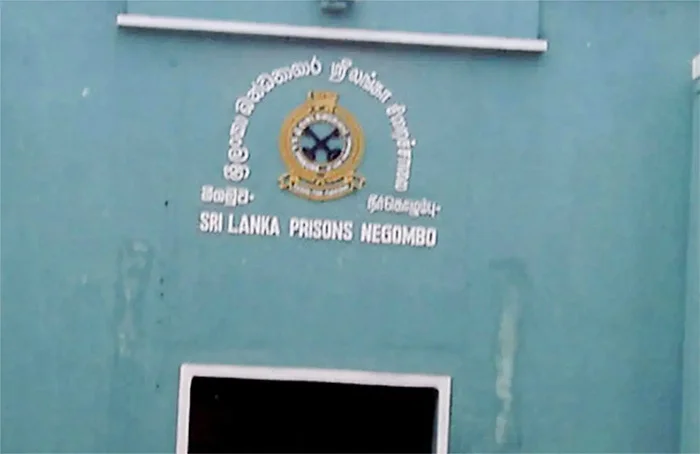
It has been reported quoting police sources that the death toll from the renewed unrest at the Negombo Prison which this morning, has risen from nineteen to twenty five (25).
A clash initially broke out between two groups of inmates (a group of remand prisoners and a group of convicted inmates serving sentences) at the Negombo Prison at around 1.00 p.m. on Sunday (05).
Two inmates died in yesterday’s clash, while around 40 others sustained injuries and are receiving treatment at hospital.
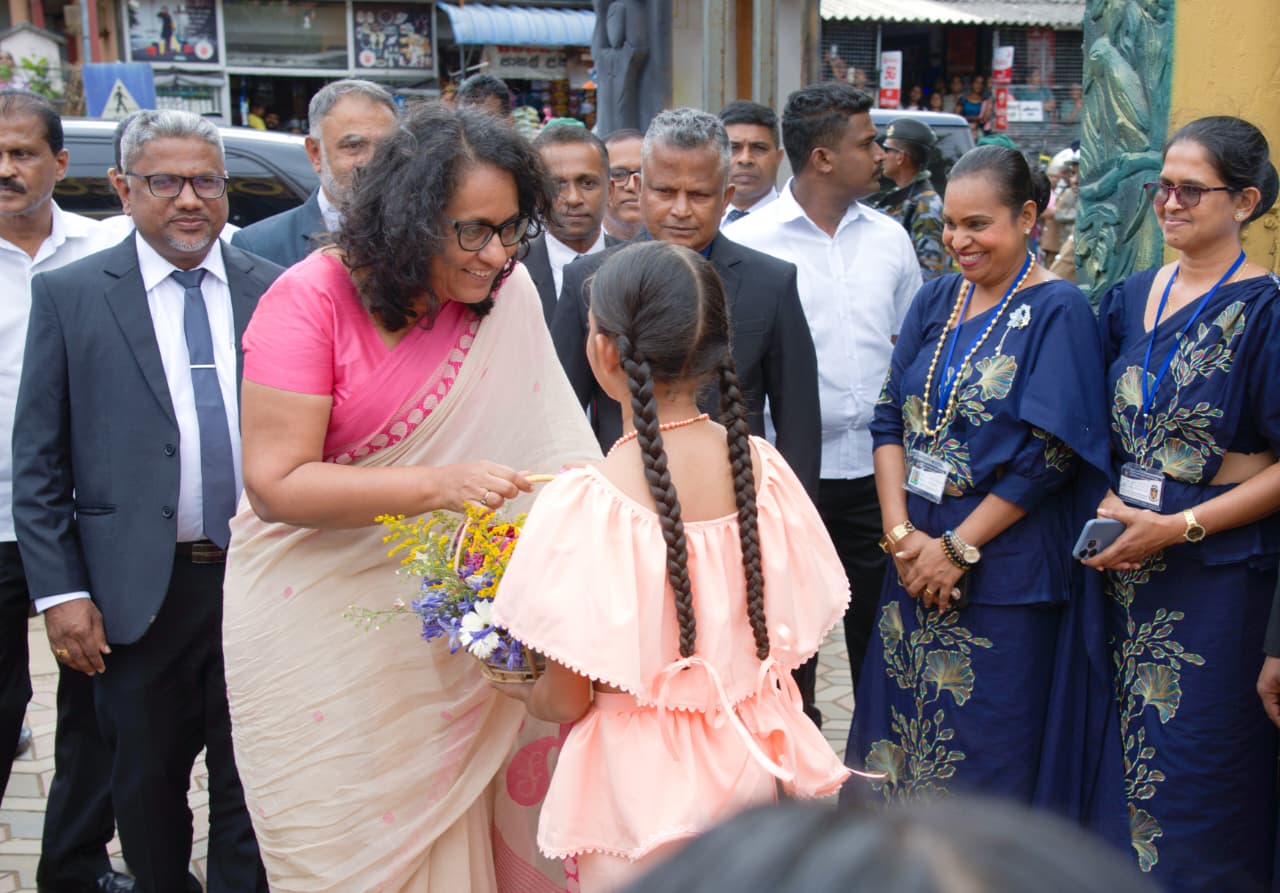
Prime Minister Dr. Harini Amarasuriya stated that the children of Sri Lanka are well capable of viewing the world with creativity and critical ways of thinking, and that the Government is committed to equipping them with the required knowledge and modern technologies necessary to realize their full potential.
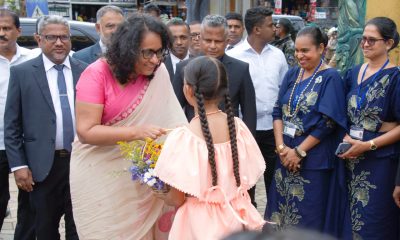
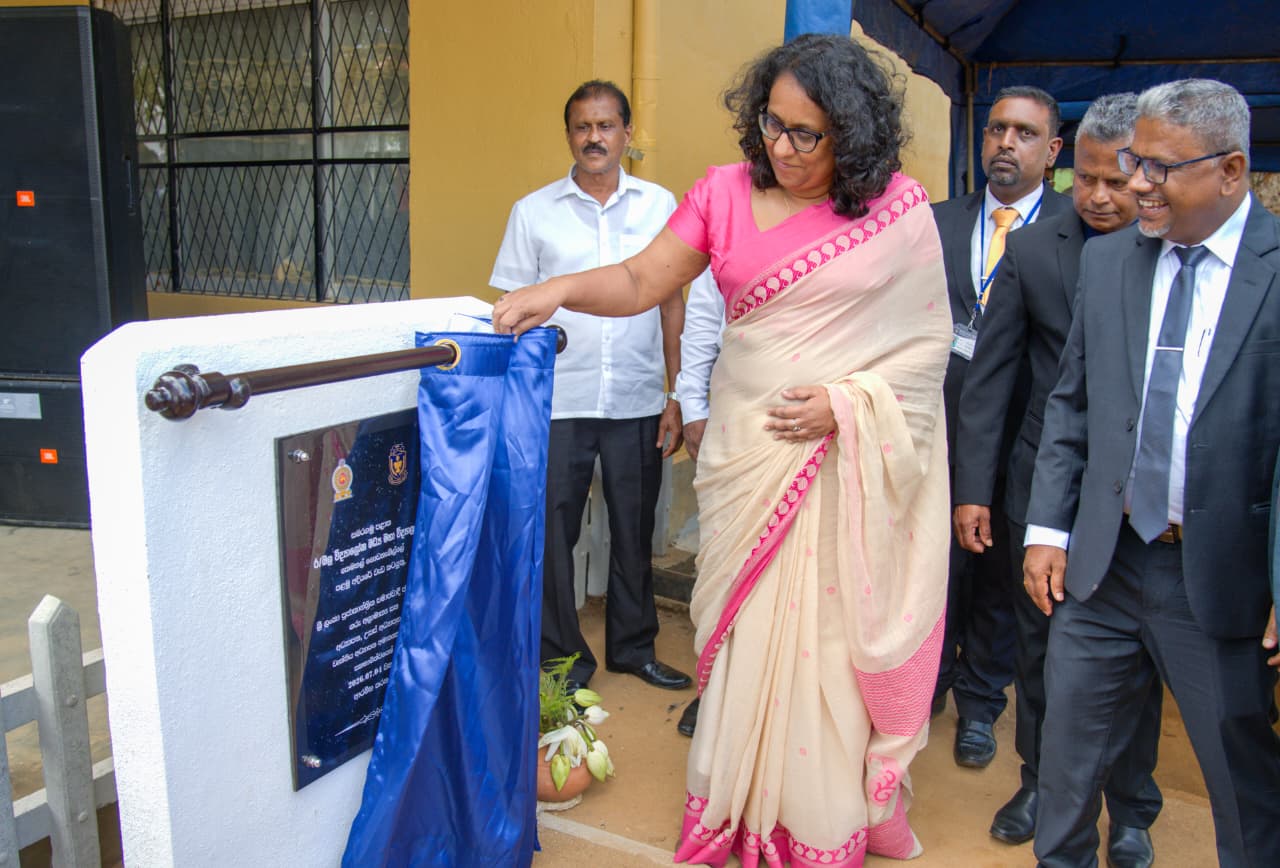
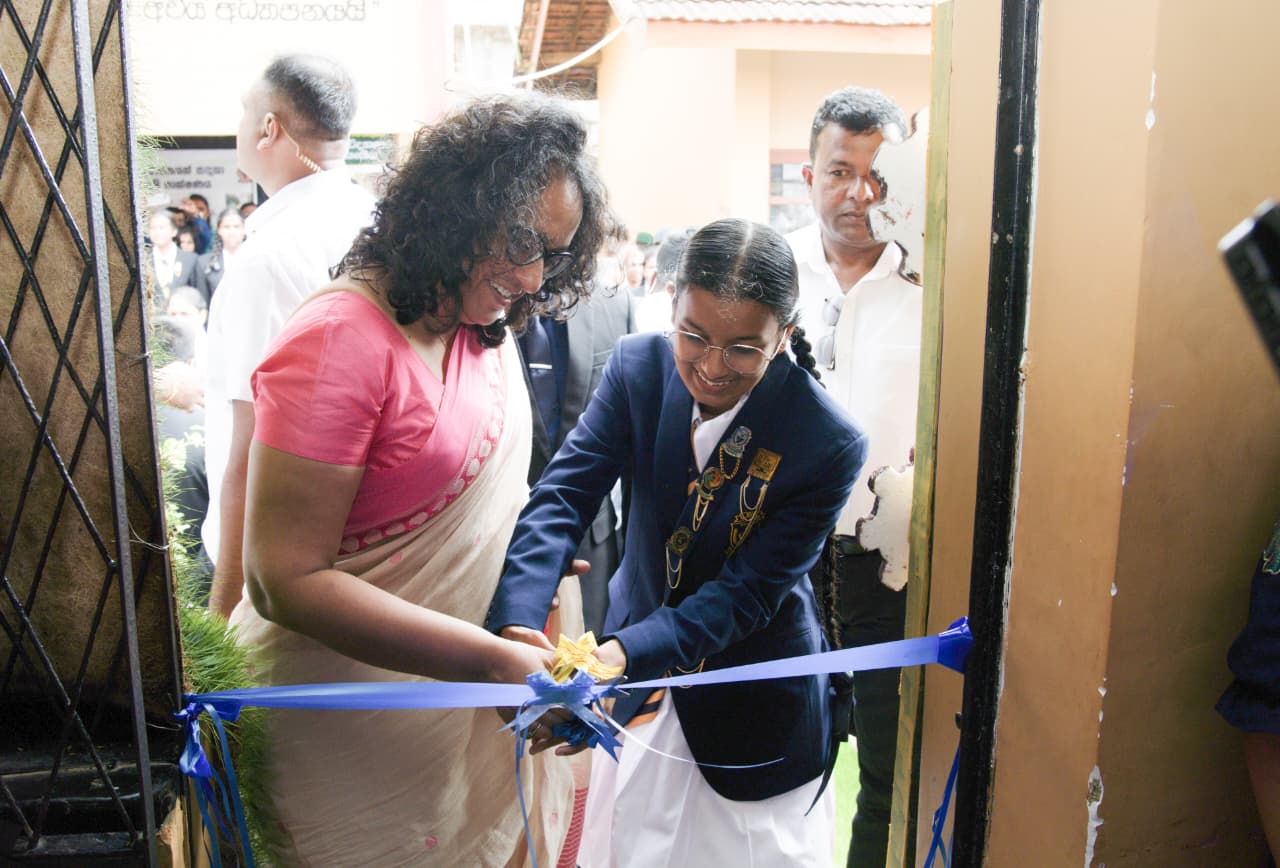
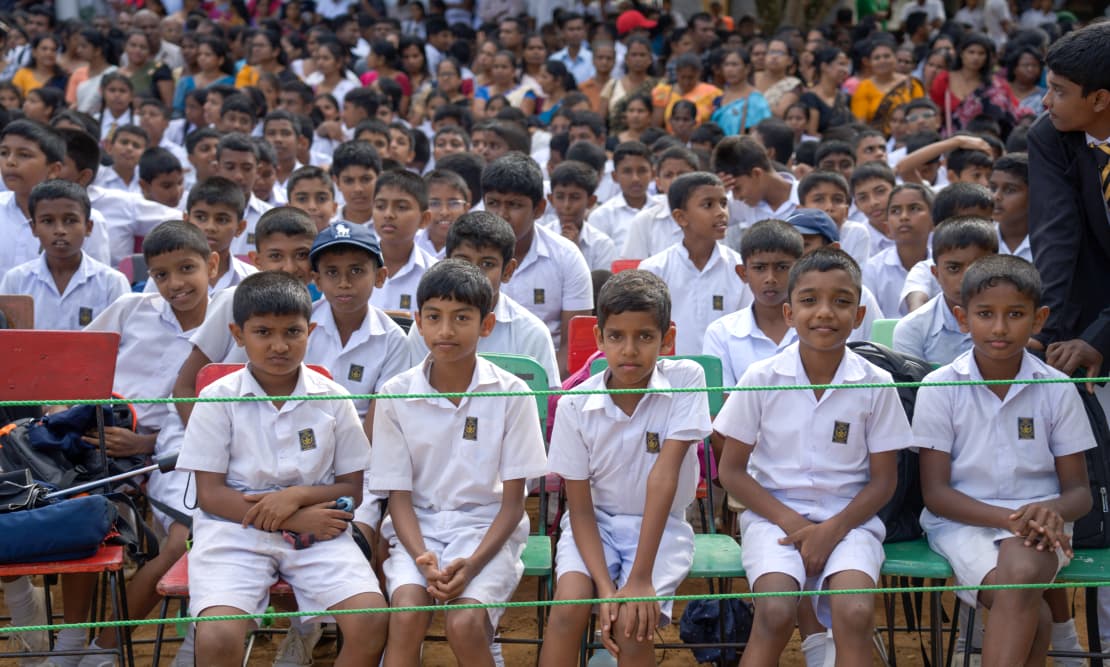
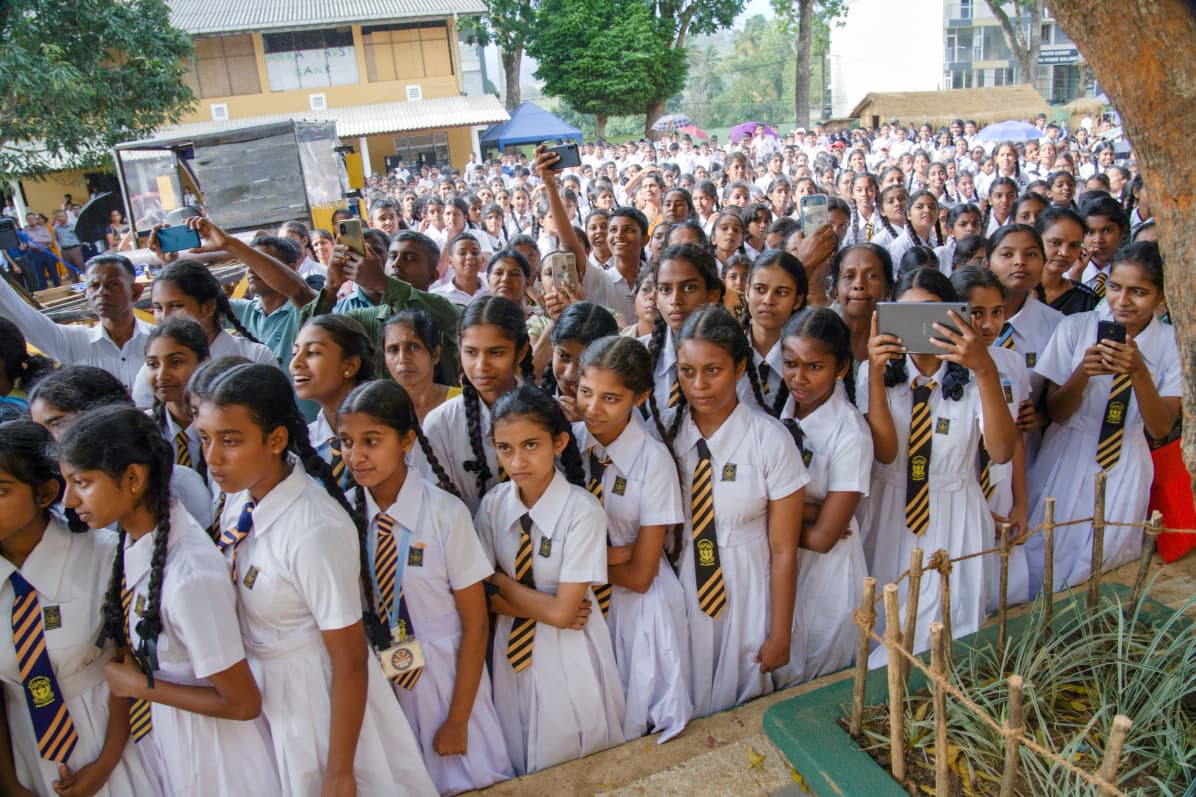
The Prime Minister made these remarks while attending the opening of the ’Arumasiya’ Exhibition and the occasion of laying the foundation stone for a new three-storey building at Balangoda Vidyaloka Central College, on the 4th of July.
During the visit, the Prime Minister officially declared open the exhibition showcasing the students’ innovations and creative talents and commended them for their remarkable achievements. The Prime Minister also participated in the ceremony of laying the foundation stone for the construction of the College’s new three-storey building.
Addressing the occasion, Prime Minister Dr. Harini Amarasuriya stated:
“It is a pleasure to participate in this special event at Balangoda Vidyaloka Central College, the school where Sri Lanka’s first female Prime Minister received her education
I had the opportunity to visit the exhibition featuring the outstanding creations and innovations of the students. What I witnessed was a group of talented young people who have moved beyond textbook learning and are capable of viewing the world with creativity and critical thinking.
We are introducing a new education reform process that moves away from a rote-learning, examination-oriented system towards a practical and skills-based one. The Government is now systematically completing all the necessary preparations to implement the new education reforms scheduled to commence in 2027.
Our objective is to ensure that every child leaving school has access to vocational and technical education that matches their individual talents and meets the demands of the modern labour market. We are committed to transforming vocational education into a field that enjoys the same dignity and recognition as university education.
Finally, I commend the Principal and the academic staff of Balangoda Vidyaloka Central College for organizing this exhibition, and to the students and parents whose dedication made this event a success.”
The event was attended by Members of Parliament for Ratnapura District Wasantha Pushpa Kumara and Sunil Rajapaksha, the Mayor of Balangoda and members of the Municipal Council, the Zonal Director of Education, the Principal and academic staff of Balangoda Vidyaloka Central College, parents, and students.
Prime Minister’s Media Division

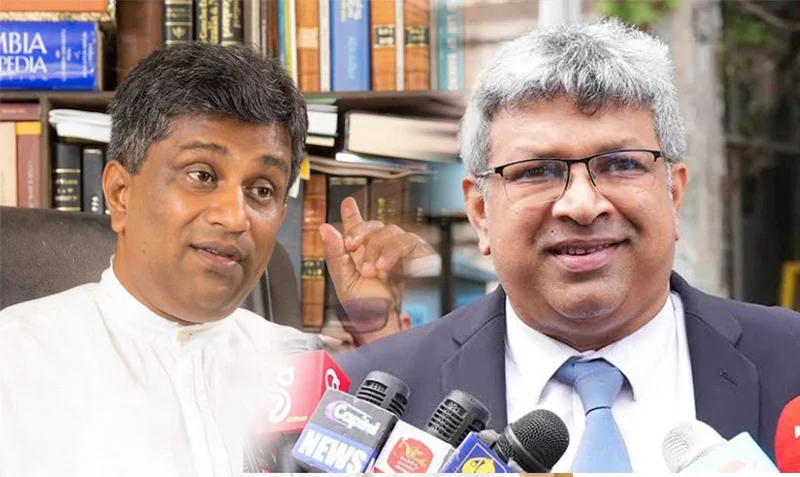
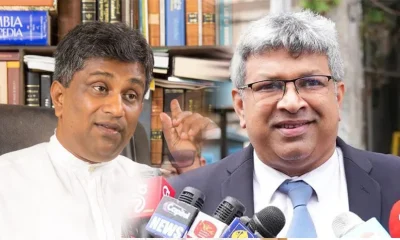
The appointment of a Special Parliamentary Ombudsman (SPO) to inquire into the complaints against the Attorney General, as promised in the NPP manifesto, is on hold, pending the establishment of an Independent Office of the Public Prosecutor and provincial Sub Officers.
Authoritative sources told The Island that the Justice and National Integration Ministry was awaiting the recommendations, regarding the new legislation for the establishment of such an Office, from a Committee of Technical Experts, chaired by Justice Yasantha Kodagoda, PC.
Responding to a query raised in Parliament by SJB lawmaker Ajith P. Perera about the delay in appointment of SPO, Justice and National Integration Minister Harshana Nanayakkara said the government couldn’t take a decision until the Kodagoda Committee made recommendations.
Nanayakkara said that the positioning of the SPO couldn’t be decided before they differentiate the powers of the Attorney General and the an Independent Office of the Public Prosecutor and provincial Sub Officers.
According to the NPP manifesto, provincial Sub Officers were to be established under a senior Additional Solicitor General.
Opposition sources pointed out that the relevant Cabinet decision was taken on 7 May 2025. According to the Cabinet Office, the government decided to establish an Independent Office of the Public Prosecutor and provincial Sub Officers in line with a proposal made by the United Nations High Commissioner for Human Rights, in her final report on Sri Lanka, submitted in September, 2024.
By Shamindra Ferdinando

Death toll in violent clashes at Negombo Prison rise to 25

The Government is committed to equipping children with new technology and knowledge – PM

Bellingham inspires 10-man England to beat Mexico 3-2 in last-16 thriller

Haaland scores twice as Norway stun Brazil 2-1 in World Cup 2026 last 16

A few showers will occur in the Western and Sabaragamuwa provinces and in Galle, Matara, Kandy and Nuwara-Eliya districts

Appointment of SPO to probe AG on hold until establishment of Ind. Public Prosecutor’s Office

‘Dates have the highest sugar content to fight Coronavirus’

Sunday Island 27 December – Headlines

#SundayIsland 17th December – Headlines

Sunday Island – 28th March

Sunday Island Headlines – 21 March

Sunday Island – 21st February – Headlines
-
 Features6 days ago
Climate action to bring South Asia together
-
 News6 days ago
Chamuditha to seek removal of injunction on Youtube programme
-
 News1 day ago
Singapore-based Buddhist monk marks nearly four decades of humanitarian service
-

 News2 days ago
Freedom 250: US Embassy celebrates America’s 250th Independence Day through magic of American cinema
-
 News3 days ago
CIABOC to question Harak Kata on Rs. 200 mn bribery allegation
-
 News3 days ago
SLAF conducts successful rescue mission under UN command in Central African Republic
-
 Opinion6 days ago
Matara Maha Keralla– Uprising against the Dutch
-
 Midweek Review5 days ago
H’tota port’s strategic status remains focal point of geopolitical scrutiny