
Business
Dr. Cornelius Boersch confident in Sri Lanka as haven for Global Venture Capitalists and Angel Investors


Dr. Cornelius ‘Conny’ Boersch is the most active Tech-Investor in Europe; and the largest Venture Capitalist in Latin America.
Keen to promote the replication of proven, successful models and business ideas for implementation in Sri Lanka.
Sri Lanka continues to have an untapped market, with very little risk for investors, given the potential of the market.
Dr Cornelius Boersch – European Business Angel of the Year (2009) and a Certified Super Angel by the European Investment Fund (EIF), during his first visit to Sri Lanka this year partook in a private event held on October 13, 2021 at Hatch Works in Colombo. The event which welcomed a limited number of guests, was broadcasted via Facebook Live for local and global audiences.
Conducted in partnership with Hatch Works, Lion ventures, and The Council for Startups, the event featured a conversation-style knowledge sharing session with Dr. Boersch, led by Founder, Veracity AI – Jeevan Gnanam, and was later joined by Co-Founder, Hatch Works – Nathan Sivaganathan and Managing GP, BOV Capital Ltd – Prajeeth Balasubramaniam, and was concluded with a Q&A session.
Speaking at the event, Dr Boersch noted “There is no shortage of knowledge, talent or passion in Sri Lanka. However, the biggest challenge I see here is the conservative mindset and the belief that the Sri Lankan market works differently compared to the rest of the world. When I started the largest food delivery company in Europe many people said that this model could not be applied to countries such as India and even Saudi Arabia, but we see that the food delivery companies are the most successful businesses in today’s market.
The world has become so similar that ideas that work in London and Berlin can also work in Colombo. Sri Lanka has one great advantage (although you may see this as negative), you are five years behind. This means you don’t have to make the same mistakes that others have, you can instead replicate models that have been tried and tested and developed to be successful. There are business models that can be applied to any market, and entrepreneurship doesn’t mean you have to create something new. I see the potential in Sri Lanka.”
General Partner, Lion Ventures – Love Yadav, the key personality behind the partnership with Dr. Cornelius Boersch, noted “As early stage investors we look for new opportunities and it is apparent that Sri Lanka is ideal where untapped potential is concerned. After successfully deploying capital for the first round of funding, Lion Ventures is closing in on its second round of funding wherein 60% of its capital will go towards venture build up ideas and the remaining 40% towards promising local startups that are easily scalable and globally transportable. I would like to thank the Board of investments and its Chairman Mr Sanjaya Mohottala who has played an integral role in the success of this trip”.
Dr Boersch spoke passionately about the need for replicating models proven for success in other markets, but adapting them to Sri Lanka’s market. Whilst his focus remains on developing the entrepreneurial ecosystem in Sri Lanka, he also delved into the concept of changing the local mindset, and for serial entrepreneurs to take on the role of investors to help newer entrants. His three-day business tour of Sri Lanka included discussions with the Founders of promising startups, The Council of Startups, Port City commission; as well as private meetings with top business houses and a courtesy visit with the Minister of Youth & Sports and Development Coordination & Supervision – Namal Rajapaksa, where the future of Sri Lanka’s strategic digital revolution was discussed in depth. Acting in partnership with Lion Ventures – a private investment vehicle formed to make long term investments through a venture build up structure focussed on digital transformation and clean technology models Dr Boersch aims to fast-track his strategic goal of further developing Sri Lanka’s local market and its entrepreneurial prowess, as he is set to revolutionise Sri Lanka’s entrepreneurial ecosystem.
Investment Director, Mountain Partners – Jorge Perez Garcia concluded: “Sri Lanka is at the inflection point of digital disruption as the Sri Lankan Startup ecosystem is ready to bloom. During this short but insightful visit to its capital, Colombo, we have been inspired by the talent of founders and managers alike, as well as by the new measures that the government will put in place in the coming months to support entrepreneurship. We are clear this is a pivotal moment for the country; we have seen it many times in other countries around the World and we see the same starting in Sri Lanka. Together with our local partner, Lion Ventures, we are starting a journey to capture opportunities in the digital space through our Company Builder and Early Stage Fund. With them, we plan to nurture and boost the local talent, bring successful disruptive business models to the country and back some of the most promising local teams. We want to invite every family office, investor, manager and entrepreneur to join us in this exciting journey that will boost the country’s long-term economic growth and open the door to a brighter future for new generations to come.
As the founder of Mountain Partners AG and Conny & Co. AG, Dr Boersch has been an entrepreneur since 1990 and the founder of ACG AG, a leading company in the RFID market. He was also the Founder/ Chairman of Rocket Internet, a multi billion dollar global company. His global portfolio also includes space logistics and drone technology. (News release)


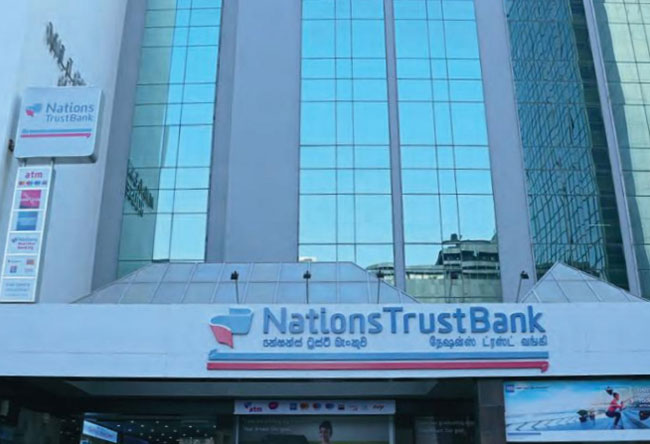
Nations Trust Bank PLC (NTB) is emerging as a well-capitalised bank with cleaner books and a resilient earnings profile, positioning itself for a stronger growth phase in the coming years, according to First Capital Research.At a time when investor confidence in frontier markets is often dictated by balance sheet strength and earnings visibility, NTB appears to be ticking both boxes, according to the research firm’s earnings update of the bank.
The bank closed 2025 with a net profit of LKR 19.3 billion, reflecting a steady recovery trajectory despite residual macroeconomic pressures. More importantly, beneath the headline numbers lies a more compelling story: NTB’s core earnings engine is gaining strength. The distortion caused by one-off impairment reversals in previous periods has now faded, allowing a clearer view of the bank’s underlying performance. On this basis, recurring earnings have expanded sharply, pointing to a structurally improved operating model.
First Capital notes that NTB’s financial position remains robust, underpinned by capital ratios comfortably above regulatory thresholds. With a total capital ratio exceeding 20% and liquidity coverage ratios well above minimum requirements, the bank has built significant buffers to withstand external shocks. This strength is particularly relevant in a post-crisis environment where financial institutions are expected to prioritise resilience over aggressive expansion.
Equally noteworthy is the improvement in asset quality. NTB’s Stage 3 loan ratio has declined to below 1%, reflecting a healthier loan book and prudent risk management practices. This marks a significant turnaround from the stress levels seen during the height of the economic crisis, and suggests that the bank has successfully navigated the most challenging phase of credit deterioration.
While loan growth surged in 2025 as economic activity rebounded, a moderation is expected over the next two years. However, this slowdown should not be interpreted negatively. Instead, it signals a return to more sustainable credit expansion aligned with macroeconomic realities. NTB is still projected to outperform system-wide credit growth, supported in part by strategic initiatives such as the anticipated acquisition of the retail banking operations of HSBC in Sri Lanka.
This acquisition, expected to be completed in 2026, could prove to be a pivotal development. It is likely to strengthen NTB’s position in the premium retail segment while significantly boosting fee and commission-based income streams. In an environment where net interest margins are under pressure due to rising funding costs, diversification into non-interest income becomes increasingly critical.
Indeed, margin compression remains one of the key challenges facing the banking sector. NTB has not been immune, with higher deposit costs, particularly from fixed deposits, outpacing growth in interest income. Yet, the bank’s ability to maintain profitability despite these pressures underscores the resilience of its business model.
Looking ahead, First Capital forecasts NTB’s net profit to rise to LKR 23.9 billion in 2026 and LKR 27.2 billion in 2027. While these projections reflect a more measured macroeconomic outlook, they also point to steady and sustainable earnings growth.
From an investor’s standpoint, the valuation story adds another layer of appeal. NTB continues to trade at relatively low multiples despite delivering returns on equity exceeding 20%. This disconnect between market valuation and underlying performance suggests potential for a re-rating as confidence in the banking sector strengthens.
Hence, NTB’s evolution mirrors the broader recovery of Sri Lanka’s financial system—but with a notable edge. Its strong capital base, improving asset quality, and growing earnings visibility position it as one of the more compelling banking counters in the market today.
By Sanath Nanayakkare

City of Dreams Sri Lanka and John Keells Foundation present a West End Musical, Opening on Friday.
Five members of the international cast of La Bamba! The Song of Veracruz arrived last week at Bandaranaike International Airport in Katunayake, ahead of the highly anticipated West End–licensed production in Colombo.
The visiting performers, Madalena Alberto, Eduardo Enríkez, Joseph Hewlett, Mychele LeBrun, and Charlotte Dos Santos Chabi, are marking their first visit to Sri Lanka and will celebrate the Sri Lankan New Year during their stay.
Following their arrival, the international artists will begin intensive rehearsals alongside the Sri Lankan cast, bringing together a dynamic blend of global and local talent. The collaborative process is expected to add depth and vibrancy to the West End–licensed musical, known for its rich storytelling, Latin rhythms, and high-energy choreography.
The production, directed and produced by London-based theatre producer Paul Morrissey, is a West End–licensed musical that brings together world-class performers, 7 live musicians, and a technical and creative crew of over 40 members. The musical has enjoyed successful runs internationally, delighting audiences across the UK, Europe, and North America with its vibrant blend of music and performances.
La Bamba! The Song of Veracruz is presented by City of Dreams Sri Lanka and John Keells Foundation. Audiences can experience this spectacular production from 24th to 27th April at The Forum, City of Dreams Sri Lanka.
Tickets are available via www.cinnamonboxoffice.com and the hotline +94 71 711 8111, with a 15% early-bird discount for Nations Trust Bank American Express and Mastercard Credit Card holders.
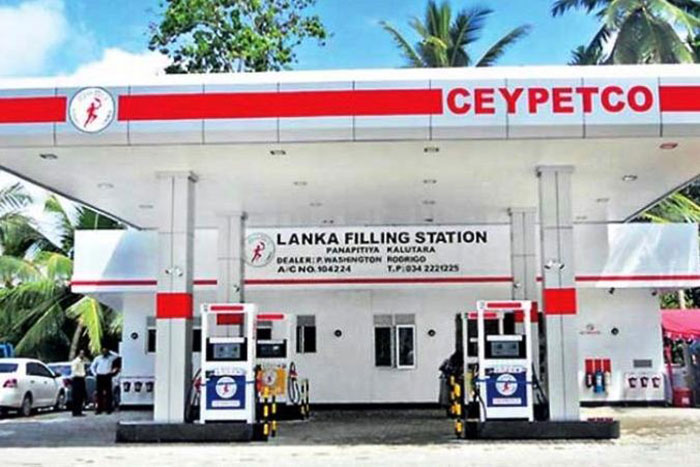
The Petroleum Dealers’ Association has urgently appealed to President Anura Kumara Dissanayake regarding a revised commission structure introduced by the Ceylon Petroleum Corporation (CPC) via Circular No. 1109 on 25 February 2025, effective 1 March 2025. The new system replaces the traditional percentage-based model with a tiered, capped rate per litre.
The Association warns that the reduced income fails to cover staff salaries, loan repayments, and operational costs—threatening the viability of 98% of individually or family-run dealers. Many cooperative-run stations may close, impacting employment and fuel supply networks. The change was made without prior consultation.
A broader structural imbalance exists: CPC operates under a cost-recovery model, retaining margin flexibility, while dealers absorb all costs within fixed earnings. By contrast, private fuel companies in Sri Lanka still pay dealers ~3% of sales, offering more sustainable income. Additionally, dealers must remit VAT on centrally-set fuel prices and purchase stock on a cash basis, increasing working capital needs without corresponding income growth.
The Association requests an expert committee, including their representatives, to develop a fair, sustainable solution. Without policy reform, financial pressure may disrupt the dealer network and national fuel availability.

Dasun Shanaka handed one-year PSL ban

Nahid, Tanzid help Bangladesh level New Zealand series

Five UAE cricketers given citizenship through naturalisation

Moni, Sharmin help Bangladesh register maiden ODI win against Sri Lanka

Advisory for Severe Lightning issued for all provinces of Sri Lanka

Oil prices rise after Trump says Iranian ship seized

‘Dates have the highest sugar content to fight Coronavirus’

Sunday Island 27 December – Headlines

#SundayIsland 17th December – Headlines

Sunday Island – 28th March

Sunday Island Headlines – 21 March

Sunday Island – 21st February – Headlines
-

 News5 days ago
PNS TAIMUR & ASLAT set sail from Colombo
-

 Business3 days ago
Harnessing nature’s wisdom: Experts highlight “Resist–Align” path to resilience
-

 News3 days ago
Gratiaen Trust announces longlist for the 33rd Annual Gratiaen Prize
-

 Latest News7 days ago
“I extend my heartfelt wishes to all Sri Lankans for a peaceful and joyous Sinhala and Tamil New Year!” – President
-

 News2 days ago
From Nuwara Eliya to Dubai: Isha Holdings markets Agri products abroad
-

 News3 days ago
Heroin haul transported on 50-million-rupee contract
-

 Latest News4 days ago
Singapore Zoo’s first Sri Lankan leopard cubs make their public debut
-

 Latest News7 days ago
US blockade of Iran would worsen global energy crisis, analysts say