
Latest News
Don Bradman baggy green sold for AU$460,000

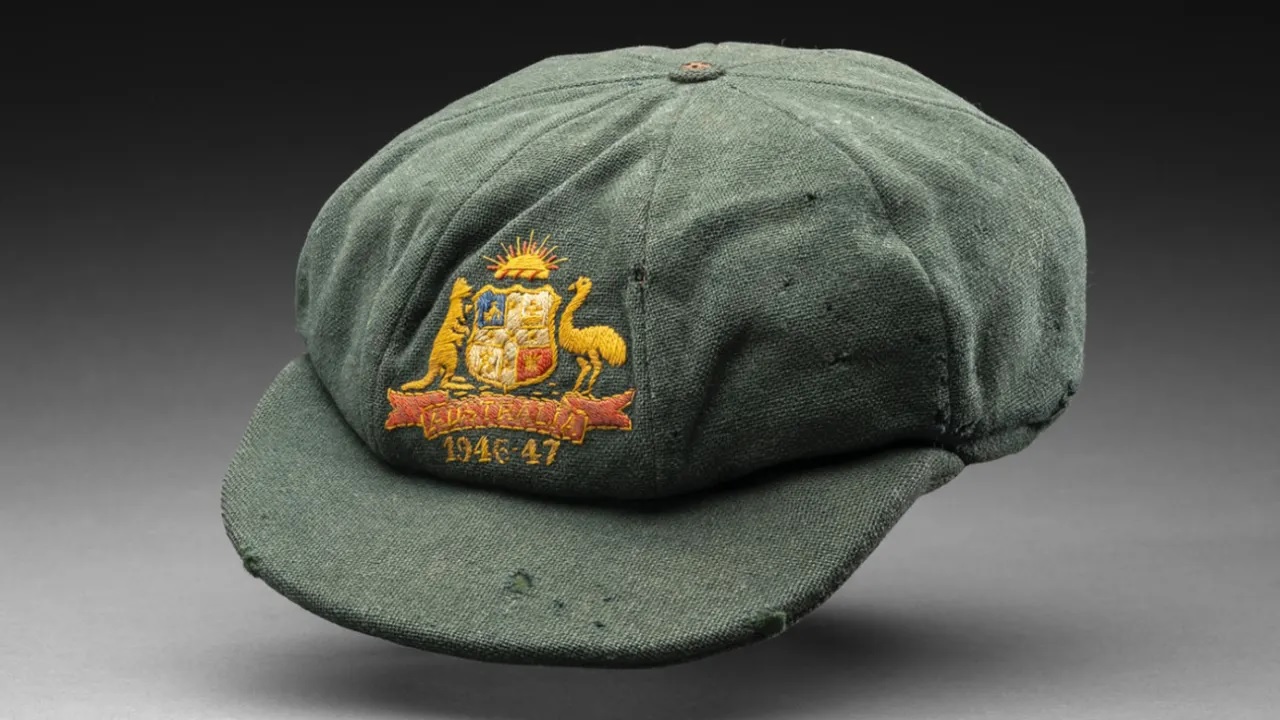
The baggy green cap that Sir Donald Bradman wore in India’s maiden series as an independent nation has been bought for AU$460,000 (US$320,000) by an anonymous buyer at a Gold Coast auction.
Bradman wore the cap during his final home series against India in 1947-48, before gifting it to their opening bowler, Ranga Sohoni, whose family had kept it in their possession ever since, without previously exhibiting it publicly.
It was sold on Monday by Lloyds Auctions in Queensland, with Lee Hames, the company’s chief operating officer, describing it as a “holy grail of cricket”.
“It has been hidden for 75 years, that’s over three generations under lock and key,” he said. “If you were a family member you were only allowed to look at it when you were 16 years old for five minutes.”
Though Sohoni played just the first Test of India’s 4-0 series defeat, and did not take a wicket in their innings loss, he nevertheless bowled their first ball of the match, and hence the first of the post-colonial era.
The inside of the cap is inscribed with the names “D.G. Bradman” and “S.W. Sohoni”, while “1947-48” is embroidered beneath the Australia crest. It is one of 11 known Bradman baggy greens, from an era when players wore different caps for each series.
Bradman’s first cap, from his debut in 1928, sold for Aus$450,000 in 2020. Shane Warne’s baggy green holds the record for such an artefact, having raised Aus$1,007,500 for the Australian Red Cross bushfire appeal in 2020.
[Cricinfo]

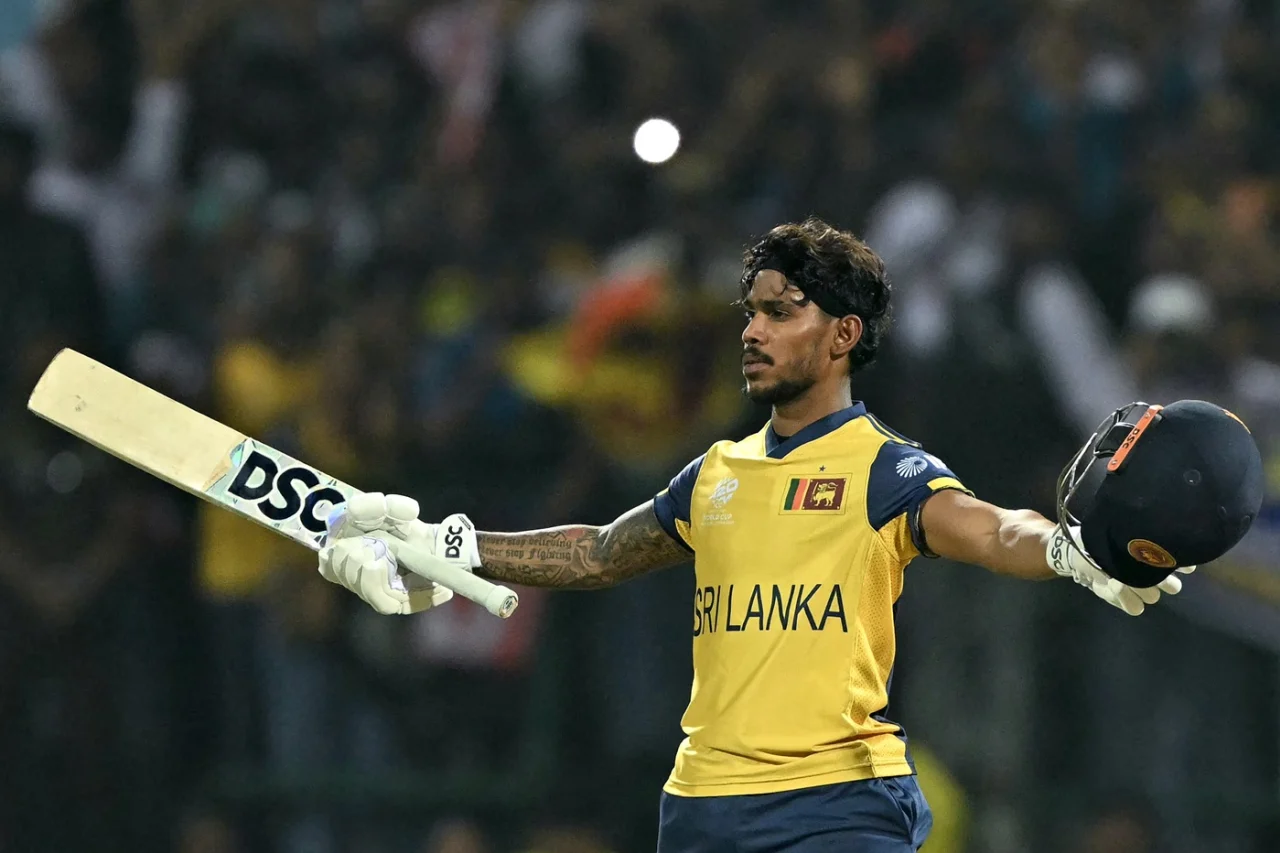
Sri Lanka survived an early onslaught to qualify for the 2026 T20 World Cup Super Eights, leaving Australia right at the exit door and hoping for a miracle.
The returning captain Mitchell Marsh and the returning-to-runs Travis Head were brutal in taking Australia to 104 in the first 50 legal deliveries, but some spectacular fielding and spin bowling helped Sri Lanka take 10 for 77 off the last 70 balls.
In front of a partying full house in Pallekele, Sri Lanka’s two most prolific batters, Pathum Nissanka and Kusal Mendis, brought out both the axe and paper cuts to slice through the chase. Nissanka, who had earlier dropped Glenn Maxwell and then dismissed him with a stunner, went on to score an unbeaten hundred and take Sri Lanka home with two overs to spare.
In the absence of Matheesha Pathirana, who walked off with a calf injury in his first over, their spinners contributed six wickets to go with excellent closing from Dushmantha Chameera. Australia’s lead spinner Adam Zampa, among the best T20 spinners of all time, took no wicket and was lucky to go for only 41 in his four overs.
Brief scores:
Sri Lanka 184/2 in 18 overs [Pathum Nissanka 100*, Kusal Mendis 51, Pavan Rathnayake 2*; Marcus Stoinis 2-41] beat Australia 181/10 in 20 overs [Mitchell Marsh 54, Travis Head 56, Josh Inglis 27, Glenn Maxwell 22; Dushmantha Chameera 2-56, Maheesh Theekshana 1-37, Dushan Hemantha 3-37, Dunith Wellalage 1-33, Kamindu Mendis 1-19] by eight wickets
[Cricinfo]
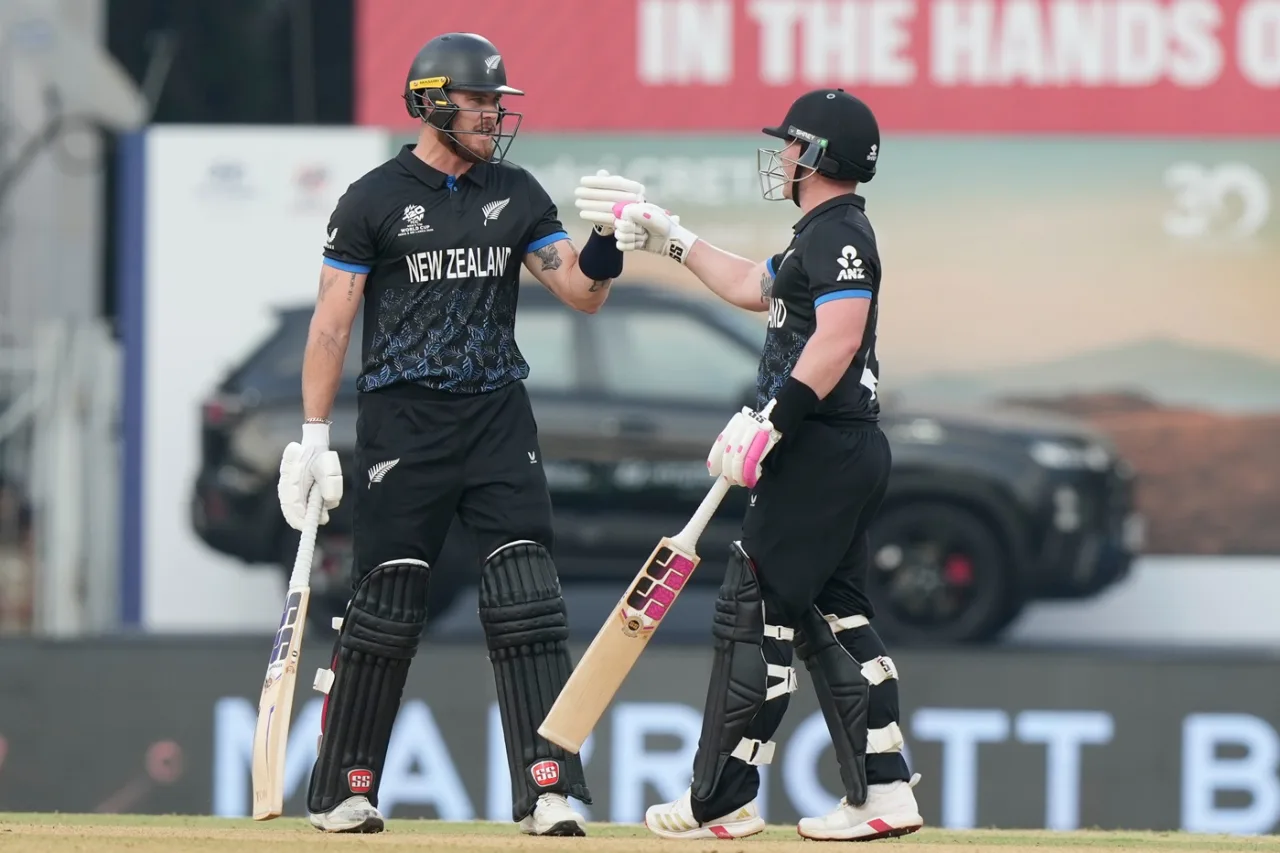
A win against Canada in their first T20I against them on Tuesday will firm up New Zealand’s spot in the Super Eight. This result will also knock out Canada; South Africa have already qualified for the next round from Group D with three wins in as many games.
New Zealand have faced Canada just three times in international cricket so far – each time in ODI World Cups. Their most recent meeting coming in the 2011 edition in Mumbai. They have won all three games and are poised to make it 4-0 against Canada in World Cups, despite the absence of Lockie Ferguson. The fast bowler has returned home for the birth of his first child and is expected to link up with the side ahead of the Super Eight. In Ferguson’s absence, Kyle Jamieson, who wasn’t even in the main squad in the first place, is set to make his T20 World Cup bow.
As for Canada, they had their moments against South Africa and UAE but they have failed to convert those into wins. On Friday in Delhi, they had UAE at 66 for 4 in the 13th over in a chase of 151, but they left the door ajar for Aryansh Sharma and Sohaib Khan to sneak home. Canada can’t afford such slip-ups against New Zealand – and then Afghanistan – if they are to notch up a win in this World Cup.
Kyle Jamieson doesn’t quite have Ferguson’s express pace, but can bang it away on a hard length and stifle the opposition batters. He also has some slower variations in his repertoire and his high-arm release could pose a big threat, especially to batters who are facing him for the first time.
Once known as “Vettori” in Canada’s club cricket circuit, Saad Bin Zafar will run into the team that was once captained by one of his heroes. The Canada left-arm spinner often attacks the stumps and keeps it tight, as his economy rate of 6.02 across 67 T20Is suggests. At 39, Saad knows he won’t be playing the game for long and will be eager to cause a few upsets on the big stage.
Jamieson is set to slot in for Ferguson unless New Zealand want to give veteran legspinner Ish Sodhi a game.
New Zealand (probable): Tim Seifert (wk), Finn Allen, Rachin Ravindra, Glenn Phillips, Daryl Mitchell, Mark Chapman, Mitchell Santner (capt), Jimmy Neesham, Kyle Jamieson, Matt Henry, Jacob Duffy
Canada are likely to play the same XI that lost to South Africa and UAE.
Canada (probable): Dilpreet Bajwa (capt), Yuvraj Samra, Navneet Dhaliwal, Nicholas Kirton, Shreyas Movva (wk), Harsh Thaker, Saad Bin Zafar, Jaskaran Singh, Dilon Heyliger, Kaleem Sana, Ansh Patel
[Cricinfo]
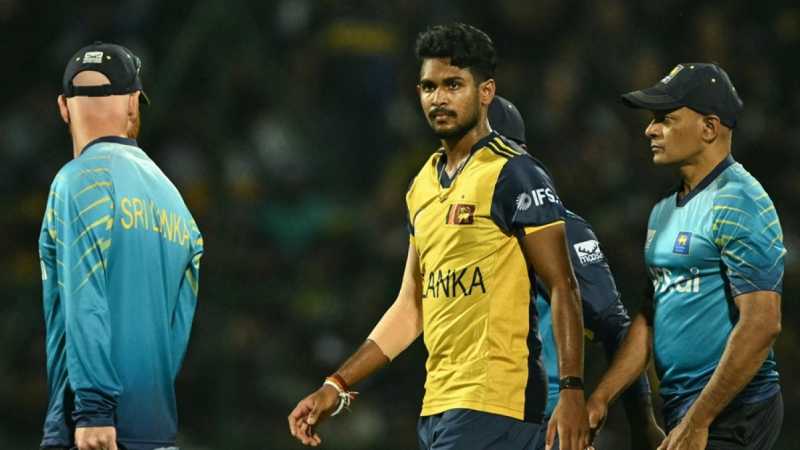
Sri Lanka fast bowler Matheesha Pathirana left the field four balls into his first over, after collapsing to the ground clutching his left calf, and did not return to the field during Sri Lanka’s bowling innings against Australia. Having briefly received treatment from the Sri Lanka physiotherapist immediately after sustaining the injury, Pathirana hobbled off the field with assistance from support staff.
He then spent the majority of the innings being treated in the dressing room. Sri Lanka will likely send him off for scans as soon as the match finishes.
“Matheesha Pathirana experienced discomfort in his left leg calf while bowling during the match and was unable to continue,” a statement read. “He will not bowl further in this game. A scan will be conducted tomorrow to determine the extent of the injury.”
Pathirana had begun well against Australia, bowling two dot balls and giving away three runs (including a wide) in those first four deliveries. The last two balls of the over were delivered by Dasun Shanaka, who gave away a four and bowled a dot.
Pathirana is the quickest bowler in Sri Lanka’s attack, and a key part of their death-bowling plans for the tournament in particular. He is also the second Sri Lanka bowler to come under an injury cloud, with Wanindu Hasaranga already having been ruled out of the World Cup with a hamstring injury of his own.
After this game against Australa, Sri Lanka have another group match to play, against Zimbabwe. They have not earned qualification for the Super Eights yet.
(Cricinfo)

Nissanka ton stuns Australia, puts Sri Lanka in Super Eights

New Zealand eye Super Eight spot against Canada

Pathirana under injury cloud as he leaves the field early

Raza: Win over Australia ‘will count for nothing if we slip up now’

Kusal Perera in as Sri Lanka bowl; Marsh returns for Australia

Jacks the star as England qualify for Super Eights with nervy win

‘Dates have the highest sugar content to fight Coronavirus’

Sunday Island 27 December – Headlines

#SundayIsland 17th December – Headlines

Sunday Island – 28th March

Sunday Island Headlines – 21 March

Sunday Island – 21st February – Headlines
-

 Life style2 days ago
Marriot new GM Suranga
-
 Features2 days ago
Monks’ march, in America and Sri Lanka
-
 Midweek Review6 days ago
A question of national pride
-

 Business21 hours ago
Ministry of Brands to launch Sri Lanka’s first off-price retail destination
-

 Business6 days ago
Autodoc 360 relocates to reinforce commitment to premium auto care
-
 Opinion5 days ago
Will computers ever be intelligent?
-

 Features2 days ago
The Rise of Takaichi
-

 Features2 days ago
Wetlands of Sri Lanka: