
Features
Does a sinking ship bring the Kuveni Curse?

Is this a cursed land? What has been happening in recent months raises this question. Are we moving from one curse to another, from small curses to bigger ones, and are we now faced with the biggest curse in our history?
Are we seeing and feeling the reality of a curse that has come down from history? Let’s see.
The people gave a huge majority to presidential candidate Gotabaya Rajapaksa with great expectations. There are many who think that was the beginning of the current Age of Curse. – Shaapaye Yugaya. Let’s put such thinking aside, because we will be blaming the voters as the sources of the curse, and not the winner.
We did get the Covid Curse very early, with an infected Chinese traveller, who was cured here and kissed goodbye by our Health Minister. But the Covid Curse did come back, kept under control in the first phase, with claims of proud achievement by the President himself. But, the curse came back again, and we saw the same Minister of Health, and other ministers, too, take to ‘yanthra and manthra’ exercises, as well as support syrups produced by carpenters and others, which did not have any power over the Covid Curse.
Amidst this Covid Curse we have also seen other curses that hit the people, but not the rulers. There was the Sugar Tax Curse that was so profitable to big sugar importers and traders, and then the coconut oil with a cancer infection. The rulers had their day, with the absence of any legal action or proper investigations. These are the signs of curse-promoting rulers being in power.
Let’s not forget the 20th Amendment to the Constitution. It was one massive curse, promoted by the rulers, that has led to the virtual destruction of the democratic process that prevailed in this country, with many limitations, since 1948. It will go down as the Constitutional Curse or Vyavastha Saapaya.
With such a curse-given power, we next saw the speedy passage in Parliament of the Colombo Port City Economic Commission Bill, with all the promise of being a major threat to the country’s sovereignty, rights of the people, and bringing us much closer to the curse of overall China dominance over the country and people. It will be recorded as the Great China Curse or the Maha Cheena Saapaya.
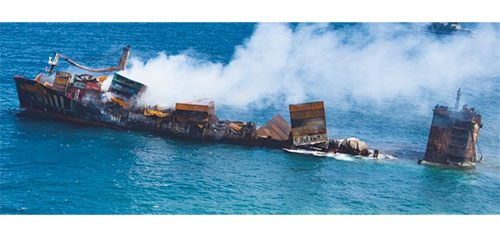
Now, we have a curse that is affecting both our land and the sea around – the X-Press Pearl – that is bringing environmental, economic, employment, health, and social curses to this country. The rulers of the past did sail away from the country to dominate in other regions, and also to establish links with Rome, China, and what is now Indonesia, and spread the words of Buddhist teachings too.
This X-Press Pearl curse has brought massive damage and destruction to our beaches, the big showpiece for tourism promotion and related development. It poses a major threat to the fisherfolk of the country, and threatens the health of the people in many ways. The last minute attempt to tow the vessel away from shallow sea close to the Colombo Harbour, certainly failed, mainly due to delays.
The questions being raised about this Land and Oceanic Curse are many. Did our Port authorities know what poisonous, fiery and other dangerous material it carried? Was Colombo informed as to why it was refused entry to two previous ports? Did they know about the fire-fighting needs that were necessary, and did we have such fire-fighting vessels and equipment?
These cursed queries go on, and all we hear now is about the huge compensation we will receive. There are politicians in positions of power who are proud of such (yet to receive) compensation, and largely silent about all the damage and destruction to this country, and to the lives of the people. This is the reality of cursed politics that dominates this country today.
I initially raised the question whether we were seeing and feeling the reality of a curse that has come down from history? It is time to go back to this cursed record. It was said to be on a Vesak Full Moon day that Vijaya and his followers arrived in this country. He was quick to marry Kuveni, who had sway over this land and people. But it did not take long for Vijaya to banish Kuveni, and their two children, and get down a royal bride from nearby India, his homeland.
Tradition has it that Kuveni did utter a heavy curse on Vijaya, his followers and descendants. This is a curse that has followed us through more than 2000 years, striking our rulers and people hard. Kuveni did have her way of catching up with all the pain she felt when banished by Vijaya. The rulers who follow Vijaya, who take pride in the Vijaya traditions of lack of faith that affect our politics to this day, had better be aware of the Power of Kuveni, when trapped in their glory of power, which includes family power.
Is the X-Press Pearl, sinking below the ocean today, the curse that Kuveni had in mind? When will we get rulers, or politicians, who can rise above the Kuvani curse, through dedicated and honest service to the country and the people? Is this something we can never expect, or even hope for, with the swearing in of Cabinet Minister Namal Rajapaksa, as State Minister for Digital Technology and Entrepreneur Development. It all remains within the family !
Will Kuveni’s curse continue to haunt our country and people, as the rulers remain the Vijaya lackeys of today? The sinking X-Press Pearl gives the answer to what till now was the Pearl of the Indian Ocean.

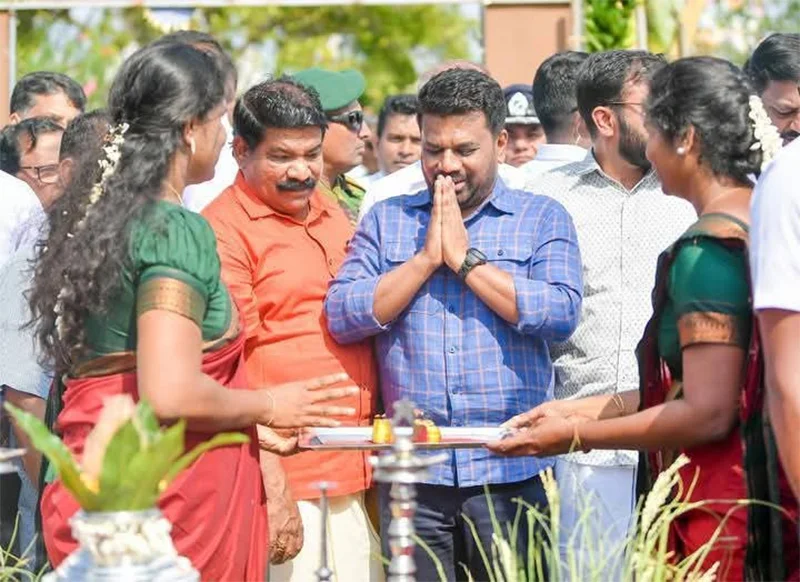
In the space of 15 months, President Anura Kumara Dissanayake has visited the North of the country more than any other president or prime minister. These were not flying visits either. The president most recent visit to Jaffna last week was on the occasion of Thai Pongal to celebrate the harvest and the dawning of a new season. During the two days he spent in Jaffna, the president launched the national housing project, announced plans to renovate Palaly Airport, to expedite operations at the Kankesanthurai Port, and pledged once again that racism would have no place in the country.
There is no doubt that the president’s consistent presence in the north has had a reassuring effect. His public rejection of racism and his willingness to engage openly with ethnic and religious minorities have helped secure his acceptance as a national leader rather than a communal one. In the fifteen months since he won the presidential election, there have been no inter community clashes of any significance. In a country with a long history of communal tension, this relative calm is not accidental. It reflects a conscious political choice to lower the racial temperature rather than inflame it.
But preventing new problems is only part of the task of governing. While the government under President Dissanayake has taken responsibility for ensuring that anti-minority actions are not permitted on its watch, it has yet to take comparable responsibility for resolving long standing ethnic and political problems inherited from previous governments. These problems may appear manageable because they have existed for years, even decades. Yet their persistence does not make them innocuous. Beneath the surface, they continue to weaken trust in the state and erode confidence in its ability to deliver justice.
Core Principle
A core principle of governance is responsibility for outcomes, not just intentions. Governments do not begin with a clean slate. Governments do not get to choose only the problems they like. They inherit the state in full, with all its unresolved disputes, injustices and problemmatic legacies. To argue that these are someone else’s past mistakes is politically convenient but institutionally dangerous. Unresolved problems have a habit of resurfacing at the most inconvenient moments, often when a government is trying to push through reforms or stabilise the economy.
This reality was underlined in Geneva last week when concerns were raised once again about allegations of sexual abuse that occurred during the war, affecting both men and women who were taken into government custody. Any sense that this issue had faded from international attention was dispelled by the release of a report by the Office of the Human Rights High Commissioner titled “Sri Lanka: Report on conflict related sexual violence”, dated 13.01.26. Such reports do not emerge in a vacuum. They are shaped by the absence of credible domestic processes that investigate allegations, establish accountability and offer redress. They also shape international perceptions, influence diplomatic relationships and affect access to cooperation and support.
Other unresolved problems from the past continue to fester. These include the continued detention of Tamil prisoners under the Prevention of Terrorism Act, in some cases for many years without conclusion, the failure to return civilian owned land taken over by the military during the war, and the fate of thousands of missing persons whose families still seek answers. These are not marginal issues even when they are not at the centre stage. They affect real lives and entire communities. Their cumulative effect is corrosive, undermining efforts to restore normalcy and rebuild confidence in public institutions.
Equal Rights
Another area where delay will prove costly is the resettlement of Malaiyaha Tamil communities affected by the recent cyclone in the central hills, which was the worst affected region in the country. Even as President Dissanayake celebrated Thai Pongal in Jaffna to the appreciation of the people there, Malaiyaha Tamils engaged in peaceful campaigns to bring attention to their unresolved problems. In Colombo at the Liberty Roundabout, a number of them gathered to symbolically celebrate Thai Pongal while also bringing national attention to the issues of their community, in particular the problem of displacement after the cyclone.
The impact of the cyclone, and the likelihood of future ones under conditions of climate change, make it necessary for the displaced Malaiyaha Tamils to be found new places of residence. This is also an opportunity to tackle the problem of their landlessness in a comprehensive manner and make up for decades if not two centuries of inequity.
Planning for relocation and secure housing is good governance. This needs to be done soon. Climate related disasters do not respect political timetables. They punish delay and indecision. A government that prides itself on system change cannot respond to such challenges with temporary fixes.
The government appears concerned that finding new places for the Malaiyaha Tamil people to be resettled will lead to land being taken away from plantation companies which are said to be already struggling for survival. Due to the economic crisis the country has faced since it went bankrupt in 2022, the government has been deferential to the needs of company owners who are receiving most favoured treatment. As a result, the government is contemplating solutions such as high rise apartments and townhouse style housing to minimise the use of land.
Such solutions cannot substitute for a comprehensive strategy that includes consultations with the affected population and addresses their safety, livelihoods and community stability.
Lose Trust
Most of those who voted for the government at the last elections did so in the hope that it would bring about system change. They did not vote for the government to reinforce the same patterns that the old system represented. At its core, system change means rebalancing priorities. It means recognising that economic efficiency without social justice is a short-term gain with long-term costs. It means understanding that unresolved ethnic grievances, unaddressed wartime abuses and unequal responses to disaster will eventually undermine any development programme, no matter how well designed. Governance that postpones difficult decisions may buy time, but lose trust.
The coming year will therefore be decisive. The government must show that its commitment to non racism and inclusion extends beyond conflict prevention to conflict resolution. Addressing conflict related abuses, concluding long standing detentions, returning land, accounting for the missing and securing dignified resettlement for displaced communities are not distractions from the government programme. They are central to it. A government committed to genuine change must address the problems it inherited, or run the risk of being overwhelmed when those problems finally demand settlement.
by Jehan Perera
 This Kuppi writing aims to engage critically with the current discussion on the reform initiative “Transforming General Education in Sri Lanka 2025,” focusing on institutional and structural changes, including the integration of a digitally driven model alongside curriculum development, teacher training, and assessment reforms. By engaging with these proposed institutional and structural changes through the parameters of the division and recognition of labour, welfare and distribution systems, and lived ground realities, the article develops a critical perspective on the current reform discourse. By examining both the historical context and the present moment, the article argues that these institutional and structural changes attempt to align education with a neoliberal agenda aimed at enhancing the global corporate sector by producing “skilled” labour. This agenda is further evaluated through the pedagogical approach of socialist feminist scholarship. While the reforms aim to produce a ‘skilled workforce with financial literacy,’ this writing raises a critical question: whose labour will be exploited to achieve this goal? Why and What Reform to Education
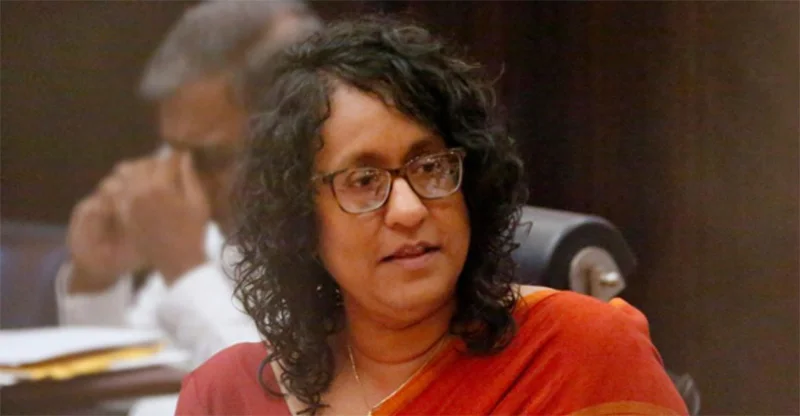
In exploring why, the government of Sri Lanka seeks to introduce reforms to the current education system, the Prime Minister and Minister of Education, Higher Education, and Vocational Education, Dr. Harini Amarasuriya, revealed in a recent interview on 15 January 2026 on News First Sri Lanka that such reforms are a pressing necessity. According to the philosophical tradition of education reform, curriculum revision and prevailing learning and teaching structures are expected every eight years; however, Sri Lanka has not undertaken such revisions for the past ten years. The renewal of education is therefore necessary, as the current system produces structural issues, including inequality in access to quality education and the need to create labour suited to the modern world. Citing her words, the reforms aim to create “intelligent, civil-minded citizens” in order to build a country where people live in a civilised manner, work happily, uphold democratic principles, and live dignified lives.
Interpreting her narrative, I claim that the reform is intended to produce, shape, and develop a workforce for the neoliberal economy, now centralised around artificial intelligence and machine learning. My socialist feminist perspective explains this further, referring to Rosa Luxemburg’s reading on reforms for social transformation. As Luxemburg notes, although the final goal of reform is to transform the existing order into a better and more advanced system: The question remains: does this new order truly serve the working class? In the case of education, the reform aims to transform children into “intelligent, civil-minded citizens.” Yet, will the neoliberal economy they enter, and the advanced technological industries that shape it, truly provide them a better life, when these industries primarily seek surplus profit?
History suggests otherwise. Sri Lanka has repeatedly remained at the primary manufacturing level within neoliberal industries. The ready-made garment industry, part of the global corporate fashion system, provides evidence: it exploited both manufacturing labourers and brand representatives during structural economic changes in the 1980s. The same pattern now threatens to repeat in the artificial intelligence sector, raising concerns about who truly benefits from these education reforms
That historical material supports the claim that the primary manufacturing labour for the artificial intelligence industry will similarly come from these workers, who are now being trained as skilled employees who follow the system rather than question it. This context can be theorised through Luxemburg’s claim that critical thinking training becomes a privileged instrument, alienating the working class from such training, an approach that neoliberalism prefers to adopt in the global South.
Institutional and Structural Gaps
Though the government aims to address the institutional and structural gaps, I claim that these gaps will instead widen due to the deeply rooted system of uneven distribution in the country. While agreeing to establish smart classrooms, the critical query is the absence of a wide technological welfare system across the country. From electricity to smart equipment, resources remain inadequate, and the government lags behind in taking prompt initiative to meet these requirements.
This issue is not only about the unavailability of human and material infrastructure, but also about the absence of a plan to restore smart normalcy after natural disasters, particularly the resumption of smart network connections. Access to smart learning platforms, such as the internet, for schoolchildren is a high-risk factor that requires not only the monitoring of classroom teachers but also the involvement of the state. The state needs to be vigilant of abuses and disinformation present in the smart-learning space, an area in which Sri Lanka is still lagging. This concern is not only about the safety of children but also about the safety of women. For example, the recent case of abusive image production via Elon Musk’s AI chatbox, X, highlights the urgent need for a legal framework in Sri Lanka.
Considering its geographical location, Sri Lanka is highly vulnerable to natural disasters, the frequency in which they occur, increasing, owing to climate change. Ditwah is a recent example, where villages were buried alive by landslides, rivers overflowed, and families were displaced, losing homes that they had built over their lifetimes. The critical question, then, is: despite the government’s promise to integrate climate change into the curriculum, how can something still ‘in the air ‘with climate adaptation plans yet to be fully established, be effectively incorporated into schools?
Looking at the demographic map of the country, the expansion of the elderly population, the dependent category, requires attention. Considering the physical and psychological conditions of this group, fostering “intelligent, civic-minded” citizens necessitates understanding the elderly not as a charity case but as a human group deserving dignity. This reflects a critical reading of the reform content: what, indeed, is to be taught? This critical aspect further links with the next section of reflective of ground reality.
Reflective Narrative of Ground Reality
Despite the government asserting that the “teacher” is central to this reform, critical engagement requires examining how their labour is recognised. In Sri Lanka, teachers’ work has long been tied to social recognition, both utilised and exploited, Teachers receive low salaries while handling multiple roles: teaching, class management, sectional duties, and disciplinary responsibilities.
At present, a total teaching load is around 35 periods a week, with 28 periods spent in classroom teaching. The reform adds continuous assessments, portfolio work, projects, curriculum preparation, peer coordination, and e-knowledge, to the teacher’s responsibilities. These are undeclared forms of labour, meaning that the government assigns no economic value to them; yet teachers perform these tasks as part of a long-standing culture. When this culture is unpacked, the gendered nature of this undeclared labour becomes clear. It is gendered because the majority of schoolteachers are women, and their unpaid roles remain unrecognised. It is worth citing some empirical narratives to illustrate this point:
“When there was an extra-school event, like walks, prize-giving, or new openings, I stayed after school to design some dancing and practice with the students. I would never get paid for that extra time,” a female dance teacher in the Western Province shared.
I cite this single empirical account, and I am certain that many teachers have similar stories to share.
Where the curriculum is concerned, schoolteachers struggle to complete each lesson as planned due to time constraints and poor infrastructure. As explained by a teacher in the Central Province:
“It is difficult to have a reliable internet connection. Therefore, I use the hotspot on my phone so the children can access the learning material.”
Using their own phones and data for classroom activities is not part of a teacher’s official duties, but a culture has developed around the teaching role that makes such decisions necessary. Such activities related to labour risks further exploitation under the reform if the state remains silent in providing the necessary infrastructure.
Considering that women form the majority of the teaching profession, none of the reforms so far have taken women’s health issues seriously. These issues could be exacerbated by the extra stress arising from multiple job roles. Many female teachers particularly those with young children, those in peri- or post-menopause stages of their life, or those with conditions like endometriosis may experience aggravated health problems due to work-related stress intensified by the reform. This raises a critical question: what role does the state play in addressing these issues?
In Conclusion
The following suggestions are put forward:
First and foremost, the government should clearly declare the fundamental plan of the reform, highlighting why, what, when, and how it will be implemented. This plan should be grounded in the realities of the classroom, focusing on being child-centred and teacher-focused.
Technological welfare interventions are necessary, alongside a legal framework to ensure the safety and security of accessing the smart, information-centred world. Furthermore, teachers’ labour should be formally recognised and assigned economic value. Currently, under neoliberal logic, teachers are often left to navigate these challenges on their own, as if the choice is between survival or collapse.
Aruni Samarakoon teaches at the Department of Public Policy, University of Ruhuna
Kuppi is a politics and pedagogy happening on the margins of the lecture hall that parodies, subverts, and simultaneously reaffirms social hierarchies.
By Aruni Samarakoon
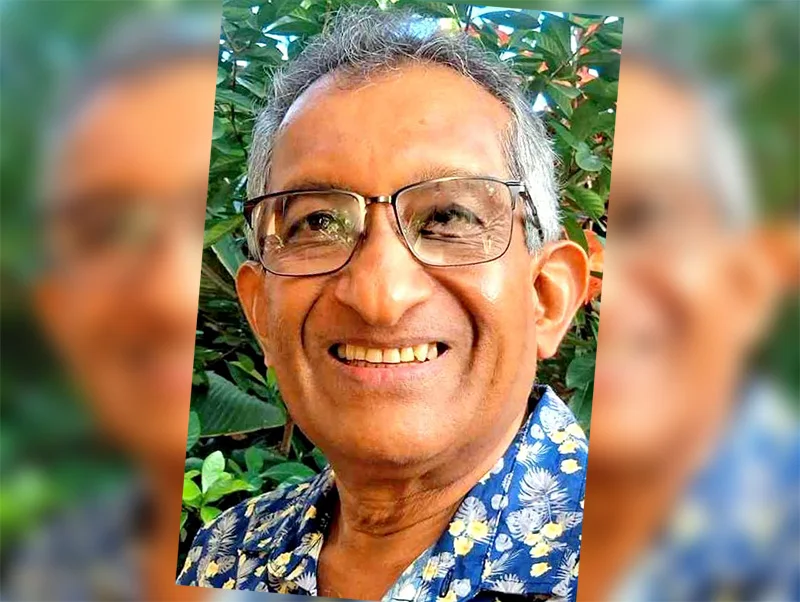
 Diliup Gabadamudalige is, indeed, a maestro where music is concerned, and this is what he had to say, referring to our Seen ‘N’ Heard in The Island of 6th January, 2026, and I totally agree with his comments.
Diliup: “AI avatars will take over these concerts. It will take some time, but it surely will happen in the near future. Artistes can stay at home and hire their avatar for concerts, movies, etc. Lyrics and dance moves, even gymnastics can be pre-trained”.
Yes, and that would certainly be unsettling as those without talent will make use of AI to deceive the public.
Right now at most events you get the stage crowded with lyrics stands and, to make matters even worse, some of the artistes depend on the smartphone to put over a song – checking out the lyrics, on the smartphone, every few seconds!
In the good ole days, artistes relied on their talent, stage presence, and memorisation skills to dominate the stage.
They would rehearse till they knew the lyrics by heart and focus on connecting with the audience.

Smartphones and lyrics stands: A common sight these days
The ability of the artiste to keep the audience entertained, from start to finish, makes a live performance unforgettable That’s the magic of a great show!
When an artiste’s energy is contagious, and they’re clearly having a blast, the audience feeds off it and gets taken on an exciting ride. It’s like the whole crowd is vibing on the same frequency.
Singing with feeling, on stage, creates this electric connection with the audience, but it can’t be done with a smartphone in one hand and lyrics stands lined up on the stage.
AI’s gonna shake things up in the music scene, for sure – might replace some roles, like session musicians or sound designers – but human talent will still shine!
AI can assist, but it’s tough to replicate human emotion, experience, and soul in music.
In the modern world, I guess artistes will need to blend old-school vibes with new tech but certainly not with smartphones and lyrics stands!

Red-hot Royal Challengers Bengaluru stay perfect ain 20nd march into playoffs

Zadran, Rasooli power Afghanistan to commanding win over West Indies

Italian fashion designer Valentino dies aged 93

U – 19 World Cup: Sri Lanka beat Ireland by 106 runs

U – 19 World Cup: Rowles, Bulbulia star in South Africa’s big win over Tanzania

U – 19 World Cup: Raza, Usman steer Pakistan to victory over Scotland

‘Dates have the highest sugar content to fight Coronavirus’

Sunday Island 27 December – Headlines

#SundayIsland 17th December – Headlines

Sunday Island – 28th March

Sunday Island Headlines – 21 March

Sunday Island – 21st February – Headlines
-

 Editorial3 days ago
Illusory rule of law
-
 News4 days ago
UNDP’s assessment confirms widespread economic fallout from Cyclone Ditwah
-

 Business6 days ago
Koaloo.Fi and Stredge forge strategic partnership to offer businesses sustainable supply chain solutions
-

 Editorial4 days ago
Crime and cops
-

 Features3 days ago
Daydreams on a winter’s day
-

 Editorial5 days ago
The Chakka Clash
-
 Features3 days ago
Surprise move of both the Minister and myself from Agriculture to Education
-

 Features2 days ago
Extended mind thesis:A Buddhist perspective