
Features
Do autocracy & kleptocracy go hand-in-hand?

JR’s despotism, Chandrika’s kleptomania; What’s the next variant?
by Kumar David
If you have not read or reread Victor Ivan’s Queen of Deceit recently it might be an idea to do so because of forebodings that the Gotabhaya Rajapaksa presidency will be an autocracy post 20A and anticipation that the constitution to be enacted thereafter will set this in stone. An allied concern is that autocracy is usually a stepping stone to kleptocracy; but is this an inevitable corollary? I make the distinction because JR was an autocrat who he did not rob the country dry; conversely Chandrika did not enjoy as formidable a stature as JR but if you accept even a part of what Victor Ivan says a better title for his book would have been ‘The Bandit Queen’. The original Sinhala is Chaura Rajna; the English version is available from Amazon, and presumably Ravaya has both.
The charge of dictatorship levelled against JR is an open and shut case. He reigned like a monarch, was venerated as a sage and worshipped by an all-stooge press. He expelled the Tamil party from Parliament, revoked a general election, egged on and rejoiced in the 1983 communal riots and drove the country to neo-liberal economics which widened inequality. He stripped Mrs B, Felix Dias and Nihal Jayawickrema of their civil rights desecrating fundamental rights but no one dared say boo to his goose. Supreme Court judges and Chief Justices who did not toe his line were shooed out. Repeated bouts of racism in Sri Lanka have removed ideological checks on the abuse of power; JR removed the institutional constraints as well. Post 20A we will have neither institutional nor ideological checks.
Re Chandrika, the first question is “To what extent should we place confidence in Victor’s indictment?”. My short answer is I believe most but not all of it. Let me state upfront, one point that is sloppy in Victor’s storyline is Chapter II (p.49-65) “Who Orchestrated the Town Hall Bombing?”. It is speculation without real evidence; it can’t stand scrutiny or challenge. He makes out that Chandrika arranged the bombing to win sympathy and turn around a flagging presidential election (December 1999), but the plan misfired and she suffered damage to an eye. Victor Ivan would have brought much credit to himself and to his book had he left out this hare-brained conspiracy theory. Another huge deficiency is that nowhere does Victor recognise that after the LSSP and CP succumbed to racism in 1965-66, Chandrika was the only national leader who made an effort – unsuccessful because of Ranil and the UNP – to go that extra mile and revisit Tamil anxieties and address legitimate demands.
It is charges of corruption – bribery, kick-backs, abuse of state facilities – that I think ring true and accusations of complicity in criminality and murder are convincingly argued. It is amazing that neither Chandrika nor her numerous explicitly named crooked partners sued or received retraction or apology for numerous stunning allegations. The implication is that none dared take the witness stand. Exposés by many people against a well known accountant, to pick an example at random, are that he masterminded on behalf of Chandrika the privatisation of Kotagala Estate where, in effect, the state was defrauded of Rs 198 million, presumably shared between the miscreants. There are many more examples; Water’s Edge for example.
Chandrika’s Presidential Security Division (PSD) was a known Mafia led by a notorious criminal Baddegana Sanjeewa and his associates; all conveniently bumped off later (shades of the Oswald-Ruby episode in the Kennedy assassination). The PSD, Victor boldly asserts, bumped off Kumar Ponnambalam and Rohana Kumara (a foul-mouthed TV producer). No election in this country has been as vile as Wayamba Provincial Council 1999, virtually run by the PSD. I do not intend to pursue criminality since my focus today is on kleptocracy. And I do believe that there was huge corruption during Chandrika’s reign. Worst perhaps were private-power projects. From friends and engineers, I know of multi-million-dollar kick-backs. Isn’t it legitimate to ask whether criminality on this scale could have transpired without connivance and benefits for the boss?
I have used these two examples to suggest that constitutional autocrats are not necessarily kleptocrats and conversely that Mafia-presidents deep into robbing with gross reputations for financial misconduct may not be formidable dictators. The Executive Presidents of Lanka have all wielded excessive power and done so unwisely but Chandrika is not the worst case of abuse of formal constitutional power; that nefarious honour goes to JR and Mahinda. Nevertheless, it is fair that I give readers access a point of view contrary to mine. Please seen an essay by Martin Sandbu in the 22 September 2020 issue of the Financial Times (UK) “Populists and kleptocrats are a perfect match”. (https://on.ft.com/2RVWkAF). It says in summary: ‘Autocracy and kleptocracy – the capture of political power for the purpose of theft and embezzlement – go together; oligarchic networks (family clans) have privatised the state for their own benefit. Use of public funds for private benefit is rife; lucrative state contracts are handed out to personal associates. Then there is the opposite problem; use of dirty money to manipulate democratic politics. Political fecklessness causes the worst damage; failure to crack down not only condones wrongdoing but also signals that it is of no great priority’. I (KD) think this is true as a generalisation but there are variations.
I am sure readers know where I am heading: What expectations should we have of the post-20A Gotabaya Presidency? Yes, you are right if you guessed that I am leaning to the view that this Presidency will be autocratic but not kleptocratic. That seems to be the style of the man – that is of course not counting hordes of venal parliamentarians and disreputable family. The downside of GR’s style lies elsewhere, it is his penchant for issuing peremptory ill-advised commands. I need to dwell on this. Yes indeed, he recognized and stuck with sound advice on COVID, but on some other matters he has not been so wise. Verbal instructions are to have the same import as formal government texts; this will lead to chaos. The President, thanks to his hare-brained advisers could end up in Mugabesque bedlam. Ex-President Tambo Mbeki of South Africa in the face of ridicule by every medical learned-society, the WHO and specialist opinion, decreed that AIDS was not caused by the HIV virus or concupiscence! This fruitcake president is responsible for 350,000 preventable deaths. The very day that he left office, the new Health Minister Barbra Hogan declared “The era of denialism is over in South Africa”. But the damage had been done!
Then for example if instructions are issued to the CEB that 80% of electrical energy shall be from renewable sources by 2030 it’s like running after a pot of gold at the end of a rainbow. If no more thermal plant is commissioned and if those in operation are switched off one by one to keep thermal below 20%, it will be pandemonium in power supply and in industry. GR is fixated on 80% renewable electricity by 2030 while the CEB long-term plan puts it at 35%; an unbridgeable gap. (In my view 35% is too high, but my two-cents worth is irrelevant). This controversy is a huge techno-economic uncertainty. We can’t go on like this. Gota needs to put his money where his mouth is. May I suggest, only partly in jest, that if he is to have any credibility, he must dismantle the CEB planning unit – engineers can transfer to other branches and should welcome the move (sic!), otherwise when things flop, they will be accused of sabotaging Presidential targets.
The Cabinet, Power Minister, unschooled MPs and CEB Chairman Herath a Viyathmaga person, dare not oppose the boss. Therefore, all must put their money where their mouths are and demand that the unit be re-staffed with “experts” foresworn to upholding the 80% decree – though full-page article alternative-experts in the local press don’t even have the foggiest notion what a rolling-plan is! This lot must be instructed to commission 2,000 GWh of additional renewable energy each year starting now – every month sans action is 30 days lost! An 80% target by 2030 means increasing renewable electricity to 26,000 GWh/annum by then. Current renewable production is about 6,300 GWh/annum, consisting of 4,500 major-hydro and 1,800 novel sources – mini-hydro (1,100), wind (450), solar (150), bio-mass (100). These numbers are not exact but acceptable; I have no access to real-time data. This is the marathon these new “experts” will need to run and let’s see how President Gotabaya bridges the 35% versus 80% handicap!
Autocracy may provide cover for kleptocracy, but it may instead provide cover and immunity for irrational decision making that none dare question. Hence my expectation differs from what most others say. It is very likely that we will get much autocracy, hand-in-hand with frequent illogical decision making, but not big time kleptocracy. Insofar as the title of this essay goes, JR was a tyrant who brooked no challenge, Chandrika a base kleptocrat, MR a populist who wore a coat of many colours, and the last incumbent only half executive but surely more than half deranged. The next, after 20A and/or the new constitution will be a novel, a very novel variant on the ever-turbulent executive-despot-autocrat theme.


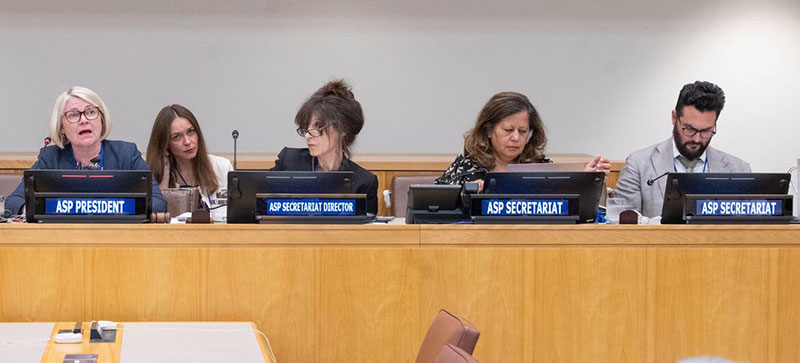
 US Secretary of State Marco Rubio’s warning to the International Criminal Court (ICC) was stark: ‘Either the ICC will end its threats, or we will end the ICC.’ It followed US central administration accusations that the court was unfairly targeting Americans on the basis of trumped-up war crimes charges.
However, a new plethora of sanctions has been clamped on the ICC by the US, which in turn has spurred accusations by sections of the world that the latter has unleashed an ‘assault’ on the international legal order.
What some of the sanctions would mean for the ICC was outlined by Rubio: ‘We will ban transactions with this rogue court, cutting off their resources and crippling their ability to operate against us.’
The ICC has shown consistency of purpose over the years. Despite some operational constraints it has indicted a large number of political strongmen from around the world, accused of war crimes and other governance excesses that come under its purview. Two such recent figures are: Russian President Vladimir Putin and Israeli Prime Minister Benjamin Netanyahu.
Rather than enjoy a mere nominal presence in the world community, the ICC has proved its effectiveness by detaining and bringing to justice scores of VIP politicians and others of their ilk who have been found guilty of human rights abuses and kindred excesses that come within the terms of reference of the ICC.
Accordingly, the international justice system would be stymied considerably as a result of the ICC being dis-empowered, particularly financially. Needless to say, potential and real perpetrators of the species of crime coming under the jurisdiction of the ICC would stand to gain most from such anarchic tendencies. That is, political repression globally would be enabled to enjoy a new lease of life.
A detailing of the types of crime coming under the purview of the ICC provides an idea of what it would cost the international community if the ICC’s operations are gravely hampered. They are mainly: genocide, war crimes, crimes against humanity and the crime of aggression.
That is, the part of the world to be worst affected would be the global South, since the latter is awash with the mentioned crimes. Needless to say, a chronically-disaffected South will sooner rather than later undermine the well being of the world dangerously. The world is already being put through these paces.
At the time of writing, ‘illegal migrants’ from the South, for example, are aggravating many a Western economy’s woes, besides creating for them acute law and order issues. The fact that these migrants’ presence goes on to become a virtual test of the migrant receiving states’ ability to forge domestic social inclusion in the face of jingoistic protests by mainly white supremacist groups is evidence of the latter. As is known, the US, to take just one example, has been up against this crisis for quite a while.
Accordingly, it will be in the best interests of the West if ‘illegal’ migrant arrivals on their shores are stemmed. If the socio-political and economic problems assailing the South are effectively managed through North-South collaborative, ‘trouble-shooting’ efforts the causes leading to ‘illegal’ migration and connected issues could be resolved at source as it were. For, it is the aggravation of the South’s material questions that lays the basis for the emergence of repressive and anti-democratic regimes in the hemisphere.
Until such time that the aforementioned issues in North-South relations are visited afresh and addressed urgently, a vibrantly functioning ICC would be needed. For, the latter would prove a deterrent to Southern political and military strongmen, highly prone to power abuse and like excesses, from coming into being in the wake of the South’s chronic material woes and the wars and conflicts that result from them.
It stands to reason then that the US would be acting in its own interests by enabling the ICC to perpetuate its mandate without hindrance. For a crop of issues that impinges negatively on internal law and order would be defused.
Meanwhile, there needs to be a meeting of minds among the rest of the West to put back in place a North-South dialogue process aimed at reducing some of the economic pressures that are weighing on the South.
Since economics usually drives politics it will be in the interests of the world community to scrutinizingly re-visit North-South issues of the past and put in place economic relief packages for Southern publics that would enable them to tide over their material hardships rather than permit the latter to aggravate into social disaffection and eventually armed militancy. It is the latter juncture that paves the way for the emergence of authoritarian rulers in the South who then go on to be a blight on their publics.
Accordingly, the Southern-based global development thinking of the past that envisaged a more equitable world economic order needs to be seen as an urgent need. That is, NAM’s international development paradigms need to be resuscitated to the extent possible.
It is unlikely that rightist governments of the West, such as the current Republican administration in the US, would find these projects feasible, but democratic states of Europe, led by perhaps the UK, are likely to think otherwise. For it would not be beneficial for the democratic world to be having on their hands repressive governments in the South who would be gravitating towards the major military and economic actors of the South, such as Iran and North Korea, who tend to be in constant power struggles with the West.
However, until such time that the mentioned, pro-people initiatives are given serious thought the ICC would need to be enabled by the international community to be in place comfortably and carry on with its mandate of bringing repressive rulers to book. Besides the ICC should pave the way for the peoples of the developing world to enjoy some substantial respite from the political repression and even terror which tend to be their lot.
Meanwhile, the wars of West Asia are relentlessly aggravating the economic hardships of people everywhere, driving the point home to enlightened sections that there is no alternative to peacemaking. A challenge is to convert the US under President Trump to this line of thinking.

 This week, I give you five simple, time-tested homemade remedies that help reduce the appearance of blemishes, control excess shine and leave your skin feeling softer and smoother.
The Honey and Lemon Brightening Dab:
For stubborn blemish marks, this is a classic. Mix one teaspoon of pure bee honey with three to four drops of fresh lemon juice. Apply gently, only on the affected spots, and leave for 10 minutes before rinsing with lukewarm water. While honey soothes and softens, lemon helps to brighten naturally. Use twice a week in the evening.
Besan and Rose Water Oil-Control Pack:
An ideal remedy to combat shine, especially on the T-zone. Take two teaspoons of besan (gram flour) and mix with sufficient rose water to form a smooth paste. Add a pinch of turmeric for its antiseptic goodness. Apply evenly, keep for 15 minutes and wash off. It absorbs excess oil without over-drying, leaving a beautiful matte finish.
Aloe Vera and Cucumber Ice Soother:
Blend fresh aloe vera gel with the juice of a grated cucumber and freeze the mixture in an ice tray. Each morning, wrap one cube in a soft muslin cloth and gently rub over a cleansed face for 30 seconds. It calms, tightens pores and imparts a baby-soft smoothness.
Oatmeal and Curd Gentle Polish:
Roughness and old blemish marks need gentle exfoliation. Combine one tablespoon of finely powdered oatmeal with one tablespoon of fresh curd (yoghurt). Massage very gently, in circular motions, for one minute, leave for five minutes and rinse. It removes dead cells and unveils softer, clearer skin.
Multani Mitti and Green Tea Magic Mask:
Brew some green tea and allow it to cool completely. Mix one and a half teaspoons of Multani Mitti (Fuller’s Earth) with the tea water to make a fine paste. Apply for 10 to 12 minutes – do not let it dry and crack completely – and wash off. It draws out impurities, fades blemishes and bestows a fresh, shine-free glow.
A Gentle Reminder:
As with any natural remedy, always do a patch test on your inner arm first. For those with oily or combination skin, avoid heavy coconut oil application and harsh scrubbing, as they tend to aggravate shine and blemishes.

 Dream of performing on a world stage? Well, here is your unique, golden opportunity!
The World Championships of Performing Arts (WCOPA) — the one and only official “Talent Olympics” — is the world’s premier global platform for aspiring singers, dancers, actors, models, instrumentalists, etc., to compete, shine and be discovered!
And, yes, this world stage is open to YOU, Sri Lankans living in Sri Lanka and overseas!
Held annually in glittering Las Vegas, WCOPA brings together over 70 countries, all competing for Gold, Silver and Bronze Medals, just like the traditional Olympics.

Lakisha Bernard: Will represent Team Sri Lanka at WCOPA 2027
Outstanding performers vie for the coveted titles of Junior and Senior Grand Champion Performer of the World, with winners and standout participants awarded over $500,000 in scholarships, cash awards and prizes to catapult their education and careers!
Sri Lanka is already making waves! At WCOPA 2026, Natharie Wickramasinghe, representing Team Sri Lanka, made the nation proud by winning a Bronze Medal in the Ethnic/Folklore Dance category!

Lakisha: Accomplished freelance Model and Fashion Design graduate
Recruitment for this prestigious competition is handled through a system of scouts and licensed National Directors — and this is where our very own Chris Rajendra, now based in Las Vegas, and National Director for Team Sri Lanka, comes into the scene.
If you are a singer, dancer, actor, model, instrumentalist — if you have talent burning inside you — contact Chris Rajendra today for registration and, who knows, you may find yourself in Las Vegas, and proudly draped in the Sri Lankan flag, at WCOPA 2027!
The contact address is: Chris Rajendra, wcopa.nationaldirector.sl@gmail.com
or chris.rajendra@gmail.com
Meanwhile, a star is born for 2027, in the form of Lakisha Bernard who is all set to represent Team Sri Lanka at WCOPA 2027.
Originally hailing from the sun-drenched coastal city of Colombo and now carving out her creative career in Canada, 22-year-old Lakisha is stepping into the international spotlight.
This accomplished freelance Model and Fashion Design graduate has officially been appointed as the Team Sri Lanka Promoter for Canada as she prepares to represent Team Sri Lanka at WCOPA in Las Vegas.
Lakisha brings a unique blend of high-fashion sensibility, captivating camera presence and expert garment design to the Team.
Having built her career, from local college shoots to high-glamour concepts, Lakisha’s inspiring journey embodies the true spirit of cultural bridge-building and creative resilience, bringing immense pride and recognition to Sri Lanka on the global stage.
WCOPA 2027 will be held at the legendary Westgate Hotel & Casino, Las Vegas, from 12th to 20th July – the very same iconic arena where the late, great Elvis Presley himself performed!
Your moment is now. Your stage is Las Vegas, so hurry and contact Chris Rajendra.

AgriConnect Sri Lanka’ to be launched on 30 October to Modernise the Agricultural Sector Through Digitalisation

57th Annual Saints’ Quadrangular Tournament on Saturday and Sunday

Showers or thundershowers will occur at most parts of the island

Prison rules to be revised over monks’ attire

AC President recuses himself from hearing prison attire case pertaining to Gnanasara Thera

Court orders steps to obtain INTERPOL Red Notice against Basil

‘Dates have the highest sugar content to fight Coronavirus’

Sunday Island 27 December – Headlines

#SundayIsland 17th December – Headlines

Sunday Island – 28th March

Sunday Island Headlines – 21 March

Sunday Island – 21st February – Headlines
-

 News7 days ago
NDB fraud Rs 60mn more than reported
-

 News7 days ago
Removing monk’s robes matter for Sangha to decide: Mahanayake Theras
-

 News5 days ago
Sri Lanka escalates anti-graft drive with Shiranthi’s jailing
-
 News6 days ago
NPP govt. reminded of its responsibilities as US warship leaves Colombo
-
 Latest News6 days ago
Farhan, Sadaqat help Pakistan ace 183 chase to go 1-0 up
-
 News7 days ago
BHC, Colombo: “LTTE remains a proscribed org. in the UK”
-

 Latest News4 days ago
Farhan and Sadaqat help Pakistan seal series in style
-

 News5 days ago
Iranian ships stranded, Lanka fears US sanctions