
Features
Do Astrology and Palmistry predictfuture whilst Astronomy, Astrophysics and Cosmology explore past?

By Dr Upul Wijayawardhana
No surprise whatsoever, if the tongue- in-cheek question I posed, as the heading for this piece, would be answered in the affirmative by the majority of Sri Lankans. Perhaps, some may get that impression because the ‘hot-topic’ of cosmology, at the moment, is the origin of the universe. Maybe, I am cynical because I never had the reassurance of any astrologer or palmist predicting that I would become a doctor, leave alone being a Cardiologist who would practise in two countries. Nobody would have imagined I would do so, as there was no family precedence or pressure. In fact, the opposite was true. Though, from the time I heard stories about my unexpected survival following a premature birth, I wanted to be a doctor, my father objected and tried to persuade me to join the Ceylon Civil Service instead! If the astrologer who cast my horoscope at birth, or any others who looked at it afterwards, had predicted that I would take to medicine, perhaps, my father would not have raised any objections.
Memorable incident
In spite of the lack of such predictions, I have kept an open mind, may be at least in part due to the lingering memory of an incident that happened in June 1976, while I was working in the Cardiology Unit. I was contacted by the daughter of a general practitioner who worked in my hometown, Matara. She inquired whether I could drop in at her place in Nugegoda to have a look at her father and I readily agreed because I could return the favour, as he had treated me occasionally in my childhood. After seeing him and having had a long chat about ‘good old days’, as I was about to leave, she said “Upul, you did a big favour. Can I show my appreciation by reading your cards?” Although I was not aware that she was a well-known card-reader, much in demand in Colombo high-society, I agreed, more out of courtesy and curiosity. She looked at the cards I picked and said “A friend of yours is to have surgery and is in grave danger” and suggested he gets surgery done after a particular date.
It took me a little while to recollect that my good friend George Rajapaksa, Minister of Health, was in Glasgow awaiting Coronary by-pass surgery. The following day, with the help of his Permanent Secretary, Vincent Panditha, I was able to contact Lalitha, George’s wife and I related this episode. Although I requested her to get the surgery postponed, she was not keen as surgery had already been scheduled for the following day. George had successful surgery but died after a prolonged stay in the Intensive Care, due to lung complications, most likely precipitated by heavy smoking. Whether the outcome would have been different had surgery been postponed, I do not know.
Interest stirred
Perhaps, I was wise to keep an open mind, rather than declaring myself a rationalist, as recently, and unexpectedly, some of my esteemed colleagues have declared their belief in the supernatural. My interest was stirred by the interesting contributions on the supernatural and the paranormal by Prof S N Arsecularatne, Emeritus Professor of Microbiology of the Peradeniya University, made over a period of time. Prof Sanath Lamabadasuriya, Emeritus Professor of Paediatrics, in an interesting piece in The Island of 02 September titled ‘Palmistry, a personal experience’ described in detail how a palmist predicted, not only his becoming a professor before the age of 40 but also how his marriage would take place. This was repeated in ‘The Sunday Island’ of 12th September, provoking a response by Bodhi Dhanapala, retired head of the science department of the Quebec Ecole Polytechnic, titled “Palmistry – personal experiences and occult nonsense” (The Sunday Island, 26 September).
Interestingly, Bodhi did not comment on another article, “My personal experience and perspective of Astrology and Palmistry” by Dr Nihal D Amarasekara, Retired Consultant Radiologist in the UK (The Sunday Island, 19 September) who was stimulated to express his views after reading the experiences of his batchmate, Sanath. Interestingly, both of them had family connections to medicine. Maybe, Nihal escaped criticism from Bodhi Dhanapala because, while describing the interest generated and the correct predictions made by his maternal grandparents, Nihal ended his piece with a tinge of scepticism typical of a scientist.
In a well-reasoned piece, Dr Upatissa Pethiyagoda Astrology, Astronomy and Reason: (The Sunday Island, 3rd October) argues against the possibility of astrological predictions. What struck me most were his concluding paragraph: “It is not my intention to stir discord but to stimulate discussion (or even demolition) by a reasoned debate, in addition to falsification or ignorance displayed by this plunge into an unfamiliar area. In any event, I stand to be corrected (hopefully) in civil language.” Is he referring to our excelling in argument and confrontation than discussion and deliberation, even amongst the intelligentsia?
For me, the most difficult concept to grasp is how anyone could foretell the future; something that has not happened yet and the course of which could be changed by many unforeseen circumstances unless, of course, our future is already pre-determined. If so, at what stage was this future written? Was the future of the universe already decided at the time of the Big Bang? If so, who made that decision? Was it the Almighty? I doubt, as I do not believe in Him or Her!
Those who believe in astrology consider ‘Nadi Vakyam’ or Nadi Astrology to be the ultimate. According to this system, originating in South India, it is believed that one’s future is dictated by the Brahma using the Navagraha’s and the Siddars as channels. As the Brahma cannot do everything in this realm directly, 84,000 Siddars have been created to perform duties on his behalf. Siddars are public servants in the cosmos, who have the capabilities and energies many would consider supernatural. Nadi Vakyams written by them in ola leaves are read by a select group of astrologers who identify horoscopes by comparison with palm prints. Some, who have had readings done, have commented that the past detailed in these readings are more accurate than the predictions for the future! However, many questions arise. Have they written the horoscopes of all the inhabitants in the world and do they continue to do so? Or, are they meant for a select few? If so, how are they chosen?
Sky at Night
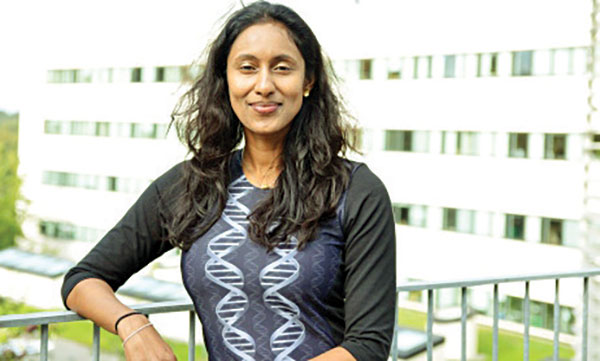
Being confined to home, thanks to the pandemic, has given me time for thought and research as well as learning through television documentaries. Couple of weeks ago, whilst channel-hopping I came across, on BBC4, an extremely interesting episode of “Sky at Night”, long-standing BBC monthly programme on Astronomy, broadcast since April 1957. This episode titled “Question Time” was a special programme celebrating British Science week with a question-and-answer session. When the compere introduced the first expert, Professor of Astrophysics in University College, London, Hiranya Peiris, my ageing heart swelled with pride as I knew she must be of Sri Lankan origin! A quick Google search, whilst watching the programme, confirmed that she was born in Sri Lanka in 1974, completed the Natural Sciences Tripos at University of Cambridge in 1998, and earned a PhD at Princeton University from the department of Astrophysical Sciences. The compere asked her whether the many ‘Medals of honour’ she has received are actual medals. When Hiranya replied that they are real and quite big, he commented that she is “The Four-star General of Cosmology”. What a wonderful achievement! The contrast cannot be starker; whilst the majority of Sri Lankans are steeped in superstition, one of our own is a shining star in the field of Cosmology, exploring the origin of the universe!
In the website of her former Cambridge College, New Hall, now called Murray Edwards College, Hiranya explains her main interests as follows:
“I am a cosmologist. In my research, I am contributing to an international effort to understand the origin and the evolution of the Universe. It is amazing that this is even possible, because it involves extreme physics that we cannot replicate in the laboratory. However, at the Big Bang, the Universe itself performed the ultimate physics experiment. The clues to this physics are imprinted upon the oldest light we can see in the Universe, the so-called cosmic microwave background, and the large-scale distribution of galaxies. Because the ultimate experiment was done once, and we can’t repeat it, cosmologists have to become detectives. Different theories of the universe produce different fingerprints in these data, and we sift through the fingerprints looking for which one matches what we observe. We are trying to piece together the clues to figure out the narrative about how our Universe began, and how it is evolving. In the past decade we have been able to precisely answer age-old questions such as how old is the Universe, what does it contain, and what is its destiny. Along with these answers have also come many exciting new questions.
A modern cosmological research is a very collaborative and international enterprise. My work involves a lot of mathematics and high-performance computing, the development of advanced algorithms and highly specialized databases to store and sift through the massive amounts data returned by cosmological sky surveys. Some of this work requires me to work in small groups with two or three other researchers, but I also contribute to large global projects with several hundred people in many countries. Since cosmology is very international, I travel extensively, discussing research findings, giving talks, and running workshops and seminars. I also enjoy sharing my knowledge and enthusiasm with my undergraduate and postgraduate students at the university.”
Hiranya and country of birth
Reading this, what passed through my mind is why Hiranya is not known in the country of her birth? Perhaps, unlike some others who do very little and advertise a lot, she shuns self-glorification. It is to reflect the work she does in understanding the origin of the universe that I referred to, in the title, Astronomy, Astrophysics and Cosmology exploring the past. In addition to the Chair she holds in University College, London, she is also the Director of the Oskar Klein Centre for Cosmoparticle Physics in Stockholm.
Hiranya was a member of the 27-person team awarded the 2018 Breakthrough Prize in Fundamental Physics. This US$3 million award was given for the detailed maps of the early universe generated from Wilkinson Microwave Anisotropy Probe, a NASA explorer mission launched in 2001, which has transformed modern cosmology. Other awards include Kavli Frontiers Fellow (National Academy of Sciences) 2007, Halliday Prize (Science and Technology Facilities Council) 2007, Philip Leverhulme Prize (Leverhulme Trust) 2009, Fowler Prize (Royal Astronomical Society) 2012, Gruber Prize for Cosmology (Gruber Foundation) 2012, Buchalter Cosmology Prize 2014, Fred Hoyle Medal and Prize (Institute of Physics) 2018, Göran Gustafsson Prize in Physics (Göran Gustafsson Foundation and the Royal Swedish Academy of Sciences) 2020, – Max Born Medal and Prize (The Institute of Physics and the German Physical Society) 2021 and Eddington Medal (Royal Astronomical Society) 2021. The only thing missing seems to be the Nobel Prize!
Hiranya’s lecture “Cosmology: Galileo to Gravitational Waves”, delivered at the Royal Institution in London, explains in simple terms complex issues of the cosmos and can be watched on YouTube (https://www.youtube.com/watch?v=5HXOfIwl9Jo)
Apparently, Hiranya migrated to the UK with her parents when she was 16 years old. Therefore, she ought to be conversant with our practices of astrology, horoscopes and palmistry. If ever I have the fortune of meeting her, the first question I would ask her is whether any astrologer or palmist predicted that one day she would become an authority on the origin of the universe. Whether I meet her or not, my fervent hope and wish is that she will be awarded the Nobel Prize in Physics and it would be an added bonus if I live to see it. She is our best hope!

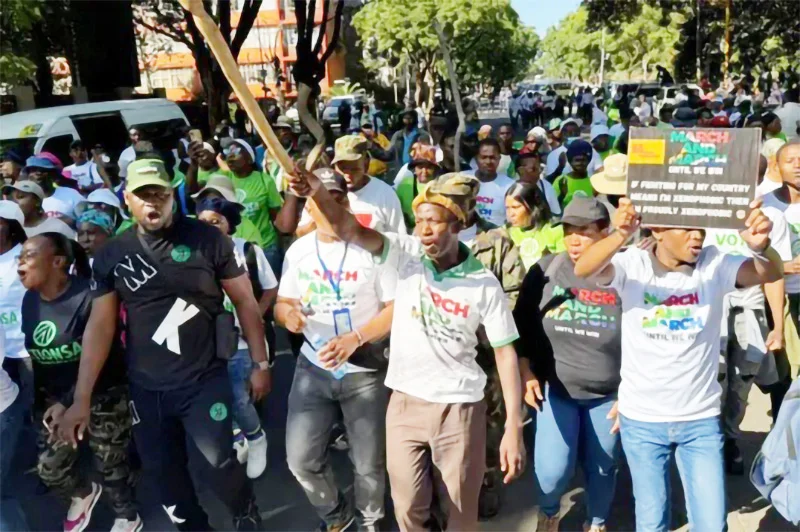
 The current outbreak of anti-immigrant protests in Durban, South Africa is bound to have taken many a subscriber to value-based politics or political idealism quite by surprise. After all, this is evidence that despite the historic accomplishments of nation-builders of the stature of the late President Nelson Mandela it cannot be taken for granted that identity politics, including racism in its worst forms, is no more in South Africa.
At the time of this writing details are scarce on the substantive root causes of the protests but it could very well be that economic grievances, particularly on the part of the majority community in South Africa, are contributing considerably to the disaffection. Shrinking employment and material prospects are likely to figure majorly among the factors igniting the unrest.
Fortunately, the local authorities in Durban are losing no time in calling for peaceful co-existence among the relevant communities and are pointing to the vital importance of stepping-up national integration processes. Apparently, immigrants in sizable numbers from neighbouring countries are present in Durban. However, international TV footage of the protests quoted some local authorities as saying that the majority of the immigrants in some centres that housed them were not illegal migrants and had the documents that entitle them to be in Durban.
In the Durban protests the world has fresh proof of the socially divisive consequences of the gathering globe-wide economic disaffection, touched off particularly by the continuing crisis in West Asia. Going ahead, the world would need to brace for increasing identity-based unrest of the kind it is just witnessing in South Africa.
Considering that the material lot of ordinary people everywhere could only aggravate progressively, with the US and Iran showing no signs of negotiating an end to their confrontation any time soon, it will be left to the more democratic and progressive sections of the world community to initiate positive measures collectively to bring a measure of relief to the discontented.
The swiftness with which such relief will be provided would depend crucially on the importance those sections taking up these undertakings attach to value-based politics as opposed to Realpolitik of power politics.
Going by these yardsticks, Italy could be considered to be moving in the right direction. Recently Italy came to the fore in initiating the collective named, ‘Rome Coalition for Food Security and Access to Fertilizer’, which has as one of its aims the swift provision of fertilizer to economically weak African countries.
In a recent statement Italian Minister of Foreign Affairs and International Cooperation, Antonio Tajani, said that a principal aim of the project was to ensure that the farmers of Africa gained easy access to fertilizer, considering that food security is a growing concern among some of Africa’s economically vulnerable countries.
The statement went on to mention that some 30 countries hailing from the Mediterranean region, the Middle East, the Balkans as well as the FAO had been invited to join the coalition. The venture is far-seeing in that food security is main among the reasons for social discontent which in turn could degenerate into endemic political turmoil and bloodshed. Separatist violence and geographical fragmentation of countries wouldn’t be too far behind these developments, as Africa itself has often proved.
It is hoped that more G7 countries would take the cue from Italy and do what they could to ease the hardships of economically distressed countries, particularly of the global South. In these efforts they would need to break rank with the US, which is today brutally indifferent to the consequences of its policy of making ‘America First’, come what may.
Going by current developments, the Trump administration seems to be blithely oblivious to the wider, deleterious effects of its policy course in West Asia. Besides rendering Iran militarily and otherwise impotent nothing else seems to matter to Washington, as regards West Asia. This is policy short-sightedness of an extreme kind. After all, right now West Asia could be said to be sitting on the proverbial powder keg.
On the other hand, Iran is not giving the world the impression that it is doing anything constructive to get out of the policy straitjacket that it wove for itself decades ago. Rather than enter into a policy of ‘live and let live’ in relation to Israel in particular and initiate a process of reconciliation with the latter, it has chosen to operate within policy parameters that continue to damn Israel. This has put Israel always on the ‘defensive’ so to speak and prevented the opening up of space for meaningful dialogue.
That said, Israel is obliged to explore the possibilities of entering into a negotiatory process with the Arab-Islamic world that could lead to a de-escalation of tensions and bloodshed. It cannot continue to look at its neighbours through lenses that distort them as archetypal enemies who should be ‘wiped off completely from the face of the earth.’
In other words, the need is urgent for Realpolitik to give way to value-based politicks. Italy is beginning to prove that the latter approach could be pursued with some success. May be the EU and the UK could throw their weight behind these initiatives as well and establish that international politics could be refashioned on the basis of humane, civilized norms. The UN would need to be fully supportive of these moves and prove an organizational nucleus of the operations that follow.
In fact the time is ripe for people of conscience to collectively stand up on the side of peace and say ‘No’ to war and violence. Organizations such as the ICRC, the WHO and Medicines Sans Frontiers have already taken up this call. Referring to the widespread destruction of health facilities and their dehumanizing results these organizations have said, among other things, that ‘This is not a failure of the law. It is a failure of political will.’
True, ‘failure of political will’ among those powers that matter accounts for the runaway, uncontrollable nature of war and destruction in contemporary times, but more fundamentally it is a failure of the human conscience. It could very well be that the phenomenal levels to which violence and war have been unleashed today have had the effect of deadening consciences. This is a matter for urgent study and wide discussion.

 I would describe Indunil Kaushalya Dissanayaka as innovative and creative, and she operates under the name of Cuteefly.
Indunil always comes up with something novel to celebrate special occasions, and she does it with candles … and that’s her profession.
She was in the spotlight when she created a happening scene, with candles, for Christmas, Sinhala and Tamil New Year, and Valentine’s Day.
As lanterns light up Sri Lanka for Vesak, the Colombo-based candle maker is quietly turning wax and wick into little pieces of the festival.

Candles reflecting Vesak themes
Her candles reflect Vesak themes – light, peace, remembrance, giving, etc., to enable you to fill your Vesak celebration with devotion and beauty.
Among her Vesak creations is a lotus-shaped soy candle, scented with sandalwood, lavender, etc., meant to burn during this Vesak Poya Day.

Indunil Kaushalya Dissanayaka: Customers
praise her for her creativity
These handcrafted Vesak candles are perfect for offering at the temple, she says.
What makes her creations so novel is that they come in different shapes, scents, themes, and all are handmade.
What’s more, her customers have heaped praise on her for her creativity.
According to Indunil, her creations are perfect as a thoughtful gift … to bring beauty, unity, and light into every moment.
Says Indunil: “Our beautifully handcrafted Unity candles are designed with premium detail and love, making them perfect for celebrations, gifts, and meaningful occasions.”
Cuteefly, says Indunil, is available online.
Readers could contact Indunil on 0778506066 for more details.
He Facebook Page is: Cuteefly.

Handmade with love

 Yes, dark spots do crop up on the skin, especially with sun exposure and, of course, as the skin ages.
However, these tips should be of immense benefit to those who are faced with dark spots.
* Lemon and Honey Glow Mask:
You will need 01 teaspoon lemon juice and 01 teaspoon honey.
Mix the lemon juice and honey well and then apply this mixture, only on the dark spots.
Leave for 10–15 minutes and then rinse with cool water.
Benefits:
Lemon helps brighten pigmentation.
Honey moisturises and heals skin.
Gives a natural glow.
* Aloe Vera Gel Treatment:
All you need is fresh aloe vera gel.
Apply the gel apply on dark spots, before going to bed.
Leave overnight and wash in the morning.
Benefits:
Reduces acne marks and pigmentation.
Soothes irritated skin.
Helps skin repair naturally.
* Turmeric and Yoghurt Paste:
You will need 01 teaspoon yoghurt and a pinch of turmeric
Mix the yoghurt and turmeric into a smooth paste and apply on affected areas.
Leave for 15 minutes and then wash gently with lukewarm water.
Benefits:
Turmeric brightens skin naturally.
Yoghurt removes dead skin cells.
Helps fade dark spots gradually.
Use these packs 02-03 times a week as results are generally seen over time.
You can also try this out: Mix a ripe papaya into a smooth paste and apply to the face, or directly on to the dark spots. Leave for 15-20 minutes and then wash with lukewarm water.

Let us all build a society valued with peace and harmony, guided by unity and solidarity beyond all differences – PM

Showers will occur at times in the Western, Sabaragamuwa and North-western provinces and in Galle, Matara, Kandy and Nuwara-Eliya districts

Rajitha calls for combined lists, denounces those unwilling to join as traitors

20 lawmakers, four officials visiting China

More Japanese funds for demining operations in the north

Clingendael Institute delegation visits Pathfinder Foundation

‘Dates have the highest sugar content to fight Coronavirus’

Sunday Island 27 December – Headlines

#SundayIsland 17th December – Headlines

Sunday Island – 28th March

Sunday Island Headlines – 21 March

Sunday Island – 21st February – Headlines
-

 Business6 days ago
Historic launch of CCWE Fashion Week & International Summit 2026
-

 News4 days ago
All-New GRAVITE launches at LKR 6.99 Mn
-
 News3 days ago
Police probe underway to ascertain links between criminals deported from UAE and local politicians
-
 Features4 days ago
The NPP’s pivot to the past
-
 News2 days ago
Easter Sunday carnage: Court told Maulana’s statement cannot be accepted without cross-examination
-

 Opinion6 days ago
The need to reform Buddhist ecclesiastical order
-
 Features4 days ago
End of Peacekeeping
-
 News3 days ago
Dickoya double murder suspect arrested