
Features
Divided people in a distorted democracy


The Geneva Calamity comes more from the thinking of the Ministry of Foreign Affairs, than that of the former Chilean politician who is now the UN High Commissioner for Human Rights.
It is such thinking of disaster advancement that made our Foreign Minister tell the Geneva meeting in his virtual address that Sri Lanka acted in ‘self-defence” in the fight against the LTTE’s terrorism. Was it self-defence that led to the actions of the armed forces or the fundamental right to safeguard the unitary state, sovereignty and territorial integrity of the Republic of Sri Lanka – whether Democratic Socialist or not?
The debate will go on in Geneva about our actions for self-defence, that defeated the LTTE, and what has taken place after that assurance of self-defence, that relates to wider reaching issues of Human Rights, with emphasis on responsibility and accountability. Now that Yahapalana is no more, it is the task of the Powers of Fortune, or Saubhagya, to make its own case on how Sri Lanka relates to the international community. This is certainly no easy task as we see the unfolding of the politics and crooked governance in Sri Lanka.
As the echoes of Geneva goes on, we are much more involved in the Easter Sunday carnage and the Presidential Commission report on it. The people are certainly puzzled as to why the planners and directors of this hugely bloody act of Islamic terrorism have not been revealed. We have the unique situation where the person who appointed this Commission of Inquiry, none other than former President Maithripala Sirisena, is to be legally punished for this carnage.
 Are we to have special satisfaction on the possibility that future Heads of State, who appoint such commissions of inquiry, will be the first accused, even in the much-delayed reports of such commissions? There is not much hope for such satisfaction. The Head of State is the emblem of supremacy, with all the powers of the 20th Amendment to the Constitution.
The families of the victims of that terrorist attack at the Katuwapitiya -Negombo, Kochchikade – Colombo, and Batticaloa churches, will certainly remain in search for the exposure and punishment of those who planned and carried out these situations of carnage. What we are shown is the true purpose and meaning of a Presidential Commision of Inquiry – PCoI.
We have certainly gone back to the origins of such inquiries, and the powers of Saubhagya at Rajavasala, have shown their honour to J. R Jayewardene, who brought the Presidential Commission as the show of the five-sixth majority Jayewardene Power. Mr. Sirisena may remember how the first PCoI of the Jayewardene era, ensured the removal of civic rights to Mrs. Sirimavo Bandaranaike, the defeated Prime Minister and Mr. Felix Dias Bandaranaike, former Minister of Justice.
Punishment of one’s political opponents is the stuff and substance of Presidential Commissions of Inquiry, and Sri Lanka is now showing the whole world how much this is a part of a Distorted Democracy. A show of power that was enabled by 69 lakhs of voters in the presidential election, followed by the parliamentary two-thirds gained through those who bowed their so-called critical heads on ‘Dual Citizens” coming to Parliament, and the huge Muslim MP cross-over – for the benefits they must have gained – as all such cross-over politicians always obtain.
The Archbishop of Colombo, Malcolm Cardinal Ranjith, who certainly prevented the Easter Sunday carnage leading to even more bloodshed, by a few timely words of caution and Christian thinking that tragic day, must be now wanting to know why he was so keen to get the report of this Commission. Who were the planners, the funders, the trainers and leaders of this carnage? What will the people know in the weeks and months to follow, and how much can the feelings of the families that were the bloody victims of this massacre of the innocents, be brought to some relief?
This PCoI is the answer to the political prayers of those manipulating power today. It is the answer to the continually rising Cost of Living, the protection to those who keep destroying our forests and jungles, the safeguard for all those who keep reducing the Alimankada pathways of our elephants, it is the whistle blow of go ahead to the forces of urban destruction, and the show-piece managers of Presidential visits to the rural people.
The rising voices of sections of the Maha Sangha against this PCoI, the call from Christian voices to expose and deal with the planners and movers of this carnage, and the louder voices for the protection of nature and the environment, will be the cause of joy to the powers of a Deadly Dominant Democracy. It is the message of power to those who take pride in killings of the past – be it the Tigers of the LTTE, or the cases of killed, injured and missing journalists, and the abduction of children.
The powers that be will continue to sing loud about how we acted in self-defence against the LTTE terror. The echoes of Geneva will keep ringing in the ears of manipulative politics and power. But this and other PCoI reports that are seen as the substance of crooked power, will soon lead our people and country to an Age of Disaster – an age of new confrontations and calamities. How much worse can we become than the JRJ manipulation of anti-democratic power?
How much can we allow our people to be divided, and thus supportive of a Distorted Democracy?



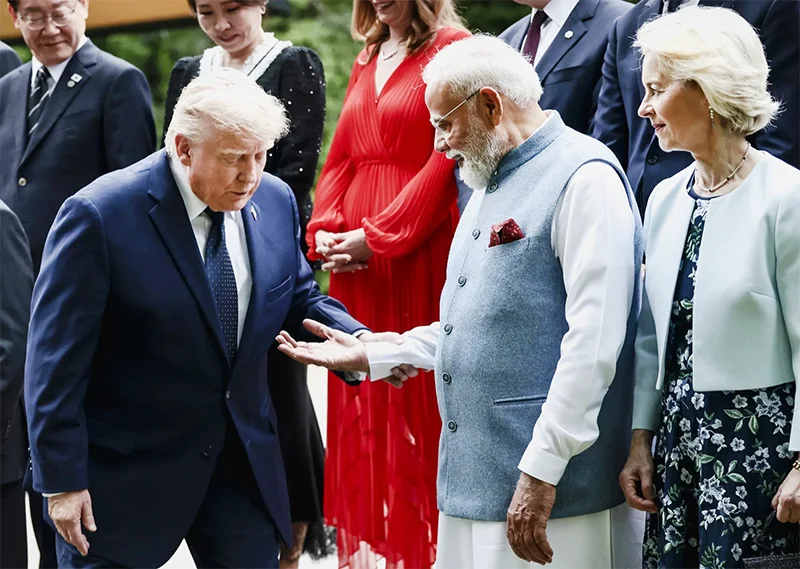
 It is obviously too early for an outpouring of joy over the seeming cessation of hostilities between the main antagonists in West Asia. While the prospect of there being a measure of calm in the region is being welcomed by considerable sections of the international community, what is ‘on the table’ currently is only a Memorandum of Understanding between the US and Iran to give peace a chance. The hard part in the peace effort remains to be achieved.
In the Middle East of today we have one of the most complex conflicts to break out in modern international politics and the observer would be naive in the extreme to expect a facile and early closure to the tangle. Yet, for the sake of the world’s publics who have been hurting badly in the prolonged hostilities one could only hope that the US-Iran MoU that is expected to be signed by the sides on Friday would lead eventually to a substantive peace. The world’s thanks are due to Pakistan in this connection for its sustained support in the peace drive.
While the sides have agreed to a ceasing of hostilities in the most general terms and have reached accord on the facilitation of uninterrupted oil and gas supplies to the rest of the world, for instance, the ‘devil will prove to be in the details’ in an envisaged comprehensive peace settlement. It is these details that would make or break peace if the negotiations go on in earnest.
Nevertheless, the details would need to be worked out consensually in a spirit of compromise with an eye to the greater good of the world community. Realpolitik or a narrow focus on solely the national interest among the protagonists, for example, would need to give way to a measure of humanity that would encompass within it a consideration of the overall well being of the world. In other words, it is statesmanship that would crucially matter.
The next few weeks would establish whether humanists are ‘asking for far too much’ when they broach the questions at issue in these terms. Yet it is essentially self interest and national security considerations of the first importance that drove the conflict from even prior to February this year and these questions would need to be taken up and resolved to the satisfaction of the US and Iran in the main if some headway is to be made towards a durable settlement.
The nuclear issue would prove to be the proverbial Gordian Knot. From a realistic viewpoint, Iran could not be expected to be without a potential nuclear deterrent in the face of perceived nuclear threats emanating for it from the West and Israel. In the short term, Iran would need to possess this deterrent to a measure, within a mutually agreed international legal framework maybe, until wide agreement is reached on the nuclear tangle. Specifically, Iran’s immediate threat perceptions with regard to her nuclear-powered rivals would need to be defused during initial negotiations.
Ideally it is a world free of nuclear weapons that must be aimed at but since this goal cannot be achieved in the near or medium terms, unfolding negotiations would need to ensure Iran’s absolute security in a world of powers that continue to swear by the nuclear deterrent, if it is to give up the suspected latter capability.
However, it is to the degree to which the present nuclear powers divest themselves of this capability that Iran could be put at ease on this score. Accordingly, it is nothing short of a complete elimination of nuclear weapons from the world that could dissuade keenly security conscious states from developing nuclear weapons of their own with a mass destruction capability.
This is the number one dilemma the international community needs to grapple with going forward and it is to the extent to which it resolves it that a nuclear weapons free world could be envisaged. No doubt, an uphill challenge.
Compelling Israel to support the present negotiatory process constitutes another grueling challenge for the US. Currently the Iranian position essentially is that a Middle East peace is inseparable from a normalization of the security situation in Lebanon. That is, the present Israeli attacks on the Hezbollah presence in Lebanon must cease if a comprehensive peace is to be realized in West Asia.
However, Israel is showing no signs of drawing back from its attacks on Hezbollah strongholds in Lebanon since the security of the Israeli state is being seen as threatened by the militant group. Co-opting Israel into the negotiatory effort therefore would turn out to be a matter of paramount concern for the US.
Moreover, elements in the rightist administration in Israel are seeing the current peace efforts as a ‘sell out’ to the enemies of Israel. They would have none of it. It is left to be seen how the US would be managing these virtual storm centres in the diplomatic process that could very well bring down the overall purported peace drive.
A recent pronouncement by US Vice President J.D. Vance points to yet another problem area in the US’ current peace overtures. He said that, ‘Regional peace and stability includes stopping the funding of terrorist organizations.’ He was obviously referring to the support extended by Iran to Hezbollah when he mentioned ‘terrorist organizations’ but he has given fresh life to the age-old conundrum of ‘Who is a terrorist?’ by these words.
To the Netanyahu government the Hezbollah and other militant organizations fighting Israel are ‘terrorists’ but from the viewpoint of the Iranian regime they are ‘freedom fighters’. This seemingly insurmountable definitional issue would not only stubbornly bedevil the peace effort but could even figure in bringing about its collapse, unless judiciously handled.
Thus, it’s the thorny details that need to be watched to keep the West Asian peace process afloat, once it gets going in earnest. There is no doubt that US President Trump would be receiving a considerable amount of support from the G7 in this historic peace undertaking and his personal appeals to the grouping currently meeting in France for continuous support are likely to elicit a positive response from it.
Likewise, Trump would need to appeal to also the BRICS countries if almost total global support is to be garnered for the peace drive in West Asia. BRICS’ solidarity with the US and the West is likely to carry considerable weight with Iran and other Eastern actors who are key to a sustained peace drive in the Middle East.
Features
Sri Lanka’s elephant paradox: Govt. counts tourism dollars while playing a dangerous numbers game: Expert
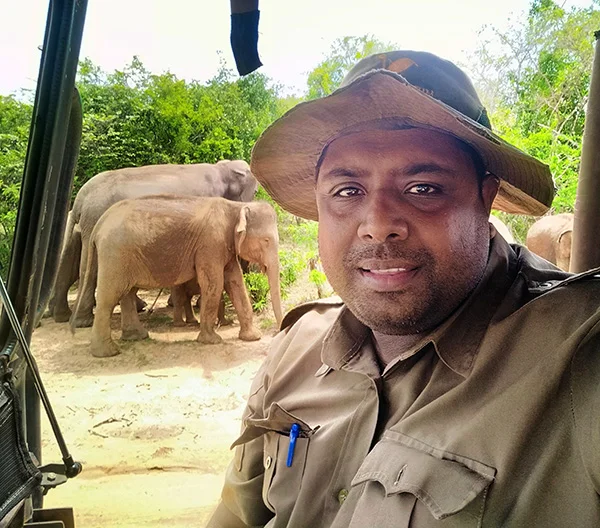
At a time when Sri Lanka is enjoying a resurgence in wildlife tourism, with elephants remaining the undisputed stars of the country’s national parks and one of its most marketable natural assets, elephant conservationist Supun Lahiru Prakash has sounded a stark warning: the nation is in danger of losing the very species that helps attract millions of tourism dollars while sustaining some of the island’s most important ecosystems.
Supun says repeated claims by authorities that Sri Lanka’s elephant population is increasing, despite the absence of a final survey report and amid continuing elephant deaths, risk creating a misleading narrative that could undermine conservation efforts and encourage retaliation against elephants.
According to Supun, the issue is not merely about numbers. It is about political priorities, scientific credibility and the future of one of Sri Lanka’s most iconic species.
“Repeatedly claiming that the elephant population is increasing appears to be an attempt to hide the Government’s inability to manage the rising annual elephant death rate and the complications of human-elephant conflict,” Supun said.
For decades, the Sri Lankan elephant has been a symbol of the country’s rich natural heritage. It is the centrepiece of wildlife tourism, drawing visitors from across the globe to national parks such as Yala, Udawalawe, Minneriya, Kaudulla and Wilpattu. International wildlife documentaries, tourism campaigns and social media promotions frequently place elephants at the heart of Sri Lanka’s nature tourism brand.
Yet, according to Supun, the country’s conservation policies do not reflect the value of the species.
“On one hand, the Government is enjoying increasing tourism revenue, and elephants remain one of Sri Lanka’s most important wildlife attractions. On the other hand, narratives are being promoted that could encourage retaliation against the very species that contributes significantly to the country’s tourism industry,” Supun said.
According to the First Countrywide National Survey of Elephants conducted in 2011, Sri Lanka had 5,879 elephants. However, official statistics show that 4,167 elephants died between 2012 and 2024.
Supun stressed that these figures represent only the deaths officially recorded by the Department of Wildlife Conservation.
“In a context where more than 70 percent of the country’s elephant population reported in 2011 has died within 13 years, it is difficult to accept claims that the population has increased,” Supun said.
The conservationist pointed out that elephants have the longest gestation period among land mammals and that scientific studies have reported increasing interbirth intervals among female elephants together with high calf mortality.
“When such biological realities are taken into consideration, claims of a dramatic increase in elephant numbers become difficult to understand,” Supun said.
Supun believes that repeated references to increasing elephant populations risk fuelling public hostility towards elephants, particularly among farming communities already affected by crop raids and property damage.
“Such claims can create the impression that elephant populations are exploding and thereby promote retaliation against elephants as well,” Supun said.
According to Supun, Sri Lanka’s elephant crisis cannot be understood solely through population estimates. The real issue lies in the country’s failure to address human-elephant conflict through long-term, science-based solutions.
Sri Lanka continues to record among the highest levels of human-elephant conflict in the world. Every year, hundreds of elephants and dozens of people lose their lives as competition for land and resources intensifies.
Despite the scale of the crisis, Supun says authorities continue to rely on strategies that have repeatedly failed.
Lahiru Prakash
These include driving elephants into protected areas, strengthening electric fences to confine them there and allocating additional manpower to maintain fencing systems.
Supun was also critical of several proposals that emerged from district-level discussions on conflict mitigation, including the sowing of paddy and corn using Air Force drones and the planting of fruit orchards within protected areas.
“Such proposals fail to address the real ecological and social dimensions of the conflict,” Supun said.
While welcoming reports that the Government intends appointing a national-level mechanism to tackle human-elephant conflict, Supun said the challenge required intervention at the highest level of government.
“Given the gravity, complexity and geographical spread of human-elephant conflict, appointing any committee other than a Presidential Task Force is not useful,” Supun said.
He argued that a Presidential Task Force chaired by either the President or the Secretary to the President would be better positioned to overcome the bureaucratic delays and institutional fragmentation that have hindered previous efforts.
Supun also stressed the urgent need to restore and protect elephant corridors and home ranges that allow elephants to move safely across landscapes.
He cited the Koholankala elephant corridor in Hambantota as one example where removing obstacles could help reduce conflict while improving habitat connectivity.
At the same time, Supun questioned policies that permit the allocation of forest lands in areas identified by environmental assessments as crucial elephant ranges and movement corridors.
“The opening of elephant corridors and the protection of elephant home ranges must be carried out scientifically and consistently if they are to succeed,” Supun said.
Beyond tourism, Supun emphasised the ecological importance of elephants.
“Elephants are ecosystem engineers. Through their feeding habits and movements, they help maintain habitats that support numerous other species. In many ways, they create safer and healthier environments for wildlife,” Supun said.
According to Supun, protecting elephants means protecting entire ecosystems and the biodiversity upon which Sri Lanka’s wildlife tourism industry depends.
“By protecting elephants, we are also protecting the biodiversity that makes Sri Lanka one of the world’s premier wildlife tourism destinations,” Supun said.
As Sri Lanka seeks to expand tourism earnings and strengthen its reputation as a wildlife destination, Supun believes the country faces a defining choice: continue with policies that have failed to stem elephant deaths and human-elephant conflict, or embrace a science-based conservation strategy that safeguards both people and wildlife.
Without a fundamental shift in policy and political will, Supun warned, Sri Lanka risks losing not only one of its most iconic species but also the ecological and economic benefits that elephants continue to provide.
“The suffering of both farmers and elephants will only intensify unless meaningful action replaces rhetoric,” Supun said.
By Ifham Nizam

Back-to-back victory for Colombia
 Katherine Castaño of Colombia claimed the Top Model of the World 2026 crown, securing a historic back-to-back victory for her country. Angelica Sanchez of Puerto Rico was named first runner-up, and Eunice Deza of the Philippines finished as second runner-up.
Katherine was crowned by outgoing titleholder Natalia Garizabal Vera of Colombia.
Several special category awards, and subsidiary titles, were also presented during the Top Model of the World 2026 pageant.
These awards recognised excellence in modelling, peer support, and regional representation.
Primary Subsidiary Titles

Sri Lanka’s Netalie Withanage: Top 16 at
the grand finale
Miss Globe 2026: Valentina Tabares (Ecuador) — Awarded to the contestant who perfectly balances fashion modelling with traditional beauty queen qualities.
Queen of Europe 2026: Mia Danielle Williams (United Kingdom) — Given to the highest-ranking candidate from a European nation.
Special Awards Recognition
Audience Iconic Award: Charly (Dominican Republic) — Won via the official public online vote, granting her a fast-track direct entry into the Top 6.
Exotic Model of the World: Angel Emeka (Nigeria) — Awarded for exceptional editorial presence and strong runway performance.
Best Body Award: Thailand — Voted directly by fellow contestants at the Flow Spectrum Hotel. The highest-ranking runners-up for this category included Zambia, South Africa, Colombia, and Ghana.

Angelica Sanchez (Puerto Rico): 1st Runner-up
Final Placement
Winner: Katherine Castaño (Colombia)
1st Runner-Up: Angelica Sanchez (Puerto Rico)
2nd Runner-Up: Eunice Deza (Philippines)
Top 6 Finalists: Included contestants from the Dominican Republic, Romania, and Germany.
The pageant, known for focusing on professional modelling careers over just beauty, brought together 36 models from around the globe for two weeks of runway, photoshoots, and cultural events.
Sri Lanka’s Netalie Withanage walked among 36 of the world’s best and powered her way into the Top 16 at the grand finale.

G7 leaders to boost Ukraine air defences, tighten sanctions on Russia

Discussion on Sri Lanka Customs’ contribution for National Export Development Plan

Gill and Kishan hundreds carry India past 400 and to victory

Arnautovic scores penalty as Austria beat World Cup debutants Jordan 3-1

Ghana beat Panama 1–0 in chaotic, charged World Cup Group L match

Diplomat confirms that US and Iran have signed MoU electronically

‘Dates have the highest sugar content to fight Coronavirus’

Sunday Island 27 December – Headlines

#SundayIsland 17th December – Headlines

Sunday Island – 28th March

Sunday Island Headlines – 21 March

Sunday Island – 21st February – Headlines
-
 News6 days ago
CIABOC summons Yoshitha over his participation in British Navy training programme
-

 News3 days ago
Release of 2025 O/L results likely to be delayed
-

 News6 days ago
Justice Minister responds to social media claims he represented Easter Sunday ringleader
-

 Sports3 days ago
Tharanga set for high-profile javelin clash in Ostrava
-

 Features4 days ago
Politics of protected species
-

 News3 days ago
Theft of USD 2.5 mn from Treasury: CoPF accused of complicity in NPP cover-up
-

 News5 days ago
Commonwealth lawyers urge Lanka to uphold rule of law
-

 News2 days ago
Beijing Capital Airlines to resume flights to Colombo signalling boost to tourism