
News
Direction Sri Lanka calls for independent National Planning Commission

Civil society grouping Direction Sri Lanka has said that the country required an Independent National Planning Commission.
The following is the text of a statement issued by Direction Sri Lanka: “It is the considered position of Direction Sri Lanka that the neglect of evidence-based national planning in the Country now for over four decades has resulted in a highly distorted, imbalanced and unsustainable economy, leading to the collapse of many industries established after independence, compounded by social polarisation in the key social sectors such as Education, Transportation and Health. As apposite illustrations; • A fairly equitable system of education gave way to an unequal system of education where the well to do moved away their children from public education to private education dominated by private and public schools; • A mostly public transportation system gave way to a polarised system dominated by private vehicles which in turn contributed to a deterioration of public transport services in the Country; These and other changes encouraged many people in all parts of the Country to look for wage employment abroad, particularly in oil-rich Middle Eastern countries. With a widening of the trade gap due to rapidly increasing industrial imports, labour migration soon then became the leading exchange earner for the Country.
Labour migration post – 1977 resulted in labour shortages in vital sectors like agriculture forcing many small holding farmers to abandon labour intensive crop production in rural areas. Large numbers of school leavers also migrated to urban areas as informal sector workers, construction workers and three – wheeler drivers. Meanwhile, the importation of cheap substitutes for local products from many rural industries, eventually led to a decline of these industries. People engaged in such rural production activities eventually moved into other economic pursuits in urban areas. All of the above developments contributed to the loss of the rural – urban balance in population distribution, leading to increasing urbanisation, particularly in the Western Province. Many people migrated to this region not only for earning higher incomes but also to enjoy better amenities and services. Another significant development under post-1977 neo-liberal reforms was the compounding problem of public finance due to low tax regimes that were introduced. State revenue that was as high as 40% of GDP in the early 1970’s came down to about 12% of GDP, making it impossible to maintain a high level of public investment in critical areas such as education, health and public transport. The response of the governments at the time was to invite private sector investment. These investors established private hospitals, international schools and imported all types of vehicles for private transport and the roads were quickly filled with cars and other private vehicles. The rich and the other higher income generators began to use private services, while the poor had to manage with underfunded public services. Meanwhile, there was no diversification of export industries and the foreign income of the Country came from a few exports such as garments and tea. This was grossly inadequate to pay for the rapidly increasing import bill.
The easiest thing for successive governments at the time was to promote the export of labour. Foreign remittances from workers in the Middle East became the largest single exchange earner, reaching about USD 7.5 Billion and covered about 70% of the trade deficit. Tourism was identified as the next foreign exchange earner, reaching approximately USD 5 Billion at its peak. What was worse came soon thereafter, which was borrowing money from foreign sources to invest in projects, several of which subsequently became ‘white elephants’, not generating any return for the investment but adding to the rapidly growing foreign debt burden. With the onset of the pandemic in 2020 and traditional foreign inflows substantially declining, the situation aggravated to where the Government could not even pay for essential imports. To compound matters, the Government of President Gotabaya Rajapaksa made several policy blunders including the ban on fertiliser imports and drastic reduction of income taxes. As is now well understood, it is the developments outlined above that eventually prepared the ground for the unprecedented economic crisis that Sri Lanka is presently facing. What is clear from the above is that it has been due to a series of public policy failures and the mismanagement of economic and social affairs of the Country for over four decades that led to the present crisis. It is the considered view of Direction Sri Lanka that the absence of a well constituted policy planning body to provide guidance (like the National Planning Council that existed up until 1977 which accommodated the best brains in the relevant fields) and the resultant lack of policy coherence across sectors paved the way for a highly distorted, imbalanced and unsustainable economy and society in Sri Lanka.
In such a context, political leaders and their cronies drawn from their own political circles continued to mismanage the economy and the social sectors leading to the present disastrous situation in the Country. It is in these attendant circumstances that Direction Sri Lanka identifies the urgent need to establish an independent National Planning Commission with necessary legal sanction and adequate empowerment as soon as possible in order to take control over the national policy making process and come up with a recovery plan based on the best evidence available and through objective and unbiased decision making. Direction Sri Lanka calls upon the President, the Government, the Opposition and all Political Parties represented in Parliament to champion the cause of setting up an Independent National Planning Commission (with necessary legal sanction and adequate empowerment) that would be the apex authority in formulating and presenting national policies that would run across all governments and the political divide for a designated period of time.


… America-Pakistan developed required ‘intel’ for operation
By Shamindra Ferdinando
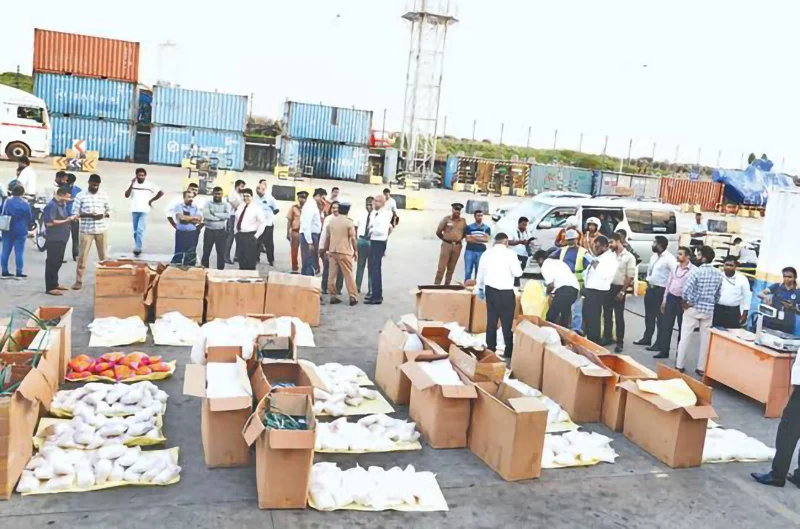
The US Embassy in Colombo declined to comment on a special police probe into the recent narcotics detection, jointly made at the China-managed Colombo International Container Terminal (CICT) by the US Drug Enforcement Administration’s (DEA) New Delhi Country Office and Sri Lanka Police..
US Embassy spokesperson said that the mission wouldn’t add to their press release, issued on 2 Sept., in the immediate aftermath of the raid.
Police Headquarters, on 11 Sept., declared that the Central Crime Investigation Bureau (CCIB) was conducting investigations into the recovery of 473 kg of Crystal Methamphetamine (‘Ice’). Police never acknowledged the role played by the US in the operation.
According to Police Headquarters, on a directive given by IGP Priyantha Weerasooriya, the Special Investigation Unit has launched an internal probe into, what it called, shortcomings and irregularities in the Colombo Port raid.
The Island:
Have you (relevant US authorities) received an update of Sri Lanka’s investigations from the Police?
US Embassy:
U.S. and Sri Lankan law enforcement authorities maintain close and ongoing cooperation on counternarcotics matters, including the exchange of information that helps both countries combat transnational drug trafficking. We don’t have anything further to share on communications with Sri Lankan authorities beyond what we’ve already said publicly about the successful operation.
The Island:
Did the Police seek clarification regarding DEA, New Delhi Country Office role in the successful raid?
US Embassy:
As the Embassy noted publicly following the seizure, cooperation with the U.S. Drug Enforcement Administration contributed to the Sri Lanka Police Narcotics Bureau’s successful seizure of approximately 463 kilograms of methamphetamine at the Port of Colombo.
The seizure demonstrates the value of close U.S.-Sri Lankan cooperation in disrupting transnational narcotics trafficking.
The Island:
Before we raised this issue were you aware of the internal investigation into the drug bust which was also raised in Parliament last week?
The US Embassy:
We don’t have anything further to share beyond what we’ve already said publicly about the successful operation.
Our focus remains on the strong U.S.-Sri Lanka law enforcement partnership and the concrete results our cooperation can deliver—disrupting transnational criminal organisations, cutting off the profits that fuel illicit drug trafficking, and protecting our citizens from the dangers of narcotrafficking.
The US Embassy attributed the success of the counternarcotics operation to the US-Sri Lanka partnership
The US Embassy statement, dated 2 Sept: The U.S. Drug Enforcement Administration’s (DEA) New Delhi Country Office and Sri Lanka’s Police Narcotics Bureau (PNB) conducted a successful joint operation disrupting a Pakistan-based narcotrafficking network attempting to smuggle crystal methamphetamine through Sri Lanka to international markets.
Acting on intelligence developed by DEA’s Foreign Counterparts Unit Pakistan Anti-Narcotics Force Special Investigations Cell between August 14–29 on suspicious maritime containers moving from Pakistan to Colombo, PNB seized approximately 463 kg of crystal methamphetamine with a street value of $21 million, concealed in bath towels, and arrested several suspects, including Pakistani nationals. This operation underscores the strength of the U.S.-Sri Lanka partnership in dismantling transnational criminal organisations that fund terrorism and threaten communities in both our countries. This cooperation builds on long-standing training and technical assistance provided through the U.S. Department of State’s Bureau of International Narcotics and Law Enforcement Affairs (INL) to the Sri Lanka Police and Customs. The United States remains committed to working with Sri Lanka and regional partners to aggressively pursue transnational criminal organizations, deny them the revenue from illicit drug trafficking, and protect our citizens from the dangers of narcotrafficking.”
SLPP National Organiser Namal Rajapaksa, in Parliament, raised questions about the internal investigation into the raid. However, Rajapaksa, too, hasn’t mentioned the US role in the operation. The Special Investigation Unit has recorded a statement from Senior DIG Ranmal Kodituwakku regarding the Colombo Port raid.
MP Rajapaksa questioned the rationale behind questioning the officer who led the raid against the backdrop of controversial releasing of 323 containers from the Colombo Port in January 2025. The failure to question those responsible for the releasing of 323 containers indicated who was behind that operation, MP Rajapaksa told Parliament.
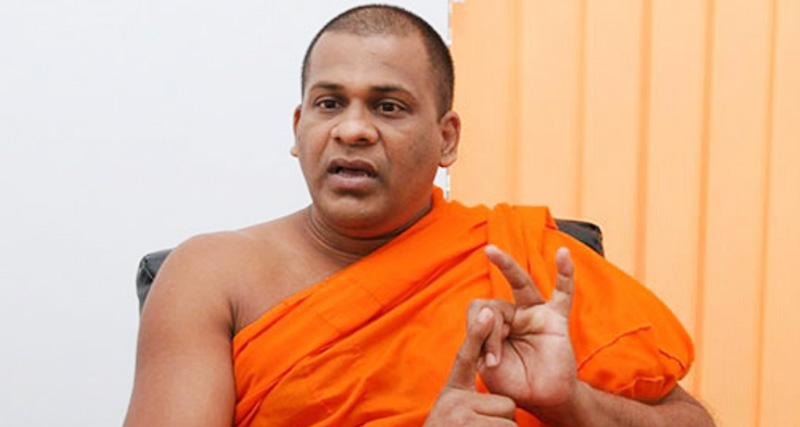
Bodu Bala Sena (BBS) General Secretary Ven. Galagodaaththe Gnanasara Thera appeared before the Colombo High Court yesterday in a case filed by the Attorney General over statements allegedly insulting Islam.
The case was taken up before Colombo High Court Judge Buddhika C. Ragala, who ordered that it be called again on September 30.
His appearance came six days after the Supreme Court invalidated the presidential pardon granted to Gnanasara Thera by former President Maithripala Sirisena in 2019.
Speaking to journalists outside the court, Gnanasara Thera said he was prepared to face the legal process and would abide by the law, rejecting reports that he had gone into hiding following the Supreme Court judgment.
“It is the weak who disappear and flee. We worked for the country and are facing the consequences for that. We are not afraid and will not flee,” he said, noting that he would surrender to the court and face whatever legal consequences following the Supreme Court decision.
The Supreme Court, on September 10, ruled that the presidential pardon granted to Gnanasara Thera by Sirisena was invalid. The judgment followed fundamental rights petitions challenging the legality of the pardon. A three-judge bench, comprising Justices Janak de Silva, Sobhitha Rajakaruna and Sampath Abeykoon, delivered the ruling.
Gnanasara Thera was convicted by the Court of Appeal in 2018 for contempt of court and sentenced to a total of 19 years’ imprisonment to run concurrently as six years. The conviction related to his conduct during proceedings at the Homagama Magistrate’s Court concerning the disappearance of Prageeth Eknaligoda.
He was released from Welikada Prison on May 23, 2019, after then President Maithripala Sirisena had granted him a presidential pardon.
The Supreme Court found the pardon to be arbitrary and invalid in law, following its consideration of the petitions challenging the exercise of the presidential power of clemency.
Meanwhile, police have said they are awaiting the Supreme Court judgment before determining what further action should be taken following the invalidation of the pardon.
The proceedings before the Colombo High Court yesterday are separate from the contempt of court case that resulted in the six-year sentence. They concern alleged statements made by Gnanasara Thera regarding Islam.
In June this year, the Colombo High Court rejected an appeal by Gnanasara Thera against a nine-month prison sentence imposed by the Colombo Magistrate’s Court in connection with statements made at a 2016 media briefing that were found to have disrupted religious coexistence.
The latest High Court proceedings, therefore, form part of separate legal action concerning his alleged remarks about Islam, while the Supreme Court ruling relates specifically to the legality of the 2019 presidential pardon granted in connection with his contempt of court conviction.
The case before the Colombo High Court will be called again on September 30.
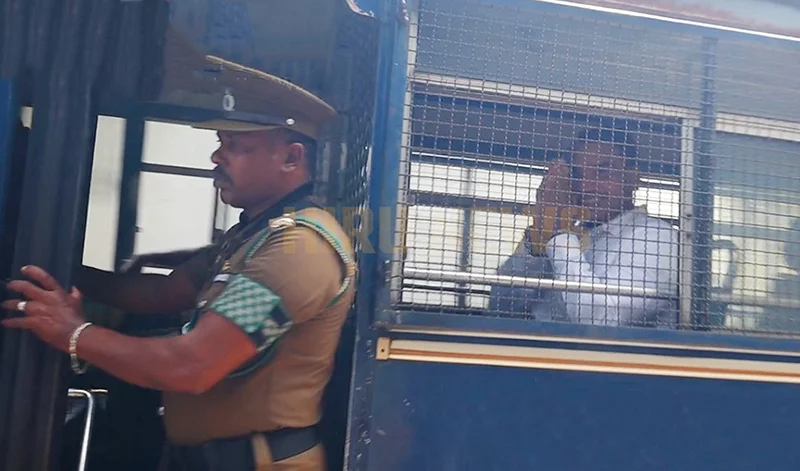
Colombo Fort Magistrate Pasan Amarasena yesterday (16) ordered SLPP National Organiser Namal Rajapaksa, MP, to be further remanded, until September 23. The Magistrate issued the order when Rajapaksa was produced before the court as a suspect in an investigation into an alleged USD 2 million bribe case connected to the acquisition of aircraft for SriLankan Airlines.
The Magistrate issued the order following the submissions made by Deputy Solicitor General Janaka Bandara, appearing on behalf of the Criminal Investigation Department (CID).
President’s Counsel Anil Silva, along with other attorneys representing Rajapaksa, also made submissions before the court.
The Magistrate also announced that a decision on Rajapaksa’s bail application would be announced on 23 September.

Bangladesh through to semi-final after washout against China

Showers in most parts of the island today (17)

US embassy won’t comment on IGP’s probe into joint drug raid

Gnanasara Thera declares outside High Court that he wouldn’t flee

Namal further remanded

22A: LAWASIA questions compostion of five-judge bench

‘Dates have the highest sugar content to fight Coronavirus’

Sunday Island 27 December – Headlines

#SundayIsland 17th December – Headlines

Sunday Island – 28th March

Sunday Island Headlines – 21 March

Sunday Island – 21st February – Headlines
-

 Sports6 days ago
DDS set to lose Test captaincy
-

 News6 days ago
Sri Lanka faces new grid challenge as rooftop solar surges: former CEB GM
-

 Latest News6 days ago
Shafali, Deepti power India into sixth T20 Asia Cup final
-

 News4 days ago
Gnanasara Thero absconding after SC ruling
-

 Latest News5 days ago
Sri Lanka thwart Fatima Sana challenge to secure Asia Cup final spot
-

 News5 days ago
Ammunition cache found in old Kandy bungalow
-

 Editorial6 days ago
A flight of fancy
-

 News5 days ago
Green Climate Fund (GCF) Regional Dialogue for East and South Asia will be held from 14 to 17 September 2026 at Cinnamon Life at City of Dreams Hotel, Colombo