
Sports
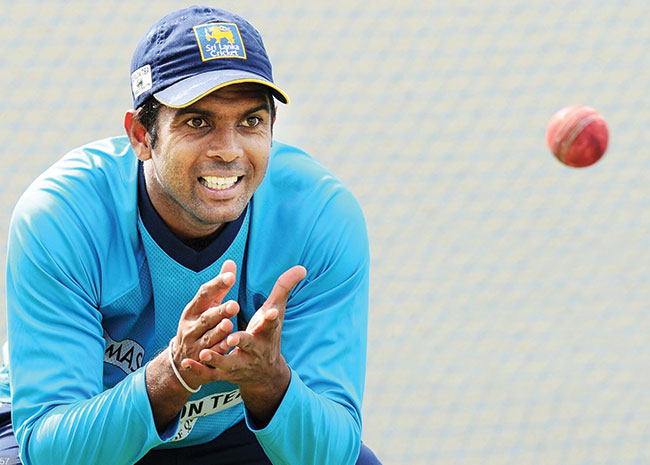
Dilruwan leaves having not fulfilled immense potential

by Rex Clementine
Of all Jesus’ disciples, Peter is the most famous one. Peter was there at every sermon, at every miracle Jesus performed and even cut off an ear of a guard when Jesus was about to be arrested. But, Peter was not Jesus’ favourite disciple. The favourite disciple of Jesus was John. Like Jesus, every leader had his favourite disciple. Some of our political leaders had Mervyn Silva while some other leaders had Sagala Ratnayake. Cricketer Dilruwan Perera was one such having been coaches’ favourite disciple. He announced his retirement from international cricket yesterday.
The national cricket team had many match winners since the big three retired in 2015. There was Dimuth Karunaratne, who was prolific overseas. Angelo Mathews was cut above the rest while Rangana Herath became the most successful left-arm bowler in the history of the game, pace or spin. But for Sri Lanka’s coaches from Graham Ford to Mickey Athur, their favourite was Dilruwan Perera.
Why is that the case you may wonder? That’s because Dilruwan did all the ‘dirty work’. If you needed a bowler to hold one end up, Dilruwan was your man. If there was an end from which your star bowler didn’t want to bowl, Dilruwan would gladly accept the role. If you needed someone to step up as night-watchman when Wahab Riaz was reverse swinging the ball to deadly effect, Dilruwan was your man. All the donkey’s work and thankless tasks were kept at the doorstep of Dilruwan and how well he performed them.
Dilruwan was a classical off-spinner. If you have no idea his impact on Sri Lankan cricket, be mindful that he was the nation’s fifth highest wicket taker in Test match cricket. The press often asked him why he didn’t try the doosra. His answer was curious. He used to say that it would be the end of his career if he tried the doosra. It could be taken in many contexts. One is that all his contemporaries who bowled the doosra chucked. Two is that ICC wanted to weed chucking out of cricket. Three is that it is impossible to bowl the doosra without bending your arm. Dilruwan would never explain his theory. He made us to find out the answer. He was quite a cheeky bloke.
You also tend to get the feeling that here was a man who never fully realized his potential. Dilruwan scored 95 runs on his Test debut against Pakistan in 2014. He should have scored more than the seven half-centuries he ended up with in Test cricket. His Test average of 18 hardly does justice to the immense talent he possessed as a batsman.
Some famous names of Sri Lankan cricket have been opening partners of Sanath Jayasuriya. There’s Roshan Mahanama, Romesh Kaluwitharana and Marvan Atapattu. Dilruwana opened batting as well with Sanath in an ODI against Australia at MCG. Such was his potential.
Dilruwan’s best game with the ball was against the Aussies in 2016 in Galle when he claimed a match bag of ten wickets for 99. Well, he did claim another match bag of ten wickets for only 78 against South Africa two years later also in Galle, but any performance that helps you beat the Aussies is special.
Some problems Dilruwan never overcame. He claimed more wickets in Test match cricket off no balls than the number of gazettes that Mahindananda has revoked as Minister of Agriculture. His fielding remained horrendous and there have been some costly drops
It’s been more than a year since Dilruwan last played for Sri Lanka. The demand to finish the kilometer run in less than eight minutes and 35 seconds was a killer blow for a 39-year-old. But to his credit, Dilruwan didn’t throw in the towel as soon as the time limit was set in place. He tried. He’s leaving the game having given some fine memories. But the question will always be asked could he have done more? He surely could have.






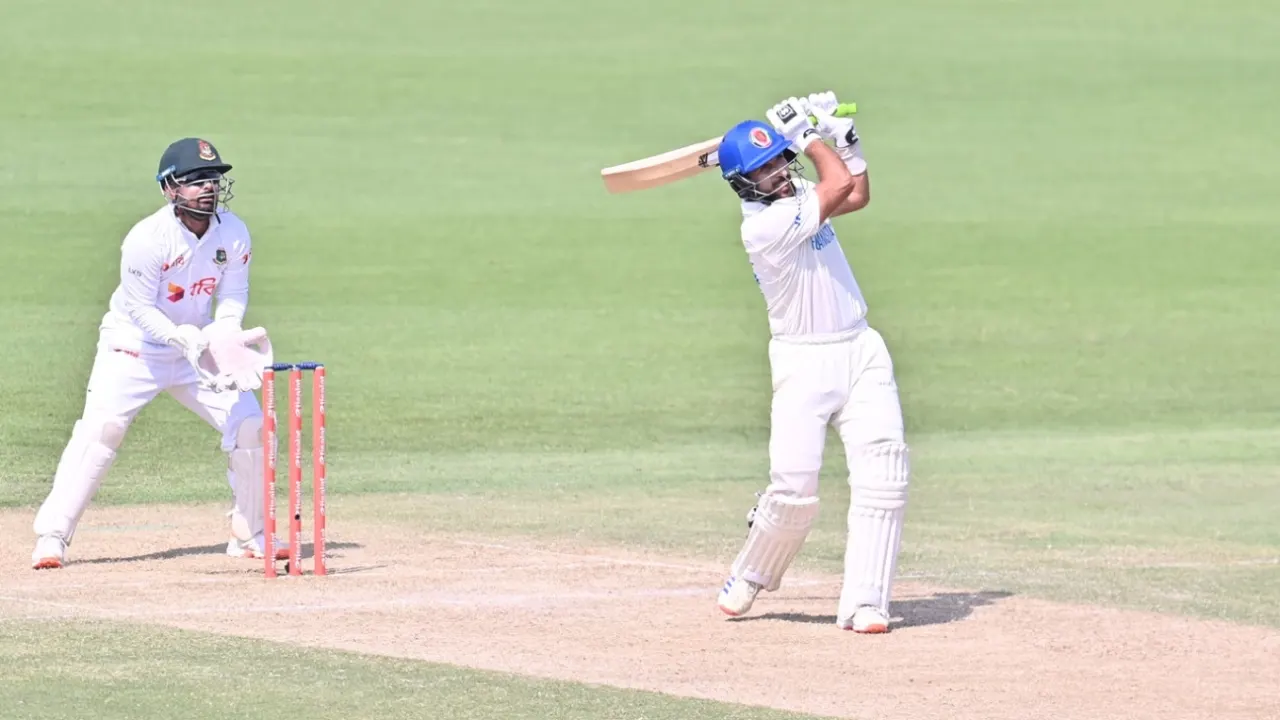
Captain Rahmat Shah played a crucial knock as he held Afghaniistan together on the second day in Abu Dhabi. He blunted Bangladesh’s threat by adding 72 runs for the unbroken fifth wicket with his deputy Ikram Alikhil.
Rahmat was unbeaten on 84 off 186 balls with eight fours and a six, while Alikhil’s 26 came off 91 balls. Ebadot Hossain was Bangladesh’s best bowler of the day.
Bangladesh wicketkeeper Litton Das got his side back into the contest shortly after the tea break. He first took a brilliant diving catch to his right, when the set Abdul Malik edged Ebadot five balls into the third session. Malik made 62 off 120 balls, with five boundaries including a six.
Next over, Litton completed a fine stumping when a Mehidy Hasan Miraz delivery turned and bounced sharply against Hashmatullah Shahidi. The former Afghanistan captain lasted just two balls as he fell for a duck.
Alikhil started with two well-timed boundaries before reining himself in for the next nine overs. Rahmat broke the boundary drought with two fours off Nayeem Hasan in the 60th over. He first pumped the offspinner through midwicket before finding the gap through mid-off for the second four.
Afghanistan then held off the Bangladesh bowling for the next 17 overs without a single boundary. Finally in the 77th over, Rahmat struck Mehidy for two fours in a row, both superb shots through extra cover, as he brought up Afghanistan’s 200.
The day began with the Afghanistan pace bowlers removing the two remaining Bangladesh wickets. It took them 8.3 overs, with Mohammad Saleem picking up his fourth wicket, having Taijul Islam caught behind and Yamin Ahmadzai removing Ebadot with a slower delivery.
Saleem finished with 4 for 82, having taken 6 for 140 against India in Afghanistan’s previous Test in June. Ahmadzai took three and Ismat Alam two wickets. This was the first time a fast bowling attack took nine wickets in a Test innings in Abu Dhabi.
After bowling out Bangladesh for 346, Afghanistan went to lunch on 34 for 1. Sediqullah Atal edged Hasan Mahmud to first slip. Atal struck three fours in his knock but also survived a caught-behind appeal in the third over. Replays showed that he had inside-edged it but Bangladesh did not use the review.
After lunch, Afghanistan batted positively. Shahidullah swept Mehidy while Mahmud conceded two fours early. Malik played the ball confidently, but Bangladesh kept things tight from both ends. It created a wicket when Shahidullah top-edged a hook against Ebadot in the 21st over. Mahmud took a good tumbling catch running in from fine-leg, as Shahidullah fell for 20 off 44 balls.
Rahmat though immediately stamped his authority with a crunchy cover drive in the same over. He hit Taijul for a straight six shortly afterwards, with Malik repeating the dose to the same bowler after a few more overs. Malik also cover-drove Nayeem before reaching his maiden Test half-century in the 34th over.
Scores:
Afghanistan 211 for 4 in 80.5 overs (Abdul Malik 62, Rahmat Shah 84*, Ikram Alkhi 32*; Ebadot Hossain 2-50) trail Bangladesh 346 in 92.3 overs (Shadman Islam 67, Tanzid Hasan 83, Litton Das 53; Mohammad Saleem 4-82, Yamim Ahmadzai 3-79, Ismat Alam 2-20) by 135 runs
[Cricinfo]

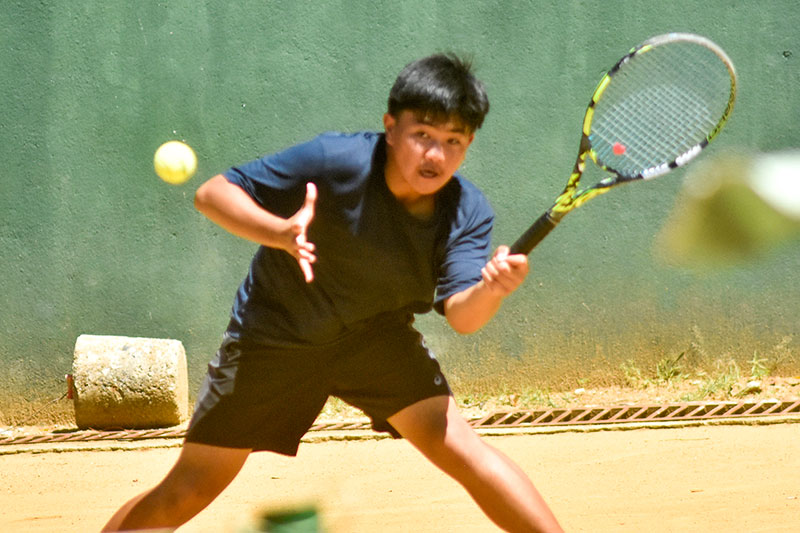
Risindi Hewawasam of Sri Lanka and Anthony Castigador of the Philippines won the girls’ and boys’ singles titles at the ATF 16 & Under Colombo 2026 – Week 1 tournament concluded at the Sri Lanka Tennis Association courts on Friday.
Castigador produced a dominant performance in the boys’ singles final, defeating India’s Gurshaan Chahal 6-2, 6-2 to secure the title. The Filipino maintained his advantage throughout the match, winning in straight sets to cap an impressive campaign.
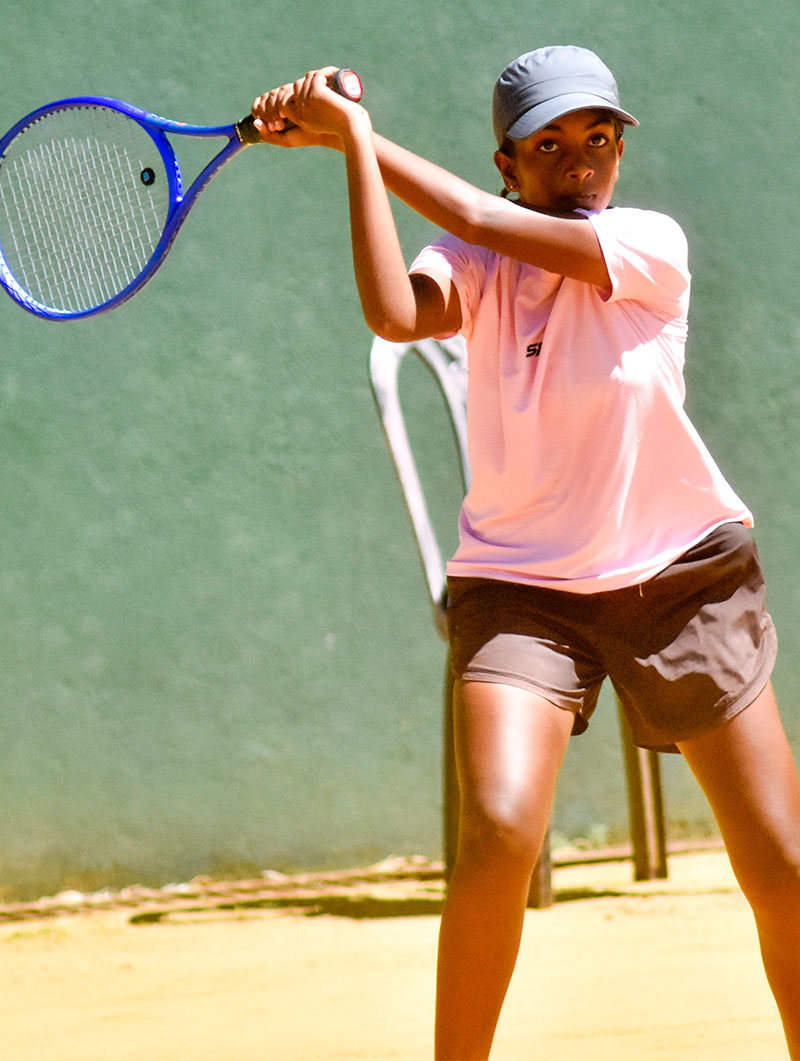
Risindi Hewawasam (Pix by Kamal Wanniarachchi)
In the girls’ singles final, Risindi delivered an equally dominant display to beat compatriot Kiara Jayamanne 6-1, 6-1. (RF)
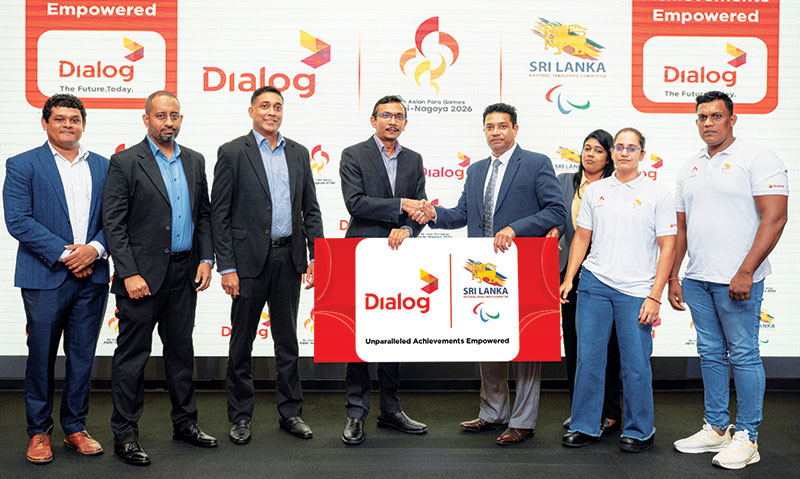
Dialog Axiata PLC is supporting Sri Lanka’s national contingent at the 2026 Asian Para Games in Achi Nagoya Japan, continuing its long standing commitment to supporting Sri Lankan athletes and helping them compete at the highest levels of international sport.
As the team sponsor, Dialog is backing a group of 21 athletes whose journeys have been shaped by determination, discipline and a strong desire to represent their country on the international stage. For Dialog, however, the value of this team goes well beyond the medal tally.
Each athlete has taken a different path into elite sport. Their physical abilities may differ, as do their individual stories, challenges, and ambitions. What they share is the commitment and determination required to train, compete, and continue pushing themselves to achieve their goals.
Dialog’s support reflects its wider commitment to creating opportunities for Sri Lankans to pursue their ambitions and represent the country with pride. For 26 years, Dialog has supported Paralympic sport in Sri Lanka, helping athletes compete at national and international level. Its continued support for the Asian Para Games contingent is part of that long-standing commitment to creating opportunities for athletes and recognizing sporting talent.
Among them is javelin thrower Samitha Dulan, a silver medalist at the 2022 Hangzhou Asian Para Games. Palitha Bandara, another experienced member of the athletics team, has also won medals at both the 2018 Jakarta and 2022 Hangzhou Games.
Nuwan Indika arrives with an impressive record after winning gold in the 100 meters and silver in the long jump at Hangzhou, while Pradeep Somasiri returns as an Asian Para Games champion after winning gold in the 1,500 metres.
Dhananjana Wickramasingha will also be looking to build on her silver medal winning performance in the women’s long jump at Hangzhou, while Madhuranga Subasinghe, who won bronze in the 400 metres, is also back in the squad.
Sri Lanka’s medal winning experience extends beyond athletics. Swimmer Naveed Rasheen won bronze in the 400 metre freestyle at Hangzhou, while Nadin Basnayake claimed silver in the women’s event.
The squad also includes Buddika Indrapala, who won bronze at the 2018 Asian Para Games.
Together, the contingent includes nine athletes who have previously won medals at the Asian Para Games, bringing valuable experience to the 2026 campaign.

Rahmat, Malik fifties lead Afghanistan’s strong reply

Showers above 75 mm are likely at some places in the Western, Sabaragamuwa, Central, Uva and North-Western provinces and in Galle, Matara, Anuradhapura and Mannar districts.

Iranian ships stranded, Lanka fears US sanctions

Sri Lanka CERT warns of overseas university admission scams

Navi Pillay’s Lankan affairs in focus as she wins 2026 Nobel Peace Prize

Lanka welcomes Indian SC remarks on Katchatheevu dispute

‘Dates have the highest sugar content to fight Coronavirus’

Sunday Island 27 December – Headlines

#SundayIsland 17th December – Headlines

Sunday Island – 28th March

Sunday Island Headlines – 21 March

Sunday Island – 21st February – Headlines
-

 News7 days ago
Geneva takes up Sallay’s case and govt. ignores opportunity to answer accusations
-

 Features6 days ago
Preventing grievances from becoming communal
-

 Features4 days ago
The Sri Lankan who made Scottish history
-

 Sports4 days ago
Nissanka absence opens door for Sri Lanka’s young guns
-

 News5 days ago
Gnansara Thera to be assigned to prison printing section: Officials
-

 Features7 days ago
Sri Lanka Cricket Bill: Governance reform is not yet a cricket strategy
-

 News3 days ago
NDB fraud Rs 60mn more than reported
-

 Features4 days ago
Future of Sri Lanka’s state university system: Should it be shut down and reopened?