
Business
Dilmah Tea Invites Industry Collaboration to Strengthen Sustainability & Resilience in Ceylon Tea Industry

With the climate emergency clouding prospects for farmers globally, Dilmah Tea recently invited stakeholders in Ceylon Tea to a collaboration aimed at embedding sustainability and resilience into Sri Lanka’s tea industry, the company said in a news release last week.
“The initiative is linked to wider conservation, restoration and sustainable agriculture efforts by Dilmah Conservation, linked to its Genesis, nature based solutions programme, and its global climate action efforts via the Dilmah Conservation, One Earth Climate Research and Adaptation Centre. The initiative envisages collaboration with Universities and Researchers in strengthening climate resilience on tea plantations through more regenerative forms of agriculture,” it said.
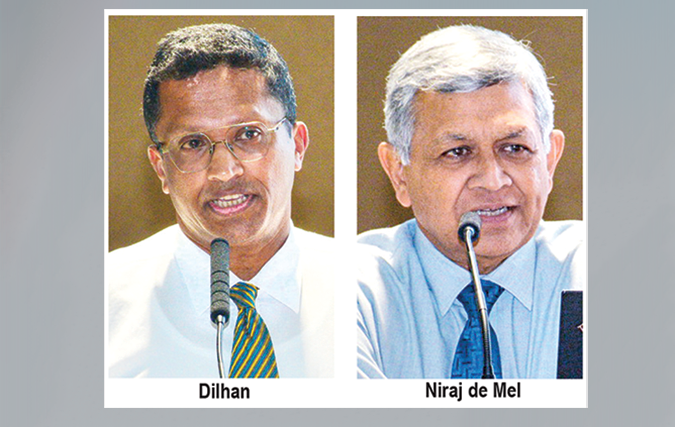
Dilmah Founder Merrill J. Fernando founded Dilmah Tea with emphasis on family values and a commitment to kindness to people and nature. That foundation is reinforced by his lifetime of devotion to Ceylon Tea until he passed away in July last year. In 2012 the family company established Biodiversity Sri Lanka with the intention of escalating its own efforts at Conservation through Biodiversity Sri Lanka into a broader coalition. Recently Merrill J. Fernando’s son Dilhan, now Chairman & CEO of Dilmah Tea, invited stakeholders in the tea industry to a collaboration aimed at driving sustainability in the Ceylon Tea Industry.
The launch event was held on December 1, 2023 at Dilmah’s ‘Founder’s Auditorium’, where 128 Regional Plantation Companies and representatives of tea smallholders convened. The meeting aimed at collectively addressing concerns and actions towards mitigating threats to the shared future of the tea industry. The focus was on the opportunity in greening the plantations, by supporting livelihoods and strengthening sustainability while mitigating the effects of increasing climate extremes. The opportunity for Ceylon Tea lies in building on sustainability to meet growing demand, strengthen livelihoods and consumer appeal while minimizing environmental impact. The theme of the gathering reflected the reality of a shared future, “Stronger Together,” the release said.
In July 2023, a similar initiative was launched to support sustainability among packaging material manufacturers -the Dilmah – MJF Sustainable Supply Chain Road Map focuses on strengthening capacity of small and medium packaging companies in the area of sustainability. While inviting collaboration for positive change, Dilmah offered support to colleagues and competitors in the industry, it added.
“Sustainability is too often viewed as a cost, when it is in reality an opportunity that builds resilience, strengthens consumer engagement and ensures the survival of businesses that take sustainability seriously,” stressed Dilhan C Fernando. He added that while Dilmah Conservation had worked on conservation, restoration, climate action and sustainable agriculture since 2007, the Stronger Together initiative was aimed at extending those benefits across the Sri Lanka Tea Industry.
Key figures in the tea industry and biodiversity, including Niraj De Mel, Chairman of the Tea Board, Vihagun Ariyarathne, CEO of Owita Naturals, Anil Cooke of Asia Siyaka Commodities PLC, Prof Enoka Kudavidanage, Conservation Biologist, addressed the event.
Niraj De Mel, Chairman of the Tea Board has been vocal in the past about the role of smallholder growers in the industry and need to reach production goals, particularly in the areas aligned with the Sustainable Development Goals (SDGs). At the event, he also emphasized the relationship between the tea industry and sustainability explaining – “we have destroyed that tea bush by going away from the sustainability code and thereby come into the situation where we say we cannot achieve B60 (leaf programme route).Don’t blame it on the weather and the lack of input – we have moved away from basics. If we are to be sustainable, we need to look after the tea bush and that is the only way we can also get into the top end of the tea market.”
Ceylon tea marks 157 years since its inception with a Colombo Tea Convention this year. The uniqueness of the industry has ensured its survival through turbulence, industry change, and transformation while preserving the identity as a universally loved beverage. Dilmah invited the gathered tea plantation community to submit their proposals aligned with carbon emission reduction or higher education opportunities for children in the plantations. After a transparent evaluation, Dilmah’s MJF Foundation will support the most impactful proposals.
In fulfilling Merrill J. Fernando’s pledge to make Dilmah a business that serves humanity, the company continues to use a minimum of 15% of its pre-tax profits for kindness to people and nature, via the MJF Foundation and Dilmah Conservation.
The environmental and humanitarian efforts of both are documented in ‘Impact,’ an e-publication that can be accessed online [https://issuu.com/dilmah/docs/impact_2022_family_business_serving_humanity]. Stronger Together is a significant component in this effort, combining environmental and humanitarian priorities in a collaboration that will strengthen the foundation of Ceylon Tea for the next century.



Business
Indian business leader urges SL entrepreneurs to tap into India’s rapidly expanding consumer market

By Sanath Nanayakkare
Speaking at the Sri Lanka Economic and Investment Summit 2026, T. Krishnakumar, Chief Executive Officer of Reliance Consumer Products Ltd (RCPL), emphasised that local enterprises can unlock substantial economic benefits by strategically aligning with India’s booming consumer base.
Addressing business leaders and policymakers at the Shangri-La Hotel in Colombo, Krishnakumar highlighted that geographical proximity and rich cultural ties provide a natural foundation for deeper commercial collaboration.
He noted that instead of viewing bilateral trade narrowly, regional partnerships should act as conduits to build robust, scalable enterprises capable of plugging into wide-reaching regional value chains.
“For Sri Lankan exporters dealing in traditional staples as well as value-added goods, accessing India’s rising middle class presents a phenomenal growth window,” he said.
Drawing insights from Reliance Consumer Products’ rapid expansion – which scaled efficiently to thousands of employees and multi-billion-dollar metrics – Krishnakumar stressed that modern corporate success relies on disciplined execution, localised consumer understanding, and smart technology integration.
Furthermore, he underscored that while rapid growth is critical, businesses must consistently anchor their models in affordability and consumer trust.
Concluding his address at the summit, the RCPL chief noted that pairing regional trade integration with resilient business practices and predictable regulatory frameworks will be vital as Sri Lanka transitions firmly toward accelerated economic development.
Addressing the Summit during a subsequent fireside chat, President Anura Kumara Dissanayake underscored that a core concern currently being targeted by the government is developing a critical mass of local entrepreneurs equipped to engage with international enterprise counterparts.
Business
SriLankan Airlines wins prestigious SATA 2026 Visitors’ Choice Award for Leading International Airline

SriLankan Airlines has once again been honoured with the prestigious Visitors’ Choice Award for Leading International Airline at the South Asian Travel Awards (SATA) 2026, reaffirming its continued recognition in the regional travel and tourism industry. The airline, which has received this award in previous years, was the only international airline to be recognised in this category at this year’s event. The 10th anniversary edition of the awards ceremony was held earlier this month at Hotel Barcelo Nasandhura in Male, Maldives.
Recognised as one of the key events on the Maldivian tourism and travel industry calendar, SATA celebrated its 10th anniversary on a grand scale, bringing together prominent industry stakeholders, including Government Ministers, distinguished dignitaries, diplomats and senior representatives from leading airlines and their respective head offices.
Commenting on the achievement, Dimuthu Tennakoon, Head of Commercial, SriLankan Airlines, stated, “We are honoured to receive this recognition at the South Asian Travel Awards 2026. Being named the Leading International Airline in the Visitors’ Choice Awards once again is a meaningful acknowledgement of our commitment to serving our passengers and strengthening our presence in the region. This award inspires us to continue enhancing the travel experience we offer and to build stronger connections with the markets and communities we serve.”
Complementing its commitment to service excellence, SriLankan Airlines offers an extensive flight network with convenient connections to destinations across the globe. In South Asia, the airline operates nearly 130 flights each week to 15 destinations across India, Pakistan, the Maldives, Nepal, and Bangladesh. With schedules thoughtfully designed to suit the needs of travellers, SriLankan Airlines provides seamless connectivity for those visiting Colombo for business or leisure, as well as passengers travelling onwards to destinations worldwide.
Business
JXG enters LMD’s Most Respected Entities in Sri Lanka 2026 for the first time, securing a place among the first 50

JXG (Janashakthi Group), Sri Lanka’s leading financial conglomerate, has been ranked 44th in LMD’s Most Respected Entities in Sri Lanka 2026, marking the Group’s first appearance in the prestigious listing. The recognition places JXG among Sri Lanka’s most respected companies and marks an important milestone in the Group’s master-brand journey.
As the holding company, JXG was also recognised across key attributes including Aspirational Workplace, Business Expansion, Business Innovation, Corporate Culture, Corporate Dynamism, Crisis Management, Employee Wellbeing, Honesty and Integrity, and Leadership Profile. The recognition reflects the growing strength of the JXG brand and the collective contribution of its businesses and people in building trust and confidence among its stakeholders.
JXG’s subsidiaries, including Janashakthi Life and First Capital, have also been recognised in the main table of LMD’s Most Respected Entities 2026 rankings, while Janashakthi Finance has been recognised under the Business Expansion attribute, reflecting the strength of the Group’s individual businesses alongside its growing master brand.
Conceptualised and commissioned by LMD and conducted by PepperCube Research Consultants, the Most Respected Entities special edition recognises companies based on an independent survey of Sri Lanka’s business community.
Commenting on the recognition, Gamika de Silva, Group Chief Marketing Officer at JXG, said, “This is a proud moment for all of us at JXG. We set out to build a Group brand that is not just seen but lived by our people and reflected in everything we do. Ultimately, the true testament to any brand lies in its people, and the credit for this recognition goes to everyone across JXG who brings our values to life every day. This recognition is an encouraging milestone for us, while also reminding us to keep raising the bar and earning the respect of our stakeholders through what we do.”
JXG’s approach to building trust is anchored in its core values of Integrity, Collaboration, Respect, Performance Driven and Innovation. These values guide how its businesses operate, how its people engage with one another and how the Group serves its customers and wider stakeholders.
As JXG continues to expand its businesses, the Group remains focused on strengthening its market presence, creating long-term value and contributing to the growth of Sri Lanka’s financial services sector, guided by its purpose, Breaking Barriers, Forging Futures.

Physical development must be matched by the enrichment of people’s inner lives through aesthetics and culture – PM

Review of the operations of the 1818 Hotline introduced to report drug-related information

Showers in the Western, Southern, Central, Sabaragamuwa, North-Western and Northern provinces and in the Anuradhapura District

SJB: Govt. trying to reappoint Jayakody, who resigned from Cabinet amidst coal scam

India busts Pakistani salt smuggling via Sri Lanka

Monks brave heavy rains to press for Gnanasara Thera’s release

‘Dates have the highest sugar content to fight Coronavirus’

Sunday Island 27 December – Headlines

#SundayIsland 17th December – Headlines

Sunday Island – 28th March

Sunday Island Headlines – 21 March

Sunday Island – 21st February – Headlines
-

 News5 days ago
Sri Lanka escalates anti-graft drive with Shiranthi’s jailing
-

 News6 days ago
NPP govt. reminded of its responsibilities as US warship leaves Colombo
-

 Latest News7 days ago
Farhan, Sadaqat help Pakistan ace 183 chase to go 1-0 up
-

 Latest News4 days ago
Farhan and Sadaqat help Pakistan seal series in style
-

 News5 days ago
Iranian ships stranded, Lanka fears US sanctions
-

 Latest News3 days ago
Nissanka’s return headlines Sri Lanka’s Test squad against Pakistan
-

 News6 days ago
Interdicted top House official Kularatne receives special recognition in Mexican Parliament
-

 Features4 days ago
Intake 16: 45 years of duty and honour