
Business
Dilmah Conservation Brings Together Seven Experts to Share Knowledge at “Elephant Knowledge Walk” Centre, Udawalawe

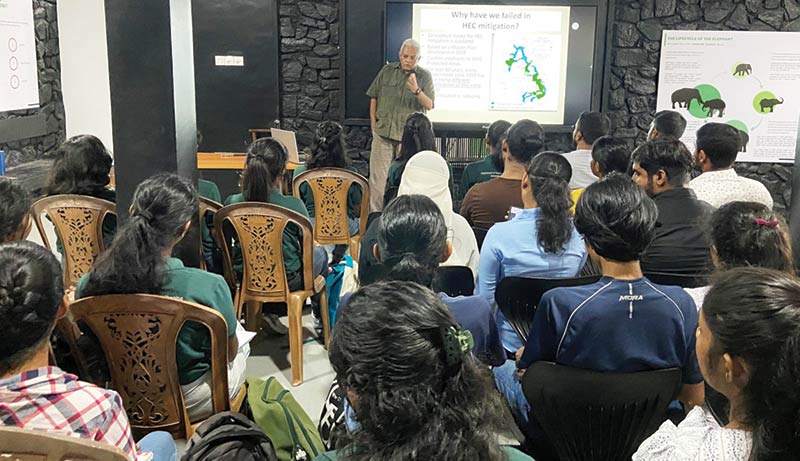
UoM’s Town and Country Planning Students Gain Insight into Human-Elephant Conflict
In October 2024, third-year students from the University of Moratuwa’s Department of Town and Country Planning embarked on an immersive learning experience at the Elephant Knowledge Walk Centre in Udawalawe, hosted by Dilmah Conservation, a Dilmah news release said.
“This unique session aimed to broaden students’ perspectives on human-elephant conflict (HEC), elephant conservation, and land-use strategies, by bringing together seven leading experts who shared deep insights into innovative approaches for tackling a persistent challenge that has impacted Sri Lanka for over 70 years,” it said.
The event marked a significant opportunity for students to re-imagine and contribute fresh solutions to the long-standing issue of HEC. Following an initial presentation from the students—highlighting their analyses and use of the Land Use Conflict Identification Strategy (LUCIS) model—the session expanded to discussions led by experts who encouraged the students to think beyond traditional methods.
This innovative platform mirrors the philosophy of Dilmah Founder, Merrill J. Fernando, who often championed the need to think outside the box and break conventional approaches to create more effective solutions. Similarly, this session encouraged students to consider the complexity of HEC from a holistic and multi-disciplinary perspective, breaking away from rigid paradigms.
Expert Insights on HEC The session continued with insights from distinguished experts who shared their knowledge across multiple facets of HEC:
Dr. Malaka Abeywardana, a veterinary surgeon from the Department of Wildlife Conservation (DWC) and the Udawalawe Elephant Transit Home (ETH), provided a veterinary perspective on HEC, illustrating the vast impact of gunshots, snares, and jaw bombs on over 1,500 elephants annually, resulting in medical costs exceeding Rs. 50 million.
Dr. Sumith Pilapitiya , former Director General of the DWC, emphasized the shortfalls of past HEC mitigation efforts, which have often prioritized human protection over elephant welfare, leading to a fundamental conflict of interests. He pointed out the limitations of protected areas, which have reached their carrying capacity, calling for more adaptable and inclusive approaches.
Dr. S. Wijeyamohan , Senior Lecturer at the University of Vavuniya, reinforced the need for evolving solutions. He noted that temporary measures like palmyrah trees, chilli fences, and trenches only work until elephants adapt to them, stressing that co-existence should not come at the cost of altering natural elephant behavior.
This rich exchange of ideas underscored the need for bold, innovative thinking—a principle central to Dilmah Conservation’s philosophy and its commitment to addressing issues beyond the conventional scope. By engaging a diverse group of experts, Dilmah Conservation offered students a comprehensive view of the complexities involved and the necessity of interdisciplinary collaboration in driving meaningful change.
Public Interest and Conservation The discussions highlighted the significance of public interest, tourism, and policy support in maintaining elephant conservation efforts. Prof. Enoka Kudavidanage, Professor in Conservation Biology at the Sabaragamuwa University noted that elephants remain a prominent figure in Sri Lanka’s conservation landscape, their charisma continuing to draw public admiration and support. Senior Wildlife Ranger Mr. Anil Vithanage discussed the adaptability of highland elephants, unique for their ability to climb hills, underlining the importance of protecting elephants across diverse habitats.
Adding an economic perspective, Mr. Srilal Miththapala, Past President of The Hotels Association of Sri Lanka (THASL), highlighted the substantial tourism value elephants bring to the country, making a strong case for their protection both as ecological and financial assets.
A Call for Change The session closed with Researcher Mr. Sameera Weerathunga’s thought-provoking remarks on the root causes of HEC, often stemming from poorly timed interactions and heightened stress on both sides. He advocated for a balanced approach, noting, “If we protect people, the elephants will be protected too.”
The comprehensive learning session provided students with a deeper understanding of the real-life challenges involved in elephant conservation, inspiring them to develop novel, adaptive solutions. Dr. Chethika Abenayake and the lecturers from the University of Moratuwa expressed their gratitude to the speakers and Dilmah Conservation for orchestrating this valuable experience, underscoring the importance of thinking beyond convention and drawing on a wealth of knowledge to craft impactful solutions for the future.

Business
A sustained wave of Indian assistance to Sri Lanka showcases defining shift in developmental diplomacy

By Sanath Nanayakkare
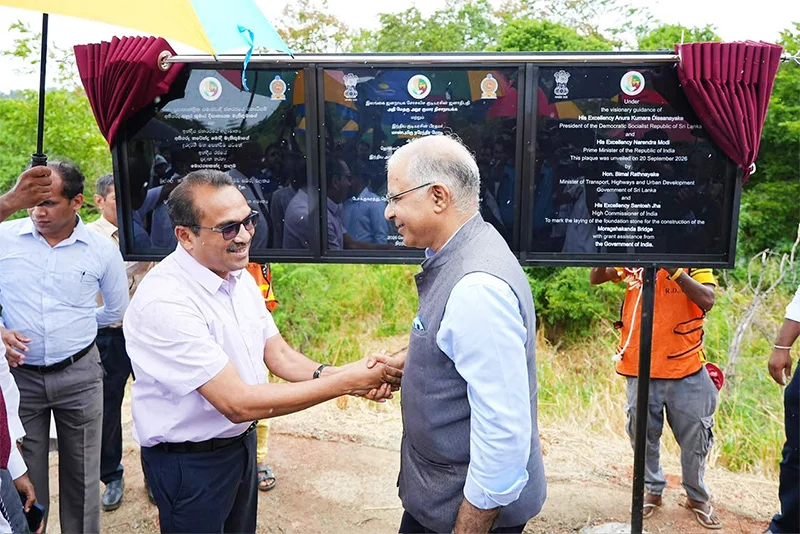
An evolving approach to regional diplomacy was brought into sharp focus with the recent foundation-laying ceremony for the Moragahakanda Bridge in Matale.
Jointly launched by Indian High Commissioner Santosh Jha and Minister of Transport, Highways and Urban Development Bimal Rathnayake, this 175-metre span is far more than a routine civil engineering project. It serves as the physical manifestation of a broader USD 450 million reconstruction package deployed by India in the wake of Cyclone Ditwah, which severely fractured the island’s transport arteries.
Foreign aid is too often discussed in cold, macroeconomic abstractions. Yet, every so often, a consistent pattern of targeted assistance alters the landscape of bilateral relations, offering a clear window into how regional partnerships evolve out of necessity and goodwill.
Across the country today, a remarkable narrative of multi-layered cooperation is unfolding.
From critical post-disaster infrastructure and maritime routes to grassroots agricultural uplift and institutional capacity-building, India’s developmental footprint is shifting unmistakably toward an organic, people-centric model of shared resilience.
What distinguishes this latest wave of assistance is its deliberate pivot from emergency support to permanent, climate-resilient transformation. When Cyclone Ditwah initially paralysed regional connectivity, India’s immediate response was marked by the rapid deployment of temporary Bailey bridges.
Today, that swift humanitarian intervention has matured into a structural blueprint: the Moragahakanda project stands as the vanguard of 13 permanent bridges being built across Sri Lanka’s provinces by IRCON International Limited, complemented by upcoming railway upgrades and modern signaling systems backed by a USD 250 million Line of Credit.
The true signature of this diplomatic shift lies in its breadth, operating simultaneously across multiple tiers of society:
Institutional Governance: Delegations of Sri Lankan parliamentarians and senior administrative officers regularly travel to India to study public policy frameworks, legislative systems, and administrative practices.
Economic Lifelines: Financial mechanisms, such as viability gap funding for the Nagapattinam-to-Kankesanthurai passenger ferry service, continue to shrink geographical distances, reviving coastal commerce and tourism.
Grassroots Empowerment: Specialised capacity-building programmes tailored for local stakeholders – ranging from state officials to rural dairy farmers -ensure that development reaches deep into the island’s hinterlands.
By aligning immediate disaster relief with long-term infrastructure, institutional capacity, and human capital, India and Sri Lanka are demonstrating how neighbours can build safer, more connected futures together, grounded firmly in mutual respect and tangible progress.

By Ifham Nizam
The Central Environmental Authority (CEA) yesterday urged visitors to the Colombo International Book Fair to bring reusable bags to carry their purchases, as part of a drive to reduce single-use plastic waste at the event.
CEA Director General R. S. P. Kapila Rajapaksha said large quantities of plastic, particularly “sili sili” bags, had been used to carry books at previous book fairs.
“We urge visitors to bring an environmentally friendly, reusable bag when they come to buy books. This simple step can help reduce the use of single-use plastic and protect the environment,” Rajapaksha said.
The book fair opens on September 25, with the CEA and the Sri Lanka Book Publishers’ Association launching an awareness programme targeting book sellers, food vendors and visitors.
The programme will be conducted under the theme “Read Smart, Carry Smart”, focusing on reducing polythene and plastic use throughout the exhibition.
The CEA said the use of plastic bags is also subject to regulations issued under the Consumer Affairs Authority Act. Gazette Extraordinary No. 2456/41, dated October 1, 2025, prohibits the free distribution of handled “sili sili” bags to consumers. Where such bags are sold, the charge must be included in the customer’s bill.
The CEA said food outlets at the book fair would also be required to comply with regulations prohibiting a range of single-use plastic products.
These include plastic straws and stirrers, disposable plastic plates, cups, spoons, forks and knives, as well as polythene-based food wrappers commonly known as lunch sheets.
The CEA said it had discussed the requirements with relevant stakeholders and reached agreement to ensure that prohibited products are not used at food outlets within the exhibition premises.
The authority urged both traders and visitors to cooperate with the initiative and help make this year’s book fair a more environmentally responsible event.

Partnership signals renewed foreign investor confidence in Sri Lanka as a destination and in the long-term growth of its hospitality sector
Japanese investor Yoshimichi Watanabe has entered into a partnership with Colombo Stock Exchange-listed Hunas Holdings PLC, in a move that comes as the diversified conglomerate prepares a significant expansion of its hospitality and real estate interests in Sri Lanka.
The partnership brings foreign capital and international market experience into one of Sri Lanka’s fastest-diversifying listed groups at a point when the Group is actively building out its pipeline across both sectors. Hunas Holdings is currently evaluating a series of hospitality and real estate developments in Sri Lanka, with further announcements expected in the coming months.
Hunas Holdings PLC operates across hospitality and leisure, real estate, renewable energy and agriculture, with a hotel portfolio that includes Hunas Falls in Elkaduwa
For Sri Lanka, the significance of the partnership extends beyond the two parties. Inbound investment of this nature, from an investor with direct and sustained experience of the market, is a measure of returning confidence in the country as a destination and in the underlying fundamentals of its hospitality sector, at a time when the industry is repositioning towards higher-value, experience-led travel.
Watanabe brings investment experience across e-commerce, hospitality and real estate in Japan and in international markets including Bali, Indonesia. He has also maintained a relationship with Sri Lanka over many years, having made multiple investments in the country, giving him first-hand insight into its business environment, regulatory landscape and long-term potential.

Appointment of Cabinet Sub-Committee for the Organization of 79th Independence Day Commemoration
Establishment of New Management Framework for the Dr. Nevil Fernando Hospital

Will Jacks five-for seals comfortable England defence of 265

Showers above 100 mm are likely in the Western, Sabaragamuwa, Central and North-western provinces and in Galle and Matara Districts

Mastermind Naufer Moulavi among 15 found guilty

No referendum needed for passage of 22 A: SC

‘Dates have the highest sugar content to fight Coronavirus’

Sunday Island 27 December – Headlines

#SundayIsland 17th December – Headlines

Sunday Island – 28th March

Sunday Island Headlines – 21 March

Sunday Island – 21st February – Headlines
-

 News6 days ago
US embassy won’t comment on IGP’s probe into joint drug raid
-

 News4 days ago
Shanakiyan urges urgent action over reported death sentence for Lankan in Saudi Arabia
-

 News5 days ago
Bid for Basil’s extradition nears final stage: Police
-

 Business6 days ago
All-new Bolero MaXX unveiled in Sri Lanka
-

 News3 days ago
Namal Rajapaksa Buddhist gambit fails, bail denied
-
 Opinion6 days ago
A journalist who wrote across the divide
-

 Features3 days ago
Why the spelling Sri Lankan names in English vary
-

 Features3 days ago
Three bands, a new identity: Sri Lankan wolf snake recognised as distinct species