
Features
Dilemmas of The New Norm

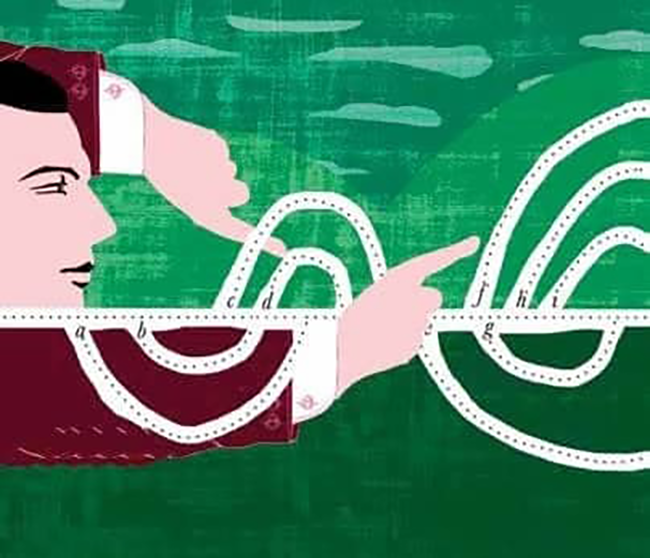
Dr Sarala Fernando
The choon (tune) van with bakery products arrived at the door after many weeks marking a sign of life in Colombo returning to normal, that is if you get used to the price-shock, everything doubled or tripled since the freeing of the exchange rate. It seems that Sri Lanka was more integrated into the global economy than had been thought; disdaining domestic import substitution, every manufacturer is raising prices claiming imported components. Or are merchants just cashing in with the lack of effective consumer protection?
Those who have savings in banks will get compensated with enhanced interest payouts but for those with limited or daily wages, coping with the new norm is crippling and despairing. With typical Sri Lanka philanthropy and self reliance mechanisms, hand outs of essential goods, community kitchens and community gardens have been started by private and voluntary organizations, but no one knows how much of the affected population will be reached. It is good to know that at last schools are open and finally, Triposha is up and running with the new booster supplement developed locally. Government health system networks including NGOs are working together with international organizations to address malnutrition in children which has been a lingering problem in Sri Lanka, a trend which began after the rice ration was stopped in the 1970’s.
The wife of the President of Ukraine, Mme Zelenska during a recent interview, had mentioned the surreal circumstances of life in Kyiv, where people are trying to live a normal life, going for walks, drinking a coffee in a cafe during the day despite the horror of the night bomb attacks from the Russian invasion and fear for their loved ones on the front lines. It is something like that in Colombo right now where people are going out to eat in restaurants, holding weddings in hotels, even international sporting events are ongoing despite the country having declared bankruptcy, a looming food crisis and the lack of dollars for basic necessities like fuel, gas, food and medicines. The truth is that people are desperate to lead their normal life today because of the uncertain tomorrow. They are cheered by even a little hope given by the new youthful Sri Lanka cricket team successfully meeting foreign challenges.
Unlike in Ukraine where President Zelensky has proved a master at communication both with the international community and the local population, one problem in Sri Lanka is a total failure of public diplomacy which is putting the government at odds with the people. In Ukraine, the President is seen in combat fatigues equally comfortable receiving foreign leaders while also inspecting the front lines and making a daily broadcast of the military situation to the people, underlining his proximity and sensitivity to their plight.
In this country, well dressed rulers message the public with one way communication, as if lecturing a captive audience; there is no visual of inspecting government activities or hearing the people’s grievances. Perhaps only in this country people are told by the rulers to manage with one meal a day and yet soon after the President is elected in Parliament, live tv broadcasts the traditional tea party enjoyed by mostly well fed parliamentarians. Nor does it help to build confidence when the messages are confused; for example the President’s mention that local debt sustainability is also to be looked at, had sent shock waves in the banking community until the Central Bank chief subsequently discounted this option. The President has recently even suggested nuclear power be included in the national energy plan, oblivious to the fact this proposal (put forward by former Minister Champika Ranawaka) had caused 60 local scientists to write in protest, even before the Fukushima tragedy.
In Japan, well before taxes are increased, there is a publicity programme put in place, to sensitize the public . Yet in Sri Lanka, apart from announcing that there are difficult times ahead and increasing public anxiety, what has the Government done to reassure the people of their plan to protect the most vulnerable? Instead, daily newspapers and social media are rife with tales of cash and other incentives offered to parliamentarians to join an all- party government in a merry- go- round of appointments to high government office. The growing chasm between the people and their elected representatives was voiced by former President Sirisena that he avoided showing his face near the fuel queues for fear of getting assaulted as one of the despised “225”.
The celebration of French National Day in July coinciding with the “aragalaya” reminded of the terrible conditions that triggered the revolution of 1789,- bankruptcy, famine and repression, which led to the overthrow of the ruling monarchy, sending its supporters in the aristocracy and the church to the guillotine. Sri Lanka’s “aragalaya” is different to the “terror” of the French revolution although both aspired to a “system change”. Initially, the “aragalaya” was peaceful and drew support across the island from all communities irrespective of social standing. In the French experience, internecine conflict broke out among the revolution leaders and its leaders like Robespierre also suffered the same fate at the guillotine. In the chaos thereafter, attempts to bring back the monarchy failed to take root and finally a little known soldier, short of stature, named Napoleon emerged, who ended up calling himself Emperor……..
Apart from the lessons of foreign revolutions , we can learn from the experience of the region. India, facing the need for economic reforms in the 1990’s, relied on respected local economists and took the Opposition into their confidence, paving the way for acceptance through parliament. However, when a problem emerges in this country, the traditional approach has been to set up an “independent” commission or new institution which inevitably runs into problems of financing and implementation. For example, faced with Sri Lanka’s infamous laws delays, they have created new courts, appointed new judges and resorted to digitalization. Why did they not accept the sensible simple suggestion by the President of the Law Commission for the existing judges and courts to work a double shift and thereby get rid of the backlog of cases? Or establish time limits for completion of court cases as in Singapore? In this time of crisis, instead of new mechanisms, why not just make use of the existing committees in Parliament, like the party leaders consultations , transformed into a National Council?
Closer to home, can we in the South take lessons from how Jaffna is coping with the present difficulties? For example, the University of Jaffna has not closed on account of the fuel crisis but is continuing to hold sessions with students and teachers coming on bicycles. As an incentive to students they have organized lunch for 1,500 students every day from local donations of rice, coconut and vegetables having to only hire a cook. They are not waiting for foreign assistance but have put the goal of education upfront and the student attendance is high being ensured of at least one good meal every day. The sponsors of the Nallur festival this year fed some 10,000 people lunch every day setting an example for the south to put aside draping stupas with cloth and building ran veta. Jaffna people who have gone through the trauma of the 30-year armed conflict have retained their simplicity and work ethic, many households still cooking with firewood and eating simple vegetarian meals. It would not be surprising if Jaffna also leads the way in renewable energy and water harvesting, setting an example for the South of a way of life that can be best described as smaller, smarter and more sustainable.
We in the South, over-roaded, traffic jams, over-built with untenable concrete hirises which have no adaptation to climate change and all draining the national grid, isn’t it time to call for a change of lifestyle? It is not our strategic location but our natural heritage, the trees, plants, the wild life, the mountains and water sources that since ancient times draws investment, trade and visitors . The question is why our rulers never seem to focus on protecting this natural treasure.
In Nepal and India where the government has supported protection initiatives, numbers of tigers in the wild are doubling because of dedicated teams of rangers. Contrast with Sri Lanka which has the worst rate of elephant- human conflict in the world and even the leopards are dying. Numerous videos of cruelty to domestic elephants and the film of gifted Sri Lanka elephants like Kavan rescued by international petition from a dismal foreign zoo and sent to a sanctuary in Cambodia, are reinforcing negative images of this country.
The dice are rolling unpredictably in Sri Lanka. Who would have thought the oldest democracy in South Asia would see an elected President deposed by an angry population and a new President, without even winning his seat, elected from Parliament? Is President Wickremesinghe an unlikely hero, savior of the nation or is he a scapegoat like in ancient Greek rituals at a time of calamity, cast out of his home and left exposed to the wolves and the elements? With storm clouds gathering amidst growing public unrest, political parties are already strategizing for an election early next year. What hope of system change with spoiled wine in new bottles?
(Sarala Fernando, retired from the Foreign Ministry as Additional Secretary and her last Ambassadorial appointment was as Permanent Representative to the UN and International Organizations in Geneva . Her Ph.D was on India-Sri Lanka relations and she writes now on foreign policy, public diplomacy and protection of heritage).


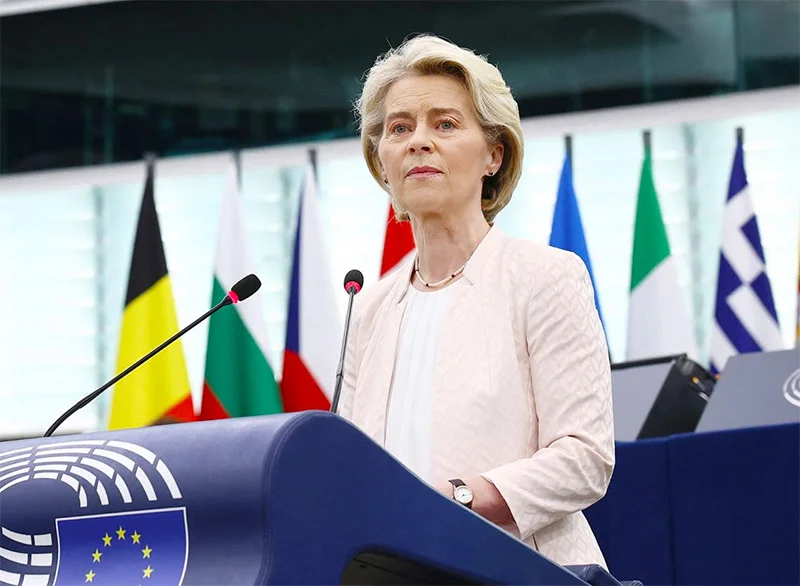
 European Commission President Ursula von der Leyen addressing the World Economic Forum in Davos, Switzerland on Tuesday put forward the EU’s viewpoint on current questions in international politics with a clarity, coherence and eloquence that was noteworthy. Essentially, she aimed to leave no one in doubt that a ‘new form of European independence’ had emerged and that European solidarity was at a peak.
These comments emerge against the backdrop of speculation in some international quarters that the Post-World War Two global political and economic order is unraveling. For example, if there was a general tacit presumption that US- Western European ties in particular were more or less rock-solid, that proposition apparently could no longer be taken for granted.
For instance, while US President Donald Trump is on record that he would bring Greenland under US administrative control even by using force against any opposition, if necessary, the EU Commission President was forthright that the EU stood for Greenland’s continued sovereignty and independence.
In fact at the time of writing, small military contingents from France, Germany, Sweden, Norway and the Netherlands are reportedly already in Greenland’s capital of Nook for what are described as limited reconnaissance operations. Such moves acquire added importance in view of a further comment by von der Leyen to the effect that the EU would be acting ‘in full solidarity with Greenland and Denmark’; the latter being the current governing entity of Greenland.
It is also of note that the EU Commission President went on to say that the ‘EU has an unwavering commitment to UK’s independence.’ The immediate backdrop to this observation was a UK decision to hand over administrative control over the strategically important Indian Ocean island of Diego Garcia to Mauritius in the face of opposition by the Trump administration. That is, European unity in the face of present controversial moves by the US with regard to Greenland and other matters of contention is an unshakable ‘given’.
It is probably the fact that some prominent EU members, who also hold membership of NATO, are firmly behind the EU in its current stand-offs with the US that is prompting the view that the Post-World War Two order is beginning to unravel. This is, however, a matter for the future. It will be in the interests of the contending quarters concerned and probably the world to ensure that the present tensions do not degenerate into an armed confrontation which would have implications for world peace.
However, it is quite some time since the Post-World War Two order began to face challenges. Observers need to take their minds back to the Balkan crisis and the subsequent US invasions of Afghanistan and Iraq in the immediate Post-Cold War years, for example, to trace the basic historic contours of how the challenges emerged. In the above developments the seeds of global ‘disorder’ were sown.
Such ‘disorder’ was further aggravated by the Russian invasion of Ukraine four years ago. Now it may seem that the world is reaping the proverbial whirlwind. It is relevant to also note that the EU Commission President was on record as pledging to extend material and financial support to Ukraine in its travails.
Currently, the international law and order situation is such that sections of the world cannot be faulted for seeing the Post World War Two international order as relentlessly unraveling, as it were. It will be in the interests of all concerned for negotiated solutions to be found to these global tangles. In fact von der Leyen has committed the EU to finding diplomatic solutions to the issues at hand, including the US-inspired tariff-related squabbles.
Given the apparent helplessness of the UN system, a pre-World War Two situation seems to be unfolding, with those states wielding the most armed might trying to mould international power relations in their favour. In the lead-up to the Second World War, the Hitlerian regime in Germany invaded unopposed one Eastern European country after another as the League of Nations stood idly by. World War Two was the result of the Allied Powers finally jerking themselves out of their complacency and taking on Germany and its allies in a full-blown world war.
However, unlike in the late thirties of the last century, the seeming number one aggressor, which is the US this time around, is not going unchallenged. The EU which has within its fold the foremost of Western democracies has done well to indicate to the US that its power games in Europe are not going unmonitored and unchecked. If the US’ designs to take control of Greenland and Denmark, for instance, are not defeated the world could very well be having on its hands, sooner rather than later, a pre-World War Two type situation.
Ironically, it is the ‘World’s Mightiest Democracy’ which is today allowing itself to be seen as the prime aggressor in the present round of global tensions. In the current confrontations, democratic opinion the world over is obliged to back the EU, since it has emerged as the principal opponent of the US, which is allowing itself to be seen as a fascist power.
Hopefully sane counsel would prevail among the chief antagonists in the present standoff growing, once again, out of uncontainable territorial ambitions. The EU is obliged to lead from the front in resolving the current crisis by diplomatic means since a region-wide armed conflict, for instance, could lead to unbearable ill-consequences for the world.
It does not follow that the UN has no role to play currently. Given the existing power realities within the UN Security Council, the UN cannot be faulted for coming to be seen as helpless in the face of the present tensions. However, it will need to continue with and build on its worldwide development activities since the global South in particular needs them very badly.
The UN needs to strive in the latter directions more than ever before since multi-billionaires are now in the seats of power in the principle state of the global North, the US. As the charity Oxfam has pointed out, such financially all-powerful persons and allied institutions are multiplying virtually incalculably. It follows from these realities that the poor of the world would suffer continuous neglect. The UN would need to redouble its efforts to help these needy sections before widespread poverty leads to hemispheric discontent.

 Hi! This week I’ve come up with tips to brighten up your skin.
* Turmeric and Yoghurt Face Pack:
You will need 01 teaspoon of turmeric powder and 02 tablespoons of fresh yoghurt.
Mix the turmeric and yoghurt into a smooth paste and apply evenly on clean skin. Leave it for 15–20 minutes and then rinse with lukewarm water
Benefits:
Reduces pigmentation, brightens dull skin and fights acne-causing bacteria.
* Lemon and Honey Glow Pack:
Mix 01teaspoon lemon juice and 01 tablespoon honey and apply it gently to the face. Leave for 10–15 minutes and then wash off with cool water.
Benefits:
Lightens dark spots, improves skin tone and deeply moisturises. By the way, use only 01–02 times a week and avoid sun exposure after use.
* Aloe Vera Gel Treatment:
All you need is fresh aloe vera gel which you can extract from an aloe leaf. Apply a thin layer, before bedtime, leave it overnight, and then wash face in the morning.
Benefits:
Repairs damaged skin, lightens pigmentation and adds natural glow.
* Rice Flour and Milk Scrub:
You will need 01 tablespoon rice flour and 02 tablespoons fresh milk.
Mix the rice flour and milk into a thick paste and then massage gently in circular motions. Leave for 10 minutes and then rinse with water.
Benefits:
Removes dead skin cells, improves complexion, and smoothens skin.
* Tomato Pulp Mask:
Apply the tomato pulp directly, leave for 15 minutes, and then rinse with cool water
Benefits:
Controls excess oil, reduces tan, and brightens skin naturally.

 That’s precisely what 25-year-old Hansana Balasuriya has in mind – shooting for the stars – when she was selected to represent Sri Lanka on the international stage at Miss Intercontinental 2025, in Sahl Hasheesh, Egypt.
The grand finale is next Thursday, 29th January, and Hansana is all geared up to make her presence felt in a big way.
Her journey is a testament to her fearless spirit and multifaceted talents … yes, her life is a whirlwind of passion, purpose, and pageantry.
Raised in a family of water babies (Director of The Deep End and Glory Swim Shop), Hansana’s love affair with swimming began in childhood and then she branched out to master the “art of 8 limbs” as a Muay Thai fighter, nailed Karate and Kickboxing (3-time black belt holder), and even threw herself into athletics (literally!), especially throwing events, and netball, as well.
A proud Bishop’s College alumna, Hansana’s leadership skills also shone bright as Senior Choir Leader.
She earned a BA (Hons) in Business Administration from Esoft Metropolitan University, and then the world became her playground.
Before long, modelling and pageantry also came into her scene.
She says she took to part-time modelling, as a hobby, and that led to pageants, grabbing 2nd Runner-up titles at Miss Nature Queen and Miss World Sri Lanka 2025.
When she’s not ruling the stage, or pool, Hansana’s belting tunes with Soul Sounds, Sri Lanka’s largest female ensemble.
What’s more, her artistry extends to drawing, and she loves hitting the open road for long drives, she says.
This water warrior is also on a mission – as Founder of Wave of Safety,
Hansana happens to be the youngest Executive Committee Member of the Sri Lanka Aquatic Sports Union (SLASU) and, as founder of Wave of Safety, she’s spreading water safety awareness and saving lives.
Today is Hansana’s ninth day in Egypt and the itinerary for today, says National Director for Sri Lanka, Brian Kerkoven, is ‘Jeep Safari and Sunset at the Desert.’
And … the all-important day at Miss Intercontinental 2025 is next Thursday, 29th January.
Well, good luck to Hansana.

Indonesian Naval Ship ‘KRI SULTAN ISKANDAR MUDA – 367’ arrives in Colombo

Royal Navy of Oman Ship ‘AL SEEB’ calls at Port of Colombo

Jacks out with illness as Sri Lanka bat against England

Mechanism to be established involving university academics and experts for Education Reforms – President

New integrated framework to bring all stakeholders together to safeguard and rebuild Central highlands – President

ICC T20 World Cup Trophy tour in Sri Lanka launched under President’s patronage

‘Dates have the highest sugar content to fight Coronavirus’

Sunday Island 27 December – Headlines

#SundayIsland 17th December – Headlines

Sunday Island – 28th March

Sunday Island Headlines – 21 March

Sunday Island – 21st February – Headlines
-

 Editorial5 days ago
Illusory rule of law
-
 News6 days ago
UNDP’s assessment confirms widespread economic fallout from Cyclone Ditwah
-
 Editorial6 days ago
Crime and cops
-
 Features5 days ago
Daydreams on a winter’s day
-

 Editorial7 days ago
The Chakka Clash
-
 Features5 days ago
Surprise move of both the Minister and myself from Agriculture to Education
-

 Features4 days ago
Extended mind thesis:A Buddhist perspective
-
 Features5 days ago
The Story of Furniture in Sri Lanka