
Business
Dialog Axiata Ranked Sri Lanka’s Most Valuable Brand by Brand Finance for the 5th Consecutive Year

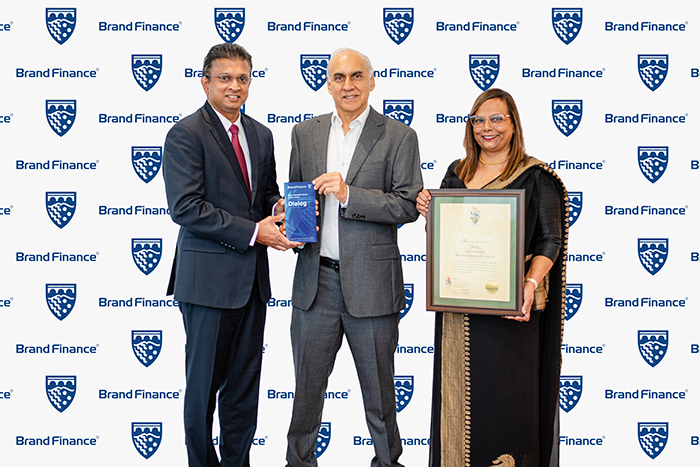
In its 20th annual review, Brand Finance, the world’s foremost independent brand valuation consultancy, bestowed the prestigious title of ‘Sri Lanka’s Most Valuable Brand’ upon Dialog Axiata PLC, the country’s premier connectivity provider, for the fifth consecutive year, with a brand value of Rs. 52 billion. Dialog emerged as the strongest brand in Sri Lanka, earning the esteemed AAA+ brand rating. The Company was also accorded the title of ‘Most Valuable Telecommunications Brand’ for the 16th consecutive year.
These coveted accolades along with being named the ‘Most Loved Telecommunications Brand’ for the 7th consecutive year, reflect the unwavering trust and confidence placed in Dialog by over 17 million Sri Lankans, and the Company’s steadfast dedication to its purpose of empowering and enriching Sri Lankan lives and enterprises through sustainable digital ecosystems. Staying true to its brand promise, “The Future. Today.”, Dialog remains resolute in delivering state-of-the-art technology and connectivity that is inclusive, affordable, and accessible to all, while propelling the country’s transformation into a thriving digital nation.
With a steadfast commitment to its core value of ‘Service from the Heart,’ the Company prioritises delivering unparalleled customer experiences, exemplified by its digital care ecosystem, including the ‘DIA’ virtual assistant, MyDialog App and Google Assistant integration to facilitate voice assistance. As part of its unwavering dedication to creating a positive impact in communities and the nation at large, the Company spearheaded the groundbreaking efforts to resolve the acute fuel shortage crisis through the pioneering ‘National Fuel Pass’ solution, developed in collaboration with its partners. In addition, Dialog, together with its corporate partners, provided much-needed emergency aid to over 120,000 families in-need across the country through ‘Manudam Mehewara,’ a multi-corporation humanitarian alliance. The launch of ‘Karuna.lk,’ Sri Lanka’s first cause-verified crowdfunding platform, further showcases Dialog’s enduring dedication to driving meaningful change through technology.
Commenting, Supun Weerasinghe, Group Chief Executive of Dialog Axiata PLC said, “We are grateful for the unwavering loyalty and patronage of over 17 million Sri Lankans and enterprises that helped achieve this recognition. As the most valuable and strongest brand in Sri Lanka, we will continue to leverage the transformative power of technology to empower and enrich Sri Lankan lives and enterprises.”
Ruchi Gunewardene, Chairman of Brand Finance Lanka stated, “We congratulate Dialog for being able to sustain its position at the top of our table. It’s the benchmark brand to be followed by others. Its ability to build brand strength across many indicators we measure in the telecommunications sector enables it to maximize the value of the Dialog brand”.
Brand Finance is the world’s leading independent brand valuation consultancy, with offices in over 25 countries including Sri Lanka. Brand Finance bridges the gap between marketing and finance by quantifying the financial value of brands. Brand Finance calculates the values of the brands in its league tables using the Royalty Relief approach – a brand valuation methodology compliant with the industry standards set in ISO 10668. It involves estimating the likely future revenues that are attributable to a brand by calculating a royalty rate that would be charged for its use, to arrive at a ‘brand value’ understood as a net economic benefit that a brand owner would achieve by licensing the brand in the open market.








By Ifham Nizam
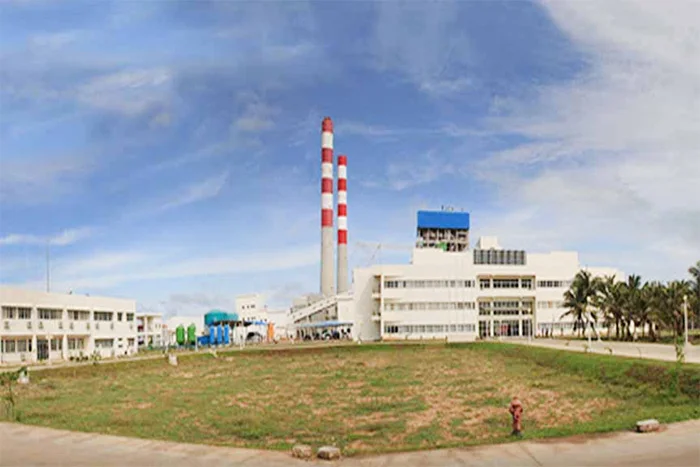
A Rs.160 million-plus diesel discrepancy at the Lakvijaya power plant in Norochcholai has triggered an internal investigation, raising questions over the handling of public funds and the controls governing fuel purchased for electricity generation.
The discrepancy surfaced during an internal audit of diesel supplied to the plant from the Kolonnawa and Sapugaskanda fuel terminals, according to senior officials familiar with the inquiry.
The audit has identified five transactions—two in December 2025 and three in January 2026—in which diesel recorded as delivered to the plant allegedly could not be fully accounted for in its physical stocks.
The investigation is now examining whether these were isolated discrepancies or part of a longer-running practice.
One transaction under scrutiny relates to January 16, when records reportedly showed that 10 diesel bowsers had arrived at the plant. Investigators subsequently found indications that the fuel stock corresponded to only nine bowsers.
A storekeeper responsible for the relevant fuel operation has reportedly been temporarily removed from those duties pending the investigation.
A senior official said investigators were reviewing historical records amid indications that similar discrepancies may have occurred over a longer period. If established, the financial exposure could therefore exceed the Rs.160 million currently identified.
The investigation is comparing fuel-terminal dispatch records, tanker movements, plant-entry records, receiving documents and physical stocks to establish exactly how much fuel was dispatched, received and accounted for.
That audit trail will also be critical in determining who authorised, received and certified the disputed consignments, and whether established controls were followed.
Relevant documents were reportedly transferred from Norochcholai to the company’s Colombo head office on September 26 for further examination, with electricity-sector security personnel assisting in the transfer.
The internal audit has also reportedly uncovered expired chemical stocks worth several hundred thousand rupees in the plant’s stores. Investigators are examining whether further inventory-management irregularities occurred.
The matter was also reportedly taken to the Puttalam Police Special Crimes Investigation Unit on September 26.
When contacted by Puttalam-based journalist Hiran Priyankara Jayasinghe for The Island Financial Review, Lakvijaya Power Plant Manager Nalaka Kumara confirmed that an investigation was under way but declined to provide further details.
The financial issue is direct: if the plant paid for diesel it did not receive, public-sector funds were spent without the electricity sector receiving the corresponding fuel.
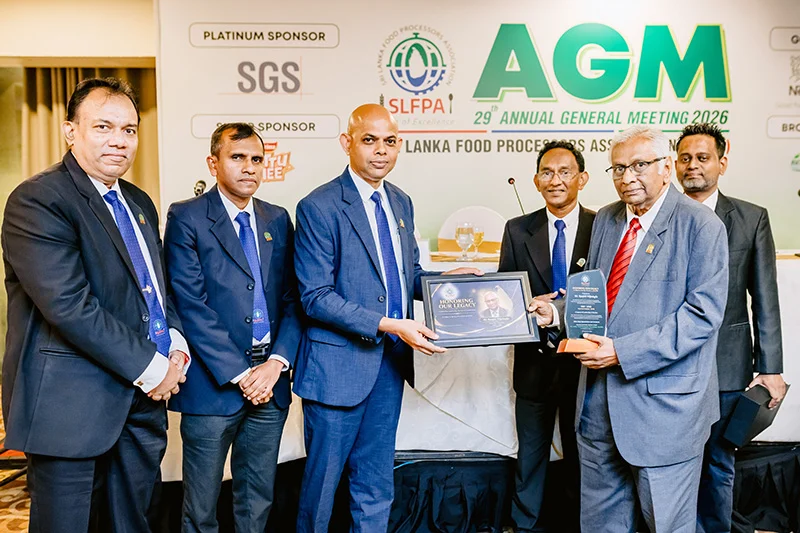
The Sri Lanka Food Processors Association (SLFPA) successfully convened its 29th Annual General Meeting (AGM) on September 23, 2026, at the Water’s Edge Hotel, Battaramulla. Bringing together key industry stakeholders and member organizations, the event served as a platform to review milestone achievements from the 2025/2026 term and outline strategic priorities for the nation’s food and beverage processing sector.
At the AGM, the new Executive Committee for 2027/2028 was appointed, comprising: Honorary President Aruna Senanayake C.W. Mackie PLC Imme. Past President Thusith Wijesinghe Trans Continental Packaging & Commodities (Pvt) Ltd.
President Elect Nadishan Guruge Meadlee Trading Co. (Pvt) Ltd.
1st Vice President Damitha Perera Forbes & Walkers Commodity Brockers (Pvt) Ltd.
2nd Vice President Rasika Seneviratne Diesel & Motor Engineering PLC 3rd Vice President Deepal De Alwis Neochem International (Pvt) Ltd.
Honorary Secretary Amila Weerasinghe Nestle Lanka Limited.
Asst. SecretaryDineth Alahakoon Country Style Foods (Pvt) Ltd.
Honorary Treasurer Sameera Jayathilaka Westmann Engineering Company (Pvt) Ltd.
Asst. Treasurer Niroshan Dalpethado C D De Fonseka & Sons (Pvt) Limited. In addition to the above office bearers, the following ten Executive Committee Members were appointed:
Sanjeewa De Silva Unilever Sri Lanka Limited Sheran De Alwis MA’S Tropical Food Processing (Pvt) Limited
Thusitha Ekanayake Anods Cocoa (Pvt) Ltd.
Vijitha Govinna Plenty Foods (Pvt) Limited Ms. Praharshi Wickramasekara International Commodity Exports (Pvt) Ltd.
Sanjeewa Niroshan SGS Lanka (Pvt) Ltd. Kushan Amarasinghe Finagle Lanka (Pvt) Ltd.
Rangajeewa Hettiarrachchi Fonterra Brands Lanka (Pvt) Ltd.
Harindra Abeyrathna Vision Technologies International (Pvt) Ltd. Thilina Weerasekara Ceylon Cold Stores PLC
The event was proudly supported by key industry partners, with SGS Lanka (Pvt) Ltd serving as the Platinum Sponsor. Unilever Sri Lanka Ltd. and Nestlé Lanka Ltd. joined as Gold Sponsors, Ceylon Agro Industries – Prima as the Silver Sponsor, while Lanka Exhibition & Conference Services (LECS) and Hero Nature Products (Pvt) Ltd., supported as Bronze Sponsors.
The proceedings concluded with a vote of thanks delivered by Hony. Secretary Deepal De Alwis, followed by cocktails and a fellowship networking session, providing an opportunity for members to connect and strengthen industry ties.
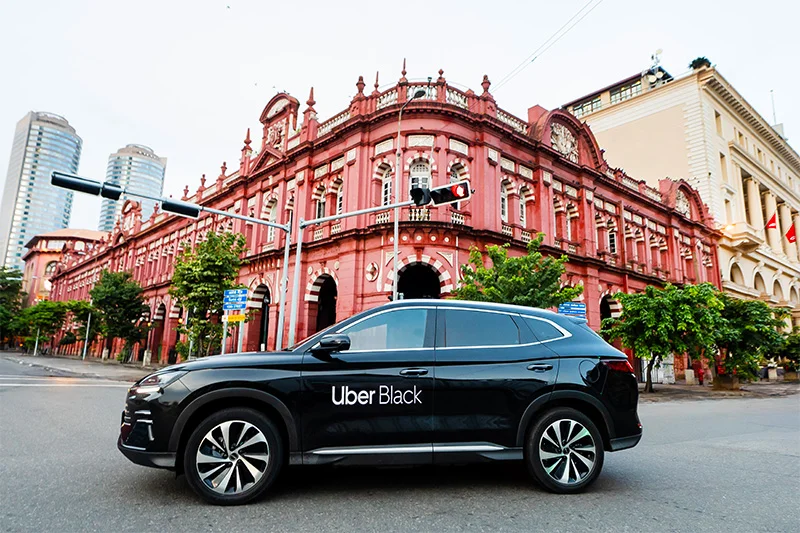
New premium ride option expands Uber’s portfolio from affordable Moto and Tuk rides to premium on-demand travel
Uber announced the launch of Uber Black in Sri Lanka, bringing its premium ride experience to the country for the first time. Designed as the “business class of back seats,” Uber Black combines premium vehicles and highly-rated drivers for riders looking for greater comfort, quality and a more elevated travel experience.
The launch comes as demand for premium products and experiences grows across Sri Lanka, with consumers seeking greater choice and quality in their everyday experiences. Uber Black brings this choice to on-demand mobility, whether for an airport journey, an important business meeting, a special occasion or simply when riders want to travel in greater comfort.

Gold winner Tharanga gets brand-new Honda Vezel from SLAAJ

Showers above 50 mm are likely at some places inthe Uva, Eastern and Central provinces and in Polonnaruwa and Mullaittivu districts after 1.00 p.m.

Civil society activist accuses govt. of favouring Ven. Gnanasara

More cops than cones

Sajith accuses govt. of using data selectively in crucial report

75 new inmates sent to Bogambara re-establishing it as a correctional facility

‘Dates have the highest sugar content to fight Coronavirus’

Sunday Island 27 December – Headlines

#SundayIsland 17th December – Headlines

Sunday Island – 28th March

Sunday Island Headlines – 21 March

Sunday Island – 21st February – Headlines
-
 Latest News6 days ago
Showers above 100 mm are likely at some places in the Western, Sabaragamuwa, Central and North-western provinces and in Galle and Matara Districts
-

 Editorial6 days ago
Crimes punished and unpunished
-

 Features5 days ago
Beyond traditional jobs: Why Sri Lanka needs to facilitate the gig economy
-

 Editorial4 days ago
Birth of a bad law
-
 Latest News5 days ago
Kusal, Wellalage star as Sri Lanka defend 322 in Headingley thriller
-

 News2 days ago
Police remove Thileepan statue in Jaffna
-

 Latest News7 days ago
Ms. P. M. Jayadeera (Engineer) appointed Director General of Irrigation
-

 News6 days ago
IMF: Sri Lanka on course for 2027 market return