
Latest News
Dhananjaya, Kamindu fifties add to Sri Lanka fightback

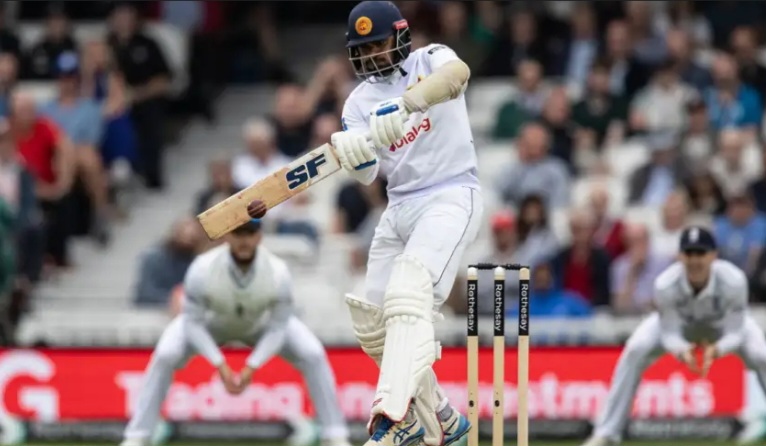
Dhananjaya de Silva and Kamindu Mendis rebuilt Sri Lanka on a see-sawing second day that closed early due to bad light yet again, but this time the tourists could claim the better of the contest.
After their bowlers had staged a remarkable turnaround to bundle England out for 325 from their overnight 221 for 3, Sri Lanka slumped to 93 for 5 before Dhananjaya and Kamindu staged an unbroken stand worth 118 for the sixth wicket to close the deficit.
There was still plenty of work to be done when the players left the field at 5.36pm with the prospect of returning equally as dim as the overhead conditions at The Oval, and stumps were indeed called half an hour later without any further play.
Dhananjaya returned from tea on 16 but by the close he had passed Kamindu to be 64 not out. That was after being dropped on 23 by debutant Josh Hull , who let a straightforward catch off the bowling of Shoaib Bashir slip through his hands and into his chest at mid-on.
Hull’s desire to disappear was as palpable as his relief upon claiming his maiden Test wicket, the dangerous-looking Pathum Nissanka for a quick-fire 64 via Chris Woakes’ catch at cover.
That was part of England’s dismantling of their opponents’ good work during an eventful afternoon session in which Olly Stone snared two wickets and Woakes chimed in with one after Nissanka’s errant call and Stone’s direct hit from short cover had run out Dimuth Karunaratne.
In bizarre scenes, Woakes was forced to send down four offspin deliveries when the umpires ruled the light to be too poor for the seamers midway through his fourth over.
As the skies brightened in the very next over and Gus Atkinson was allowed to bowl off his full run, so too Woakes returned to his stock in trade, and in his sixth over he had Kusal Mendis taken by Harry Brook at second slip.
Stone struck with his fourth delivery, Angelo Mathews caught by Ollie Pope at gully, and after Hull had removed Nissanka, Stone pinned Dinesh Chandimal lbw to leave Sri Lanka in deep trouble.
Kamindu brought up Sri Lanka’s 100 with the first of three gorgeous drives in one Stone over and by tea he was unbeaten on 34.
Due to bad light, England had to bowl spin for the duration of the evening session, 17 overs in which Dhananjaya and Kamindu added 69 runs.
Earlier, Sri Lanka’s bowlers responded to fast-bowling coach Aaqib Javed’s call at stumps on the first evening to “rest and come up with something better than this”.
England were fallible in a collapse of 6 for 35 in 56 balls, with poor shot-selection and too often falling into the traps Sri Lanka’s bowlers set for them, but it was an undeniably improved performance from the visitors as their bowlers employed greater patience and probing lines while making the ball swing.
Pope pushed his dazzling first-day score of 103 not out to 154 but apart from him and Ben Duckett, no England batter reached 20.
Brook looked streaky when he resumed on 8, particularly against anything wide of off stump, and he had added just four more runs before skying Milan Rathnayake to deep point, where Asitha Fernando had eons to wait underneath it before inexplicably putting it down.
So frustrated was Brook by Sri Lanka’s nagging fifth- and sixth-stump line that at one point he took up his stance a foot outside off stump and gesticulated with outstretched arms that seemed to question their tactic. The answer came soon enough when his frustration appeared to boil over into a slash at Rathnayake’s outswinger and Kamindu made no mistake with the sharpest of catches diving to his right at short cover.
Brief scores:
Sri Lanka 211 for 5 in 45 overs (Dhananjaya de Silva 64*, Pathum Nissanka 64, Kamindu Mendis 54*; Olly Stone 2-28) trail England 325 in 69.1 overs (Ollie Pope 154, Ben Duckett 86; Vishwa Fernando 2-46, Lahiru Kumara 2-97, Milan Rathnayake 3-56, Dhananjaya de Silva 2-18) by 114 runs

Latest News
Showers above 100 mm are likely at some places in the Western, Sabaragamuwa, Central, Uva and Southern provinces and in Anuradhapura district

WEATHER FORECAST FOR 08 OCTOBER 2026
Issued at 05.30 a.m. on 08 October 2026 by the Department of Meteorology
Misty conditions can be expected at some places in the Western, Sabaragamuwa, Central and Uva provinces and in Galle and Matara districts during the early hours of the morning.
Showers or thundershowers will occur in the most part of the island after 1.00 p.m. Heavy showers above 100 mm are likely at some places in Western, Sabaragamuwa, Central, Uva and Southern provinces and in Anuradhapura district.
The general public is kindly requested to take adequate precautions to minimize damage caused by temporary localized strong winds and lightning during thundershowers.

Former first lady Shiranthi Rajapaksa, wife of former President Mahinda Rajapaksa was produced before the Hulftsdorp court, after being arrested by officers of the Commission to Investigate Allegations of Bribery or Corruption (CIABOC) and produce
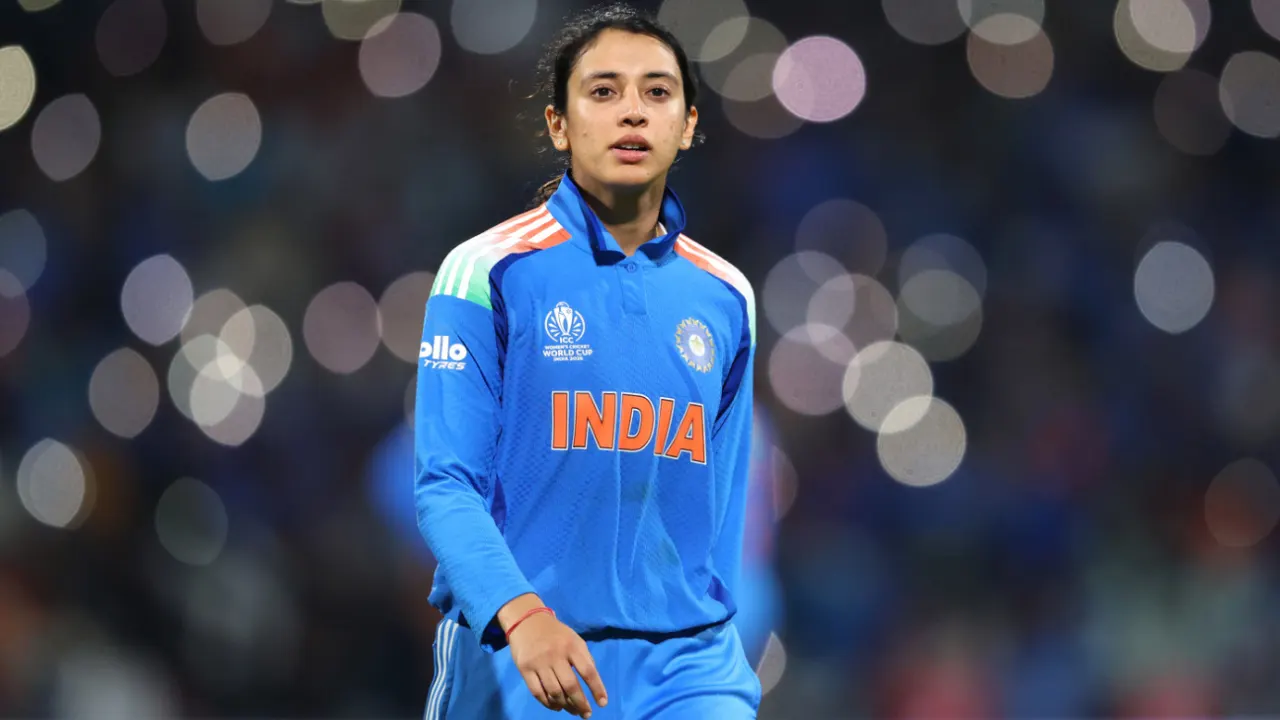
Smriti Mandhana has been named India’s all-format women’s captain on the same day Harmanpreet Kaur stepped down from the role after nearly a decade since she first took over.
Mandhana – vice-captain to Harmanpreet for much of this period – has previously led India in four ODIs and 18 T20Is, apart from captaining Maharashtra in domestic cricket and Royal Challengers Bengaluru in the Women’s Premier League.
Mandhana’s first assignment will be the limited-overs series against Zimbabwe beginning with the three T20Is in Raipur from October 16. On Tuesday, Mandhana was part of the selection meeting chaired by Amita Sharma to pick the squad for the tour.
Terming the appointment a “special honour”, Mandhana also acknowledged the contributions of her predecessor in her welcome note.
“I would also like to acknowledge Harmanpreet and the contribution she has made as captain over the years,” she was quoted as saying by the BCCI. “She has led the team with great commitment and has been an important part of our journey.
“I understand the responsibility that comes with this role and look forward to working with the team, learning along the way and giving my best to take Indian cricket forward.”
Mandhana’s appointment comes on the back of a review meeting held on Monday in Guwahati. Chaired by secretary Devajit Saikia, the meeting was also attended by Mandhana, Harmanpreet and head coach Amol Muzumdar to chart a roadmap forward, with an eye on next year’s inaugural Women’s Champions Trophy in February as well as the T20 World Cup and Los Angeles Olympics in 2028.
Mandhana, India’s best all-format batter, has been knocking on the doors for a while. Earlier this year, she led RCB to their second WPL title, in which she also top-scored in the final.
In September, she overtook Mithali Raj to become the leading run-scorer in women’s international across formats. Her 18 international hundreds are also the most in women’s cricket. She is also the first Indian woman to score centuries in all formats.
[Cricinfo]

Showers above 100 mm are likely at some places in the Western, Sabaragamuwa, Central, Uva and Southern provinces and in Anuradhapura district

PSTA worse than PTA: FSP

Shiranthi R remanded until 13 Oct.

Former NSB Chairman Kariyawasam granted bail

Katchatheevu row: India SC urges fishermen to avoid Sri Lankan waters

Remembering Juvenal, Coke, Acton and Machiavelli

‘Dates have the highest sugar content to fight Coronavirus’

Sunday Island 27 December – Headlines

#SundayIsland 17th December – Headlines

Sunday Island – 28th March

Sunday Island Headlines – 21 March

Sunday Island – 21st February – Headlines
-

 Editorial6 days ago
Colombo Port drug bust: The plot thickens
-

 Features4 days ago
The first woman in the foreign service or Ceylon Overseas Service it was then called
-

 News3 days ago
Geneva takes up Sallay’s case and govt. ignores opportunity to answer accusations
-

 Editorial5 days ago
Fuelling discontent and protest
-

 Latest News5 days ago
Tharindu Rathnayake, bowlers secure Asian Games Bronze for Sri Lanka
-

 Foreign News5 days ago
Ten injured after car crashes into rugby supporters in Australia
-

 Features3 days ago
Sri Lanka Cricket Bill: Governance reform is not yet a cricket strategy
-

 News4 days ago
Nearly 20 Iranian tankers stranded off Lanka amid US sanctions