
Business
Developing cultural and historical ties between India and Sri Lanka through the “Murugan Trail”


Sri Lanka was further able to strengthen its cultural and historical friendship with its Indian counterparts by organizing the first ever ‘’Murugan Trail ‘’ from South India, which was a Media FAM Tour organized by the Sri Lanka Tourism Promotion Bureau, in collaboration with the Sri Lanka Deputy High commission in Chennai, from 3rd to 13th August 2022.
This was seen as a good initiative as the country is recovering slowly from its economic crisis, where the Tourism sector also suffered a considerable setback, with several countries issuing travel advisories. Sri Lanka Tourism is back on track with the hope of bringing one million tourists this year, where tourist arrivals are on the rise with the gradual relaxation of travel advisories at the same time. India has been exceptionally helpful towards its neighbor during this crucial period, by bringing the most number of tourist arrivals to the destination, recorded as 74,792 for the month of July 2022.
The main purpose of organizing this FAM Tour was to promote the ‘’Murugan Trail’’ to South Indian tourists, who have a deep connection with Lord Murugan and the festivals as Hindu devotees. Nallur festival in Jaffna and Kataragama Esala Festival are held annually to pay homage to Lord Murugan. Nallur Kandaswamy Kovil or Nallur Murugan Kovil is one of the of the most significant Hindu temples in the Nallur, Jaffna. The Nallur Festival in Jaffna in August is the island’s longest festival. Spanning 25 days of vibrant chariot processions, drumming, dancing and acts of self-mortification, held in honor of the war god Skanda.
Kataragama temple is mostly worshipped by Sinhalese and Hindu devotees. Kataragama plays a very pivotal role as it is a religious place of worship by both Sri Lankans and South Indians alike. Murugan, is the Hindu god of war, the son of Parvati and Shiva, the brother of Ganesha and a god whose legends have many versions in Hinduism. Skanda has been an important deity in the Indian subcontinent since ancient times, worshipped as Mahasena and Kumara in North India and is and predominantly worshipped in the state of Tamil Nadu and other parts of South India, Sri Lanka, Singapore, and Malaysia as Murugan. He is also known as the God of the Tamil people’’. Therefore, the Kataragama Esala Festival is also a crucial part of the Murugan Trail.
In this regard, the Kataragama Esala Festival is a crucial celebration where Kataragama temple is dedicated to lord Murugan and is also known as ‘’Skandha’’ who is known among the Sinhalese as the “Kataragama Deviyo”. The Kataragama Esala Festival also holds an important place in the ‘’Murugan Trail ‘’ because of its historic connection. Due to this reason, many South Indians come to Sri Lanka as Pilgrims to worship.

The Commercial Documents Registration Division (CDRD) of The Ceylon Chamber of Commerce has expanded its export support services with the introduction of the Free Sale Letter for Pharmaceuticals, providing Sri Lankan pharmaceutical manufacturers and exporters with an additional document certification service to support their export processes and compliance requirements in international markets.
The new service expands CDRD’s portfolio of trade documentation solutions, which includes Certificates of Origin and the certification of key commercial documents required by overseas buyers, customs authorities, and regulatory bodies. These services assist exporters across sectors by helping ensure their documentation meets applicable requirements for international trade.
Established in 1925 as one of the authorised institutions to issue Certificates of Origin in Sri Lanka, CDRD has supported the country’s international trade for nearly a century. Today, the Division provides certification and verification services to exporters, manufacturers, freight forwarders, logistics providers, and other trade stakeholders, supporting businesses in meeting documentation requirements for global markets.
In addition to pharmaceutical certification, CDRD facilitates the certification of Commercial Invoices, Packing Lists, Price Lists, Health Certificates, Phytosanitary Certificates, Certificates of Analysis, Bills of Lading, Survey Reports, Beneficiary Certificates, and other export-related documents. The Division also issues Free Sale Letters and Surveyor Appointment Letters, while supporting exporters through the Ministry of Foreign Affairs’ Electronic Document Attestation System (e-DAS), enabling secure and efficient document authentication.
Through established processes, digital solutions, and its e-service platform, CDRD continues to enhance the efficiency and accessibility of trade documentation services. Available 24/7 and 365 days of the year, the platform enables exporters to submit and manage documentation requirements conveniently while ensuring that certified documents meet internationally accepted requirements. By providing reliable documentation support and adapting its services to changing trade needs, the Division assists Sri Lankan businesses in managing export requirements and accessing international markets.
For more information on obtaining commercial document registration services, contact Achala via achala@chamber.lk / 0115588886
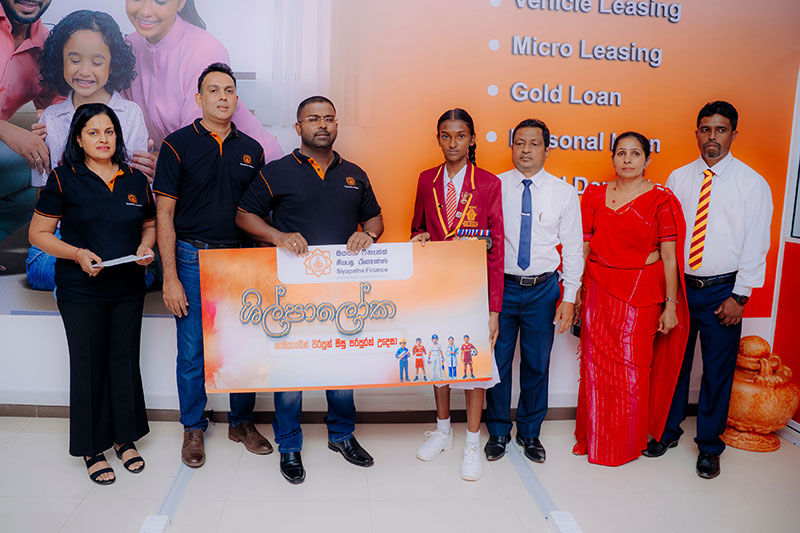
Siyapatha Finance PLC recently expanded its island-wide footprint with the successful inauguration of its 64th branch in Bandarawela. Strategically located in scenic hill town in the Badulla District, the latest branch offers convenient and wider access to tailored, customer-centric financial solutions.
The branch was ceremoniously declared open by Siyapatha Finance PLC Chief Executive Officer (CEO) Mathisha Hewavitharana, joined by Chief Operating Officer (COO)Rajeev De Silva, Ms.D.M. Dewmi Tharindi, a student of Bandarawela Dharmapala Vidyalaya who won the Under-18 Girls’ 3,000m event at the Junior National Athletics Championship, the Senior Management and staff members as well as Traffic OIC Kandasami, Trade Association Secretary Sunanda Rathnayaka, representatives of the government and private banks and insurance companies and well-wishers.
Sharing his thoughts, Siyapatha Finance PLC CEO Mathisha Hewavitharana remarked: “We are deeply honoured to be of service to the people of Bandarawela. Opening this branch is a pivotal step in our 2026 expansion strategy and a reflection of our commitment to strengthen our presence in Sri Lanka. It is a region that showcases potential for greater economic development primarily through the country’s traditional agricultural practices. We look forward to reaching as many different communities as possible in the coming years.”
The Bandarawela branch offers a comprehensive product portfolio including leasing, fixed deposits, gold financing, business loans, personal loans, fast draft, and factoring to Smart Pay, the Company’s bill payment facility. With a thorough understanding about the current socio-economic dynamics of the region, the well-trained team at the newest branch is dedicated to providing flexible financial solutions to aspiring individuals as well as small and medium-scale enterprises (SMEs).
Business
Dialog recognised as Sri Lanka’s Most Loved Service and Telecommunications Brand for third consecutive year


Dialog Axiata PLC, Sri Lanka’s #1 connectivity provider, has once again been recognised as Sri Lanka’s Most Loved Brand in the Service and Telecommunications sectors, while also ranking among the top Corporate Brands in the LMD Brands Annual. Marking its third consecutive year at the top of both categories, the recognition reflects the company’s commitment to enriching Sri Lankan lives and enterprises through technology, while creating value for customers, communities and the nation.
The accolades were awarded through the LMD Brands Annual survey, conducted independently by PepperCube Consultants on behalf of Media Services. Based on responses from 400 readers across Sri Lanka, representing a broad demographic and geographic mix, the survey identified the brands that resonated most strongly with consumers in terms of trust, loyalty and brand affinity.
Lasantha Theverapperuma, Group Chief Marketing Officer of Dialog Axiata PLC said, “Being recognised as Sri Lanka’s Most Loved Brand across both the Service and Telecommunications sectors is a meaningful endorsement of the trust and confidence that Sri Lankans continue to place in Dialog. This recognition reflects our commitment to understanding and serving the evolving needs of our customers while expanding access to digital connectivity, services and opportunities. As we continue to innovate and grow, we remain focused on creating value for communities and supporting Sri Lanka’s digital and socioeconomic progress.”
The recognition also reflects Dialog’s continued focus on innovation, customer-centricity and investments that support Sri Lanka’s digital future, including expanded 5G connectivity, AI-powered digital experiences and broader access to digital services.
Beyond connectivity, Dialog continues to support communities, livelihoods and the environment through initiatives such as Govi Mithuru, which provides AI-driven agricultural advisory services to over one million farmers, and Shishyadhara, which has enabled subsidy distribution to more than 450,000 underprivileged students. The company also continues to advance its Net Zero 2050 ambition through energy optimisation, renewable energy adoption and the expansion of solar-powered network infrastructure.
Further underscoring the brand’s standing among Sri Lankan consumers, Dialog was also recognised as the ‘Service Brand of the Year’ for the fifth time and the ‘Telecommunication Brand of the Year’ for the 15th consecutive year at the SLIM-KANTAR People’s Awards 2026.

US$ 2.5 mn cyber heist exposes system failures

Opposition signs no-confidence motion against Justice Minister for dereliction of duty over Negombo Prison deaths

AG informs SC of e-visa agreement review

Navy, Coast Guard seize smuggled pharmaceuticals and cosmetics in Puttalam

BASL urges President to fill superior courts’ vacancies

Mariazelle passes away

‘Dates have the highest sugar content to fight Coronavirus’

Sunday Island 27 December – Headlines

#SundayIsland 17th December – Headlines

Sunday Island – 28th March

Sunday Island Headlines – 21 March

Sunday Island – 21st February – Headlines
-
 News6 days ago
Singapore-based Buddhist monk marks nearly four decades of humanitarian service
-
 News1 day ago
Herath warns prospective migrant workers not to get fleeced by racketeers
-

 News5 days ago
AI concerned over proposed SL military deployment in Haiti
-

 Midweek Review3 days ago
Unexpected focus on ‘pieces of tin’ worn by military men
-
 Latest News4 days ago
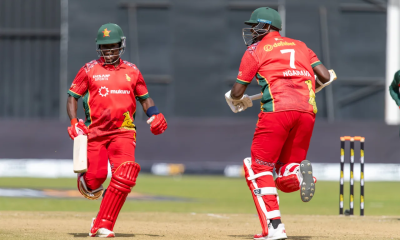
Nyamhuri and Ngarava stun Bangladesh by defending 141
-

 Features6 days ago
The NPP’s New Challenge: Balancing Easter Lawfare and Economic Welfare
-

 News2 days ago
Negombo Prison riot: Ensuring protection of prisoners fundamental responsibility of the state – UN
-

 Editorial3 days ago
Prison riots and political battles