
Business
Despite love and hate, National Carrier is a must-have for its economy: SriLankan CEO

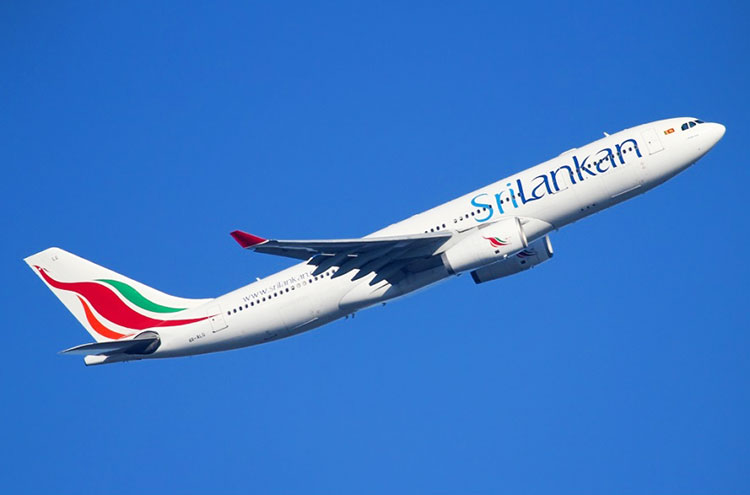
By Sanath Nanayakkare
National airlines are usually the most loved and the most criticised operation in many countries and Sri Lanka is a clear example for this, Richard Nuttall, the Chief Executive Officer at Sri Lankan Airlines said at the Aviation College in Katunayake recently.
He said so while delivering the keynote speech at a workshop held for a group of media personnel who write, broadcast and telecast aviation news for their respective media organisations.
The two-day media workshop no doubt helped create more understanding of the aviation industry and why it’s important, and even more so how the National Carrier best serves its passengers and contributes to the economy despite having to deal with ill-considered and uninformed comments made in the main stream media and social media platforms.
“If you do a survey, you will find that the most favorite airline is the most hated airline at the same time, which is true for Sri Lanka too. Sri Lankans are in a state of having two opposing feelings at the same about the National Carrier, or are uncertain about how they should feel about it,” he said.

Richard Nuttall
Further speaking SriLankan CEO said,” Most often what is get reported is about ‘I had to wait an hour at the airport, or a flight turned back due to technical fault, but the reality is we are carrying 5 million passengers a year, and when you have 5 million passengers a year, it means 1,500 passengers through 15 desks in an hour. Such trivial things happen everywhere in the world and there are lot worse places in terms of such occurrences. Everywhere you would see a flight turning back or something happens on a flight and the airline says,” we don’t continue and we need to go back to base’. If you Google and search, you will find that it happens to any carrier in the world. So, what we want is to let the conversation move beyond instead of talking about small things; how we handle 5 million passengers a year on thousands of flights to many destinations. For example, if a Hajj pilgrim at the end of his life unfortunately passes away on a flight, it is not news. It is a general incident. This is why we want to lift the conversation and the understanding to a different level and see whether we could get the people who are really interested in aviation to see how the industry works so that we can have more informed views about the big picture of the industry. Aviation is a very complex business and it requires a lot of commitment and many, many skills. Sri Lankan Airlines has many personnel with a huge amount of training. For example, it takes years of hard work to become a pilot. It takes years to become an engineer. Like everybody else, we have IT experts, accounting professionals etc. We have about 100 IT systems integrated into our operational system. We have personnel who do revenue management, who set prices and plan where the aircrafts go. In addition, we have Catering, Ground Services and we provide maintenance for other carriers. Some of them stay with SriLankan for longer periods and others choose to work for other airlines. So, this is a huge, complex industry and SriLankan Airlines is a big company. We are highly regulated and we need to get permission from various governments where we arrive. And we need to operate in compliance with the safety protocols of not only the Civil Aviation Authority in Sri Lanka but also of civil aviation authorities from across the world. Everything we do in flying and on the ground is regulated and if we don’t follow these procedures, we might not be allowed to fly to Europe tomorrow. So it is more important to have an understanding of how SriLankan Airlines maintain these highest standards rather than anything else.”
“Aviation is probably worth about 5-6% of GDP for most countries and if we didn’t have aviation, that contribution wouldn’t be there. We employ 6,000 people. Around the ecosystem, there are many other people employed in civil aviation, in airports, as travel agents, as cargo agents etc. Hotels and tourism industry which directly and indirectly supports 10% of the population wouldn’t be able to operate if we didn’t engage in connectivity. If you look around the world at strongest economies, they all have a strong airline. What’s the hub in the Middle East? It’s Dubai and it grew on the back of Emirates. Etihad, Qatar, Saudi Arabia flights go there and their economy is driven hand in hand with Emirates. The financial centres of the world such as London, Frankfurt, Singapore, Hong Kong, and New York, all have major airlines based there with flights going in all directions. All regional airline offices in Africa are based in Nairobi. Kenya Airways is based in Nairobi. So aviation and airlines are really, really critical to any given country’s economy, businesses and tourism. This is why countries need to have strong airlines and all the reasons for having a strong national carrier for those important networks to work seamlessly. Today SriLankan flies to 35 destinations and as a ‘oneworld member’, we connect to hundreds of destinations across the world. How many people in this country have connections with Australia? If we don’t have an airline based here, nobody would fly nonstop to Australia. The reason for that is those flights are filled with 40% of the passengers coming from India. If we didn’t fly to Australia and didn’t fly to South East Asia maybe 50% of the flights that we fly on Indian routes won’t be there. There are so many people who say that if SriLankan is not there, somebody else will carry that route. That’s not correct. If you get somebody else to fly on maybe 30% of the routes, you just have to go via somewhere else and you will end up paying a lot more airfare. So if you want to build an aviation hub here, grow your tourism, scale up your industries, you have to have a strong national carrier.”









The “Sri Lanka Business Forum 2026” was organized by MEDEF International, the French Business Confederation of leading French companies, in partnership with the Embassy of Sri Lanka in France, on 30 January 2026 at the MEDEF Office in Paris. The event, which was held in hybrid format, had a solid line up of reputed French companies participating.
Delivering the keynote address, the Deputy Minister of Industry and Entrepreneurship Development of Sri Lanka Chathuranga Abeysinghe presented the Government’s policy framework and the reform agenda aimed at strengthening investor confidence, improving ease of doing business, and accelerating export-led growth. The Deputy Minister elaborated on upcoming legislative reforms, including amendments to the Minerals Act, the Colombo Port City legislative framework, implementation of the Investment Single Window, and the Government’s broader digitization drive which would contribute towards enhancing transparency and business confidence.
Highlighting Sri Lanka’s comparative advantage in the South and Southeast Asian region, the Deputy Minister emphasized France’s role as a strategic investment partner, while inviting French companies to engage with Sri Lanka. The Deputy Minister’s address was followed by a vibrant Q&A where he responded to several questions posed.
The Forum was moderated by Chairman of the France–Sri Lanka Business Council at MEDEF International and Advisor to the Chairman of the Michelin Group, Eric Le Corre.
Delivering welcome remarks, the Ambassador of Sri Lanka to France and Permanent Delegate to UNESCO Manisha Gunasekera applauded the convening of the Forum a first step in broadening and deepening the investment partnership. She appreciated the role of MEDEF in connecting reputed French companies with potential investors and partners in Sri Lanka.
The Executive Director of the Board of Investment (BOI) of Sri Lanka Priyanka Samaraweera, in her presentation detailed, inter alia, investor facilitation measures, fiscal incentives including tax holidays, tariff benefits under preferential trade agreements, and upcoming industrial zones. The BOI also invited potential French investors to participate in the upcoming Investors’ Forum scheduled to be held in Colombo on 30 March 2026.
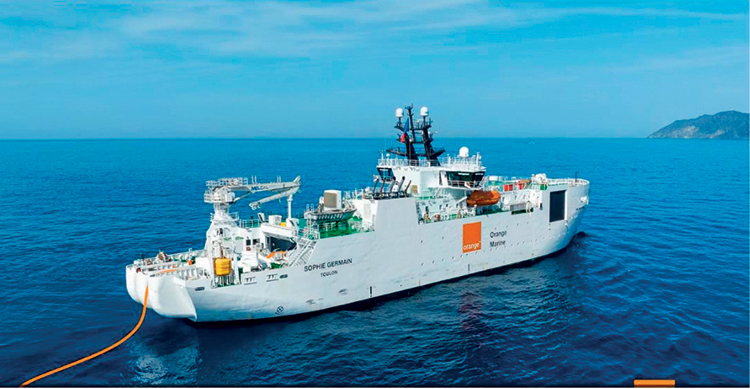
The presentation of the CEO of Orange Marine, Didier Dillard on the company’s successful collaboration with Colombo Dockyard PLC in building their cable vessel “Sophie Germain” in 2023; and two additional vessels scheduled for delivery in 2028 and 2029, helped position Sri Lanka as an attractive and competitive investment destination.
The Embassy highlighted “Sri Lanka Expo 2026” which will be held in Colombo from 18-21 June 2026, as a key global platform for buyers and investors; and encouraged French companies to participate.
Reputed French companies, SNCF, Bureau Veritas, Carrefour, Deviseo Fret, Emovis SAS, Union de Banques Arabes et Françaises (UBAF), Michelin, and Top Tech College, participated in the Forum, thus demonstrating the interest among French cooperates in doing business with Sri Lanka. The participating companies reaffirmed that the engagement marked a first step in expanding dialogue and collaboration between France and Sri Lanka.
Senior officials of the Ministry of Industry and Entrepreneurship Development, and the Export Development Board of Sri Lanka (EDB) also participated in the forum. The Forum was organised by the Commercial Section of the Embassy led by First Secretary (Commerce) Prasadi Boomawalage, in consultation with relevant stakeholders. The success of the Forum reflects the strong commitment of the parties concerned to organise a broader, outcome-oriented engagement with the French private sector in the future.
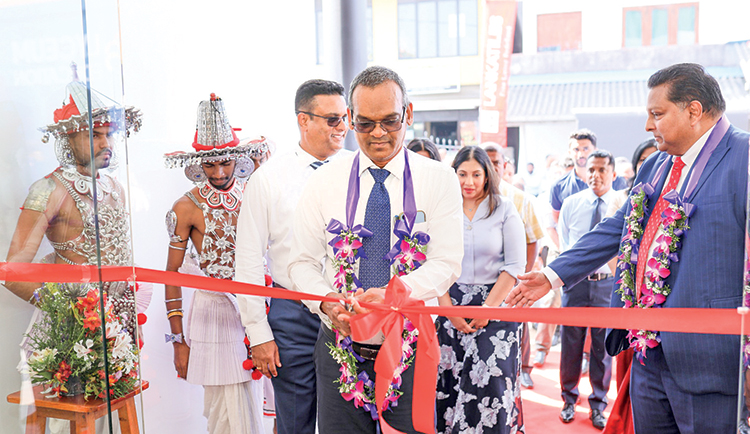
Sri Lanka’s leading tile manufacturer, LANKATILES, proudly announces the grand opening of its 58th showroom and second in the Galle located at No. 145, Matara Road, Pettigala Watta, Galle. This latest addition marks a significant milestone in LANKATILES’ continued journey of design excellence, innovation, and trusted service built over more than five decades.
Inspired by the heritage charm and timeless architecture of Galle, a UNESCO-valued destination renowned for its cultural tapestry and historic streets, the new showroom blends local architectural heritage with contemporary living needs, truly Creating Spaces That You’d Love to Live In.
“Galle’s unique character shaped by centuries of history, art and human ingenuity resonates deeply with LANKATILES’ ethos of design integrity and aesthetic depth,” said Priyantha Talwatte, Managing Director of LANKATILES. “We’re delighted to bring our design leadership and trusted product portfolio closer to the Southern market, supporting both residential aspirations and the burgeoning tourism-led growth across the region.”
Built on more than five decades of trust and excellence, LANKATILES continues to set the benchmark in tile design superiority while delivering solutions that uplift spaces with beauty and performance. The new showroom features standout products including the Majestica large-format tile collections and Mosaics, ideal for modern living spaces, luxury tourism projects, boutique hotels, and heritage restorations that demand both quality and visual impact.
As Sri Lanka’s tourism sector continues to grow, strategic destinations such as Galle play a vital role in LANKATILES’ long-term expansion strategy. The company aims to strengthen its presence in the Southern market through enhanced accessibility, tailored solutions, and meaningful collaboration with industry stakeholders.
“We recognize the indispensable role of architects, designers, contractors, and tilers in shaping inspiring spaces,” added Talwatte. “We look forward to deepening partnerships across the region celebrating creativity that transforms environments and enriches everyday living.”
The new showroom is operated by Franchise Owner Yasith Ranu Karunasekara, a Southern Province-based entrepreneur with a keen appreciation for design-driven business and customer-centric service. His local expertise and commitment to quality align strongly with the LANKATILES brand promise.
“This showroom is more than a retail space, it’s a destination where imagination meets craftsmanship,” said Karunasekara. “We’re excited to support local homeowners, hospitality developers, and professionals in redefining spaces across the Southern region.”
The LANKATILES Galle showroom officially opened on January 28, 2026, welcoming customers and industry professionals to experience the brand’s curated collections, design expertise, and innovative tile solutions.
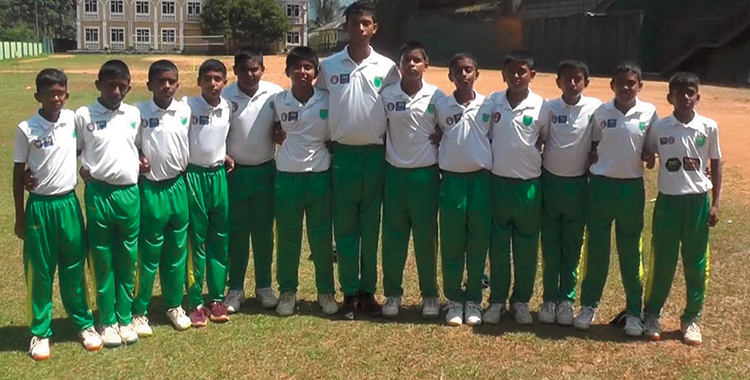
By the time the last wicket fell at Gangakanda Vidyalaya in Pelmadulla, silence briefly hung over the ground. The scoreboard told an almost unbelievable story: the Under-13 team of Kalawana National School had dismissed their opponents, Mihindu Vidyalaya, Ratnapura, for just four runs. In six overs and five balls, a group of boys from a remote corner of Sabaragamuwa had etched their names into Sri Lanka’s schools cricket record books.
The achievement soon found its way onto the official Sri Lanka Cricket Facebook page. But behind that viral moment lies a quieter, more powerful story of children who train without a proper ground, a coach who works without pay, and parents who refuse to let poverty dictate their children’s dreams.
For the boys of Kalawana National School, cricket is not played on manicured turf. There is no proper pitch. Practice nets are borrowed and returned. The few bats and pads available are worn and broken. During the rainy season, there is often nowhere to practise at all.
Yet, every evening, they turn up.
“Our children play under conditions where even the most basic facilities are lacking,” said N. V. Pushpakumara, a parent. “There is no proper playground, no pitch. Still, they keep winning. We hope the authorities will see what these children are capable of and give them the support they deserve.”
-
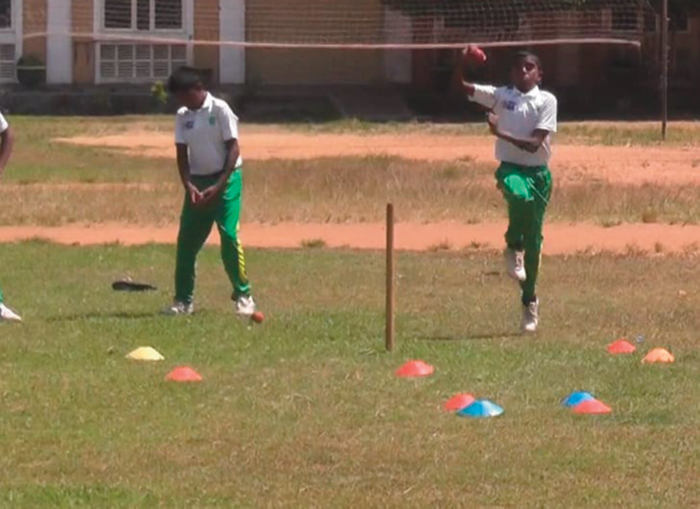
- Cricket players of Kalawana National School undergoing training amid challenges
At the centre of this effort is their coach, Chanuka Pradeep Madhushan, who joined the school in late 2021. He trains the children voluntarily, without a salary, accepting only small contributions from parents who themselves struggle to make ends meet.
“I didn’t come here expecting facilities,” he said. “I came because I saw potential. One of our boys played for the district squad in 2025. This year, our Under-13 team is doing very well. We even have a left-arm bowler who has taken 21 wickets in four matches. When you see their commitment, you want to give your best, even without pay.”
The school’s principal, Ashoka Nandasiri, speaks of cricket at Kalawana National School as a journey marked by quiet persistence. The school began leather-ball cricket in 2011. In 2016, their Under-16 team broke into the top 16 at national level. In 2025, a student was selected to the Sabaragamuwa Under-15 provincial team. And in January this year came the moment that stunned school cricket circles across the country.
-
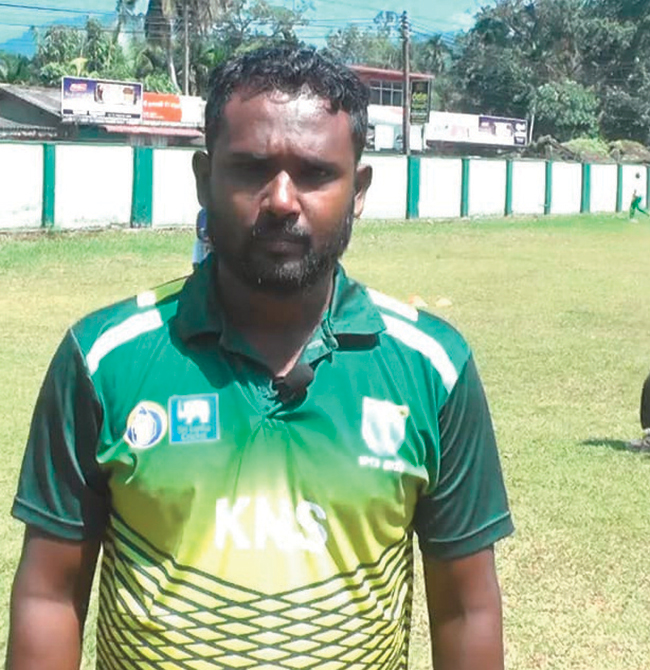
- N.V. Pushpakumara, Parent
-
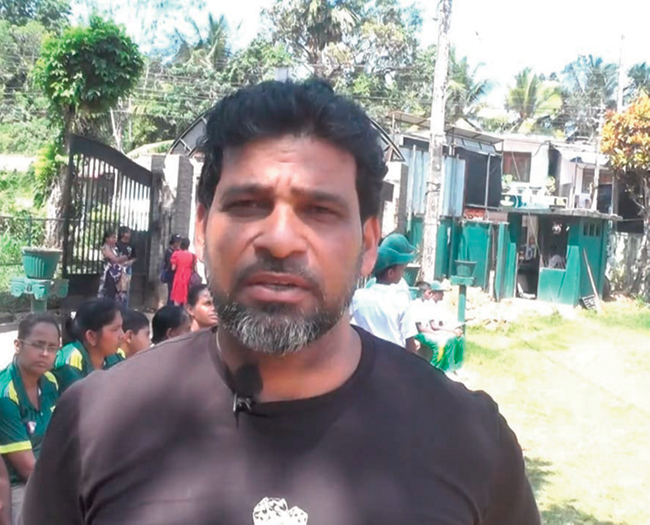
- Chanuka Pradeep Madhushanka, Cricket Coach
-
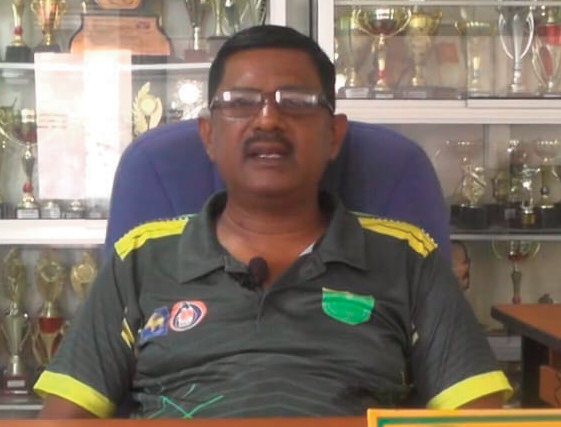
- Ashoka Nandasiri, Principal of Kalawana National School
“These achievements did not come easily,” the principal said. “They came through the dedication of our coach and the sacrifices made by parents. Despite many difficulties, they have kept this programme alive.”
For the boys themselves, the record is not just about four runs. It is about being seen.
“We practise with many difficulties,” said team captain P. A. Pamod Lakshan. “We don’t have proper equipment or a proper ground. When it rains, we have nowhere to go. Once, a kind uncle from Kalawana helped build us a small indoor place to practise. We are very grateful. We want to go a long way in cricket.”
In a country where cricketing dreams often begin in elite school grounds with lush pitches and modern facilities, the story of Kalawana National School stands as a reminder of how talent can grow in the most unlikely soil. These children do not ask for luxury—only for a fair chance.
Their record-breaking performance is now part of Sri Lanka’s cricketing statistics. But the deeper question remains: will their struggle also be noticed? Parents hope that this extraordinary moment will prompt sports authorities and policymakers to look beyond the usual centres of privilege and invest in rural schools where potential waits quietly, often unseen.
For the boys from Kalawana, the scoreboard has already given its verdict. Now they wait for the country to do the same.
By Upendra Priyankara Jathungama

England survive Nepal scare to clinch last-ball thriller

Ireland opt for an extra batter as they ask Sri Lanka to bat

England bat; Nepal hand debut to Sher Malla

Seifert and Phillips conquer Afghanistan spin to script convincing New Zealand win

Thailand votes as reformists, conservatives vie for power

Afghanistan to bat first against New Zealand

‘Dates have the highest sugar content to fight Coronavirus’

Sunday Island 27 December – Headlines

#SundayIsland 17th December – Headlines

Sunday Island – 28th March

Sunday Island Headlines – 21 March

Sunday Island – 21st February – Headlines
-

 Business2 days ago
Zone24x7 enters 2026 with strong momentum, reinforcing its role as an enterprise AI and automation partner
-

 Business6 days ago
SLIM-Kantar People’s Awards 2026 to recognise Sri Lanka’s most trusted brands and personalities
-

 Business7 days ago
All set for Global Synergy Awards 2026 at Waters Edge
-
 Business6 days ago
API-first card issuing and processing platform for Pan Asia Bank
-
 Business2 days ago
HNB recognized among Top 10 Best Employers of 2025 at the EFC National Best Employer Awards
-

 Business2 days ago
GREAT 2025–2030: Sri Lanka’s Green ambition meets a grid reality check
-

 Editorial4 days ago
All’s not well that ends well?
-

 Features4 days ago
Phew! The heat …