
Editorial
Democracy, cops and violence

Friday 14th August, 2020
The US has evinced a keen interest in promoting ethnic reconciliation and national integration in Sri Lanka and never misses an opportunity to proffer advice to the governments here. It also generously funds some local NGOs that promote democratic ideals. Issuing a statement on the outcome of the recently-concluded general election, the US has urged the newly elected government to renew its commitments to building an inclusive economic recovery and uphold human rights and the rule of law. Some pro-government elements have taken exception to this unsolicited advice, as evident from their social media posts, but there is nothing wrong with it. Sri Lankan governments and politicians should be kept reminded of the need to uphold democracy, which they are allergic to, but shouldn’t the US put its own house in order first?
Social integration eludes the US, which pontificates to others, as can be seen from the Black Lives Matter movement, which has been the African Americans’ response to racially motivated brutal police attacks on the member of their community. Their long-standing grievances have also found expression in their protest campaign, which has rippled out to some other countries as well. Perhaps, it was only in Sri Lanka that the police set upon a group that took part in a Black Lives Matter protest. America’s failure to achieve national integration fully and the attendant issues seem to have led to a serious problem.
Homicide rates in some large US cities such as New York, Philadelphia and Chicago have increased by double-digit percentages amidst police officers resigning and retiring across the country, Newsweek reports. The beginning of the rise in crimes coincided with the death of George Floyd at the hands of a group of police officers, on 25 May, Newsweek says. The diminished police legitimacy, following the killing of Floyd, is thought to be one of the reasons for the increase in the crime rate.
The murder of Floyd led to a resurgence of the Black rights campaign and calls, in the US, for deep fund cuts for the police force and downsizing it. These measures have been adopted in US states, making many police officers quit or opt for premature retirement. The Seattle city council recently voted for reducing the police force by 100 officers and decreasing the salaries of its high ranking officers. Seattle Police Chief Carman Best has resigned in protest. Fund cuts have reportedly affected the New York Police Department as well. It has had to cancel a recruitment drive and is experiencing a high retirement rate. A decrease in the number of police officers leads to an increase in the crime rate anywhere in the world. This situation would not have arisen if the US had practised what it preaches to others and achieved national integration and social cohesion.
One can only hope that the Sri Lanka police will learn from what has befallen their US counterparts and mend their ways. Their legitimacy is also diminishing rapidly. They have become a mere appendage of the ruling party and earned notoriety for their selective efficiency and brutality. Unless urgent action is taken to straighten up the Police Department, the day may not be far off when the people take to the streets, calling for fund cuts or even the abolition of it, as in the US.
It has now been revealed that the Police Narcotic Bureau was the biggest distributor of dangerous drugs in the country. The Attorney General’s Department, disappointed at the failure of the guardians of the law to carry out court orders, has said it can enlist the assistance of the military to have suspects arrested. The Military Police has already been deployed to help the traffic cops, who have failed to carry out their duties and functions properly. It looks as if the situation could not get any worse.


Wednesday 22nd April, 2026
The Opposition is in overdrive, attacking the JVP-NPP government, left, right and centre, over the coal procurement scam, which has resulted in a huge increase in the cost of power generation and electricity tariffs, besides bleeding the Treasury. The government has said the additional cost of burning diesel to produce electricity to meet the Norochcholai generation shortfall will not be passed on to the public, but the funds it is spending on diesel liberally for power generation belong to the public, and not to the JVP or the NPP. It is the people who bear the losses and the cost overruns in power generation caused by the coal procurement scandal.
What we are witnessing is a textbook example of the link between unbridled power and corruption. Allegations of corruption against the incumbent government, which came to power promising to usher in good governance, remind us of a rhetorical question in Juvenal’s Satires: Who guards the guards? (Quis custodiet ipso custodes?) It is being argued in some quarters that self-policing is the way out, but what Juvenal has highlighted is the problem of ensuring accountability at the top as well as the need for effective checks and balances. Guards simply do not care to guard themselves. Acton’s dictum about the correlation between power and corruption also points to the fact that those who wield unchecked power tend to believe they are above the law, beyond criticism and always right. Hence, steamroller parliamentary majorities and the overconcentration of power in one or two political institutions are detrimental to the interests of a country that lacks robust democratic safeguards. This has been Sri Lanka’s experience.
A collective of Opposition parties has pledged to defeat the JVP-NPP government, probe the coal procurement scandal, etc., and throw the corrupt elements in the current dispensation behind bars. Some Opposition bigwigs appeared on television yesterday and made a pledge to that effect. The corrupt no doubt must be brought to justice, but pity a nation that has to rely on the corrupt to punish the corrupt, one may say with apologies to Brecht. Most of the self-righteous Opposition politicians on a crusade against corruption are tainted. They faced serious allegations of corruption while in power. If their corrupt deals and ill-gotten assets had been properly probed, they would have been in jail.
The Opposition politicians who are out for former Energy Minister Kumara Jayakody’s scalp for his involvement in the coal scam and hauling President Anura Kumara Dissanayake over the coals for shielding him, also have a history of defending the corrupt. SLPP politicians are at the forefront of the Opposition’s anti-corruption campaign. During the previous government, they unashamedly shielded the then Health Minister Keheliya Rambukwella, who was embroiled in a procurement racket, and even defeated a no-faith motion against him. They are demanding to know how some JVP full-timers have acquired valuable assets including houses. They themselves are well-heeled, full-time politicians, aren’t they? They have bigger houses than the JVP leaders. How have they acquired their wealth?
Some of the Opposition grandees campaigning against corruption and condemning the incumbent rulers for corrupt deals had the chutzpah to deny the Treasury bond scams (2015) and go so far as to defend the culprits during the UNP-led Yahapalana government. They went to the extent of trying to dilute the COPE (Committee on Public Enterprises) report on the bond scams by having a slew of footnotes incorporated into it. They also sullied their reputations by defending the Yahapalana administration accused of various questionable deals. Interestingly, from 2015 to 2019, they were in league with the JVP leaders who are currently in power. The JVP propped up the Yahapalana government despite the latter’s involvement in the Treasury bond scams and failure to prevent the Easter Sunday carnage. The SLPP, which came to power, vowing to have the UNP leaders jailed over the bond scam, joined forces with the latter in 2022 to retain its hold on power.
Thus, it may be seen that the ruling party politicians and their Opposition counterparts are driven by expediency and not principle; they are ready to do anything to safeguard self-interest despite their moral grandstanding and rhetoric.


Tuesday 21st April, 2026
‘Mastermind’ has become a household term in this country since the Easter Sunday terror attacks (2019). The last seven years have seen several investigations, conducted by the police, committees and a presidential commission, into the carnage that shook the world, but there has been no general consensus on who actually masterminded the terror strikes. There are several schools of thought and various conspiracy theories about the terror attacks and the mastermind(s) behind them, and how long it will take to put the matter to rest is anybody’s guess.
The Easter Sunday carnage has caused Sri Lankans’ attitudes towards terrorism to undergo a sea change. Everyone has condemned the heinous crime unequivocally, without trotting out anything in extenuation of it. This, we reckon, is something positive.
Terrorism must be condemned and eradicated in all its forms and manifestations. It has no place in the civilised world, regardless of the various causes the perpetrators of it flaunt to justify their crimes and gain legitimacy. Terrorism is no means to an end; it is both the means and the end.
Unfortunately, while the LTTE and the JVP were going on killing sprees, opinion was divided on their terror campaigns and causes. The mastermind behind the LTTE’s terror attacks on civilians was obviously Prabhakaran, but some political and religious leaders and foreign diplomats had no qualms about meeting him and even posing for pictures with him, thereby allowing him to gain legitimacy. There are thousands of JVP members, including the current government leaders, who commemorate Rohana Wijeweera, who masterminded the JVP’s terror campaign. Prabhakaran is commemorated in a similar manner in the North and the East. Thankfully, no such public events are held in memory of Zahran Hashim, who led the National Thowheed Jamaath (NTJ), which carried out the Easter Sunday attacks, killing more than 275 people and injuring about 500 others.
Failure to prevent terror attacks despite the availability of actionable intelligence is also a criminal offence that must not go unpunished. Whoever masterminded the Easter Sunday bombings, lives could have been saved if the police, the then government and the intelligence agencies had acted swiftly upon being warned of impending attacks. Only a few of those who failed to prevent the carnage have faced legal action and been made to pay compensation to the victims. All recommendations made by the Presidential Commission that probed the Easter Sunday terror attacks must be implemented.
Curiously, prominent among those tasked with probing the Easter Sunday carnage afresh in a bid to trace the mastermind(s) behind it are two individuals who were at the helm of the CID in 2019, when it failed to prevent the terror attacks. They are retired SSP Shani Abeysekera and retired SDIG Ravi Seneviratne. They are currently serving as the Director of the CID and the Secretary to the Ministry of Public Security, respectively. Their political affiliations with the ruling NPP, as members of its Retired Police Collective, and the fact that the incumbent government brought them out of retirement and elevated them to their current positions for political reasons have compromised the integrity of the ongoing investigations into the Easter Sunday carnage.
Some of those seeking justice for the victims of the Easter Sunday terror attacks have demanded that Deputy Defence Minister Maj. Gen. (Retd.) Aruna Jayaskera resign forthwith, as he was the Security Forces Commander (East) at the time of the carnage, and some military intelligence officers facing investigations for their alleged links to the NTJ served under him. They insist that there is a conflict of interest on his part. Their argument is tenable, but it defies comprehension why they have not likewise called upon Abeysekera and Seneviratne to step down, thereby helping preserve the integrity of the investigations into the terror attacks.
Meanwhile, the masterminds behind some financial crimes have also not been identified. The Treasury bond scams (2015) were blamed squarely on the then Central Bank Governor Arjuna Mahendran although it is public knowledge that he acted at the behest of his political masters. Neither the Presidential Commission of Inquiry that probed the bond scams nor the COPE (Committee on Public Enterprises), headed by JVP MP Sunil Handunnetti, revealed the mastermind. The JVP was honeymooning with the UNP at the time. The mastermind behind the coal procurement scam, which has caused staggering losses to the Treasury and sent the power tariffs up, must also be identified and brought to justice. It is not possible that Kumara Jayakody, blamed for the scam, acted of his own volition.

Monday 20th April, 2026
Several salespersons have been arrested and remanded for forcibly cutting the hair of a woman as punishment for shoplifting. But neither Kumara Jayakody nor Udayanga Hemapala has been arrested over a mega coal procurement scandal that has caused massive losses, amounting to billions of rupees, to the state coffers. The government had them resign as the Minister of Energy and the Secretary to the Ministry of Energy, respectively, as a face-saving exercise.
The fraudulent procurement of low-grade coal causes a generation shortfall of more than 150MW at the Norochcholai power plant, according to power and energy experts, and hundreds of thousands of litres of diesel have to be burnt daily to prevent power cuts. The government has increased fuel prices and electricity tariffs to make up for the losses caused by the coal scam. Some former ministers have been sentenced to prison for misusing fuel allowances and state-owned vehicles, but Jayakody is seen in the exalted company of the JVP/NPP leaders. So much for the change the NPP promised.
When a Grade Six English language module was found to contain a link to an adult website, a few months ago, the CID was swiftly called in to conduct a probe. But no such action was taken against those involved in the coal procurement scam. This alone is proof that the government has qualms about protecting the corrupt.
A wag might say the JVP/NPP government has got blundering down to a fine art. It blundered by defending Minister Jayakody and defeating a no-confidence motion against him over the coal procurement racket. It has made an even bigger blunder by trying to muddy the water in a bid to open an escape route for Jayakody; President Anura Kumara Dissanayake has appointed a special presidential commission of inquiry to investigate coal procurement since 2009. (Thankfully, the probe does not cover the steam-locomotive era, when coal was imported!) Desperate to cover up the coal scam and shield Jayakody, the JVP-NPP government has resorted to a familiar ruse used by pickpockets who, while fleeing, shout ‘Pickpocket, Pickpocket’, to mislead onlookers into believing that they are also good guys pursuing thieves. But it is highly unlikely that the government will be able to fool all the people all the time.
The coal scandal and the despicable efforts of the JVP/NPP leaders to save Jayakody have revealed a political leadership with a faulty moral compass. Ironically, the JVP-led NPP is popularly known as Malimawa (compass), which is its symbol. The self-righteous JVP/NPP leaders have made a mockery of their commitment to upholding accountability and the rule of law. They find themselves in the same predicament as the proverbial cat that fouled a rock and scrambled to cover it up.
Not even President Ranil Wickremesinghe, vilified by the JVP/NPP for shielding the corrupt, stooped so low as to appoint a presidential commission of inquiry to probe all procurement issues since the establishment of the Health Ministry when the then Health Minister Keheliya Rambukwella and some senior officials were exposed for fraudulent procurement of substandard medicines. True, the SLPP-UNP government unashamedly defended Rambukwella and defeated a no-faith motion against him, but he and his bureaucratic lackeys were arrested, remanded and prosecuted. Shame on the JVP/NPP leaders who are making a determined effort to save Jayakody and other cronies involved in the coal scandal.
President Maithripala Sirisena appointed a special presidential commission of inquiry to investigate the Treasury bond scams (2015). He did not order that all bond issues under previous governments be investigated. President Dissanayake has resorted to smoke and mirrors. His government is now without any moral right to be critical of the corrupt.
While the Treasury bond probe was on, former Central Bank Governor Arjuna Mahendran, went overseas. He never returned. The JVP-NPP government has not cared to have him extradited despite its platform rhetoric. There is no guarantee that Jayakody and others involved in the coal scam will not emulate Mahendran. Hence the need for them to be arrested and prevented from leaving the country.

Abhishek’s 135 not out blows Delhi Capitals away

Trump announces Iran ceasefire extension but says blockade remains

Showers above 75 mm are likely at some places in the Western, Sabaragamuwa, Central, Uva and Southern provinces and in Ampara and Kurunegala districts

Cardinal: Presidents, IGPs and AG sabotaged Easter carnage probes before 2024 regime change

CIABOC asks Parliament not to transfer witness in case against Deputy Secy General

UN wants Sri Lanka to deliver concrete results in Easter Sunday bombing probe

‘Dates have the highest sugar content to fight Coronavirus’

Sunday Island 27 December – Headlines

#SundayIsland 17th December – Headlines

Sunday Island – 28th March

Sunday Island Headlines – 21 March

Sunday Island – 21st February – Headlines
-
 News1 day ago
Rs 13 bn NDB fraud: Int’l forensic audit ordered
-

 Business4 days ago
Harnessing nature’s wisdom: Experts highlight “Resist–Align” path to resilience
-

 News7 days ago
PNS TAIMUR & ASLAT set sail from Colombo
-

 News4 days ago
Gratiaen Trust announces longlist for the 33rd Annual Gratiaen Prize
-

 News3 days ago
From Nuwara Eliya to Dubai: Isha Holdings markets Agri products abroad
-

 Opinion2 days ago
Shutting roof top solar panels – a crime
-
 News4 days ago
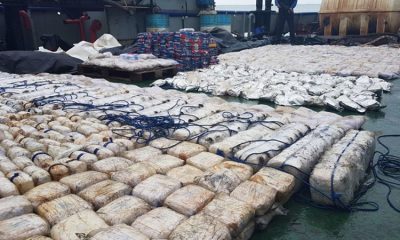
Heroin haul transported on 50-million-rupee contract
-

 Latest News6 days ago
Singapore Zoo’s first Sri Lankan leopard cubs make their public debut