
Business
Deepak Senthil succeeds outgoing managing director of Coca-Cola Sri Lanka


Coca-Cola Beverages Sri Lanka (CCBSL) recently bade farewell to outgoing Managing Director Mayank Arora, who will be proceeding as General Manager to Coca-Cola’s Bangladesh office with effect from 1st July 2022. During his successful stint in Sri Lanka for the past five-and-a-half years, Mayank was able to establish and strengthen partnerships effectively and efficiently navigating through the highly complex landscape in the region. Under Mayank’s leadership, CCBSL received various accolades and recognitions within and beyond the system, including ‘Coca-Cola South West Asia (SWA) Bottler of the Year 2020’.
One of Mayank’s key challenges during his tenure here was managing the impact of the pandemic on the company whilst reaching out to help local communities in need. As Sri Lanka grappled with COVID-19, CCBSL swiftly adapted to the changing situation, prioritizing the health, safety and job security of its employees and partners, whilst complying with all national health and safety guidelines with zero job losses and no reduction in salaries, while extending annual increments and incentives. Disinfection programmes and distribution of essential packs were conducted in the local community by the company to limit the spread of the pandemic.
Coca-Cola’s Sri Lanka operation has consistently gained value market share each year for the past five years under his leadership, underscored by a strong culture of continuous improvement in efficiency and productivity, successfully positioning Sri Lanka as one of the best performing markets in the Coca-Cola Bottling Investments Group (BIG).
Consolidating the success achieved by the company thus far, Deepak Senthil will take CCBSL through to its next phase of operational growth and sustainability milestones. He counts a 20-year career at Hindustan Coca-Cola Beverages (HCCB) across Sales, RGM, Trade Marketing, Category Management and Zonal leadership. Prior to this, he was Vice President for Winning at Point of Sale (W@POS) at HCCB and a key leader in driving business turnaround strategies and projects. He has also helped to design commercial strategies, including the redesign and rollout of commercial execution based on new ways of working across the network. His sound professional experience will have a positive impact on the company’s progress going forward.



The government’s proposal to raise fines on manufacturers of substandard plastic products to as much as Rs. 1 million is expected to trigger a major compliance shift within Sri Lanka’s plastics industry, correcting long-standing market distortions caused by weak enforcement.
Environment Deputy Minister Anton Jayakody said the move targets producers who continue to bypass approved standards, undercutting compliant manufacturers and exacerbating environmental damage.
Environment Ministry Advisor Dr. Ravindra Kariyawasam said the initiative represents a structural market correction rather than a purely environmental intervention.
“Non-compliant producers have enjoyed an artificial cost advantage for years, distorting pricing and discouraging legitimate investment,” Kariyawasam told The Island Financial Review. “Meaningful penalties are essential to restore fairness and industry discipline.”
He said the widespread circulation of low-grade plastic products has eroded consumer confidence and delayed the sector’s transition towards higher-value and sustainable manufacturing.
Industry analysts note that a Rs. 1 million fine would significantly alter risk calculations for marginal operators, forcing upgrades in machinery, testing and compliance or pushing weaker players out of the market.
Kariyawasam stressed that the policy is intended to support responsible businesses rather than suppress industry growth.
“Manufacturers investing in recycling, biodegradable alternatives and quality assurance should not be penalised by competing with environmentally damaging, low-cost products,” he said.
The Deputy Minister indicated that tighter enforcement will be paired with policy support for sustainable packaging and circular-economy initiatives, aligning the sector with emerging global trade and environmental standards.
From a business perspective, the proposed regulation is likely to impact pricing, supply chains and capital investment decisions, while improving the long-term credibility of Sri Lanka’s plastics industry in both domestic and export markets.
By Ifham Nizam

First Capital Holdings PLC (the Group), a subsidiary of JXG (Janashakthi Group) and a pioneering force in Sri Lanka’s investment landscape, is set to host the 12th edition of its renowned ‘First Capital Investor Symposium’ on 22 January 2026 at Cinnamon Life Colombo, starting from 5.30 pm onwards.
The 12th Edition will focus on Sri Lanka’s Economic Outlook for 2026, offering attendees a comprehensive analysis of market forecasts, investment strategies and emerging opportunities in the capital markets. The symposium serves as a crucial gathering for investors seeking insights to navigate the evolving economic landscape and make sound, strategic decisions.
As a leading investment institution, First Capital remains committed to promoting informed decision-making through comprehensive research and market analysis. By hosting this annual symposium, the organisation reinforces its role as a trusted partner in Sri Lanka’s capital markets, providing a premier platform for investors, professionals, and industry leaders to exchange knowledge, explore opportunities and build meaningful connections.
A key highlight of this year’s agenda will be First Capital’s presentation on the Economic and Investment Outlook, outlining market conditions and investment strategies for the period ahead. The presentation will be delivered by Ranjan Ranatunga, Assistant Vice President – Research of First Capital Holdings PLC.
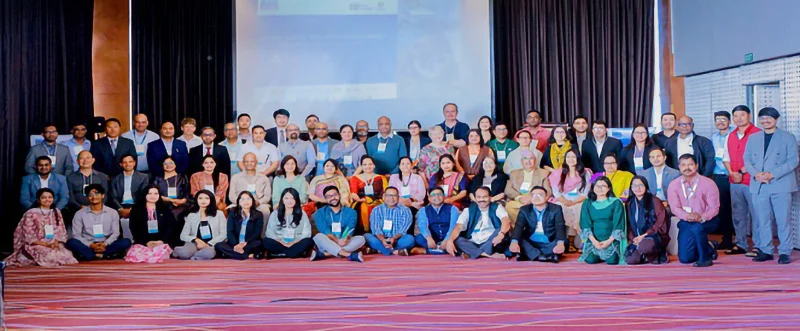
Oxfam in Asia commenced the Rivers, Rights, Resilience Forum (RRRF) 2026, a three-day regional forum bringing together water experts, policymakers, civil society, researchers, and community leaders from across South Asia and beyond to strengthen cooperation on shared river systems and climate resilience.
The Forum is part of the Transboundary Rivers of South Asia (TROSA) programme, supported by the Government of Sweden, which works on the Ganges–Brahmaputra–Meghna (GBM) river basins, while also encouraging cross-basin learning at the regional and global levels. This year’s theme is “Building Resilient Communities and Ecosystems.” The Forum is co-organised by Oxfam in Asia and Dev Pro, Sri Lanka.
The forum opened with a welcome address by John Samuel, Regional Director, Oxfam in Asia, who highlighted the deep connection between rivers, politics, climate change, and sustainability. He underlined how rivers shape both environmental and social outcomes across South Asia and called for stronger collaboration between governments and civil society.
“Today building resilience is important in terms of climate and politics, and when civic space is shrinking, we should all work in solidarity,” he said.
Speaking at the Forum, Chamindry Saparamadu, Executive Director of DevPro shared examples of how communities in Sri Lanka have taken actions to ensure equitable access to water resources through catchment protection initiatives, community-based water societies etc. She further highlighted that learning exchanges would be useful to further strengthen inter-provincial water governance in Sri Lanka.
The Chief Guest, Syeda Rizwana Hasan, Advisor, Ministry of Environment, Forest and Climate Change and Ministry of Water Resources, Bangladesh, in her video message, emphasised the need for regional cooperation among South Asian countries beyond the upstream–downstream identity.
“Climate change will make water scarce, so South Asian countries have to come together to work on the common interest of their communities. Rivers are not just ecology but economics as well for communities. Forums like this help us to share our experience and learn from each other,” she said.

Red-hot Royal Challengers Bengaluru stay perfect ain 20nd march into playoffs

Zadran, Rasooli power Afghanistan to commanding win over West Indies

Italian fashion designer Valentino dies aged 93

U – 19 World Cup: Sri Lanka beat Ireland by 106 runs

U – 19 World Cup: Rowles, Bulbulia star in South Africa’s big win over Tanzania

U – 19 World Cup: Raza, Usman steer Pakistan to victory over Scotland

‘Dates have the highest sugar content to fight Coronavirus’

Sunday Island 27 December – Headlines

#SundayIsland 17th December – Headlines

Sunday Island – 28th March

Sunday Island Headlines – 21 March

Sunday Island – 21st February – Headlines
-

 Editorial2 days ago
Illusory rule of law
-

 News3 days ago
UNDP’s assessment confirms widespread economic fallout from Cyclone Ditwah
-

 Business5 days ago
Koaloo.Fi and Stredge forge strategic partnership to offer businesses sustainable supply chain solutions
-

 Editorial3 days ago
Crime and cops
-

 Features2 days ago
Daydreams on a winter’s day
-

 Editorial4 days ago
The Chakka Clash
-

 Features2 days ago
Surprise move of both the Minister and myself from Agriculture to Education
-

 Features1 day ago
Extended mind thesis:A Buddhist perspective