
Business
Dangers posed by beggars and traders at traffic lights in Colombo City

The motorists in the City of Colombo (Zone 1 to 15) have been experiencing extreme difficulties at traffic lights due to beggars and traders distracting the movement of vehicles. This matter has been lingering for a considerable period as the authorities concerned are not taking suitable action to remedy it.
Furthermore, the Automobile Association will be hosting the next Federation Internationale De L’ Association (FIA) Round Table Conference in Sri Lanka. It was pointed out to them that necessary action needs to be taken to remove beggars at traffic lights in the metropolis.
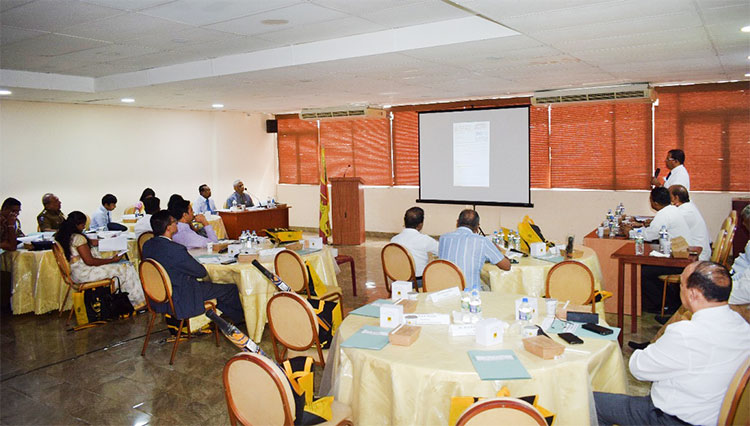
The Automobile Association of Ceylon convened a forum for this purpose with stakeholders, who are the authorities who could engage in exchanging views and could take corrective action to bring a solution to this menace.
Automobile Association of Ceylon as a facilitator invited representatives from Presidential Secretariat, Ministry of Women, Children’s Affairs and Social Empowerment, Road Development Authority, Department of Social Services, Colombo Municipal Council, National Council for Road Safety and Police Department to a forum to discuss and obtain their views to take necessary steps to clear the beggars and traders at traffic lights in Colombo City. The Automobile Association of Ceylon was represented by a special Sub Committee headed by M/s Prasanna De Zoysa(Sectional Chairman Buildings, Establishment and Environment Management), Ananda Dangalla (Vice President/ Sectional Chairman Finance), Wickrama R. Punchihewa (Sectional Chairman- Legal), Harsha Panduwawala (Executive Committee Member), Anton Kandiah (Consultant) and Devepriya Hettiarachchi (Secretary).
It was a well-attended and successful forum held on September 14, where each stakeholder expressed his/her views and proposed remedial measures to prevent harmful and obnoxious behavior of beggars and traders at traffic lights.
In the open forum these representatives pointed out the pros and cons and the obstruction anticipated by elements who sympathize with these intruders, including the mafia behind them.
However, it was the general view of the participants that rather than educating and clearing the beggars and traders from the traffic lights, it is prudent and effective if we educate the potoring Public not to encourage and to give money to the beggars or buy any items from the traders at the traffic lights. It was also suggested that suitable placards or handouts are distributed at these traffic lights.
However, it was decided to convene a meeting October 3, 2023, at the AAC auditorium to discuss the subject further and take a constructive and final decision.


By Ifham Nizam
Saudi Arabia’s Vision 2030 is creating opportunities for Sri Lanka in trade, investment, renewable energy, tourism and employment while strengthening the longstanding friendship between the two countries.
Led by King Salman bin Abdulaziz Al Saud and Crown Prince and Prime Minister Mohammed bin Salman, the programme aims to diversify Saudi Arabia’s economy, attract international investment, develop new industries and reduce dependence on oil revenues.
Launched in 2016, Vision 2030 is built around three pillars: a vibrant society, a thriving economy and an ambitious nation. Its focus on tourism, technology, logistics, renewable energy, industrial development and private-sector growth aligns with Sri Lanka’s need for foreign investment, stronger exports, energy security and sustainable employment.
Trade and investment opportunities
The establishment of the first Saudi–Sri Lanka Joint Business Council in November 2025 created a platform for businesses to identify investment opportunities, develop partnerships and address trade barriers. Saudi participation in Sri Lanka Expo 2027 could further strengthen commercial ties.
Sri Lanka can expand exports of value-added tea, spices, apparel, rubber products and processed foods to Saudi Arabia. Better distribution networks, packaging and compliance with market standards would help local producers, especially small and medium-sized enterprises, compete more effectively.
Saudi investors could explore Sri Lankan tourism, logistics, food processing, renewable energy and export-oriented manufacturing. The goal should be long-term partnerships that create jobs, transfer technology and improve productivity rather than simply increasing trade.
Renewable energy and green investment
Energy is another promising area. Saudi Arabia’s diversification programme includes major investments in renewable energy and emerging technologies. Partnerships in solar power, battery storage, electricity infrastructure and energy efficiency could help Sri Lanka reduce dependence on imported fossil fuels and improve energy security.
Cooperation could also include technical training and technology transfer. Saudi investment in sustainable tourism, modern agriculture, water management and infrastructure could create further opportunities if projects are commercially viable and supported by transparent regulations.
Vision 2030 seeks to make Saudi Arabia a major international tourism destination while improving services for pilgrims visiting Makkah and Madinah.
Sri Lanka could attract more Saudi visitors through better air connectivity, targeted marketing and partnerships with travel operators. Sri Lankan companies could also supply food, hospitality services and other products to Saudi Arabia’s expanding tourism sector.
Employment remains central to bilateral relations. Sri Lankan workers contribute to the Saudi economy, while their remittances provide valuable foreign exchange at home. As Saudi Arabia develops new industries, Sri Lanka can strengthen vocational training and skills-based recruitment in hospitality, healthcare, construction and technical services. Recognised qualifications, ethical recruitment and worker protection would benefit both countries.
Economic cooperation is complemented by Saudi Arabia’s distinctive spiritual role as custodian of Islam’s two holiest mosques.
Through the Custodian of the Two Holy Mosques’ Guests Programme for Hajj, Umrah and Visit, King Salman approved the hosting, at his personal expense, of 1,000 male and female Umrah performers from around the world in June 2026. Implemented by the Saudi Ministry of Islamic Affairs, Dawah and Guidance, the programme’s first group included 250 guests from 16 Asian countries, who visited Madinah and Makkah and took part in cultural and educational activities.
For those invited, performing Umrah and visiting the holy sites is a deeply meaningful religious experience. The initiative reflects Saudi Arabia’s commitment to facilitating worship and strengthening bonds among Muslim communities. It also complements Vision 2030’s Pilgrim Experience Programme, which aims to improve transport, accommodation, digital services and facilities for pilgrims.
This spiritual and cultural engagement adds a human dimension to commercial ties, helping deepen understanding between the two peoples.
Sri Lanka and Saudi Arabia established diplomatic relations in 1974, and their partnership has grown through trade, employment, development cooperation and diplomacy. The next step is to convert this goodwill into measurable results.
Sri Lanka needs a clear portfolio of viable projects, predictable regulations and efficient procedures to attract Saudi investment. Local businesses must be prepared to meet Saudi market requirements, while the Joint Business Council and Sri Lanka Expo 2027 can help connect investors and entrepreneurs.
The partnership should ultimately be judged by increased exports, productive investment, quality employment and the transfer of skills and technology.
Vision 2030 offers Sri Lanka an opportunity to build a more dynamic relationship with Saudi Arabia by combining commercial cooperation with diplomatic, spiritual and people-to-people ties. Together, the two countries can create lasting benefits for their economies and communities.

Hatch, Lankan Angel Network and BOV Capital join forces, with First Capital Holdings PLC committing LKR 300 million as anchor limited partner in a fund built on a commercial investment case.
Starting a business is difficult. Building one that can grow, compete and endure is harder still.
For Sri Lankan founders, the challenge doesn’t end when they prove their idea works. The next stage demands stronger operations, access to new markets and the capital to pursue opportunities that could transform a promising venture into a sustainable business.
A new initiative aims to help more founders take that next step.
Hatch, Lankan Angel Network (LAN) and BOV Capital have launched HLAB, a collective LKR 3 billion fund designed to back early and growth stage regional companies that are incorporated in Sri Lanka. Announced at the final event of First Capital Startup Nation, organised by Hatch, the initiative brings together three established participants in the country’s startup ecosystem around a shared ambition: expanding access to capital for businesses seeking to grow.
Adding institutional participation to the initiative, First Capital Holdings PLC has committed LKR 300 million as the fund’s anchor limited partner, representing 10% of its total size.
From promising startups to enduring businesses
The transition from an early stage venture to a sustainable, growing company is a defining point in a founder’s journey. Businesses must move beyond establishing their models and begin building the operational strength and market reach needed to pursue larger opportunities.
Business
JXG’s Wasanthi Stephen makes history as the first female recipient of the CIPM Sri Lanka Lifetime Gold Award

JXG (Janashakthi Group) celebrates Wasanthi Stephen, Group Chief Human Resources Officer, on becoming the first female recipient of the prestigious CIPM-Baurs Lifetime Gold Award 2026 from the Chartered Institute of Personnel Management (CIPM) Sri Lanka since the award’s inception. Presented on 14 October 2026, at the opening of the National Human Resource Conference (NHRC) 2026 at Monarch Imperial, Kotte, the award marks a historic milestone for Sri Lanka’s Human Resources profession and a proud moment for JXG.
The highest individual recognition in Sri Lanka’s Human Resource Management sphere, the CIPM Sri Lanka Lifetime Gold Award celebrates individuals whose long-standing contributions have advanced the HR profession at organisational, national, and international levels. It recognises professional excellence, ethical leadership, transformational impact, and a sustained commitment to people and institutions.

Crystal Palace urged to retire bald eagle mascot

Little time to unpack as India open in Christchurch

Senior England players to miss Sri Lanka T20Is for WPL 2027

Bangladesh and Nepal to host Women’s Under-19 T20 World Cup from January 21 to February 6

Showers above 100 mm are likely at some places in the Western, Sabaragamuwa, Central, North-western, Northern and Southern provinces and in Anuradhapura district.

Low-quality coal causes power cuts: Ex-LECO Chief

‘Dates have the highest sugar content to fight Coronavirus’

Sunday Island 27 December – Headlines

#SundayIsland 17th December – Headlines

Sunday Island – 28th March

Sunday Island Headlines – 21 March

Sunday Island – 21st February – Headlines
-

 Features4 days ago
Kotahena:A Small Enclave, An Extraordinary Legacy
-

 News4 days ago
Asgiri Mahanayake calls for immediate release of Gnanasara Thera
-

 News3 days ago
Record 1,600 students take Russian Classical Ballet examination in Sri Lanka
-

 News6 days ago
AC President recuses himself from hearing prison attire case pertaining to Gnanasara Thera
-

 News5 days ago
Naval officer testifies Yoshitha received Rs. 5.15 mn in salaries during SLN service
-

 News3 days ago
Karannagoda pushed for £24,536 for Yoshitha’s UK training, Court told
-

 Editorial6 days ago
Saving Anojan: Beyond Executioner’s Blade
-

 News6 days ago
CID informs Fort Magistrate’s Court investigation into money laundering case against Namal completed