
News
CSOs protest and exit from OGP over Govt’s crackdown on democratic rights of people


Hastened passage of Online Safety Act through parliament and proposed anti-terror laws ignite outrage
Civil society organizations (CSOs) involved in the collaborative development of the third National Action Plan have collectively decided to withdraw from the Open Government Partnership (OGP) in protest against the Government’s hastening the passage of the Online Safety Bill through parliament and its intention to enact draconian anti-terrorism laws, despite widespread public opposition.
CSOs said that these actions of the Government are aimed at suppressing the civic space and fundamental freedoms of the people, and therefore clearly contradict the fundamental principles of the OGP.
As the co-convenors of the CSOs in the OGP process in Sri Lanka, Transparency International Sri Lanka (TISL) and Sarvodaya Shramadana Movement, on Thursday wrote to the President to officially inform him of this collective decision.
Full text of the letter titled: ‘Civil Society Organisations Withdraw from the Open Government Partnership in Sri Lanka’: “In our capacity as co-convenors of the civil society organisations involved in the Open Government Partnership (OGP) process in Sri Lanka, we write to communicate the collective decision of the group, to withdraw from the ongoing collaborative efforts with the Presidential Secretariat to create Sri Lanka’s third National Action Plan (NAP). This decision is taken after careful consideration and in response to alarming developments in the country that are in direct contradiction to the fundamental principles of the OGP.
“Civil society organisations in Sri Lanka have been actively involved in the OGP process since 2015, consistently advocating for transparent, accountable, and participatory governance. The formulation of the two previous National Action Plans faced numerous challenges, including administrative transfers and lack of political will. Despite past challenges and lack of sustained interest and dedication to fulfilling commitments, with some reservations that were communicated, civil society organisations demonstrated their commitment by agreeing to contribute to the development of the third National Action Plan.
“However, recent actions of the Government, specifically the purported passage of the Online Safety Act and attempts to introduce a draconian anti-terrorism law despite widespread opposition, have compelled us to take this principled stance against the suppression of civic space and the violation of fundamental freedoms. There have been serious concerns raised regarding the purported Online Safety Act and the Anti-Terrorism Bill, specifically on their potential to stifle information-sharing, questioning, critique, dissent, and protest by citizens.
“Despite our appeals to the government to reconsider these bills, the Online Safety Bill was recently certified without certain amendments mandated by the Supreme Court in its determination. This constitutes a breach of the constitutional safeguards intended for seeking legal remedies through the courts in response to legislative attempts to enact unconstitutional laws. It is an unprecedented breach of the checks and balances fundamental to a constitutional democracy and marks a further, dangerous step in the democratic backsliding that Sri Lanka is witnessing.
“Further, this proactive pursuit of oppressive and draconian laws represents a clear violation of principles upheld by OGP. It undermines the core tenets of open governance, transparency, and accountability that the OGP aims to promote and violates even the sense of limited trust that CSOs had in the process. For citizens to freely participate in defining, shaping, and monitoring government policies and programmes, there needs to be an enabling environment that encourages freedom of expression, dissent, and constructive dialogue. Constraints on online expression and discourse on societal problems being treated as national security threats impede this essential environment. The departure from democratic principles raises significant concerns about the government’s commitment to upholding fundamental freedoms and maintaining an inclusive and participatory approach to governance.
“Therefore, we demand that the Government immediately withdraw the purported Online Safety Act and the proposed Anti-Terrorism law. While taking this decisive step to withdraw from the OGP initiative, we remain committed to the ideals of the OGP, and remain ready to re-engage in the process, when the government signals through concrete action, that it is committed to the principles of open, accountable, participatory governance in good faith, and creates an environment conducive to the exercise of civic freedoms.”
The letter signed by Nadishani Perera, Executive Director, Transparency International Sri Lanka and Dr. Vinya Ariyaratne, President, Sarvodaya Shramadana Movement has also been copied to Chandima Wickramasinghe, Additional Secretary to the President, Presidential Secretariat and Shreya Basu, Deputy Director – Country Support, Open Government Partnership.
The OGP is a multi-stakeholder initiative focused on improving government transparency, ensuring opportunities for citizen participation in public matters, and strengthening mechanisms for public accountability.
More than 70 countries, a growing number of local governments and thousands of civil society organizations are members of OGP. Under the OGP, all participating countries are required to develop a two-year National Action Plan through a multi-stakeholder process to implement governance initiatives in prioritized sectors in collaboration with civil society.
Since 2015, Sri Lanka has been internationally committed through its membership in the OGP. Since then, two National Action Plans have been prepared, but the implementation faced various challenges.


News
Steps are taken to accelerate the recovery efforts following Cyclone Ditwah despite Global Economic Challenges

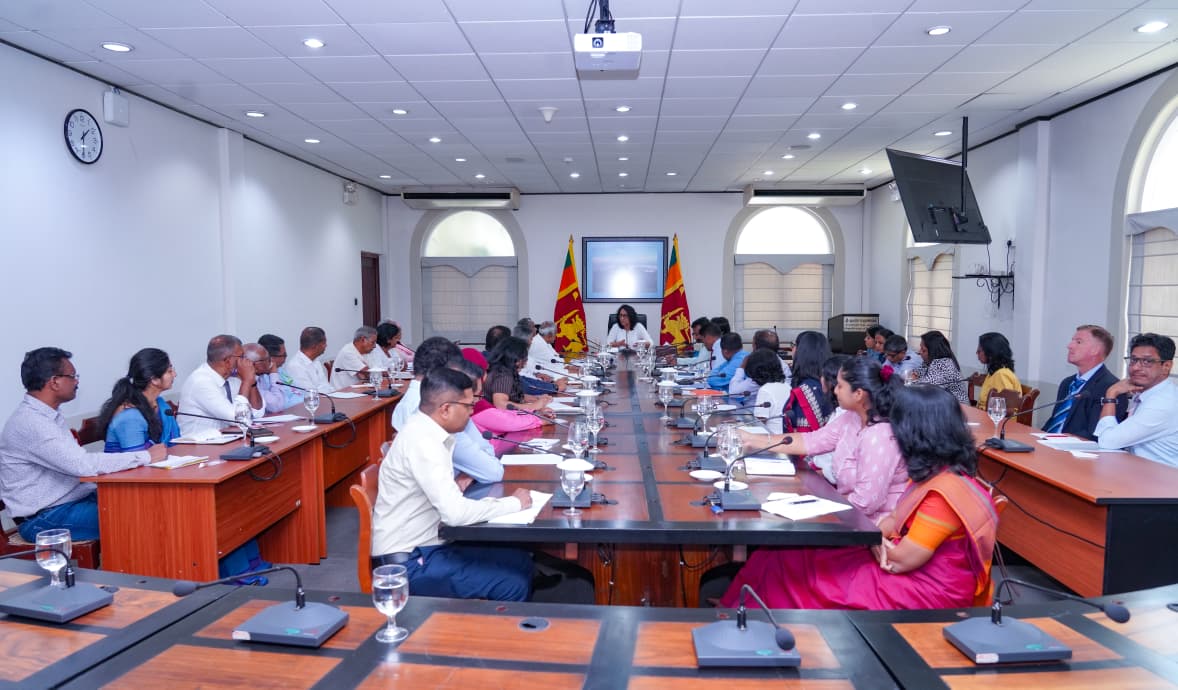
A discussion on accelerating recovery measures and providing relief to those affected by the Cyclone Ditwah was held on March 28 at Temple Trees, with the participation of Prime Minister Dr. Harini Amarasuriya and civil society organizations.
During the meeting, a brief report on the current status of government measures including compensation payments through District Secretariats and information related to safety camps was presented to the Prime Minister by the Chief of Staff to the President and Commissioner General of Essential Services, Prabath Chandrakeerthi.
Special attention was given to the concerns of the estate sector Estate sector Malaiyaha Tamil community affected by the cyclone, particularly those without legal land ownership, in accessing government relief and compensation. Attention was also drawn to the need for a policy decision in coordination with the Ministry of Plantation and Community Infrastructure regarding this matter.
It was further stated by the Secretary to the Ministry of Housing, Construction and Water Supply, Engineer L. Kumudu Lal Bogahawatta , that plans have been made to accelerate the recovery process related to damages caused by the disaster in 2025. These include the construction of 20,000 new houses, the renovation of 115,000 partially damaged houses, and the provision of financial assistance amounting to Rs. 5 million for individuals who already possess safe land to build a house. Additionally, there are plans to construct apartment complexes with public facilities in major urban areas.
Officials further emphasized that the physical, psychological, and social well-being of affected communities especially women, children, and persons with special needs will continue to assess through civil society organizations, special committees, and sub-committees.
The Prime Minister emphasized that the efforts to rebuild damaged housing have focused on constructing homes in locations that are more suitable and equipped with urban public facilities over the past four months, stressing the importance of maintaining continuous communication with communities and ensuring that reconstruction takes place in safer locations that are less vulnerable to future disasters.
The discussion was attended by Secretary to the Prime Minister Pradeep Saputhanthri, Chief of Staff to the President and Commissioner General of Essential Services Prabath Chandrakeerthi, Secretary to the Ministry of Housing, Construction and Water Supply Engineer L. Kumudu Lal Bogahawatta, Additional Secretary to the Ministry of Defence K.C. Dharmathilaka, and representatives from civil society organizations.
[Prime Minister’s Media Division]


Parliament yesterday (30) said the use of inferior quality coal at Norochcholai Lak Vijaya coal-fired power plant caused environmental pollution.
The Opposition has accused the Energy Ministry of importing low quality coal and the CEB has directly blamed the developing crisis in coal imported from South Africa.
The Parliament is scheduled to debate a no-confidence motion moved by SJB-led Opposition against Energy Minister Kumara Jayakody on 10 April.
The Sectoral Oversight Committee on Environment, Agriculture and Resource Sustainability has instructed officials to immediately prepare a plan for the environmentally friendly disposal of ash emitted from the Norochcholai Lak Vijaya Power Plant.
These instructions were given at a recent meeting of the Committee held in Parliament, under the Chairmanship of Member of Parliament Hector Appuhamy.
It was revealed during the meeting that due to issues related to the quality of coal imported to Sri Lanka for power generation, the volume of ash emitted during electricity generation had increased significantly. Officials were directed to formulate a plan under the leadership of the District Secretary of the Puttalam District, to take the necessary measures.
It was also proposed that the possibility of reusing the coal ash for production purposes be studied, and that any revenue generated from such products be utilised for welfare projects benefiting the communities affected by the power plant.
In addition, the Committee instructed the Central Environmental Authority to submit a comprehensive report on whether water and air pollution have occurred as a result of the Norochcholai Power Plant. Furthermore, the North Western Provincial Environmental Authority was also instructed to provide responses within two weeks regarding the questionnaire and related matters submitted by the Committee in connection with the Norochcholai Power Plant.
Officials of the North Western Provincial Environmental Authority stated that although the volume of ash emitted from the plant had increased, the filtration system in use at the plant was sufficient to absorb it. Several matters, including the issuance of environmental protection licenses for the power plant, were discussed at the committee meeting.
By Ifham Nizam
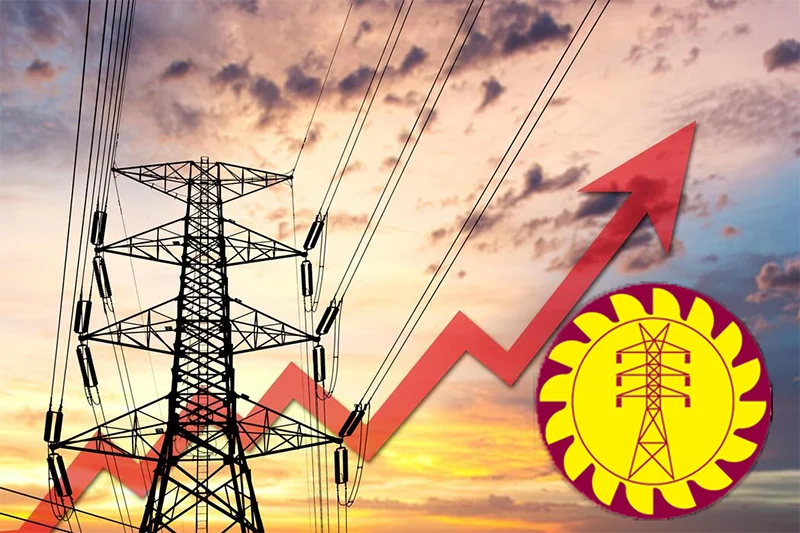
Electricity consumers will face a fresh financial jolt from 01 April, with the Public Utilities Commission of Sri Lanka (PUCSL) approving a countrywide tariff increase that will push up monthly bills across all consumption categories, with the heaviest burden falling on high-end users.
The decision follows a proposal by the Ceylon Electricity Board (CEB), which sought a 13.56 percent upward revision for the second quarter of the year, citing mounting operational costs and financial pressures within the power sector.
Under the new tariff structure, even the lowest-income households will not be spared, though the increases at the bottom tiers remain relatively modest. Consumers using between 0–30 units will see a 4.3 percent rise, adding approximately Rs. 15 to their monthly bill. Those in the 31–60 unit bracket will experience a 6.9 percent increase, translating to an additional Rs. 45.
For middle-tier users, the impact becomes more pronounced. Households consuming 61–90 units will pay around Rs. 120 more per month, following a 6.9 percent hike, while those in the 91–120 unit range will face a sharper increase of 7.1 percent, pushing their monthly costs up by about Rs. 420.
However, the steepest escalation is reserved for heavy electricity users. Consumers exceeding 180 units will be hit with a staggering 25 percent increase — the highest adjustment under the latest revision — raising serious concerns over affordability, particularly for urban households and small businesses already grappling with rising living costs.
Energy sector analysts warn that the latest revision signals deeper structural issues within the power sector, including reliance on costly thermal generation, currency pressures, and inefficiencies in energy procurement.
“The burden is gradually shifting toward consumers as the sector struggles to maintain financial stability,” a senior power sector analyst said, noting that repeated tariff adjustments could further strain public tolerance.
The PUCSL maintained that the revision was necessary to ensure the sustainability of electricity supply and to prevent a recurrence of crises that previously led to widespread outages and load shedding. The regulator has also indicated that cost-reflective pricing remains a key policy direction, particularly as global energy markets remain volatile.
The move comes at a time when many households are still adjusting to broader economic pressures, including high food prices and transport costs, raising fears that the tariff hike could have a cascading effect on the cost of living.
Small and medium enterprises, already operating on thin margins, are also expected to feel the pinch, with higher electricity costs likely to feed into production expenses and retail prices.
Despite the increases, questions remain over whether the tariff revision alone will be sufficient to stabilise the financially strained power sector, or if further adjustments — or reforms — may be inevitable in the months ahead.
With electricity demand steadily rising and generation costs remaining unpredictable, consumers now brace for yet another phase of higher utility bills, underscoring the fragile balance between energy security and economic resilience.

Steps are taken to accelerate the recovery efforts following Cyclone Ditwah despite Global Economic Challenges

Qalandars fine Afridi for violating security protocols

Sooryavanshi, Archer, Burger demolish Chennai Super Kings

Showers may occur at a few places in the Western and Sabaragamuwa provinces and in Galle and Matara districts after 2.00 pm

Burning of low-grade coal at N’cholai plant increases pollution: Parliament

Tariff shock from 01 April as power costs climb across the board

‘Dates have the highest sugar content to fight Coronavirus’

Sunday Island 27 December – Headlines

#SundayIsland 17th December – Headlines

Sunday Island – 28th March

Sunday Island Headlines – 21 March

Sunday Island – 21st February – Headlines
-

 News6 days ago
Senior citizens above 70 years to receive March allowances on Thursday (26)
-

 Features3 days ago
A World Order in Crisis: War, Power, and Resistance
-

 News4 days ago
Energy Minister indicted on corruption charges ahead of no-faith motion against him
-

 News5 days ago
US dodges question on AKD’s claim SL denied permission for military aircraft to land
-

 Business5 days ago
Dialog Unveils Dialog Play Mini with Netflix and Apple TV
-

 News6 days ago
CEB Engineers warn public to be prepared for power cuts after New Year
-

 Sports4 days ago
SLC to hold EGM in April
-
 Latest News5 days ago
A strong Technical and Vocational Education and Training (TVET) system equips individuals with practical, relevant, and future-oriented skills helping to innovate responsibly towards a greener and sustainable future – PM