
Business
CSE chairman focuses on capital-raising and stock market outlook for 2024


The chairman of the Colombo Stock Exchange (CSE), Dilshan Wirasekera, discusses opportunities for capital raising and the stock market outlook for 2024 in the following interview:
Give us an overview of the current market landscape and discuss the CSE’s overall outlook for the year 2024.
We believe the overall outlook of the CSE, for the year 2024 to be a positive one, which I think mirrors the outlook for the country as a whole. There is a significant recovery in economic activity that we see which is now translating into the capital markets and specifically to the Colombo Stock Exchange.
Notably, the turnover levels of the exchange have experienced a significant uptick from what it was at the beginning of the year. An increase from its daily average turnover (ADT) of around Rs 715 million in January, to the current comparatively more stable Rs1.8 billion ADT in March.
I would like to delve into why performance wasn’t as what it used to be, as well as why I believe it will be better this time around. The first, and arguably most significant reason being because the country is currently in a default status. As it is in default and awaiting finalisation of external creditors for the debt restructuring, we are seeing very little foreign activity, and therefore turnover is still dominated by domestic activity. As of March 28th, we are currently at 74.91% local 25.09% foreign participation to turnover. A stark shift from previous years such as in 2018, where we were able to witness a 50-50 foreign to local contribution to the turnover.
We are optimistic that as the external debt restructuring is forecasted to be finalised before June, we will then be able to shed our default status. Portfolio funds can then allocate investments into Sri Lanka, and that will drive an increase of foreign activity from its current status of 25.09%.
Second, the domestic economy has had a negative growth of 7.8% in 2022, followed by a negative growth of 2.3% for 2023. However, the last quarter for 2023 shows 4.5% growth for that quarter. Therefore, looking ahead to 2024, we are optimistic that a growth of 3 – 5 percent will be achieved by the economy. That will undoubtedly result in a lot more activity.
Next, interest rates have been prohibitive for investments. Previously, fixed income yields were over 20%, and people tend to avoid risky asset classes like equity regardless of whether the returns could be rewarding. The Central Bank has reduced policy rates, and as the AWPLR downward trajectory appears to be coming closer to 10%, which will primarily expect to stimulate credit growth; ultimately, people will consider investing in the stock market due to low interest rates.
Finally, the performance of the current market landscape hasn’t been very impressive since, the market yet remains undervalued. The current market PE is 10.27 and the price-to-book value is at 1.02. However, historically we have had our market trade at multiples of 17 times price earnings, one and a half times book value. These are all the reasons that would then further result in the valuations being re-rated.
Overall, we are quite optimistic that activity and turnover will increase driving yields and the market will perform well for the year 2024 as economic conditions continue to improve.
Do you foresee a demand for capital raising via the stock market in 2024?
Yes, there is a strong anticipation of increased demand for capital raising via the stock market in 2024. Several factors contribute to this optimistic outlook:
Conducive Market Conditions: The market environment is seen as favourable for companies to raise capital. With expectations of improved valuations, companies can achieve reasonable multiples when raising equity, making it an opportune time for capital infusion.
Investor Appetite: As investor activity increases, there is a growing appetite for initial public offerings (IPOs). This increased demand from investors creates a conducive environment for companies seeking to raise capital through the stock market.
Introduction of New Products: The introduction of new financial instruments such as sustainable bonds, infrastructure bonds, and sukuks provides alternative fundraising options for organizations. This diversification of offerings is expected to attract companies looking to capitalize on these new instruments, thereby driving more listings and investor activity.
Broad basing via Introducing Multiple Listing Boards: The Colombo Stock Exchange offers three listing boards—the Main Board, Diri Savi Board, and Empower Board— catering to local corporations of all sizes. These boards serve as gateways for companies to obtain listings and access capital markets, providing a range of options to suit different company profiles and capital-raising needs. Further, the Colombo Stock Exchange has introduced the Catalist Board exclusively aimed at accommodating listings of State-Owned Enterprises anticipated in the future. Additionally, to assist foreign-listed companies seeking dual listing status in Sri Lanka, the CSE has established a specialized board called the Multi Currency Board.
The CSE has strengthened its listing function by allocating resources with focus on issuer relations activities, including actively engaging with companies in creating awareness and addressing misconceptions, and streamlining its processes to facilitate listings.
Is there opportunity to raise capital in foreign currency for local companies?
Yes, there is indeed an opportunity for local companies to raise capital in foreign currency through the Colombo Stock Exchange (CSE). The framework established by the CSE allows listed entities to issue foreign currency denominated equity, subject to certain eligibility criteria and regulatory requirements.
One of the key eligibility requirements is that 50% of the company’s revenues should be in the form of foreign currency, with a minimum threshold of USD 5 million over a period of three years. Additionally, these issuances are classified as a different class of shares and are available exclusively to non-residents in the country.
Furthermore, companies that raise foreign currency through these issuances are required to allocate 40% of the proceeds to local requirements, while the remaining 60% can be invested outside Sri Lanka.
Despite the potential benefits of such listings, including access to a broader pool of investors and diversification of funding sources, there have been no such listings so far. This can be attributed to various factors, including the prevailing economic conditions, exchange rate volatility, and regulatory restrictions.
However, there is optimism within the CSE and the business community that these listings will gain traction in the future. Improvements in the local and global economic climate, along with the increasing demand for capital among exporters and other eligible entities, are expected to drive interest in foreign currency denominated equity issuances.
As conditions continue to evolve and stabilize, it is anticipated that more local companies will explore the opportunity to raise capital in foreign currency through the CSE, contributing to the growth and development of Sri Lanka’s capital markets.
Overall, this partnership depicts the commitment of both the CSE and USAID to foster the development of SMEs and promote inclusive economic growth. By providing SMEs with the necessary resources, guidance, and incentives, this initiative aims to empower them to harness the capital markets as a means of realizing their full potential and contributing to the broader prosperity of Sri Lanka’s economy.










Central Depository Systems (Pvt) Ltd (CDS), a subsidiary of the Colombo Stock Exchange (CSE), has reached a milestone as total registered accounts surpassed the 1 million mark. This achievement coincides with the approach of the organization’s 35th anniversary in September 2026, marking three and a half decades of providing depository infrastructure for the Sri Lankan capital market.
Since its inception in 1991, the CDS has held the distinction of being the first depository in the South Asian region. In its core capacity as a depository, the institution is responsible for holding a wide array of securities including shares, debentures, corporate bonds, and units belonging to investors in electronic form.
The crossing of the one million account threshold also reflects the aggressive broad basing of the retail investor market over the past five years. This expansion is largely attributed to the comprehensive digitalization of the CSE, which has created accessibility for individuals across the country. Digital tools such as the CSE Mobile App and the “CDS e-Connect” portal have revolutionized how investors interact with the stock market, providing them with real time access to their holdings and a seamless interface for account management. The “CDS e-Connect”, originally launched in 2016 and revamped in 2021, has become a one stop shop for stakeholders, by offering services such as client profile management, real time balance and transaction viewing, eNomination facility, monthly statements and newly introduced dividend payment history viewing option. From 2016, by offering eStatements and SMS alert facilities CDS ensures transparency and security for the CDS accountholders. By decentralizing account openings and introducing online facilities in 2020, the CDS successfully brought the stock market to the fingertips of the general public, moving away from the traditional, paperwork heavy processes that once characterized the industry.
A critical pillar of this 35-year history was the 2011 launch of the full dematerialization drive. This initiative was designed to significantly reduce the movement of physical certificates, which were prone to loss, damage, and forgery. Today, the success of this drive is evident as the CDS holds 97 percent of listed equity and 100 percent of corporate debt in scripless form. This near total transition to electronic records has provided a secure and accessible service environment. The Central Control Unit plays a vital role, ensuring that all functions performed by the depository and its participants align with strict rules and regulatory guidelines. By identifying operational, financial, and market risks early, the CDS maintains the integrity of the ecosystem and fosters trust among both domestic and international investors.
Beyond its primary depository functions, the CDS has significantly expanded its influence through the Corporate Solutions Unit (CSU), established in 2017. The CSU was created to standardize and elevate the benchmarks for corporate action services in Sri Lanka and has since grown through the strategic acquisition of PW Corporate Registrar arm. This diversification allows the CDS to expand registrar services and manage corporate actions for both listed and unlisted companies, providing a holistic suite of services that includes the distribution of dividends, rights issues, and e-applications for Initial Public Offerings (IPOs). The digitization of issuer services has been a hallmark of the CSU’s work, introducing innovations such as eDividend payments, eWarrants, and eNotices. These advancements have streamlined the process for issuers while ensuring that shareholders receive their entitlements promptly and securely.
The strategic outlook for the CDS is now centred on the newly formed Research and Development Unit, which is essential to the organization’s vision for the future. This unit functions as a Project Management Office and is responsible for developing innovative services. By cultivating strategic alliances and international collaborations, the R&D unit ensures that the CDS remains a future forward institution capable of adapting to the evolving needs of the global financial sector.
As the CDS looks toward its 35th year of service, it remains focused on digital transformation, strategic partnerships that power progress, new service offerings and enhanced international relations. The integration of new technologies continues to ensure robust infrastructure for the next generation of market participants.
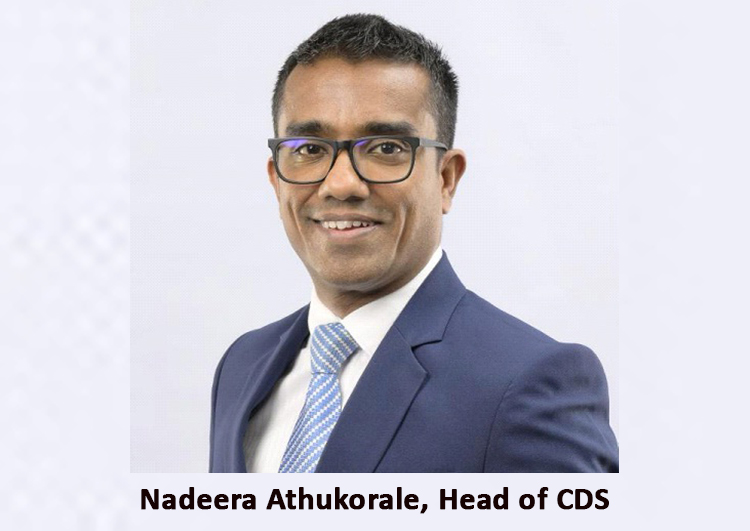
Head of CDS Nadeera Athukorale commenting on the vision of the CDS, remarked “By balancing its core depository duties with non-core registrar and consultancy services, the CDS has positioned itself for long term sustainability and industry leadership.”
The achievement of one million accounts serves as a testament to the resilience and adaptability of the Sri Lankan capital market infrastructure, demonstrating CDS’ ability to facilitate a growing digitized market while continuing to serve as the backbone of the nation’s investment landscape. (CSE)

TONIK, a new hospitality venture under Sri Lanka’s Acorn Group, has unveiled its vision to place culture, storytelling and design at the heart of island exploration, positioning itself as the next Sri Lankan hospitality brand to achieve global recognition.
Built on the Acorn Group’s decades of expertise across aviation, travel, logistics and leisure in multiple Asian markets, TONIK aims to elevate Sri Lanka’s tourism by translating the “soul” of destinations into curated experiences. The brand’s philosophy, “Every Stay Is a Story”, treats villas and boutique hotels as “living narratives” shaped by architecture, memory, craft and community.
The venture addresses a key market gap: while Sri Lanka features exceptional independent villas, many struggle with visibility and global reach. TONIK seeks to resolve this by amplifying each property’s unique value proposition – transforming distinctiveness into revenue -generating potential for owners.
“TONIK’s philosophy aligns with the evolution of our industry- where authenticity and meaningful experiences are no longer optional but essential,” said Harith Perera, Partner at Acorn Group. “Sri Lanka’s narrative deserves platforms that elevate its voice globally.”
For property owners, TONIK offers access to Acorn’s intelligence networks across the Maldives, Middle East, Europe and Asia, including insight into High-Net-Worth travel patterns.
CEO Sundararajah Kokularajah said: “By nurturing properties as living narratives, we aim to shape a new chapter for tourism – authentic, future-ready and deeply Sri Lankan.”
By Sanath Nanayakkare

SDB bank relocated its Warakapola Branch to a new location with a modern, fresh look and ample parking, further strengthening its commitment to delivering an enhanced, customer-centric banking experience. The newly refurbished branch, located at No. 221/E, Colombo Road, Warakapola, will officially open its doors to customers.
The relocation reflects SDB bank’s ongoing efforts to adapt its branch network to today’s banking requirements, ensuring clients enjoy a refreshed, welcoming, and efficient service. The upgraded branch features contemporary design and improved facilities, providing greater convenience and a seamless banking experience for individuals, entrepreneurs, and businesses in the Warakapola area.
As part of its continuous transformation journey, SDB bank has prioritised innovation and service excellence in reimagining the Warakapola Branch. The new premises have been thoughtfully designed to meet evolving customer needs while fostering stronger engagement with the local community and business sector.
Kapila Ariyaratne, Executive Director / Chief Executive Officer of SDB bank, stated, “The relocation of our Warakapola Branch reflects SDB bank’s dedication to providing our customers a modern and enhanced banking experience with convenience and personalised service. This modern space is designed to meet evolving needs while reinforcing our strong ties with the local community. We remain committed to delivering innovative and customer-focused financial solutions that support regional and national growth.”
The enhanced branch environment is expected to serve both existing customers and new clients in the region, reinforcing SDB bank’s growing island wide presence. Through this relocation, the Bank continues to demonstrate its commitment to sustainable growth, service excellence, and meaningful community engagement.
SDB bank invites its valued customers and the Warakapola community to visit the new branch and experience the enhanced facilities firsthand.
A future-ready bank, dedicated to offering customer-centric and comprehensive support tailored to each individual’s needs, SDB bank is a licensed specialized bank regulated by the Central Bank of Sri Lanka, with a listing on the Main Board of the Colombo Stock Exchange and a Fitch Rating of BB +(lka).
Through the network of 94 branches island-wide, the bank provides a comprehensive range of financial services to its Retail, SME, Co-operative, and Business Banking clients across the country. Environmental, Social, and Governance (ESG) principles are deeply ingrained in SDB bank’s ethos, with a steadfast focus on uplifting local communities and businesses through sustainable practices. The bank is particularly committed to promoting women’s empowerment, sustainable development of SMEs, and digital inclusion, aiming to propel Sri Lanka to new heights.
Ceremonial opening of SDB bank Warakapola Branch
From left to right,
Binesh Aravinda – Head of Branch Banking – SDB bank,.A.D.Walisinghe – Chairman Kegalle Sanasa District Union, Kapila Ariyaratne – Executive Director/ Cheif Executive Officer – SDB bank, Chitral De Silva – Cheif Business Officer – SDB bank

Qatar partially reopens airspace as Iranian strikes continue to hit Gulf

The final voyage of the Iranian warship sunk by the US

AI-generated Iran war videos surge as creators use new tech to cash in

Huge explosions rock major Tehran airport as Israel strikes ‘regime infrastructure’

India hit back but Sutherland, Hamilton impress to give Australia the edge

Heat Index at ‘Caution Level’ in the Sabaragamuwa province and, Colombo, Gampaha, Kurunegala, Anuradhapura, Vavuniya, Hambanthota and Monaragala districts

‘Dates have the highest sugar content to fight Coronavirus’

Sunday Island 27 December – Headlines

#SundayIsland 17th December – Headlines

Sunday Island – 28th March

Sunday Island Headlines – 21 March

Sunday Island – 21st February – Headlines
-

 Features5 days ago
Brilliant Navy officer no more
-

 Opinion5 days ago
Sri Lanka – world’s worst facilities for cricket fans
-

 News2 days ago
Legal experts decry move to demolish STC dining hall
-

 News1 day ago
University of Wolverhampton confirms Ranil was officially invited
-

 Features5 days ago
A life in colour and song: Rajika Gamage’s new bird guide captures Sri Lanka’s avian soul
-

 Business3 days ago
Cabinet nod for the removal of Cess tax imposed on imported good
-

 Features6 days ago
Overseas visits to drum up foreign assistance for Sri Lanka
-

 Features6 days ago
Sri Lanka to Host First-Ever World Congress on Snakes in Landmark Scientific Milestone