
News
CSCD attacks proposed anti-terrorism law

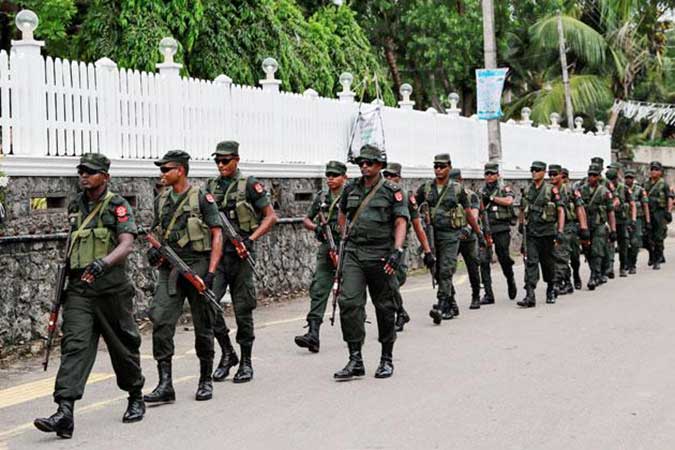
The Civil Society Collective for Democracy (CSCD) says that it strongly opposes the proposed Anti-Terrorism Law because it violates the Constitution and endangers the freedoms and human rights that are guaranteed in a democratic society.
A statement by the CSDC says: “The government is presenting its proposed Anti-Terrorism Act (ATA) to be fast-tracked through Parliament, in a context in which it has come under significant international pressure to repeal or amend the Prevention of Terrorism Act (PTA). The PTA has been widely criticized, both within Sri Lanka and internationally, due to its potential for abuse. Recently, three persons held under the PTA for 14 years were acquitted by the Court which is but the tip of an iceberg of abuse over a very long period.
“While as members of the civil society of Sri Lanka we support the repeal of the PTA, we are concerned that the draft ATA, presented by the government to replace it, has several features that are worse than the PTA. These would impact on the democratic space and rights available to political parties, trade unions, and civic activists.
“Among the worst features of the proposed ATA is its vague and broad definition of terrorism which would include theft of government property and trade union action. It also includes legitimate democratic actions including protests, publishing material, demands for action by the government, strikes, and disputes relating to racial and religious places. The law permits police or military or coast guard personnel of any rank to arrest anyone on whom they have reasonable suspicion of being involved in acts, such as those given above. Once a person is arrested, that person can be detained for up to 24 hours, and even more depending on the situation, in a place of the arresting party’s choosing. The plight of a young person arrested in such a manner can be imagined. Thereafter, if a detention order is signed by a more senior police officer, those arrested can be held for up to three months without being presented before a court of law. All these provisions demonstrate the enormous potential for abuse of this law.
“We the Civil Society Collective for Democracy strongly oppose the proposed ATA because it violates the Constitution and endangers the freedoms and human rights that are guaranteed in a democratic society.
This law is far too broad and leaves wide open who can be arrested, by whom they can be arrested, and for what purpose they are arrested. The present economic situation in the country is very difficult for the masses of people with the economy set to contract by a further four percent this year in addition to the eight percent last year. Through no fault of the people, the country was made bankrupt by those that governed it. We fear that the proposed ATA will be used to make the people bear the full weight of the economic burden by those who are responsible for the calamity, by suppressing the space to question, to expose and to dissent with the Government. As such, it would create an environment of fear among trade unions, journalists and civil society, thereby intensifying the prevailing democratic deficit and violating the Fundamental Rights of Sri Lankans.
“Therefore, we demand that the Government withdraw the proposed ATA and honour its duty to protect democracy and the rights of citizens and to uphold its international obligations related to human rights and democratic freedoms.”

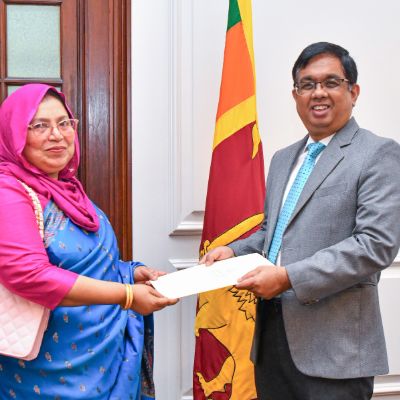
President Anura Kumara Dissanayake has appointed Ms N. R. Anees as the new Chairperson and a member of the Finance Commission.
J. M. C. J. Wijetunga and K. Karunaharan have been appointed as the other members of the Commission.
The letters of appointment were presented to the appointees by the Secretary to the President, Dr Nandika Sanath Kumanayake, at the Presidential Secretariat ton Monday (20) afternoon
The appointments were made to fill the vacancies createdy following the expiry of the terms of office of the previous members of the Finance Commission.
(PMD)
News
True leadership is not about titles or power, but about acting responsibly for the well-being of others – Prime Minister

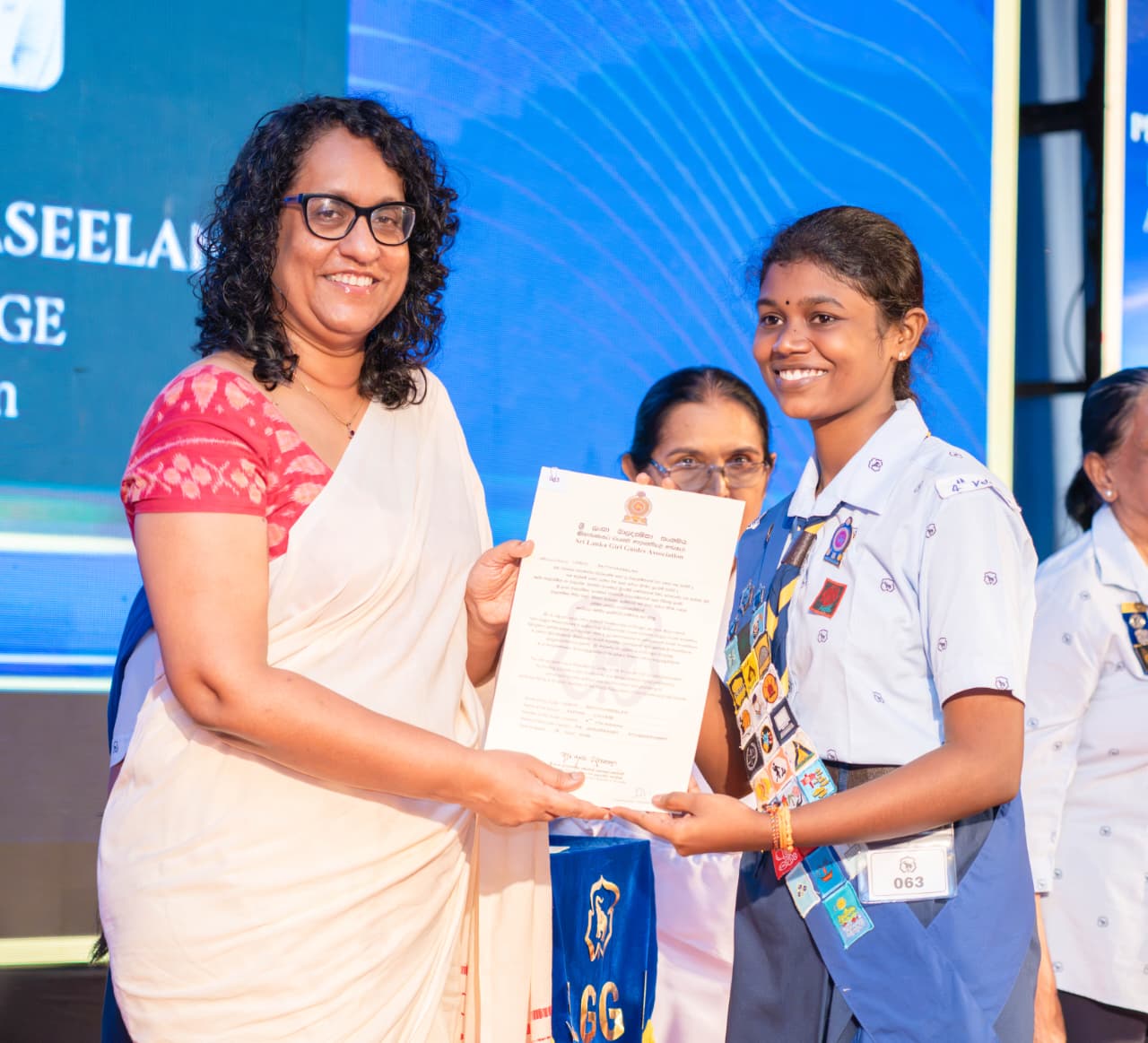
Prime Minister Dr. Harini Amarasuriya stated that true leadership is not about titles or power, but about acting responsibly, with compassion, and working for the well being of the others.
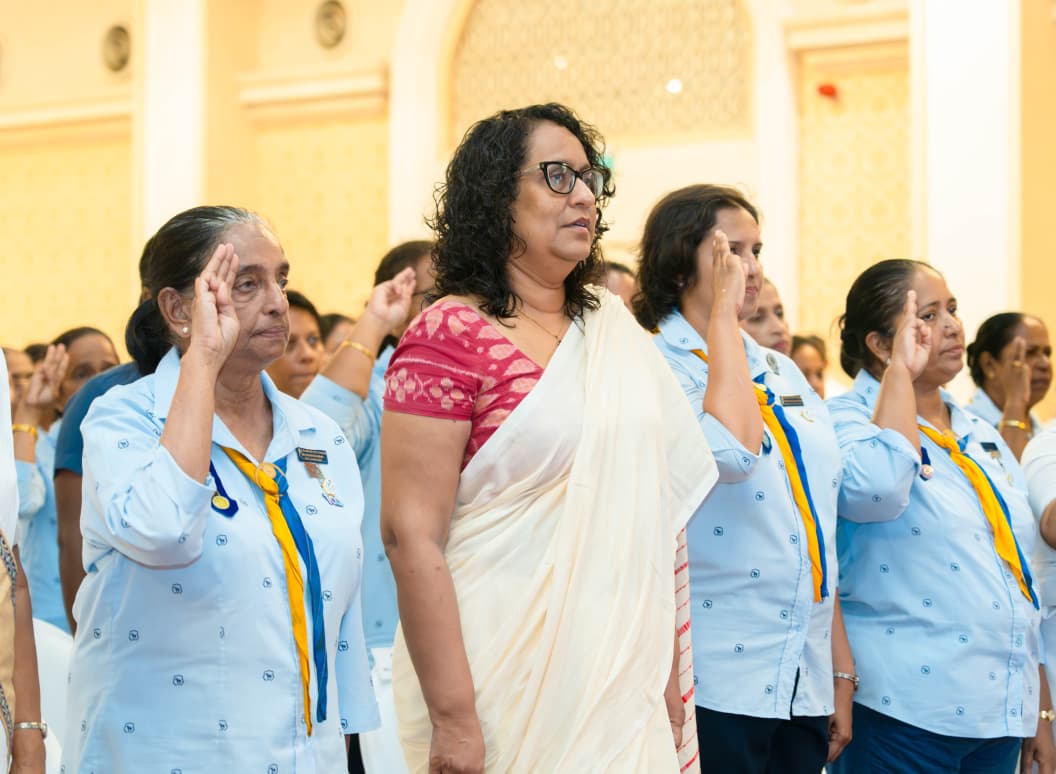
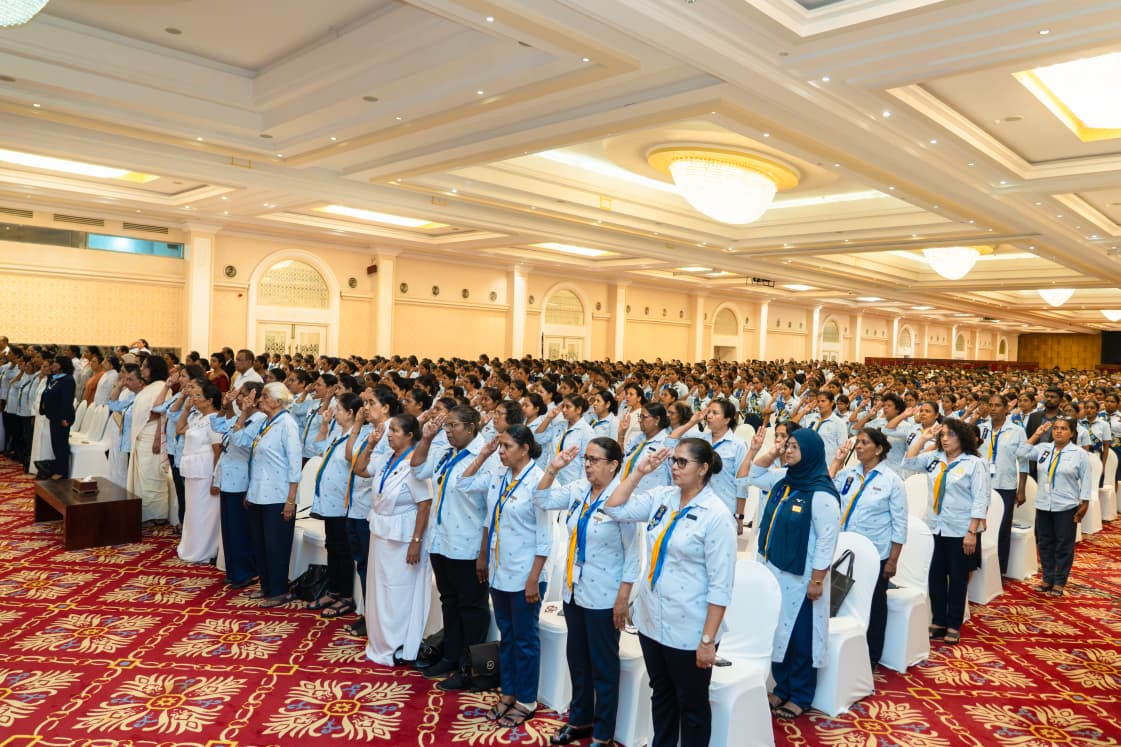
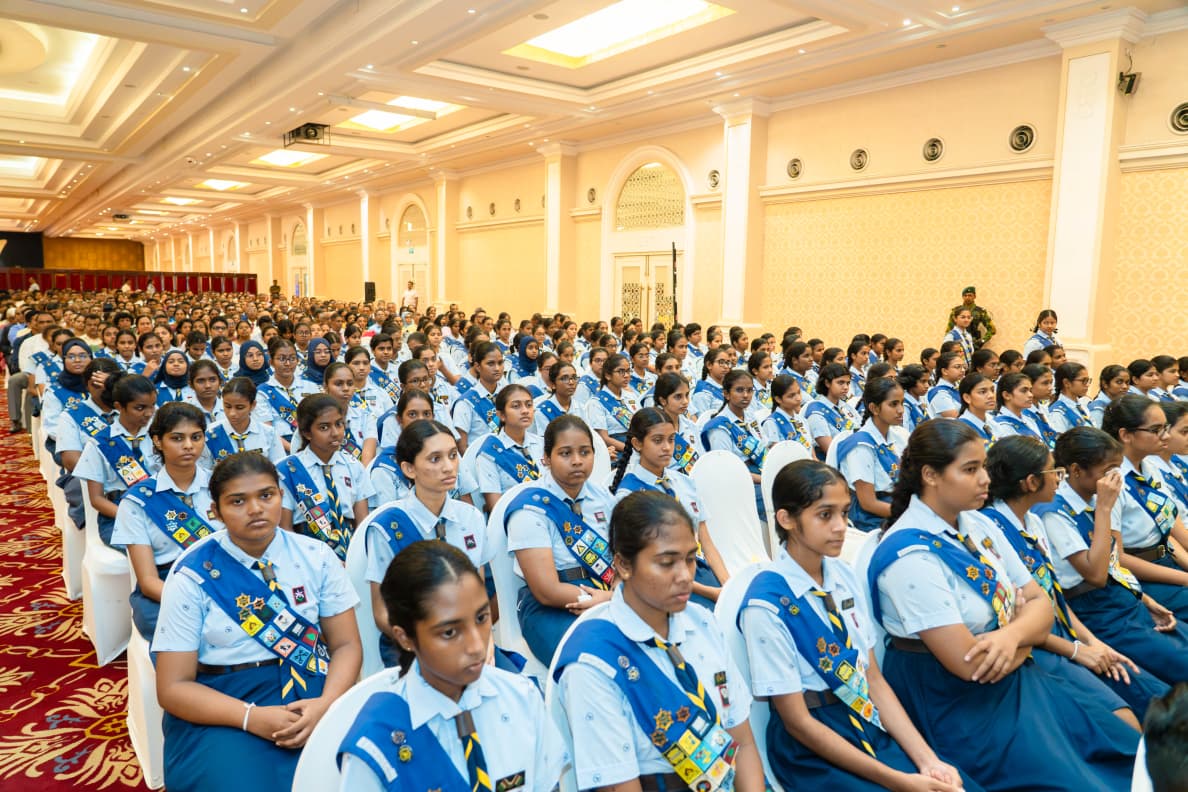
The Prime Minister made these remarks while attending the President’s Guide Award and Prime Minister’s Award Ceremony, organized by the Sri Lanka Girl Guides Association, one of the country’s leading voluntary organizations dedicated to empowering girls and young women. The ceremony was held on Sunday (19th July )at Temple Trees in Colombo.
During the event, the Prime Minister presented medals and certificates to the award recipients.
A total of 350 awards were presented at this year’s ceremony, comprising 338 President’s Guide Awards and 12 Prime Minister’s Awards, in recognition of the recipients’ discipline, resilience, integrity, and commitment to serving others.
Addressing the occasion, Prime Minister Dr. Harini Amarasuriya stated that one of the greatest strengths of the Girl Guides association is its commitment to providing equal opportunities to every child, regardless of their background or abilities. The Prime Minister also emphasized that true leadership is not defined by titles or power, but by acting responsibly, listening with compassion, and working for the well-being of others.
The Prime Minister further noted that while women had limited opportunities in the past, today increasing opportunities are being created for girls and women across all sectors, and young women are making remarkable progress in every field. The Prime Minister further stressed that every girl and young woman deserves equal opportunities to improve themselves, noting that the country needs young women leaders who are ready to step forward to build a better future for Sri Lanka.
The Prime Minister also highlighted that, particularly at a time when Sri Lanka is undertaking significant economic and democratic reforms, achieving sustainable national progress requires not only economic growth but also the development of citizens who uphold strong ethical values and social responsibility. In this regard, she commended the invaluable contribution made by the Sri Lanka Girl Guides Association.
Guided by its motto, “Be Prepared,” the Girl Guiding Movement in Sri Lanka was first established on 21 March 1917 at Kandy High School by Miss Jenny Calverley Green. Today, the movement operates through seven branches; Butterflies, the Little Friends, the Guides, the Rangers, the Youth, the Differently Abled Guides, and the Community Guiding Units, catering to different age groups and abilities. The President’s Guide Award is the highest honour that can be achieved by a Girl Guide and is awarded only to those who successfully complete the required challenges, written and oral examinations, and the BP Challenge. The Prime Minister’s Award is presented as the highest recognition within the Ranger Guide section.
The event was attended by at the President of the Sri Lanka Girl Guides Association Swarnika Pitigala, Chief Commissioner Dr. Kushantha Herath, President’s Guide Commissioner Pushpa Perera, Prime Minister’s Guide Commissioner Aruni Karunaratne, other senior officials of the Sri Lanka Girl Guides Association, President’s Guides and Prime Minister’s Guides, as well as a large number of their parents.
(Prime Minister’s Media Division)

Rs. 16 bn BMW revenue fraud:
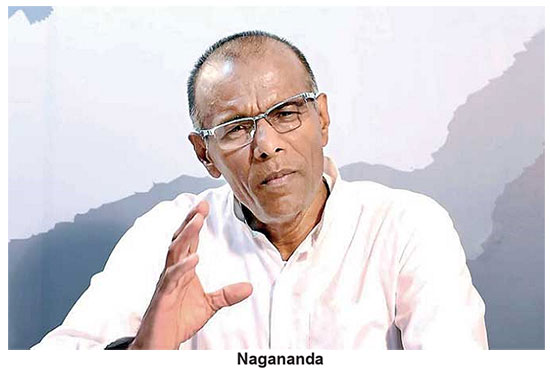
Public interest litigation activist Nagananda Kodituwakku has said he will initiate appropriate proceedings against Director General of Customs, Wimal S.K. Liyanagama, in terms of the Anti-Corruption Act No 9 of 2023, unless the Customs carries out a revenue fraud inquiry to recover approximately Rs 16 bn in lost government revenue.
General Secretary of Vinivida Foundation, and former Customs officer, Kodituwakku said that though the Department, in response to his request for a meeting to discuss the issue, in writing, assured them that the investigation was underway, they found that the actual situation was not so.
Kodituwakku alleged that the Customs Chief had neglected what he called statutory duties under the Customs Ordinance, by disregarding his request for a meeting.
Kodituwakku said the investigation into the importation of 1,728 brand new BMW vehicles, under the concessionary duty permits issued by the government for the public servants, between 2011 and 2014, had been stalled.
The civil society activist said that investigations had revealed the vehicles hadn’t been imported by the permit holders themselves but others. It also transpired that the value of the imported vehicles, mentioned in the commercial invoices, proforma invoices and the CusDecs, tendered to Customs in the names of the permit holders, were not the actual values for the vehicles in question.
The high-profile case has been handled by the Central Investigation Directorate, at that time headed by Murugesu Thayabaran, a batchmate of Kodituwakku.
The ex-Customs officer said that he had appeared as counsel for Thayabaran in Court of Appeal and was determined to bring the case to a successful conclusion. According to him, the importer, over the years, had been represented by nine President’s Counsel as the case dragged on from the time of P.S.M. Charles, Director General, Customs.
Kodituwakku made available letters he wrote to the Customs and other parties on this issue, to The Island. Pointing out that the Court of Appeal on 7 May, 2024, dismissed the importer’s final appeal regarding the case pertaining to the revenue loss of Rs. 16 bn, Kodituwakku said that although the court had cleared the way for the Customs probe, no action had been taken.
However, the Court of Appeal ruling was given before Liyanagama succeeded Seevali Arukgoda as DG Customs on 6 May, 2026. Liyanagama served as Director General of the Department of Management Services at the Treasury before the new appointment.
Kodituwakku said that he had also brought the Customs case to the attention of the Commission to Investigate Bribery or Corruption (CIABOC).
Emphasising the failure on the part of the Opposition to raise this issue, both in and outside Parliament, Kodituwakku said that since the exposure of the BMW scam, during Mahinda Rajapaksa’s presidency, there had been four presidents, namely Maithripala Sirisena, Gotabaya Rajapaksa, Ranil Wickremesinghe and incumbent Anura Kumara Dissanayake. Unfortunately, successive administrations had allowed the interested parties to drag the case. The lack of interest shown by political parties revealed that they not only protected those responsible but encouraged corrupt practices of allowing third parties to import vehicles in terms of permits issued to legitimate recipients of such permits.
Having campaigned on an anti-corruption platform, during the presidential and parliamentary polls in 2024, the NPP couldn’t, under any circumstances, turn a blind eye to this situation, Kodituwakku said, adding that even the IMF should be concerned of the failure on the part of successive governments to recover the money.
By Shamindra Ferdinando

Trump threatens to bomb a power plant for each ship strike

Mexico goalkeeper Guillermo Ochoa retires after 22-year career

New Chairperson and Members appointed to the Finance Commission

True leadership is not about titles or power, but about acting responsibly for the well-being of others – Prime Minister

A few showers will occur in the Western, Sabaragamuwa and North-western provinces and in Kandy, Nuwara-Eliya, Galle and Matara districts

Customs asked to resume probe or face legal action

‘Dates have the highest sugar content to fight Coronavirus’

Sunday Island 27 December – Headlines

#SundayIsland 17th December – Headlines

Sunday Island – 28th March

Sunday Island Headlines – 21 March

Sunday Island – 21st February – Headlines
-
 Features4 days ago
Two memorable excerpts from a former SLAF commander’s memoir
-
 Business4 days ago
‘Giving up was never an option’: The fisherman who fought back after losing millions in SL
-
 Latest News4 days ago
Davis cup Asia/Oceania Group IV 2026 to be held in Colombo from 20th to 25th July
-
 Features4 days ago
Erdoğan’s New Republic
-

 Life style4 days ago
Taste of the Swiss Alps comes to Colombo
-
 News5 days ago
Evidence recorded in money laundering case against Yoshitha Rajapaksa
-
 News5 days ago
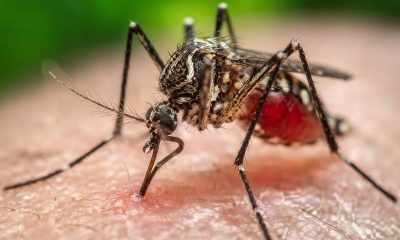
Dengue outbreak gallops ahead: Infections surpasses 73,455, leaving 50 dead
-

 News6 days ago
Money laundering case against Yoshitha, fixed for pre-trial conference