
Business
Creating an Estimated Ecological Wealth of USD 382,362 through a Nature Corridor


A Model for Forest Landscape Restoration by Dilmah
The recently concluded World Environment Day 2021 marked the advent of the ‘decade of restoration,’ where the United Nations calls States to take urgent action to revive our damaged ecosystems. It is an attempt to halt the exploitation of sensitive ecosystems and turn towards healing our environment. In its efforts to foster respect for the environment and encourage harmonious coexistence of man and nature, Dilmah initiated through Dilmah Conservation, a Nature Corridor on Endana Estate, in the Sabaragamuwa Province. The initiative focuses on the restoration and revitalisation of a habitat, by connecting two isolated forest patches located in the vicinity of the Sinharaja Rain Forest.
Located on the border of the globally significant Sinharaja Forest Complex, Endana Estate is endowed with many species, both fauna and flora. The estate lies in a part of the land that has separated Iharakanda and Walankanda Forest Reserves by tea plantations and human settlements for over 100 years. The nature corridor was strategically established to connect the two forest reserves so that fauna and flora can migrate freely between the two locations leading to greater genetic diversity. In 2018, Dilmah Founder Merrill J. Fernando uprooted tea plants at the Endana Tea Estate as a symbol of the project’s initiation.
Dilmah ensures to continue monitoring and restoring the habitat, as an initial baseline survey revealed that, it is home to a high level of fauna diversity including 34 endemic species and 20 threatened species, while many birds and mammals use the estate as a route to migrate between the forest reserves. Furthermore, to ensure sustainability, the threatened endemic plant species selected for the restoration were based on micro and macro elements, such as, species distribution patterns in Sinharaja tropical lowland rainforest, and the conservation status of species according to the IUCN Redlist.
“We have conducted several field studies in Endana Nature Corridor since 2018. I would like to highlight our recent estimates of the total ecosystem services of the Endana Nature Corridor. In a mere extent of 60 ha, this corridor generates an annual ecological wealth of US$ 382,362 (approximately 76.3 million rupees). Our estimates are discounted for the secondary forest patches within the corridor and home gardens in comparison to high-valued virgin rainforests in the vicinity. These estimates are vital and should be considered for conservation and development-related decision making in the wet zone forests” says Dr. Nalaka Geekiyanage, the principal scientist. Dilmah is committed to strengthening the habitat through the plant nursery established to house saplings which will soon be planted in the nature corridor and by constant monitoring of climate change impacts to the selected area.
“The environment is central to Dilmah’s business, and Dilmah Conservation was established as an affirmation of this core commitment to environmental sustainability. As Dilmah has grown, I have not forgotten my pledge, and revenue from the sale of Dilmah funds the work of the MJF Charitable Foundation. Our Foundation – I say ‘our’ because every Dilmah tea drinker is a part of the MJF Foundation – has changed the lives of thousands. Its humanitarian service will continue to grow alongside Dilmah,” says the Founder, Merrill J. Fernando.
The nature corridor is situated in a mosaic that bring together local communities, tea estates and forest reserves with rich biodiversity. Engaging local communities is an integral part of the project, that ensure its success and sustainability. From the inception of the project, Dilmah has worked with the local communities; educating, creating awareness, and strengthening livelihoods by providing beekeeping education and the necessary infrastructure, including market alignment for the finished products.
The United Nations Environmental Programme emphasises that commitment to green recovery through reimagining, recreating, and restoring ecosystems is vital. It would allow minimal global temperature rise, ensure food security for a growing population and slow the rate of species extinctions. In addition to the Endana Nature Corridor, Dilmah Conservation has established several other projects under its green recovery programme. These include the Hunuwella pilot project which aims to restore degraded tea lands through a Kandyan Home Garden and eco-agroforestry concept.
(Dilmah news release)





Business
Arvind Subramanian: Why hasn’t Sri Lanka’s democracy acted as a hedge against economic chaos?
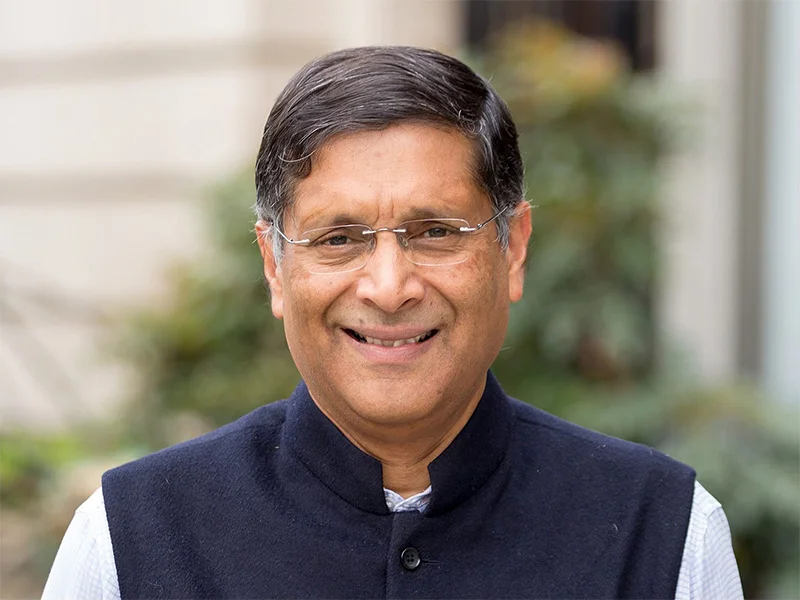
In a sobering and intellectually provocative lecture delivered yesterday at the Central Bank of Sri Lanka, Dr. Arvind Subramanian, former Chief Economic Advisor to the Government of India, posed a “haunting” question to the nation’s policymakers: Why has one of the world’s oldest democracies outside the West failed to leverage its political system to ensure economic stability?
Titled ‘Reviving Growth While Maintaining Stability,’ the lecture moved beyond technical prescriptions. Dr. Subramanian, now a Senior Fellow at the Peterson Institute for International Economics, admitted that his experience with the complexities of the Indian economy had made him “humble and somber,” leading him to focus on the broader socio-political structures that dictate a nation’s fate.
Dr. Subramanian argued that in India, democracy acted as a vital pressure valve that prevented both extreme political violence and economic chaos. He noted that while the process of nation-building is historically violent – citing the West’s decimation of populations and China’s estimated 40–75 million deaths between 1950 and 1976 – India managed to maintain a relatively low degree of mass violence.
“Democracy had a key role to play in that,” he asserted. “It is one of India’s major achievements.”
The speaker extended this logic to the economic sphere, suggesting that Indian democracy created a “societal demand” for low inflation.
In India, he noted, there is a pervasive political belief that if inflation crosses the 5 percent threshold, the government is likely to lose the next election. This political accountability forced the Central Bank and the State to maintain macro-stability.
The crux of Dr. Subramanian’s address was the “intellectual puzzle” of why Sri Lanka, which received universal franchise well before India, did not experience the same stabilising effects of democracy.
He presented two charts that he described as “haunting.” The first revealed that Sri Lanka has spent 60 percent of its time under IMF programmes, indicating a state of “perennial macro-economic stress.” In contrast, India has not sought an IMF programme in the 35 years following its 1991 reforms.
“Why does Indian society demand low inflation and macro-stability, while the same doesn’t happen in Sri Lanka?” he asked. Despite its long democratic tradition, Sri Lanka has consistently seen higher inflation and greater financial instability than its neighbour.
Dr. Subramanian also highlighted a stark difference in how both nations treat foreign capital. Pointing to data on external debt stock as a share of Gross National Income (GNI), he illustrated that Sri Lanka has been consistently and significantly more reliant on foreign capital than India or China.
While some argue that Sri Lanka’s small size necessitates a reliance on foreign capital, Dr. Subramanian remained unconvinced, noting that India also suffered from low domestic savings for decades but chose a more cautious path.
“India has been much more cautious in opening up to foreign capital,” he explained. While foreign capital can drive growth, it brings the “downside of risk and volatility” as capital flows in and out – a reality that came to haunt Sri Lanka in recent years through its high exposure to foreign currency-denominated debt.
The lecture concluded not with a list of “1, 2, 3 points” for recovery as the wider audience had expected, but with a challenge to the Sri Lankan intelligentsia. If democracy is meant to be a safeguard against political and economic disorder, the breakdown of that mechanism in Sri Lanka requires deep introspection.
“Different societies differ,” Dr. Subramanian concluded. “But if democracy had a key role in avoiding volatility in India, why shouldn’t it have been so in such an old democracy as Sri Lanka? It is worth pondering over,” he said.
By Sanath Nanayakkare

HSBC will launch ‘Clean Waterways’ in partnership with the Beira Lake Restoration Task Force that was convened by the Governor of the Western Province to restore Beira Lake. HSBC in partnership with Clean Ocean Force will build and operate two solar powered, zero emission, waterway cleaning boats, which are the first of their kind in Sri Lanka. They will be used extensively in support of restoring the Beira Lake ecosystem and its surrounding environment.
Once a picturesque centerpiece in Colombo, Biera Lake is now suffering from significant pollution. Urbanization and lack of effective waste management practices have led to large volumes of plastic and floating organic debris, untreated sewage and industrial effluents contaminating the water. Resultant algal blooms, unchecked hyacinth growth and water stagnation further give the lake a detrimental odour and appearance. The pollution has degraded water quality, harmed aquatic life posing health risks to residents living in proximity by attracting disease-carrying fauna.
The Biera Lake Restoration Task Force was convened by the Governor of the Western Province with the purpose of delivering cleaner waterways in the urban environment. It is vital to educate and support change for communities that reside near the Beira Lake. To achieve this, a dedicated community outreach programme will reach over 5000 wider residents through awareness building and education which is anticipated to reduce ‘waste at source’.
Mark Surgenor, Chief Executive Officer, HSBC Sri Lanka stated “With over 130 years presence in Sri Lanka, HSBC understands the importance of Beira Lake to Colombo’s urban environment. Supporting cleaner waterways is a vital step towards restoration of that environment. Through this first ever public-private partnership, multiple stakeholders are coming together to work towards restoring this iconic lake. We have committed to support the Beira Lake Restoration Task force, not just with the much-needed funding, but also bringing best practices through our experience with similar projects in other markets that we operate in. The community outreach programme planned alongside the project is a critical step towards making this impact sustainable. HSBC has always been at the forefront of innovation in Sri Lanka and we look forward to continuing that for our next 130 years here”
Sri Lanka has moved to strengthen the financial backbone of its marine conservation efforts with the establishment of the country’s first CORALL Conservation Trust Fund, a landmark initiative that positions coral reef protection firmly within the framework of sustainable finance and long-term economic value creation.
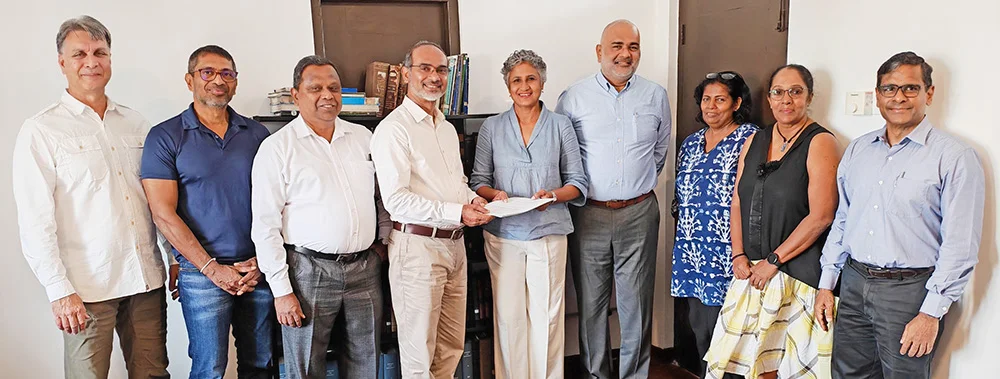
The Trust Deed establishing the CORALL (Conservation of Reefs for All Lives and Livelihoods) Conservation Trust Fund was signed on December 31, 2025, by Environment Foundation (Guarantee) Limited (EFL) as Settlor together with the inaugural Board of Trustees. The Fund is designed to support the conservation of Pigeon Island National Park, Bar Reef Marine Sanctuary and Kayankerni Marine Sanctuary, along with their associated seascapes—areas that are central not only to marine biodiversity but also to fisheries, tourism and coastal protection.
From a business and policy perspective, the Trust Fund represents a decisive shift away from short-term, donor-driven conservation projects towards a structured and enduring financing mechanism. It is a key component of the Sri Lanka Coral Reef Initiative (SLCRI), a six-year national programme funded by the Global Fund for Coral Reefs and implemented by the International Union for Conservation of Nature (IUCN), but critically, the Trust itself is structured to continue well beyond the project’s lifespan, offering a permanent vehicle for mobilising state, private sector and international sustainability-linked funding.
Coral reefs within the three targeted seascapes have been increasingly degraded by destructive fishing methods such as blast fishing, overfishing, coastal pollution, unregulated tourism and unplanned coastal development. These pressures carry significant economic consequences, undermining fish stocks, tourism revenues and the natural coastal protection that reefs provide. Project partners note that a major driver of this degradation is the limited understanding among communities and institutions of the true economic value of coral reefs as natural capital that underpins livelihoods and resilience.
EFL, as an implementing partner to IUCN, played a central role in shaping the Trust’s institutional and financial architecture. It carried out a comprehensive legal, policy and institutional review, provided recommendations on the structure of Conservation Trust Funds, and drafted both the Trust Deed and an operational manual embedding governance, accountability and transparency safeguards. These features are seen as critical in building investor and donor confidence, particularly at a time when environmental, social and governance (ESG) considerations are increasingly influencing capital flows.
The Board of Trustees, selected by IUCN and the SLCRI National Steering Committee following a public call for applications, brings together expertise from investment banking, commercial banking and marine science. The Trustees—Palitha Gamage, Prof. (Ms.) Sevvandi Jayakody, Nalin Karunatileka, Dr. (Ms.) Nishanthi Perera, Chanaka Wickramasuriya and Nishad Wijetunga—will oversee grant funding for conservation and restoration proposals submitted by Special Management Area Coordinating Committees, while also ensuring robust monitoring and evaluation to safeguard long-term financial and ecological sustainability.
“This marks a significant step in sustainable financing to conserve coral reef ecosystems which are critical for marine biodiversity conservation, coastal protection, climate resilience, and the livelihoods of coastal communities, said Dr. Shamen Widanage, Country Representative of IUCN Sri Lanka, highlighting the wider economic and social returns expected from the initiative.
EFL chairperson Deshini Abeyewardena said the Trust Fund reflects a broader shift towards innovative financing models for environmental protection.
“EFL is honoured to have been selected by IUCN to implement this landmark initiative. The establishment of the CORALL Conservation Trust Fund reflects EFL’s long-standing commitment to advancing environmental justice through strong governance, legal safeguards and innovative financing mechanisms. As Sri Lanka faces increasing pressures on its marine ecosystems, this Trust provides a credible and transparent platform to secure sustained investment for coral reef conservation, she said.
By Ifham Nizam

Mechanism to be established involving university academics and experts for Education Reforms – President

New integrated framework to bring all stakeholders together to safeguard and rebuild Central highlands – President

ICC T20 World Cup Trophy tour in Sri Lanka launched under President’s patronage

Rasooli, Atal and Mujeeb seal Afghanistan series win

U – 19 World Cup: Afghanistan’s Nooristani Omarzai blows Tanzania away

U – 19 World Cup: Mayes’ 191 helps England crush Scotland

‘Dates have the highest sugar content to fight Coronavirus’

Sunday Island 27 December – Headlines

#SundayIsland 17th December – Headlines

Sunday Island – 28th March

Sunday Island Headlines – 21 March

Sunday Island – 21st February – Headlines
-

 Editorial4 days ago
Illusory rule of law
-

 News5 days ago
UNDP’s assessment confirms widespread economic fallout from Cyclone Ditwah
-

 Editorial5 days ago
Crime and cops
-
 Features4 days ago
Daydreams on a winter’s day
-

 Editorial6 days ago
The Chakka Clash
-
 Features4 days ago
Surprise move of both the Minister and myself from Agriculture to Education
-

 Features3 days ago
Extended mind thesis:A Buddhist perspective
-

 Features4 days ago
The Story of Furniture in Sri Lanka