
Sports
CR start Clifford Cup battle without Kandy SC


By A Special Sports Correspondent
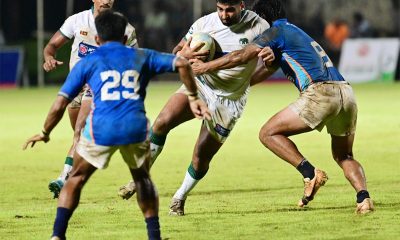
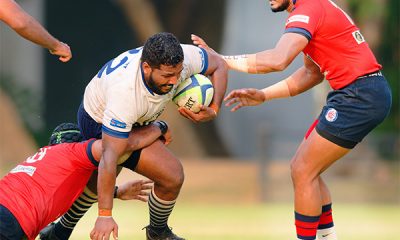
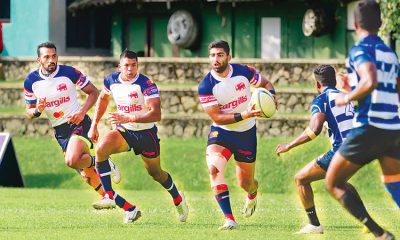
Ceylonese Rugby & Football Club (CR&FC) will be hot favourites to win the knockouts when the ‘Clifford Cup’ unfolds another chapter with seven out of the eight A Division teams battling for honours. The knockout tournament is scheduled to start today (February 28) with a quarter-final match between Police SC and Air Force which is scheduled to take place at Longden Place this evening. The other quarter final matches are: Havies vs Navy (February 29) and CH&FC vs Army (March 1). CR&FC receives a bye and moves to the semi finals.
This year’s runners-up at the league rugby tournament, Kandy SC, has pulled out of the tournament citing disagreements over venue arrangements for the knockout tournament. Kandy SC wanted all their matches in the Clifford Cup to be played at Nittawela, but the organizer of the tournament- Sri Lanka Rugby (SLR)-was not in favour of this request. This was the same scenario at the tournament last year too with Kandy SC pulling out of the tournament due to a similar disagreement.
Kandy SC could end up being the ‘looser’ for the decision taken to hold the SLR to ransom. They are not the champions this season and fans and the team’s sponsor would have received a golden opportunity to see the Nittawela side bounce back from two defeats had they opted to play in the knockouts. This Kandy SC side is a young outfit and the players need match practice and exposure at top level games. Given that most of the Kandy SC players also shun national duty, playing in all domestic tournaments would be just what the ‘doctor’ ordered for the players based in the cool climes of central province.
The Clifford Cup will now have to proceed without Kandy SC. CR&FC has taken over the slot that Kandy SC occupied as ‘kings of local rugby’. The second and third best teams in the knockout tournament will be planning their game around CR&FC, which has raised their game many notches with hard work, commitment and discipline. Changes like this in the top spot of rugby serves the game well. This writer is not writing with malice directed at Kandy, but there is now a breath of fresh air in the domestic rugby scene with a team from Colombo breaking Kandy SC’s dominance in the game played with the oval shaped ball. It would have been good for CR&FC if Kandy SC played in this tournament because that would have presented them with an opportunity of beating them thrice in a row and apart from giving western province the feel that there is a rugby kingdom here as well.
This concept of ‘the enemy or rival’ at sport is an interesting one. The Kandy-CR&FC rivalry began during the early 1990s when several players from Longden Place left Colombo and headed for Kandy SC over a captaincy dispute. Since then, these two teams have made their traditional encounter one hell of a contest; akin to a cricket big match like the Royal-Thomian. Despite whatever disagreements Kandy SC should have played in the knockout for the sake of playing against their arch-rival, CR&FC. Kandy’s absence is surely going to make CR mourn the loss of a much looked forward to battle at rugby; akin to a quarrel by two lovers.
By the way, the last week of matches at the league tournament was hectic and rugby analysts and statisticians at SLR probably had to work on their calculators and recall lessons on arithmetic to make the final points table. Interestingly after the first and second slots were decided it would have taxed the brains of SLR’s recorders of the game to find the third and fourth place finishers of the league tournament. Now, we are told by the SLR that Havelocks SC finished third and the fourth place was taken by Police SC (The eventual Plate Championship winner in the league) despite the ‘cops’ not booking a slot in the Cup Competition of the tournament. Only the teams finishing among the top four places in the points table after the first round of the league tournament were pooled into contest the Cup Competition. The rest of the teams contested the Plate Championship and Police did well to win that tournament despite losing to Air Force in the 10th and final week of the tournament. The surprise is that CH&FC, despite playing in the Cup Championships, finished fifth in the league tournament. A cursory look at the rest of the places in the points table reveals the following: Air Force Sports Club (sixth), Army Sports Club (seventh) and Navy Sports Club (eighth).
Havies can find itself being rated as the ‘dark horse’ at the upcoming Clifford Cup tournament; given the fact that they have improved with every game this season. Led by hooker and playmaker Azmir Fajudeen the players from the ‘Park Club’ have given CR&FC a run this season; losing 25-10 in the first round of the league tournament and then going down fighting 12-9 in the second-round game in the league tournament. However, CR&FC will receive a bye in the quarter finals of the knockout and move to the first semi finals scheduled for March 5. The second semi final of the tournament is scheduled for March 6 and the final on March 9. Both semi finals and the final are scheduled to be played at Race Course.
CH&FC can pat themselves on the back for a ‘well done’ this season, because they finished a hopeless eighth (Last) during last year’s league tournament. But it must be commended that the Gymkhana Club players have decided to stay in contention for more honours this season and contest the Clifford Cup. Last season (2022/23) even CH&FC pulled out of the Clifford Cup knockouts.
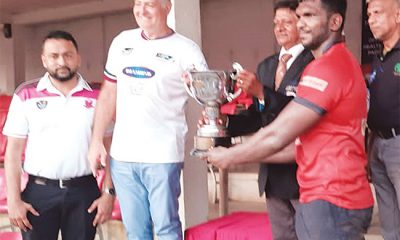
The Clifford Cup is one of Asia’s longest used pieces of silverware given away during presentation ceremonies at sport. The trophy came into being on September 2, 1911 when Lady Clifford presented this trophy to be given away at the game between All Ceylon and United Services and played in Kandy. The cup later served as the trophy given away in a quadrangular tournament. It was later on offer for the winner of the domestic inter-club league rugby tournament. Rugby records show the huge fan following for rugby when teams contested for the Clifford Cup. The cup was then used to be presented to the winner of the inter-club knockout tournament in 1985 and served this purpose for many years.







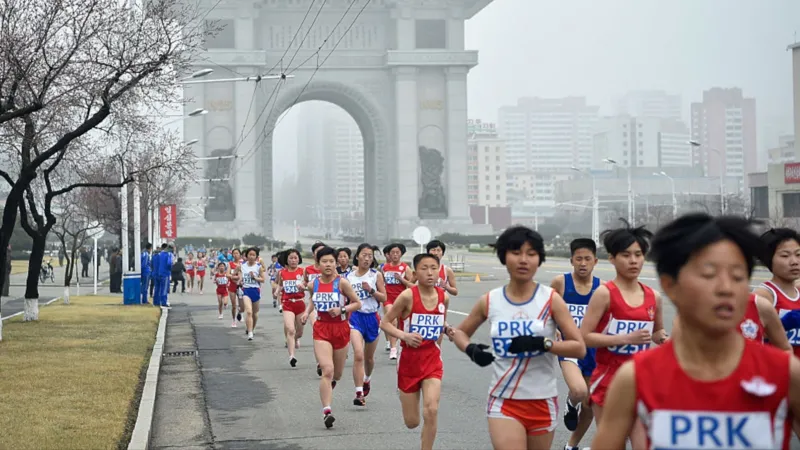
North Korea has cancelled the Pyongyang marathon for unspecified reasons, a tour agency linked to the event has said.
British-owned Koryo Tours, which describes itself as the official partner of the marathon, said on Monday that it had received notice of the cancellation from North Korea’s athletics association.
A message it attributed to the association said the marathon was being cancelled “due to some reasons”.
The annual event was established in 1981 to celebrate the birth of North Korea’s founding leader Kim Il Sung. The 2026 race was set to take place on 5 April.
The message, purportedly from the North Korea athletics association’s general secretary, thanked “all the Elite Marathoners and Amateur Runners of the world who are interested in Pyongyang International Marathon”.
The message gave no further explanation on what the reasons for the cancellation were.
Koryo Tours said it understood the decision was final and had been taken “at a level above the organisers of the event itself”.
It said it would be seeking clarification on the circumstances surrounding the decision.
The tour company added that neither organisers nor event partners were involved in making the decision, and said it recognised “this announcement will be disappointing to many runners who had already registered or were planning to participate”.
Koryo Tours, based in Beijing, China, offers several marathon packages to foreigners, departing from Beijing, Shanghai and Shenyang.
Packages start from €2,190 ($2,529; £1,894) for 2.5 nights in the North Korean capital, Pyongyang, including a marathon place and “highlights” of the capital and tickets were sold out this year, according to the agency’s website.
It said all deposits paid will be returned and runners have the option to retain their deposit for a future event or North Korea tour.
A date for the 2027 marathon has not yet been set.
The event had only returned last year after it was suspended for five consecutive years due to the Covid pandemic.
It is open to both amateur and some professional athletes and offers several race distances – 5km (3.1 miles), 10km (6.2 miles), half marathon (21.1km; 13.1 miles) or full marathon (42.2km; 26.2 miles).
[BBC]

The white ball series between Afghanistan and Sri Lanka, scheduled to be held in the UAE from March 13 to 25, is likely to be postponed indefinitely due to the ongoing military conflict in West Asia.
While neither ACB nor SLC has issued an official statement, ESPNcricinfo has learned that both boards have agreed the series cannot take place in the UAE, keeping the ongoing crisis in mind. While both boards are still discussing alternatives, the bilateral series is unlikely to be shifted elsewhere due to logistical challenges.
The series comprising six white-ball matches was scheduled to start on March 13 starting with the three T20Is. The T20I leg was scheduled in Sharjah – on March 13, 15 and 17 – while the three ODIs were scheduled in Dubai on March 20, 22 and 25.
The series was set to be Afghanistan’s first under Ibrahim Zadran’s leadership, with the opener taking over the reins from Rashid Khan after a group-stage exit in the World Cup.
Last week, six matches of the ICC Men’s Cricket World Cup League 2 in Nepal involving Oman, UAE and the hosts were postponed because of the conflict.
The travel plans of several teams that were in India and Sri Lanka for the men’s T20 World Cup have also been disrupted owing to airspaces being closed or limited in West Asia.
Despite being knocked out over the last week, the contingents from West Indies and South Africa have been stuck in Kolkata, and received clarity only on Sunday, that they will be flying out on Tuesday.
[Cricinfo]
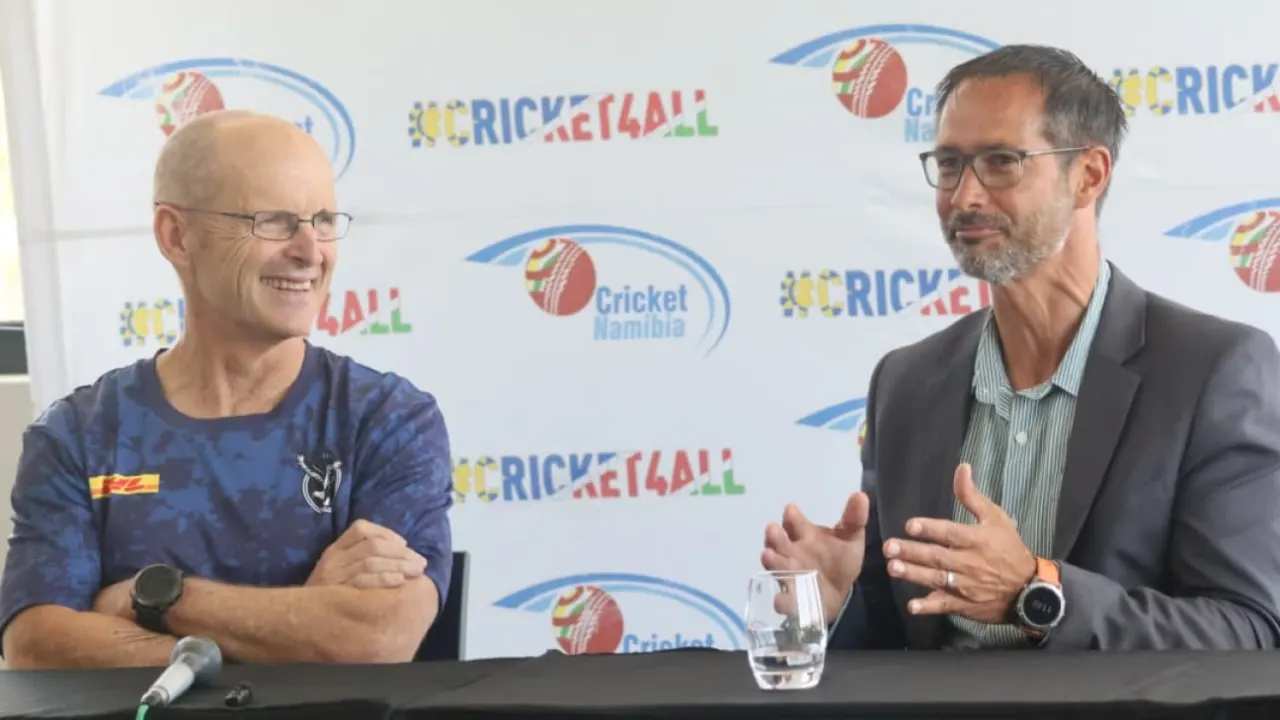
Sri Lanka Cricket (SLC) has officially announced the appointment of Gary Kirsten as the new head coach of the men’s national team. Kirsten, who comes with a hefty coaching pedigree, will take over the reins on April 15 on a two-year contract that runs until April 14 2028.
The former South Africa batter will take over a Sri Lankan side seeking stability and a blueprint for consistency in the modern game. While outgoing head coach Sanath Jayasuriya was undoubtedly a household name, Kirsten is without question the most blockbuster appointment to the position in Sri Lanka’s history.
He famously guided India to their 2011 ICC Cricket World Cup victory. And under his tenure, South Africa reached the top of the Test rankings. Most recently, he served as a consultant for Namibia during the 2026 ICC Men’s T20 World Cup.
As a player, Kirsten was a stalwart for South Africa, amassing over 14,000 international runs and becoming the first from his country to reach 100 Test matches.
Kirsten hopes to join a long line of non-Sri Lankan coaches who have significantly influenced the nation’s cricketing history. This tradition includes Dav Whatmore, who orchestrated the historic 1996 World Cup win; Tom Moody and Trevor Bayliss, who led the team to World Cup finals in 2007 and 2011; and Chris Silverwood, the most recent foreign head coach before Sanath Jayasuriya took over as interim and then full-time coach in late 2024.
The appointment comes at a critical juncture following the team’s limp exit from the 2026 T20 World Cup, and marks a pointed departure from the post-2024 World Cup pivot towards coaches with more local knowledge.
Jayasuriya, who officially resigned as head coach following the tournament’s conclusion, will now lead the High Performance Centre. Sri Lanka enjoyed historic home successes in 2024 under his leadership – including a first ODI series win against India in 27 years – but their recent World Cup campaign ended in the Super Eight after disappointing losses to England and New Zealand.
Sri Lanka’s campaign was marked by competing philosophies, with batters in particular seemingly lacking clarity in their roles. SLC, in a media release, stated that the “appointment of the new head coach is part of Sri Lanka Cricket’s efforts to revamp the structure of the National High Performance Center,” and Kirsten will first and foremost be tasked with establishing a clear path to success.
With the 2027 men’s ODI World Cup set to be held in his native South Africa, alongside Namibia and Zimbabwe, Kirsten’s intimate knowledge of those conditions would have also likely played a role in his hire, but SLC will be hoping that his impact will be longer lasting and help build a winning culture similar to those he helped established in India and South Africa.
[Cricinfo]

Prime Minister on official visit to Manila, Philippines

It is the government’s responsibility to ensure women’s rights are realized in everyday Life, and are not confined merely to Laws – PM

North Korea cancels Pyongyang Marathon for ‘some reasons’

Canadian officials rescue 23 people who floated away on ice sheet

India offered sanctuary to Iranian ship three days before US sank it

Afghanistan-Sri Lanka white-ball series set to be postponed due to West Asia conflict

‘Dates have the highest sugar content to fight Coronavirus’

Sunday Island 27 December – Headlines

#SundayIsland 17th December – Headlines

Sunday Island – 28th March

Sunday Island Headlines – 21 March

Sunday Island – 21st February – Headlines
-

 News4 days ago
University of Wolverhampton confirms Ranil was officially invited
-

 News5 days ago
Legal experts decry move to demolish STC dining hall
-

 News4 days ago
Female lawyer given 12 years RI for preparing forged deeds for Borella land
-

 News3 days ago
Peradeniya Uni issues alert over leopards in its premises
-

 Business5 days ago
Cabinet nod for the removal of Cess tax imposed on imported good
-

 News4 days ago
Library crisis hits Pera university
-

 News3 days ago
Wife raises alarm over Sallay’s detention under PTA
-
 Business6 days ago
War in Middle East sends shockwaves through Sri Lanka’s export sector