
News
CPSL sounds alarm over new anti-terrorism law


Much-debated recently proposed “Protection of the State from Terrorism Bill” is not a tool for security, but a blueprint for authoritarian overreach, Communist Party of Sri Lanka General Secretary Dr. G. Weerasinghe, told The Island yesterday.
Dr. Weerasinghe has issued the following statement: “The government has released the draft “Protection of the State from Terrorism Bill” (PSTB) for public review. We must scrutinise this proposal not merely as policy, but through the essential lenses of constitutional integrity, natural justice, and Sri Lanka’s binding international human rights commitments.
The PSTB poses a grave and direct threat to foundational legal principles. Rather than protecting citizens, it systematically dismantles core freedoms and due process, violating both our Constitution and international law (ICCPR – International Covenant on Civil and Political Rights).
Key Fundamental Rights under threat
= Presumption of Innocence:
Contradicting Article 14 of the ICCPR, the bill inverts this cornerstone of justice by forcing the accused to prove their innocence.
= Equality before the Law:
The bill’s dangerously vague terminology, contrary to Article 12(1) of the Constitution, opens the door to arbitrary and discriminatory enforcement. It creates a special class of “;terrorism suspects” with different procedures and wide executive discretion.
= Freedom from arbitrary detention:
It permits executive-ordered detention for up to 18 months without charge, blatantly violating Constitutional Articles 13(1), (2), (4) and ICCPR Article 9.
= Freedom of thought and religion:
By criminalising ideological expression and punishing beliefs inferred from association, the bill attacks the liberty of conscience guaranteed by Article 10 of the Constitution.
= Freedom of expression:
It unlawfully restricts speech, writing, and publication (Article 14(1)(A)) by creating offences for encouragement” or “glorification” without any requirement to prove intent or imminent threat of violence.
=Freedom from torture:
The bill structurally enables abuse by permitting detention in ungazetted locations, delaying access to lawyers, and easing rules on admitting confessions, thereby directly contravening Article 11 of the Constitution and the Convention Against Torture Act.
= Sovereignty of the People and Separation of powers
Art 3 and 4(c) of the Constitution threatened, executive detention replaces judicial decision making
The Communist Party of Sri Lanka (CPSL) has consistently opposed draconian security legislation, including the Prevention of Terrorism Act (PTA) of 1979, arguing that existing criminal law is sufficient to address acts of terrorism. The PSTB, however, represents a drastic
escalation, containing even more extreme provisions that would strip citizens of their rights.
This bill is not a tool for security, but a blueprint for authoritarian overreach. The CPSL unequivocally condemns the PSTB and calls upon all citizens, political parties, trade unions, civil society organizations, and defenders of democracy to unite and decisively reject this assault on our fundamental freedoms.”

News
Sun directly overhead Galle, Angulugaha, Imaduwa, Telijjawila, Yatiyana and Tangalle about 12.08 noon today (07)


The sun is going to be directly over the latitudes of Sri Lanka from 28th of August to 07th of September due to its apparent southward relative motion.
The nearest places of Sri Lanka over which the sun is overhead today (07) are Galle, Angulugaha, Imaduwa, Telijjawila, Yatiyana and Tangalle about 12.08 noon.
By Norman Palihawadane
The CID recently found that former SLPP Deputy Minister Premalal Jayasekara, better known as ‘Choka Malli’, had left for Thailand when the Supreme Court imposed an overseas travel ban on him last Friday.
The CID discovered that Jayasekara had left Sri Lanka on August 31, while authorities were taking steps to enforce the travel restriction imposed by the Supreme Court. The Department has subsequently informed the Attorney General’s Department of the development.
The Supreme Court last Friday ordered Jayasekara, and two other men, to appear before court on October 21, and imposed a ban on their overseas travel.
The orders were made as the Supreme Court considered an appeal challenging the acquittal of the three men in connection with the 2015 murder of Shantha Dodangoda, also known as D.G. Sunil Perera.
The appeal was filed by Dodangoda’s wife against a decision of the Court of Appeal to acquit and release Jayasekara and the two other accused, who had previously been convicted and sentenced to death by the Ratnapura High Court.
Dodangoda was killed in a shooting in Kahawatta town, in the early hours of January 5, 2015, while a group of people were putting up decorations for an election rally in support of then common Opposition presidential candidate Maithripala Sirisena.
Two others, Karunadasa Weerasinghe and Mohamed Ilfan, were seriously injured in the shooting.
Following the incident, the Ratnapura High Court convicted Jayasekara, former Chairman of the Kahawatta Pradeshiya Sabha Wajira Darshana de Silva, and former Sabaragamuwa Provincial Council member Nilanta Jayakody, sentencing all three to death.
The Court of Appeal subsequently acquitted the three men and ordered their release.
The victim’s wife later challenged the acquittal before the Supreme Court.
The appeal was taken up before a Supreme Court bench, comprising Justice Preethi Padman Surasena and Justices Achala Wengappuli and Gihan Kulatunga.
During the proceedings, Deputy Solicitor General Janaka Bandara requested that the court impose overseas travel restrictions on Jayasekara and the other respondents.
The Supreme Court subsequently ordered all three to appear before the court on October 21 and imposed travel bans on them.
President’s Counsel Nalin Ladduwahetty, President’s Counsel U.R. de Silva and President’s Counsel Anuja Premaratne appeared for the respondents. President’s Counsel Saliya Peiris represented the aggrieved party.
Police sources said that the discovery that Jayasekara had already left for Thailand, on August 31, has raised concerns over the timing and enforcement of the travel ban.
Sources said that the CID had notified the Attorney General’s Department and was taking further action in relation to the development.
By Pradeep Prasanna Samarakoon
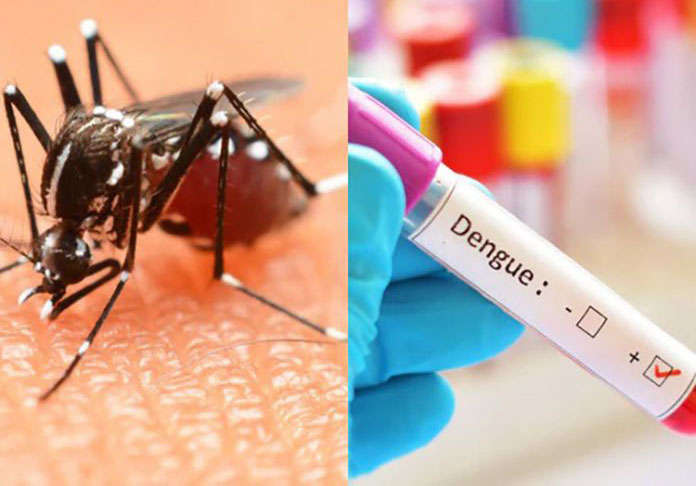
The number of deaths from dengue fever in Sri Lanka has risen to 73 this year, with 96,228 cases reported across the country so far, according to the Dengue Control Unit.
The latest figures indicate that dengue continues to pose a significant public health concern, with 737 new cases recorded during the first four days of September alone.
Dengue infections peaked in July, when 29,964 cases were reported, according to the latest data. June recorded the second-highest monthly total, with 21,533 cases, while 10,155 cases were reported in August.
Earlier in the year, 8,590 cases were recorded in May and 7,866 cases in January.The Western Province remains the worst-affected area, accounting for more than half of all dengue cases reported nationwide. A total of 50,851 cases have been recorded in the province, representing 52.84% of the country’s total.
The Southern Province has recorded 13,950 cases, followed by the Central Province with 8,818 cases and Sabaragamuwa Province with 7,925 cases.

Sun directly overhead Galle, Angulugaha, Imaduwa, Telijjawila, Yatiyana and Tangalle about 12.08 noon today (07)

Showers above 50 mm are likely at some places in the Uva and Eastern provinces.

Harshitha’s composed knock seals Sri Lanka’s semi-final berth

‘Choka Malli’ slips out of country before travel ban

Dengue death toll rises to 73

Ranil accuses govt. of undermining democracy

‘Dates have the highest sugar content to fight Coronavirus’

Sunday Island 27 December – Headlines

#SundayIsland 17th December – Headlines

Sunday Island – 28th March

Sunday Island Headlines – 21 March

Sunday Island – 21st February – Headlines
-

 News4 days ago
Denied of promotion to SC despite vacancies, justice Gurusinghe retires
-

 Latest News5 days ago
Grade 5 scholarship exam results released
-

 News4 days ago
22A: SC urged to suspend hearing, appoint full bench
-

 Midweek Review5 days ago
The local and global dynamics of Sri Lanka’s 22nd Amendment
-

 News4 days ago
Govt. seeks NATO assistance
-

 News2 days ago
Namal remanded until Sept. 18 over Airbus deal investigation
-

 News5 days ago
40 professional organisations and TU oppose proposed 22A
-

 News5 days ago
Ai-CHA expands Lankan footprint with new Negombo outlet