
Features
Covid-19 vaccines for very young children


Dr B.J.C.Perera
MBBS(Cey), DCH(Cey), DCH(Eng), MD(Paed), MRCP(UK), FRCP(Edin), FRCP(Lon), FRCPCH(UK), FSLCPaed, FCCP, Hony FRCPCH(UK), Hony. FCGP(SL)
Specialist Consultant Paediatrician and Honorary Senior Fellow, Postgraduate Institute of Medicine, University of Colombo, Sri Lanka.
In any immunisation programme against an infective disease, the aim is to vaccinate as many of the susceptible population as possible. That is a fundamental principle in epidemiology. There is absolutely no question in the minds of the experts that in the case of the raging COVID-19 pandemic that is causing havoc right round the globe now, there is universal susceptibility of all humans of all nations, all populations and all social groups of the people of planet earth to this miserable blight. There are no worthwhile differences in the ethnic groups, age categories and socio-economic assemblies in their actual propensity for contracting the disease. The virus will get in and infect anyone anywhere. There are only differences in the severity of the illness and the tendency to die from the disease in certain well-understood categories or age groups of people.
It is a well-recognised fact that the coronavirus disease may be quite asymptomatic in a vast proportion of affected youngsters of all age groups, ranging from very young pre-schoolers to adolescents and even young adults. In another significant though rather small proportion of children and young people, the symptoms are quite mild. Only in a very small minority, perhaps as low as 1 to 2 percent of affected children, is the disease is of such severity as to need intensive treatment. In the United States of America, a proportion varying from 0.01% to 1.9% of all affected children needed hospitalisation. Their death rates in children in different states has varied between zero to about 0.25% of all deaths in all age groups from COVID-19. However, this has varied somewhat in different countries due to individual susceptibilities, coexistent other diseases and of course the ‘variants of concern’ such as the Delta strain, as described by the World Health Organisation (WHO).
With all this in mind, one might wonder as to why experts are advocating vaccination of children against COVID-19. After all, it does not seem to be as much of a major problem in children as it is in adults and the elderly. In addition, up to now, there have been only scarce amounts of data regarding the safety and effectiveness of the vaccines in children and it was difficult to arrive at a definitive conclusions regarding the requirements to vaccinate children and young people.
There is no question as to the need to vaccinate susceptible children, such as those who have co-morbid diseases, as they are more likely to get severe complications and die from the disease. Yet for all that, what about the need to vaccinate the other healthy children? In answer to that, there are a few other observations that need to be addressed. Children are more susceptible to catch the disease by virtue of the surroundings that they have to be kept in the classrooms of schools, the risks of catching the disease during travel to school in crowded public or private transport vehicles as well as the inevitable congregations of significant numbers of them in schools and playing fields. Those children who contract the virus can spread the disease even if they are asymptomatic. One must also remember that children and young people form a significant proportion of the population of any country and to arrive at the 70% coverage of the population as the Gold Standard for herd immunity, it is necessary to think of vaccinating them as well.
We, in this emerald isle, have now vaccinated children with comorbidities which make them that much more vulnerable and susceptible to die. Currently children over 15 years and up to 19 years are being vaccinated with the Pfizer vaccine with the trade name “Comirnaty”. As this vaccine is licensed for Emergency Authorisation Usage in children over the age of 12 years, it is most likely that Sri Lankan children from 12 to 15 years may also be vaccinated soon. That decision will be made after careful consideration of several medical details. In contrast to the Pfizer Comirnaty vaccine, the Oxford AstraZenica vaccine is currently licensed to be used only in persons above the age of 18 years. Results of some on-going research trials in the usage of that vaccine in those under 18 years of age are awaited.
The burning question in medical circles at present is what about children under the age of 12 years. Should they be vaccinated? A few weeks ago, closer to a month or so, Pfizer Inc., submitted the data of their clinical trials on the efficacy and safety of their Pfizer Comirnaty vaccine directly to the United States Food and Drug Authority (FDA) for licensing its usage for children over five years of age. They submitted the data before they were peer-reviewed and published in any research journal. That modus operandi came under some flak as the company has a previous history of concerns being expressed in medical circles as a company that uses ‘aggressive pharmaceutical marketing’ and was also alleged to have been involved in several other ethical misdemeanours (https://en.wikipedia.org/wiki/Pfizer).
However, in this instance, Pfizer appears to stand vindicated because the results of the study have now been published in the reputed New England Journal of Medicine on 09th November 2021. It is an on-going research study in children over six months of age, going up to 11 years of age. The paper presents very convincing data in children over five years of age going up to 11 years. The company has not provided analytical data for children under five years of age. The entire project consists of an Open-Label Phase 1 dose-finding study, together with on-going Phase 2 and 3 randomised placebo-controlled studies.
In the Phase 2–3 trial, participants were randomly assigned in a 2:1 ratio to receive two doses 21 days apart of either the Pfizer BNT162b2 Comirnaty vaccine at the dose level of 10-μg, identified during the open-label Phase 1 study, or placebo, respectively. Immune responses 1 month after the second dose of the vaccine were immunologically bridged and compared to those in 16-to-25-year-olds from the pivotal trial of two 30-μg doses of BNT162b2. Vaccine efficacy against Covid-19 at seven days or more after the second dose was assessed. They also looked at the adverse effects profile and the researchers found no significant incidence of any serious side-effects of the vaccine, including even the rare myocarditis and pericarditis.
Based on the results, the researchers concluded that “A Covid-19 vaccination regimen consisting of two 10-μg doses of BNT162b2 administered 21 days apart was found to be safe, immunogenic, and efficacious in children five to 11 years of age”. It must be noted that the dose used is one third of the 30-μg dose used for adults and the elderly. In addition, one may speculate that Pfizer had decided to present the data directly to the FDA before the paper was published in a journal because of the unavoidable delay in publishing the accepted articles in scientific medical journals. One could now well understand that as a reason for the pathway that Pfizer Inc., had elected to take in the very recent past.
Taking into account all this information, the local experts in the medical field will have to make appropriate decisions regarding COVID-19 vaccination in children under the age of 15 years. It will necessarily involve serious consideration being given to many complex aspects of the entire scenario. It would indeed be a daunting task for the decision-makers, very specially the Sri Lanka College of Paediatricians, which is the premier academic organisation principally involved in child healthcare. However, it must be unequivocally stated that a prerequisite for such decisions would be the mandatory licensing of any vaccine against COVID-19 by internationally recognised licensing authorities for the under 12-year age group.


Representatives of almost all the main opposition parties were in attendance at the recent book launch by Pivithuru Hela Urumaya leader Udaya Gammanpila. The book written by the PHU leader was his analysis of the Easter bombing of April 2019 that led to the mass killing of 279 persons, caused injuries to more than 500 others and caused panic and shock in the entire country. The Easter bombing was inexplicable for a number of reasons. First, it was perpetrated by suicide bombers who were Sri Lankan Muslims, a community not known for this practice. They targeted Christian churches in particular, which led to the largest number of casualties. The bombing of Sri Lankan Christian churches by Sri Lankan Muslims was also inexplicable in a country that had no history of any serious violence between the two religions.
There were two further inexplicable features of the bombing. The six suicide bombings took place almost simultaneously in different parts of the country. The logistical complexity of this operation exceeded any previously seen in Sri Lanka. Even during the three decade long civil war that pitted the Sri Lankan military against the LTTE, which had earned international notoriety for suicide attacks, Sri Lanka had rarely witnessed such a synchronised operation. The country’s former Attorney General, Dappula de Livera, who investigated the bombing at the time it took place, later stated, upon retirement, that there was a “grand conspiracy” behind the bombings. That phrase has remained central to public debate because it suggested that the visible perpetrators may not have been the only planners behind the attack.
The other inexplicable factor was that intelligence services based in India repeatedly warned their Sri Lankan counterparts that the bombings would take place and even gave specific targets. Later investigations confirmed that warnings were transmitted days before the attacks and repeated again shortly before the explosions, yet they were not acted upon. It was these several inexplicable factors that gave rise to the surmise of a mastermind behind the students and religious fanatics led by the extremist preacher Zahran Hashim from the east of the country, who also blew himself up in the attacks. Even at the time of the bombing there was doubt that such a complex and synchronised operation could have been planned and executed by the motley band who comprised the suicide bombers.
Determined Attempt
The book by PHU leader Gammanpila is a determined attempt to make explicable the inexplicable by marshalling logic and evidence that this complex and synchronised operation was planned and executed by Zahran himself. This is a possible line of argumentation in a democratic society. Competing interpretations of public tragedies are part of political discourse. However, the timing of the intervention makes it politically more significant. The launch of the PHU leader’s book comes at a critical time when the protracted investigation into the Easter bombing appears to be moving forward under the present government.
The performance of the three previous governments at investigating the bombing was desultory at best. The Supreme Court held former President Maithripala Sirisena and several senior officials responsible for failing to act on prior intelligence and ordered compensation to victims. This judicial finding gave legal recognition to what victims had long maintained, that there was a grave dereliction of duty at the highest levels of the state. In recent weeks the investigation has taken a dramatic turn with the arrest and court production of former State Intelligence Service chief Suresh Sallay on allegations linked directly to the attacks. Whether these allegations are ultimately proven or disproven, they indicate that the present phase of the investigation is moving beyond negligence into possible complicity.
This is why the present moment requires political sobriety. There is a danger that the line of political division regarding the investigation into the Easter bombing can take on an ethnic complexion. The insistence that the suicide bombers alone were the planners and executors of the dastardly crime makes the focus invariably one of Muslim extremism, as the suicide bombers were all Muslims. This may unintentionally narrow public attention away from the unanswered questions regarding intelligence failures, possible political manipulation, and the allegations of a broader conspiracy that remain under active investigation. The minority political parties representing ethnic and religious minorities appear to have realised this danger. Their absence from the book launch was politically significant. It suggests an unwillingness to be drawn into a narrative that could once again stigmatise an entire community for the crimes of a handful of extremists and their possible handlers.
Another Tragedy
It would be another tragedy comparable in political consequence to the havoc wreaked by the Easter bombing if moderate mainstream political parties, such as the SJB to which the Leader of the Opposition belongs, were to subscribe to positions merely to score political points against the present government. They need to guard against the promotion of anti-minority sentiment and the fuelling of majority prejudice against ethnic and religious minorities. Indeed, opposition leader Sajith Premadasa in his Easter message said that justice for the victims of the 2019 Sri Lanka Easter Sunday attacks remains a fundamental responsibility of the state and noted that seven years on, both past and present governments have failed to deliver accountability. He added that building a society grounded in trust and peace, uniting all ethnicities, religions and communities, is vital to ensure such tragedies do not occur again.
Sri Lanka’s post war history offers too many examples of how unresolved security crises become vehicles for majoritarian mobilisation. The Easter tragedy itself was followed by waves of anti-Muslim suspicion and violence in some parts of the country. Responsible political leadership should seek to prevent any return to that atmosphere. There are many other legitimate issues on which the moderate and mainstream opposition parties can take the government to task. These include the lack of decisive action against government members accused of corruption, the passing of the entire burden of rising fuel prices on consumers instead of the government sharing the burden, and the failure to hold provincial council elections within the promised timeframe. These are issues that touch the daily lives of citizens and the health of democratic governance. They offer the opposition ample ground on which to build credibility as a government in waiting.
The search for truth and justice over the Easter bombing needs to continue until all those responsible are identified, whether they were direct perpetrators, negligent officials, or political actors who may have exploited the tragedy. This is what the victim families want and the country needs. But this search must not be turned into a partisan and religiously divisive matter such as by claiming that there are more potential suicide bombers lurking in the country who had been followers of Zaharan. If it is, Sri Lanka risks replacing one national tragedy with another. coming together to discredit the ongoing investigations into the Easter bombing of 2019 is an unacceptable use of ethno-religious nationalism to politically challenge the government. The opposition needs to find legitimate issues on which to challenge the government if they are to gain the respect and support of the general public and not their opprobrium.
by Jehan Perera
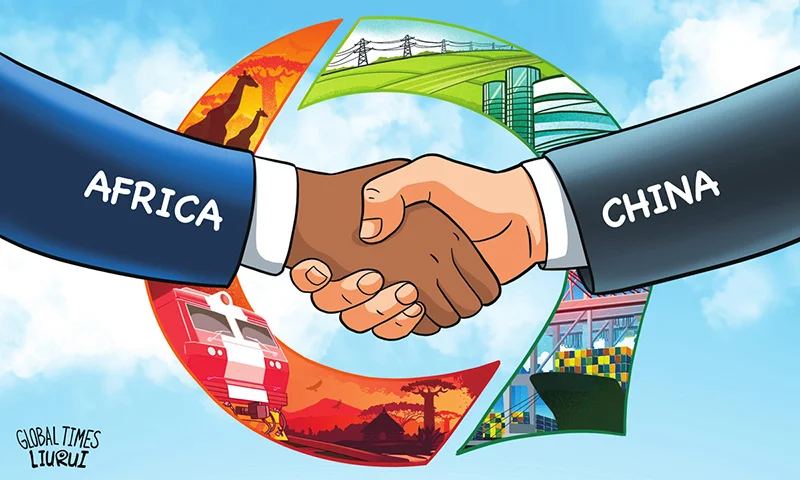
* The new duty-free regime for Africa, announced by Chinese President Xi Jinping in February, is the most generous unilateral nonreciprocal trade concession offered by any country to developing countries since the beginning of the modern rule based international trading system.
* Yet, it is a clear violation of the cornerstone of the multilateral trade law, the Most-Favoured-Nation (MFN) principle.
* Hence, its implications on developing countries, without duty-free access to China, will be extremely negative. Sri Lanka is one of the few developing countries without duty-free access to China.
On 14 February, 2026, Chinese President Xi Jinping announced that China will grant zero-tariff treatment to 53 African nations, effective 01 May, 2026. Under this new unilateral policy initiative, China would eliminate all import tariffs on all goods imported from all the countries in Africa, except Eswatini. China already enforces a zero-tariff policy for 33 Least Developed Countries (LDCs) in Africa. Now this policy would be extended to non LDCs as well. This policy initiative clearly aims at reducing the continuously expanding trade deficit between China and Africa. In 2024, China’s trade surplus against Africa was recorded at US $ 61 billion.
This trade initiative, a precious gift amidst ongoing global trade tensions, is the most generous unilateral nonreciprocal trade concession given by any country to developing countries, since the beginning of the modern rule based international trading system.
Though this landmark announcement has far-reaching implications on global trade, as much as President Trump’s “Liberation Day” tariffs, it was almost overlooked by the global media.
Implications for Global Trade
This Chinese policy initiative, though very generous, is a clear violation of the Most-Favoured-Nation (MFN) principle and the “Enabling Clause” of the International Trade Law. The MFN principle is the cornerstone of the multilateral trading system under the World Trade Organisation (WTO) and is enshrined in Article I of the General Agreement on Tariffs and Trade (GATT). It mandates that any trade advantage, privilege, or immunity granted by a WTO member to any country must be extended immediately and unconditionally to all other WTO members. Though, the GATT “Enabling Clause” allows developed nations to offer non-reciprocal preferential treatment (lower tariffs) to developing countries without extending them to all WTO members, this has to be done in a non-discriminatory manner. By extending tariff concessions only to developing countries in Africa, China has also breached this requirement.
This deliberate violation of the MFN principle by China occurs less than 12 months after the announcement of “Liberation Day” tariffs by President Trump, which breached Article I (MFN) and Article II (bound rates) of the GATT. However, it is important to underline that the objectives of the actions by the two Presidents are poles apart; the US objective was to limit imports from all its trading partners, and China’s objective is to increase imports from African countries.
Though the importance of the MFN principle of the WTO law had eroded over the years due to the proliferation of preferential trade agreements and unilateral preferential arrangements, the WTO members almost always obtained WTO waivers, whenever they breached the MFN principle. Now the leaders of the main trading powers have decided to violate the core principles of the multilateral trading system so brazenly, the impact of their decisions on the international trading system will be irrevocable.
Implications for Sri Lanka
China’s unilateral decision to provide zero-tariff treatment to African countries will have a strong adverse impact on Sri Lanka. Currently, all Asian countries, other than India and Sri Lanka, have duty-free access, for most of their exports, into the Chinese market through bilateral or regional trade agreements, or the LDC preferences. Though Sri Lanka, India and China are members of the Asia Pacific Trade Agreement (APTA), preferential margins extended by China under APTA to India and Sri Lanka are limited.
The value of China’s imports from Sri Lanka had declined from US$ 650 million in 2021 to US$ 433 million by 2025. However, China’s exports to Sri Lanka increased significantly during the period, from US$ 5,252 million to US$ 5,753 by 2025. This has resulted in a trade deficit of US$ 5,320 million. Sri Lanka’s exports to China may decline further from next month when African nations with duty-free access start to expand their market share.
Let me illustrate the challenges Sri Lanka will face in the Chinese market with one example. Tea (HS0902) is Sri Lanka’s third largest export to China, after garments and gems. Sri Lanka is the largest exporter of tea to China, followed by India, Kenya and Viet Nam. During the last five years the value of China’s imports of tea from Sri Lanka had declined significantly, from US$76 million in 2021 to US$ 57 million by 2025. Meanwhile, imports from our main competitors had increased substantially. Most importantly, imports from Kenya increased from US$ 7.9 million in 2021 to US$ 15 million in 2025. For tea, the existing tariff in China for Sri Lanka is 7.5% and for Kenya is 15%. From next month the tariff for Kenya will be reduced to 0%. What will be its impact on Sri Lanka exports? That was perhaps explained by a former Ambassador to Africa, when he urged Sri Lankan exporters to “leverage duty free access from Kenya” to expand their exports to China!
(The writer is a retired public servant and a former Chairman of WTO Committee on Trade and Development. He can be reached at senadhiragomi@gmail.com)
by Gomi Senadhira

 Jeevarani Kurukulasuriya was a famous actress and her name still rings a bell with many. And now in the spotlight is her daughter Senani Wijesena – not as an actress but as a singer – and she has been singing, since the age of five!
The plus factor is that Senani, now based in Australia, is also a songwriter, plays keyboards and piano, dancer, and has filmed and edited some of her own music videos.
Says Senani: “I write the lyrics, melody and music and work with professional musicians who do the needful on my creations.”
Her latest album, ‘Music of the Mirror’, is made up of 16 songs, and her first Sinhala song, called ‘Nidahase’, is scheduled for release this month (April) in Colombo, along with a music video.
‘Nidahase’,
says Senani, is a song about Freedom … of life, movement, love and spirit. Freedom to be your authentic self, express yourself freely and Freedom from any restrictions.
In fact, ‘Nidahase’ is the Sinhala translated version of her English song ‘Free’ which made Senani a celebrity as the song was nominated for a Hollywood Music in Media Award in the RnB /Soul category and reached the Top 20 on the UK Music weekly dance charts, as well as No. 1 on the Yes Home grown Top 15, on Yes FM, for six weeks straight.
Senani went on to say that ‘Nidahase’ has been remixed to include a Sri Lankan touch, using Kandyan drums and the Thammattama drum, with extra music production by local music producer Dilshan L. Silva, and Australia-based Emmy Award winning Producer and Engineer Sean Carey … with Senani also in the scene.
The song was written (lyrics and melody) and produced by Senani and it features Australian musicians, while the music video was produced by Sri Lanka’s Sandesh Bandara and filmed in Sri Lanka.

First Sinhala song scheduled for release this month … in Colombo
Senani’s music is mostly Soul, Funk and RNB – also Fusion, using ethnic sounds such as the tabla, sitar, and sarod – as well as Jazz influenced.
“I also have Alternative Music songs with a rock edge, such as ‘New Day’, and upcoming releases ‘Fly High’ and ‘Whisper’“, says Senani, adding that she has also recorded in other languages, such as Hindi and Spanish.
“As much of my fan base are Sri Lankans, who have asked me to release a song in the Sinhala language, I decided to create and release ‘Nidahase’ and I plan to release other original Sinhala songs in the future.
Senani has a band in Australia and has appeared at festivals in Australia, on radio and TV in Australia, and Sri Lanka.
She trained as a vocalist, through Sydney-based Singing Schools, as well as private tuition, and she has 5th Grade piano music qualifications.
And this makes interesting reading:
“I graduated from the University of Newcastle in Australia with a Bachelor of Medicine and I work part time as a doctor (GP) and an Integrative Medicine practitioner, with a focus on nutrition, and spend the rest of the time dedicated to my music career.”
Senani hails from an illustrious family. In addition to her mum, Jeevarani Kurukulasuriya, who made over 40 films, including starring in the first colour movie ‘Ranmuthu Duwa’, her dad is Dr Lanka Wijesena (retired GP) and she has two sisters – all musical; one is a doctor, while the other is a dietitian/ psychotherapist.

Cabinet approves relief meaures to persons affected due to the War situation in the Middle East

Amendments to the Finance Act No. 35 of 2018 to be Gazetted

Value Added Tax (Amendment) Bill to be Gazetted

H.M.J.M.Herath appointed Commissioner General of Registration of Persons

Water Resources Board Act, No. 29 of 1964, to be amended

Securing public sector employment opportunities for Athletes demonstrating National-Level sporting excellence

‘Dates have the highest sugar content to fight Coronavirus’

Sunday Island 27 December – Headlines

#SundayIsland 17th December – Headlines

Sunday Island – 28th March

Sunday Island Headlines – 21 March

Sunday Island – 21st February – Headlines
-

 Features3 days ago
Ranjith Siyambalapitiya turns custodian of a rare living collection
-

 News6 days ago
2025 GCE AL: 62% qualify for Uni entrance; results of 111 suspended
-

 News3 days ago
Global ‘Walk for Peace’ to be held in Lanka
-

 Business7 days ago
Hour of reckoning comes for SL’s power sector
-

 Editorial6 days ago
Search for Easter Sunday terror mastermind
-
 Opinion5 days ago
Hidden truth of Sri Lanka’s debt story: The untold narrative behind the report
-
Editorial7 days ago
Ideological confusion and identity crisis
-

 Opinion6 days ago
Is there hope for Palestine?