
Business
Confidence holds for now, but medium-term warning signals emerge

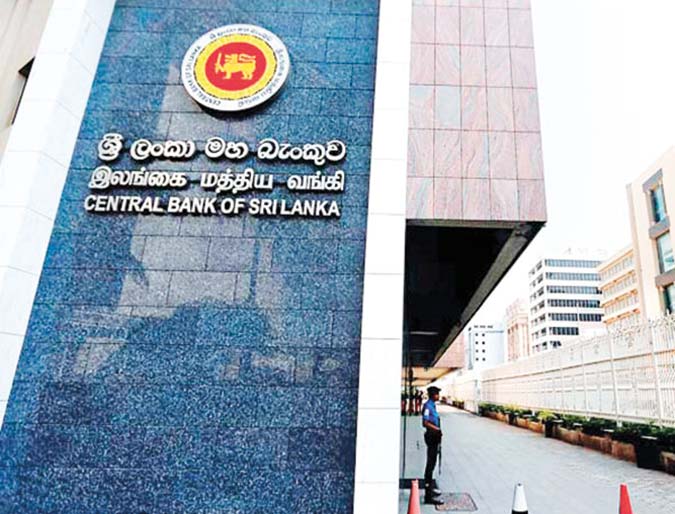
Inside the Central Bank’s Systemic Risk Survey
Sri Lanka’s financial sector enters the first half of 2026 with a cautiously steady footing, but undercurrents of concern over general domestic macroeconomic risks are growing more pronounced, according to the latest Systemic Risk Survey conducted by the Central Bank of Sri Lanka (CBSL).
The H1 2026 survey, carried out between December 19, 2025 and January 16, 2026 among 147 financial sector institutions, reveals a nuanced risk landscape: short-term confidence in the financial system remains positive, yet medium-term confidence has weakened, while the perceived probability of a high-impact negative event has edged up in both time horizons .
The CBSL has reclassified the previous broad category of ‘domestic macroeconomic risks’ into two distinct segments beginning H2 2025:
Fiscal and sovereign-related risks
General domestic macroeconomic risks
This refinement underscores the Central Bank’s intent to differentiate between sovereign balance sheet pressures and broader macroeconomic vulnerabilities such as growth slowdowns, inflation dynamics, labour market conditions and structural imbalances.
Survey responses for H1 2026 show that general domestic macroeconomic risks remain among the key concerns flagged by market participants. While no single risk category emerged as overwhelmingly dominant, perceptions were widely dispersed across several categories, indicating a multi-dimensional risk environment rather than a single flashpoint .
For businesses, this dispersion is telling. It suggests that the financial system is not currently gripped by a singular systemic threat but is instead facing a matrix of interlinked pressures – domestic macro fragilities, fiscal constraints, global uncertainties and institutional risks.
One of the more cautionary signals from the survey is the uptick in the perceived probability of a ‘high impact negative event’ in both the short term (next one year) and the medium term (next three years) .
Translated, market participants see a slightly elevated likelihood of a significant adverse shock.
In the Sri Lankan context, such a shock could stem from domestic macroeconomic strains, renewed inflationary pressures, currency volatility, growth disappointments, or fiscal slippages or from external spillovers amplified through trade, capital flows or geopolitical tensions.
Encouragingly, perceptions of overall confidence in the financial system remain positive in the short term. However, medium-term confidence has moderated .
The CBSL notes that this softening may reflect uncertainties prevailing during the survey period, including natural hazards and geopolitical tensions [such as U.S. and Israel attacking Iran] . For financial institutions and corporates alike, this indicates that while immediate systemic stability is not in question, risk buffers and contingency planning will be crucial over the next three years.
The Systemic Risk Survey, introduced in 2017 by the CBSL’s Macroprudential Surveillance Department, canvasses risk officers across licensed banks, finance companies, insurance firms, unit trust managers, stockbrokers, rating agencies and financial infrastructure providers .
For H1 2026, respondents assessed risks across seven major categories:
Global macroeconomic risks
Fiscal and sovereign-related risks
General domestic macroeconomic risks
Risks related to financial infrastructure
Financial market risks
Risks related to financial institutions
General risks
The broad spread of concerns across these categories suggests that the financial system is in a phase of recalibration rather than acute stress. However, the prominence of general domestic macroeconomic risks reinforces a key message for policymakers: structural reform momentum, fiscal discipline and macro stability remain central to sustaining financial sector resilience.
For corporate leaders and investors, the survey’s findings carry three strategic implications:
Growth stability, inflation management and policy consistency will heavily influence risk perceptions going forward.
Medium-term planning must factor in uncertainty. Even if near-term conditions appear stable, capital allocation decisions should account for potential volatility over a three-year horizon.
Risk is systemic, not isolated. The absence of a single dominant risk category implies interconnected vulnerabilities rather than a contained sectoral issue.
In essence, Sri Lanka’s financial system is not signalling alarm – but neither is it complacent.
For policymakers, the message is equally clear: maintaining macroeconomic credibility and strengthening buffers will be decisive in keeping confidence anchored – not just for the next year, but for the years beyond, the findings of the survey signalled.
-SN

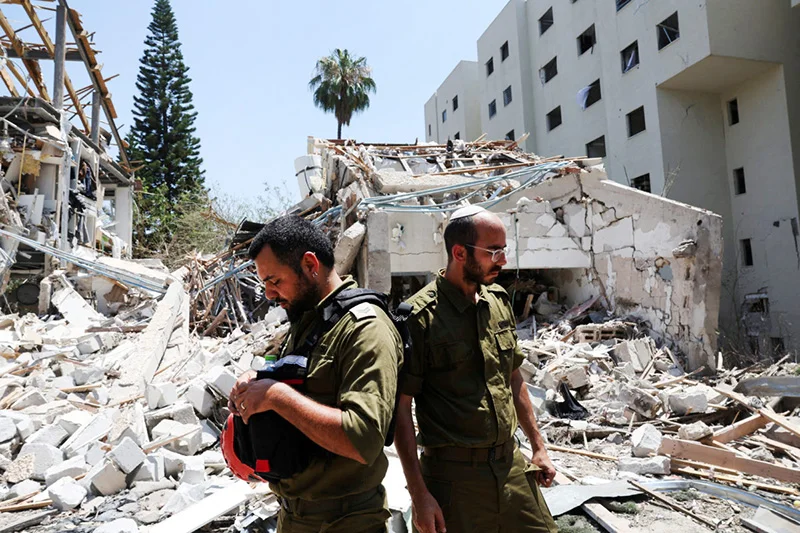
The U.S. and Israeli strikes on Iran have reignited geopolitical tensions in the Middle East, stoking fears of a broader conflict that could disrupt critical energy supply routes – particularly the Strait of Hormuz, through which roughly one-fifth of the world’s oil supply flows. Brent crude has already edged higher, and global oil markets warn prices could climb toward, or even exceed, US$80–100 a barrel if hostilities escalate.
Against this backdrop, an independent economic analyst told The Island that for Sri Lanka – a small, fuel-importing economy with limited domestic energy resources – the implications could be significant.
“Sri Lanka imports over 90% of its petroleum requirements, and any sustained rise in global crude prices would expand the annual import bill, placing renewed pressure on already tight foreign exchange reserves,” he said.
Even moderate spikes in oil prices, he noted, tend to filter quickly through the domestic economy. “Higher fuel costs translate into increased transport and production expenses, which feed into inflation and erode household purchasing power. Freight charges for essential goods – from food items to industrial inputs – would also rise.”
“The Middle East remains a key source of remittances and export demand,” the analyst explained. “A large share of Sri Lankan migrant workers are employed in Gulf economies, while regional markets absorb tea and other exports. Heightened instability could weaken remittance inflows and soften demand, further straining the balance of payments.”
When asked whether the Central Bank of Sri Lanka (CBSL) might be compelled to shift policy in response, the analyst said the monetary authority faces a delicate balancing act.
“Rising import inflation stemming from higher global energy prices could push the Central Bank to maintain – or even tighten – its monetary policy stance in order to safeguard price stability and support the rupee. A firmer stance may be deemed necessary to anchor inflation expectations and preserve market confidence. The Central Bank is therefore likely to monitor inflation data closely in the coming weeks to assess whether energy-driven price pressures prove temporary or more entrenched,” he said.
Meanwhile, Ceylon Petroleum Corporation (CPC) Chairman S. Rajakaruna said that Sri Lanka’s fuel imports – sourced primarily from Singapore and India – reduce immediate exposure to supply disruptions directly linked to Middle Eastern routes. He also sought to allay public concerns, noting that the country currently maintains sufficient fuel stocks for approximately one month and that there need not be any queueing up by the public to hoard supplies.
However, the analyst cautioned that while physical supply may remain stable, global price pass-through effects are an unavoidable risk.
Meanwhile, Opposition politician Wimal Weerawansa said that official assurances of “one month’s stock” tend to unsettle the public, arguing that such statements evoke memories of past shortages and public distress.
By Sanath Nanayakkare
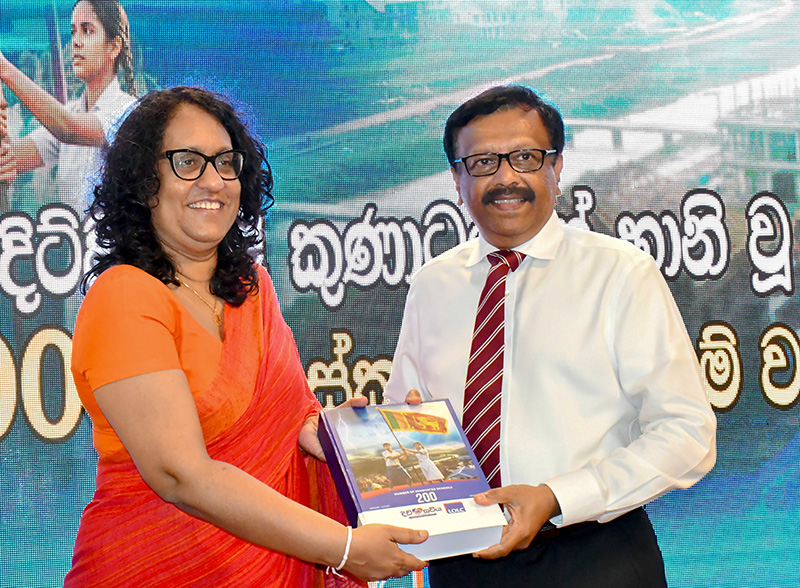
The Ministry of Education officially recognised LOLC Holdings PLC for its flagship humanitarian initiative, Divi Saviya, at a special ceremony held on 27th February 2026 in Battaramulla. The event marked the second time the Ministry has acknowledged the programme’s contribution to the nation’s education sector.
Group Managing Director/CEO Kapila Jayawardena presented a project update to Prime Minister and Education Minister Dr. Harini Amarasuriya, highlighting the rapid restoration of 200 schools under Phase 02 of ‘Obai, Mamai, Ape Ratai’. The schools were repaired and handed over within just 45 days, enabling students displaced by Cyclone Ditwah to safely resume learning.
Phase 02 follows a needs assessment that identified 200 damaged schools and 4,000 displaced families. Implemented with Divisional Secretariats and Disaster Management Centres, the Rs. 500 million programme has delivered Family Super Packs and school renovations across six districts.
Kapila Jayawardena stated, “It was a privilege to share these outcomes with the Prime Minister. This recognition reflects how private sector collaboration can complement government efforts during national challenges.” Plans are underway to fully rebuild select schools destroyed by the cyclone.

Nestlé Professional, the B2B arm of Nestlé Lanka, signed a Memorandum of Understanding (MoU) with the Chefs Guild of Lanka and the Sri Lanka Hospitality Graduates Association to collaborate in organizing the Nestlé Golden Chef’s Hat and Nestle Golden Chef’s Hat Junior Competition 2026. This islandwide culinary competition aims to identify, nurture, and develop emerging culinary talent within Sri Lanka’s hospitality industry, reinforcing Nestlé Professional’s commitment to supporting the growth of the hospitality sector and the next generation of chefs.
The Chefs Guild of Lanka will support the Professional category of the Nestlé Golden Chef’s Hat Competition 2026, facilitating eight regional competitions across the island. These regional rounds will provide a competitive platform for professional chefs to showcase their culinary expertise while helping them to develop their culinary skills further.
In parallel, Nestlé Professional Sri Lanka, in collaboration with the Sri Lanka Hospitality Graduates Association and Chefs Guild of Lanka, will organize the Junior Nestlé Golden Chef’s Hat Competition 2026, aimed at nurturing students within Sri Lanka’s hospitality sector. The regional rounds of the junior competition will be conducted across prominent hotel schools island‑wide, creating a structured platform to identify, mentor, and inspire the young students who aspire of becoming the top chefs in the country and world-wide.
Bernie Stefan, Chairman and Managing Director of Nestlé Lanka commented, “For 120 years, Nestlé has been enriching Sri Lankan lives by unlocking the power of food and beverages to enhance quality of life. This commitment has also been demonstrated in our endeavour to strengthen Sri Lanka’s foodservice ecosystem. The Nestlé Golden Chef’s Hat Competition 2026 and Junior Competition is a platform that brings together industry expertise, education, and opportunity – empowering both professional chefs and hospitality students to reach their full potential.

War photographer Paul Conroy dies as tributes paid

Allies of US in the Gulf bear brunt of Iran attacks

Dry weather will prevail in most parts of the island

Israel resumes attacks as Iran vows to avenge supreme leader’s death

CPC has enough fuel stocks

Lanka, Pakistan strengthen ties at 13th JEC

‘Dates have the highest sugar content to fight Coronavirus’

Sunday Island 27 December – Headlines

#SundayIsland 17th December – Headlines

Sunday Island – 28th March

Sunday Island Headlines – 21 March

Sunday Island – 21st February – Headlines
-

 News7 days ago
Prime Minister Attends the 40th Anniversary of the Sri Lanka Nippon Educational and Cultural Centre
-

 Opinion3 days ago
Jamming and re-setting the world: What is the role of Donald Trump?
-

 Sports7 days ago
Dottin out obstructing the field as Sri Lanka clinch series
-

 Features3 days ago
An innocent bystander or a passive onlooker?
-
 Features5 days ago
Building on Sand: The Indian market trap
-
 Opinion5 days ago
Future must be won
-
 Features4 days ago
Ratmalana Airport: The Truth, The Whole Truth, And Nothing But The Truth
-
 Business4 days ago
IRCSL transforms Sri Lanka’s insurance industry with first-ever Centralized Insurance Data Repository