
Latest News
Concerns for India despite ten wicket win over Nepal


Rex Clementine at Pallekele
Despite a comfortable ten wicket win over qualifiers Nepal in the Asia Cup at Pallekele on Monday, concerns remain for India ahead of this year’s World Cup which they will be hosting.
After a batting collapse in their first game against Pakistan, India’s opening game in the tournament was washed out here on Saturday.
If batting had caused them some concerns in the epic clash against the arch-rivals, Nepal exposed India’s fielding woes while their fast bowlers were not able to quite knock off the opposition as expected.
More than bowling, fielding raised huge concerns as three catches were put down in the first five overs allowing the Nepalese openers to add 65 runs for the first wicket.
There were too many misfields as well and overthrows too a headache for a team that is billed as one of the tournament’s favourites, playing in their own backyard.
Kushal Bhurtel played some superb shots racing to 38 off 25 balls with three fours and two sixes. Aasif Sheikh the other opener top scored with 58 runs off 97 balls.
India pulled back things reducing Nepal to 144 for six, but Sompal Kami at number eight with 48 runs off 56 balls ensured his side ended up with 230.
Ravindra Jadeja was the pick of the bowlers finishing with three for 40. Mohammed Siraj also picked up three wickets but was expensive going for 61 runs in 9.1 overs.
After a lengthy rain interruption, India were set a revised target of 145 in 23 overs.
They had no problems chasing down the target with Rohit and Shubman Gill knocking off the runs with 17 balls to spare.
Rohit reached his half-century in 39 balls and was unbeaten on 74 having hit six fours and five sixes.
Gill was on 67 not out. He had faced 67 deliveries and hit seven fours and one six.
India and Pakistan qualified for the Super Four stage from their group while the outcome of the Sri Lanka – Afghanistan game will decide who is going through from the other group. Bangladesh and Sri Lanka have a win each.
There were talks of the second-round games of the tournament being shifted from Colombo to either Hambantota or Dambulla. Hambantota seems to be the preferred choice for the replacement venue, but concerns remain about the hotel facilities around the area.












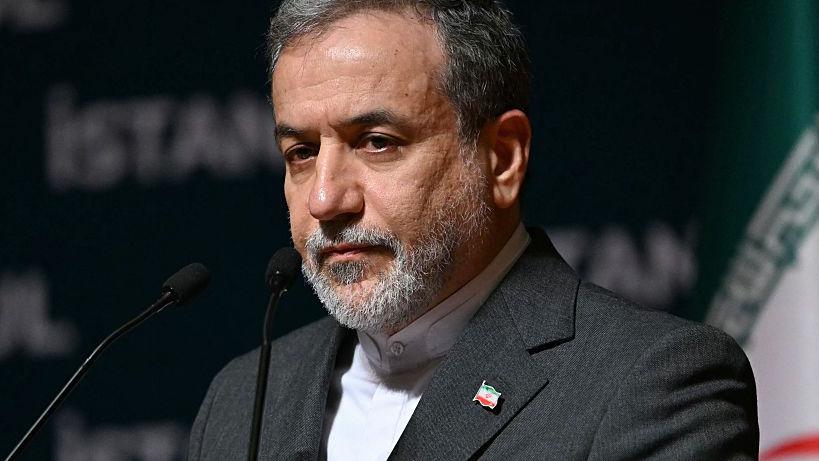
Iran’s Foreign Minister Abbas Araghchi has met with Qatari mediators in New York to discuss a proposal to reopen the Strait of Hormuz, while a United States official said there would be no agreement to end the war unless Tehran’s nuclear programme is addressed.
Araghchi told Iranian state media on Monday that the Qatari mediators would carry the ideas discussed at the meeting to the US and that he hoped to receive Washington’s final response by Tuesday.
“We talked about ideas and how to find solutions to fulfil Iran’s conditions and how to implement those conditions,” he said. “They had some ideas, and we had a discussion that they will also present to the American side.”
Asked whether he would stay in New York to await the reply, Araghchi said he would fly to Tehran within hours.
“Whenever the Qataris have a response, they know how to get it to us,” he said.
He described the meetings as part of an existing exchange of messages through Qatari and Pakistani mediators, which he said had taken on “a more serious form” since Iran submitted its proposal.
The Iranian plan , announced on Friday at the United Nations General Assembly in New York City, calls on the US to release frozen Iranian funds, lift sanctions and end its naval blockade of Iranian ports. Araghchi said those steps could be completed within four or five days, allowing the strait to reopen and negotiations on a final agreement, including on Iran’s nuclear programme, to begin by the seventh day.
US President Donald Trump, however, rejected the proposal on Saturday, calling it “unacceptable”
The US official, who spoke to Al Jazeera, said indirect discussions were continuing.
The talks were “positive and constructive”, the official said, but stressed there would be no agreement unless Iran’s nuclear programme is addressed. The official said Trump is willing to relieve sanctions and release Iran’s frozen funds in exchange for progress on nuclear issues.
“Iran has indicated they are flexible on the nuclear issues, but the sides still remain apart on the timing of the commitments and who takes which steps first,” the official said.
The official also expressed scepticism of Iran, saying it had broken the memorandum of understanding signed in June by firing on commercial vessels. Tehran denies the accusation and says it was Washington that broke its commitments by failing to halt Israel’s attacks on Lebanon and by seeking to establish alternate shipping routes through the Strait of Hormuz.
Iran had closed the strait, which handled roughly 20 percent of the world’s oil and gas supplies before the war, shortly after the US and Israel launched their offensive on February 28. Iranian attacks on vessels since have sharply curtailed shipping, and oil prices have risen above $100 a barrel.
Even so, crude exports from major Middle East producers rebounded in September to 12.8 million barrels per day, their highest level since the war began, the Reuters news agency reported, citing data from the maritime intelligence firm Kpler.
That is still well below the 18.8 million bpd exported in February.
Some ships have used the US military-supervised route hugging the coast of Oman, travelling at night with tracking systems off and offloading oil to tankers outside the strait. Admiral Brad Cooper, the head of US Central Command, said on Saturday that American forces had assisted 2,000 transits and more than 1 billion barrels of oil in recent months.
The US has also imposed a blockade on Iranian ports and threatened secondary sanctions against airports and companies that do business with Iranian airlines. The United Arab Emirates, Iraq and Oman have already cancelled related flights.
(Aljazeera)
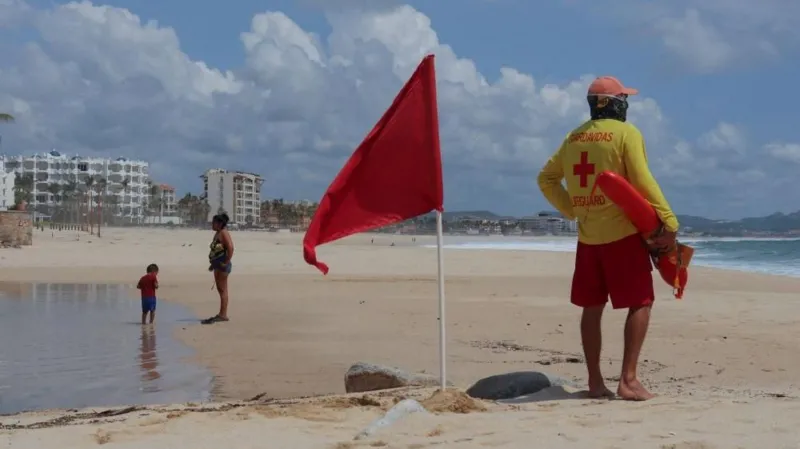
People living on the northern Pacific coast of Mexico are bracing for the arrival of Hurricane Polo, which is forecast to make landfall later on Monday or early on Tuesday.
The category three storm, with maximum sustained winds near 115 mph (185 km/h), is expected to move over the state of Baja California Sur, a region popular with tourists and home to the resort destination of Los Cabos.
Meteorologists at the US-based National Hurricane Center (NHC) have warned of heavy rainfall which could lead to life-threatening flooding and mudslides, especially in areas of steep terrain.
Residents on Sunday stocked up on essentials such as drinking water and food as the storm approached.
The NHC warned of the storm surge Hurricane Polo could unleash, which it said could be accompanied by large and destructive waves.
In Cabo San Lucas, famous for its natural rock arch, the authorities restricted access to the beaches. Some restaurants also closed in the town, which acts as a base for sport fishers and whale watchers.

The regional government of Baja California Sur has ordered schools to remain closed on Monday as a preventive measure.
Governor Víctor Manuel Castro Cosío said temporary shelters had been opened should residents need to be evacuated.
The federal authorities have also deployed thousands of members of the navy and the army along with specialised machinery.
Polo has been slowly moving towards Mexico’s coast line.
Meteorologists said it was being fuelled by extremely warm waters caused by the El Niño climate phenomenon.
(BBC)
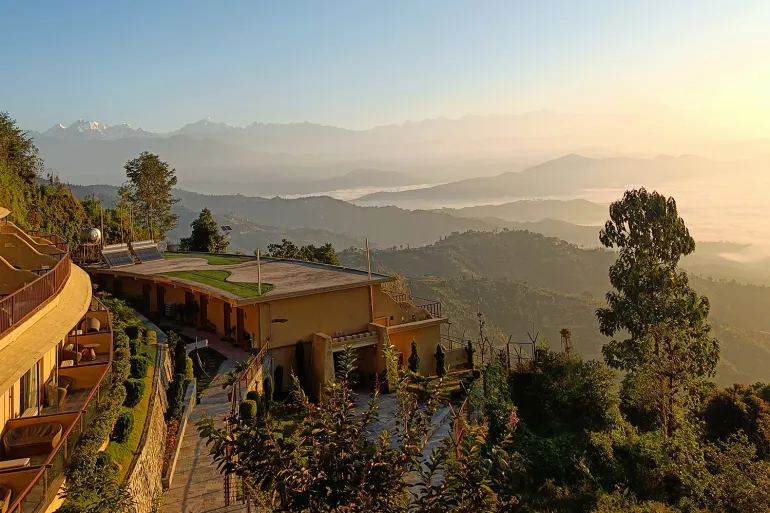
Like every year, Pushpraj Rimal, a tour planner and taxi driver in Nepal’s capital, Kathmandu, was looking forward to September for his business to boom.
But what he got instead was a series of cancellations by tourists after catastrophic floods last month killed more than 1,450 people and destroyed key highways, deeply impacting the Himalayan nation heavily dependent on tourism.
“It is still a lockdown kind of situation,” the 42-year-old told Al Jazeera nearly a month after the disaster.
Pushpraj, who speaks Nepali and Hindi, works on commission for several hotels and trekking companies in Kathmandu and the scenic town of Pokhara, known for its lake nestled in the Annapurna mountain range. Pokhara also serves as a base for Himalayan trekkers.
Nepal’s tourist season peaks after the monsoon ends in August and the skies are clearer. Tourism attracts thousands of international travellers, accounting for nearly 8 percent of Nepal’s gross domestic product and employs more than 1 million people.
Last year, Nepal saw more than 1.15 million tourists visiting the country, nearly a third of them during the September-November season.
But the floods this year, triggered by a glacial mountain collapse along the Nepal-Tibet border in the north, have pushed tourists away from the unaffected areas as well.
“I had rented two cars for two months, but I have done one fourth of the business I usually do in a season. Tourists generally start pouring in from September, but most of them have cancelled this year,” he said.
“I will get no commissions from the hotels or trek organisers, nor has the taxi business worked well. … I am now waiting for the season to end.”
Rimal has two children, Hema, 14, and Rahul, 12, whom he had promised a tablet this Dussain, a prominent Hindu festival that usually falls in October. “But it seems impossible now. I will have to break their hearts and my promise to them for the very first time.”
(Aljazeera)

Iran’s Araghchi meets Qatari mediators as US calls for nuclear talks

Showers above 50 mm expected in Uva, Eastern and Central provinces and in Polonnaruwa and Mullaittivu districts after 2.00 p.m.

PAFFREL raises concerns over Anti-Corruption (Amendment) Bill

First cases taken up by SC after enactment of 22A dismissed

Now NR named 4th suspect in Krrish case

Sri Lanka Red Cross Society honoured with Friend of Singapore Red Cross Award

‘Dates have the highest sugar content to fight Coronavirus’

Sunday Island 27 December – Headlines

#SundayIsland 17th December – Headlines

Sunday Island – 28th March

Sunday Island Headlines – 21 March

Sunday Island – 21st February – Headlines
-

 News6 days ago
Mastermind Naufer Moulavi among 15 found guilty
-

 Midweek Review6 days ago
Thileepan’s fast unto death: An authentic narrative that many missed
-
 Latest News5 days ago
Showers above 100 mm are likely at some places in the Western, Sabaragamuwa, Central and North-western provinces and in Galle and Matara Districts
-

 Editorial6 days ago
Big Bad Bills
-
Editorial5 days ago
Crimes punished and unpunished
-

 Features4 days ago
Beyond traditional jobs: Why Sri Lanka needs to facilitate the gig economy
-

 News6 days ago
No referendum needed for passage of 22 A: SC
-

 Latest News6 days ago
Ms. P. M. Jayadeera (Engineer) appointed Director General of Irrigation