
News
Commonwealth Observer Group gives good marks for credible and transparent poll


The Commonwealth Observer Group yesterday said that the Presidential Election was credible and transparent and commended the people of Sri Lanka for turning out in their numbers in a peaceful and orderly manner on what was also International Peace Day.
Reading out COG’s Interim Statement during a press conference in Colombo, COG Chairperson Dany Faure, former President of Seychelles, said: The Commonwealth is honoured to be in Sri Lanka to observe the 2024 Presidential Election, which had a record 38 candidates standing for election. Following the Pre-Election Assessment Mission and the subsequent invitation from the Election Commission of Sri Lanka, the Commonwealth Secretary-General Patricia Scotland KC, constituted our Group. This also marks the Commonwealth’s 200th election observation since it began observing in 1980.
We arrived on 14 September and will depart on 27 September. As Chair, I am leading a Commonwealth Group of 14 independent and eminent persons drawn from across the Commonwealth. They are experts in law, politics, elections, gender, youth and the media. The Group is independent of the Commonwealth Secretariat.
Our role is to offer an independent, informed and impartial analysis of the electoral process, taking account of all factors which may impinge on the overall credibility and transparency of an election.
Prior to our arrival, members of the staff support team observed postal voting in Colombo on 11 and 12 September.
They observed pre-poll arrangements, voting and closing for postal voting.
I now have the privilege to present our preliminary findings which are based on our engagement with a cross section of stakeholders, assessment of the pre-election environment, polling day, and the count. Our final report with key recommendations will be submitted to the Secretary-General and shared with the Government of the Democratic Socialist Republic of Sri Lanka, Commonwealth governments as well as other key stakeholders, and to the wider public.
Let me begin with the pre-election environment.
PRE-ELECTION ENVIRONMENT
To understand the pre-election environment, our observers met with a wide range of stakeholders, including the Election Commission of Sri Lanka, the Attorney General, candidates and representatives of political parties and civil society. We also met the Senior Deputy Inspector General of Police, international and citizen observers, the media, fact checking organisations, and representatives from Commonwealth High Commissions in Colombo.
We commend the Election Commission of Sri Lanka for introducing some key reforms ahead of this election. These include the introduction of tactile frame (stencil) for the visually impaired voters, use of sign language at polling stations and the provision of identification cards for Persons with Disabilities (PWDs).
Sri Lanka has also strengthened its legislative framework with the introduction of the Regulation of Elections Expenditure Act
No.3 (2023). This is a welcome development; however, stakeholders informed the Group that the Election Commission lacked capacity to enforce this law and we hope that the Commission will take necessary measures to address this. We note the efforts by some Civil Society Organisations who were actively engaged in monitoring campaign expenditure.
We note that the Election Commission and other stakeholders, including the media and CSOs, have made significant strides in educating and informing citizens during this election cycle, surpassing previous elections. However, we have noted that there is a need for greater voter education, including dedicated educational programmes demonstrating the preferential voting system, which led to confusion about how the system works, and how voters cast their ballots in order of preference.
Media freedom, as enshrined in the Constitution, has largely been respected, allowing the press to cover campaigns and elections without intimidation. Nevertheless, media ownership continues to shape the narrative around elections and key issues. To address this, we recommend the strengthening and enforcement of the media code of conduct, especially in regards to the provision of equitable airtime for all candidates.
As with recent elections, political parties and candidates continued to use social media for their campaigns. However, there were concerns about electoral violations on social media including misinformation and disinformation. We welcome the Election Commission’s partnership with CSOs in addressing some of these concerns. We call on social media companies to work with the Election Commission and the relevant stakeholders to address these issues.
We observed several campaign rallies in Colombo and noted they were conducted in a peaceful atmosphere. The fundamental rights of candidates, political parties and supporters to assemble and campaign were broadly observed.
There were widespread allegations of the misuse of state resources in the lead up to this election. We were also informed of isolated incident of physical and online intimidation.
On 19 September, our teams were deployed to all nine provinces of Sri Lanka: Central, Eastern, Northern, North Central, North Western, Sabaragamuwa, Southern, Uva and Western.
In these locations, we observed the pre-election preparations. In addition, we also engaged with several stakeholders, including district election officials, political parties, the police, civil society and others ,to gain a deeper appreciation of the electoral process.
We observed the deployment of sensitive materials, and the setup of potting stations, counting and results centres.
ELECTION DAY
Pre-Poll and Opening of Poll Procedures
The pre-poll and opening procedures were meticulously followed at the stations observed. Polling stations opened on time and there were few voters on the queues at the start of the poll.
Conduct of the Polls
Voting proceeded in a peaceful and orderly atmosphere. Most polling stations were divided into two or more streams which aided queue management.
In all polling stations visited, a sample of the ballot paper and relevant instructions were clearly displayed. Signage was also visibly displayed outside some polling stations.
The polling officials conducted their duties with professionalism, transparency, diligence and dedication. They were also helpful to voters, especially the elderly and PWDs.
Participation and Inclusion
We note that there were no female presidential candidates in this election. We also observed that while women served as polling officials at most polling stations, Senior Presiding Officers were mostly male.
We were encouraged by the number of young women and men who turned out to exercise their franchise.
We commend the polling officials for giving priority to the elderly and PWDs. We also note that the tactile frame (stencils) for visually impaired were provided at some polling stations.
In addition, we welcome the efforts of the Election Commission, in partnership with civil society and community leaders to identify polling stations in accessible locations that would enable PWDs to exercise their franchise with dignity and in accordance with legal provisions. Similar observations also apply to elderly voters. While we commend these efforts, more needs to be done to enhance accessibility for these categories of voters.
Party Agents
Political party and candidates’ agents were observed in all polling stations. They conducted themselves professionally and were peaceful throughout the voting process.
Security
We observed the presence of police in all polling stations, and they were professional.
Secrecy of the ballot
Most polling stations were located at schools and buildings within religious sites. There was a lack of uniformity in the polling station layout, resulting in some polling stations compromising secrecy of the ballot.
Citizen and International Observers
International and citizen observers were present at some polling stations. Our observers interacted with People’s Action for Free and Fair Elections (PAFFREL), Center for Monitoring Electoral Violence (CMEV) and the European Union.
Close and Count
At the close of polls at 4:00 pm, most polling stations we observed had no queues. We observed that polls closed on time and once again the Election Officials managed the process meticulously and with dedication. Our observers followed the results process from polling stations to counting centres. I visited the Royal College counting centre where postal votes for Colombo district were also being counted. I also visited the national results centre at the Election Commission Secretariat.
Our observations of the counting process suggest that some voters did not fully understand the preferential system of voting. Most ballots indicated a single preference or the use of mixed symbols. In addition, the counting staff did not appear to be fully conversant with the process.
More needs to be done in building the knowledge and understanding of the preferential voting system in the electorate throughout the electoral cycle.
We will provide recommendations on how the processes might be further improved in our final report.
Conclusion and Post-Election Period
It is our view that this election was credible and transparent.
I commend the people of Sri Lanka for turning out in their numbers in a peaceful and orderly manner on what was also International Peace Day. We hope that this peaceful environment will continue in the postelection phase.
Lastly, I extend my warm congratulations to the President and the people of Sri Lanka.






The price of gold has risen above $5,000 (£3,659) an ounce for the first time, extending a historic rally that saw the precious metal jump by more than 60% in 2025.
It comes as tensions between the US and NATO over Greenland have added to growing concerns about financial and geopolitical uncertainty.
US President Donald Trump’s trade policies have also worried markets. On Saturday he threatened to impose a 100% tariff on Canada if it strikes a trade deal with China.
Gold and other precious metals are seen as a so-called safe-haven assets that investors buy in times of uncertainty.
Demand for gold has also been driven by a range of other factors including higher-than-usual inflation, the weak US dollar, buying by central banks around the world and as the US Federal Reserve is expected to cut interest rates again this year.
Wars in Ukraine and Gaza, as well as Washington seizing Venezuelan President Nicolás Maduro, have also helped push up the price of gold.
On Friday, silver topped $100 an ounce for the first time, building on its almost 150% rise last year.
[BBC]
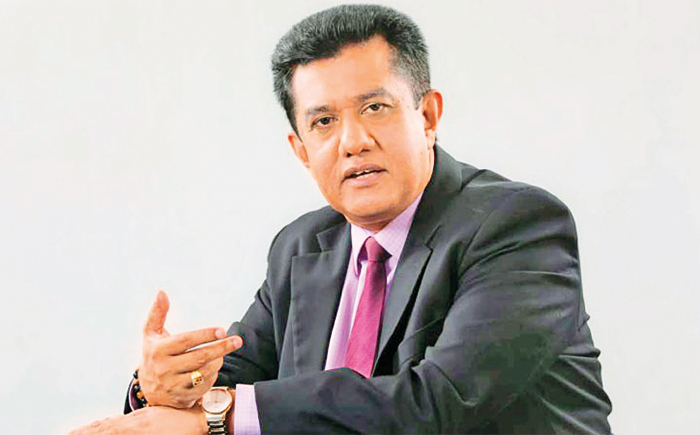
SJB Working Committee member and ex-SLPP lawmaker Charitha Herath says that all eyes are on the newly constituted Constitutional Council (CC) as to how it will handle the dispute between President Anura Kumara Dissanayake, and the previous CC, over the appointment of Auditor General (AG).
The former parliamentarian said so in response to The Island query yesterday (25). In terms of the Constitution, Prime Minister Dr. Harini Amarasuriya and Opposition Leader Sajith Premadasa last week agreed on the appointment of former civil servant Austin Fernando, Professor Wasantha Seneviratne and Ranjith Ariyaratne as non-MP members of the CC.
They replaced former Ministry Secretary Dr. Prathap Ramanujam, former Chairperson of the Sri Lanka Medical Association Dr. Dilkushi Anula Wijesundere and Dr. Dinesha Samararatne of the University of Colombo. Pointing out that they rejected the President’s nominees for the AG’s post on several occasions, Herath emphasised the pivotal importance of the appointment of a person with impeccable credentials.
The other CC members are the Prime Minister, Speaker Dr. Jagath Wickremaratne (Chairman), the Opposition Leader, the President’s nominee Bimal Rathnayake and five persons appointed by the President, upon being nominated as follows: one MP nominated by agreement of the majority of the MPs representing the Government (Aboobucker Athambawa, MP), one MP nominated by agreement of the majority of the Members of Parliament of the political party, or independent group, to which the Leader of the Opposition belongs (Ajith P. Perera, MP), and one MP nominated by agreement of the Members of Parliament other than those representing the Government and those belonging to the political party or independent group to which the Leader of the Opposition belongs, and appointed by the President ( Sivagnanam Shritharan, MP.)
The present CC was established on October 31, 2022 in terms of the 21st Amendment to the Constitution. The Attorney General heads the National Audit Office (NAO). One-time COPE Chief said that it would be the responsibility of the government to ensure the integrity of the NAO.
Chulantha Wickramaratne, who served as AG for a period of six years, retired in April 2025. Following his retirement, President Dissanayake nominated H.T.P. Chandana, an audit officer at the Ceylon Petroleum Corporation as the AG. The CC rejected that nomination. Subsequently, President Dissanayake appointed the next senior-most official at the NAO Dharmapala Gammanpila as Acting Auditor General for a period of six months. Then, the President nominated Senior Deputy Auditor General L.S.I. Jayarathne to serve in an acting capacity, but her nomination, too, was also rejected. Many an eyebrow was raised when the President nominated O.R. Rajasinghe, the Internal Audit Director of the Sri Lanka Army for the top post. That nomination too was rejected. As a result, the vital position remains vacant since 07 December, 2025.
Herath said that the government was in a bind over the Auditor General’s appointment and the disgraceful campaign launched against Attorney General Parinda Ranasinghe, Jr, PC.
The ex-lawmaker said that JVP/NPP loyalists masquerading as journalists and civil activists had launched the protest against the Attorney General. Herath said that the decision to send Deputy Secretary General of Parliament Chaminda Kularatne, on compulsory leave, too, was a matter of serious concern.
Herath said: “This is the same government that campaigned strongly on non-interference, institutional independence, and respect for the rule of law—principles they used to criticise every previous administration. Now, they appear to be doing exactly what they once opposed, only more openly. If this pattern continues, these undemocratic actions will eventually lead to their own downfall.”
BASL in late December, 2025 urged President Dissanayake and others, including the Opposition Leader, to consult civil society and professional bodies, including them, before the appointment of civil society representatives.
Herath said that the newly constituted CC would face its first acid test when it addressed the Auditor General issue.
by Shamindra Ferdinando
News
Easter Sunday carnage: Campaigners for justice ask govt. to have suicide bomber’s wife extradited
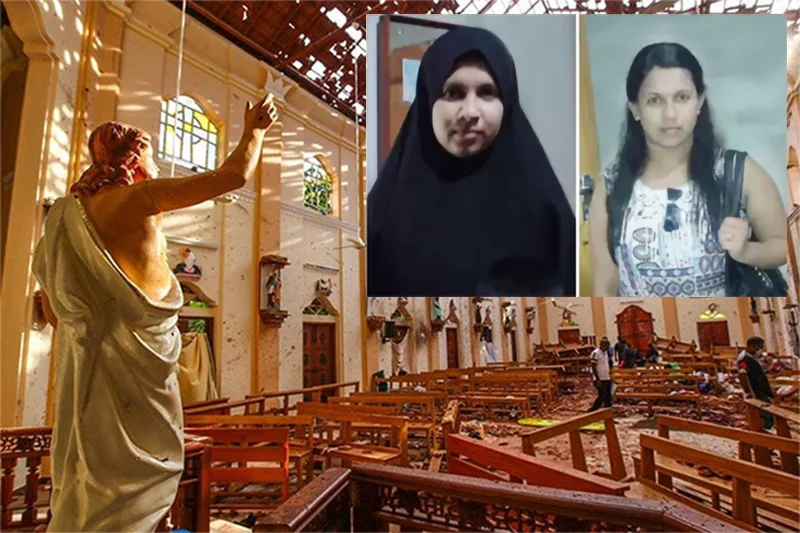
A Catholic Church–backed organisation, Just for Justice, has called on the government to immediately fast-track the extradition of Pulasthini Mahendran, also known as Sarah Jasmine, who has been linked to the 2019 Easter Sunday terror attacks.
Addressing a press conference at the Centre for Society and Religion in Maradana last week, Fr. Rohan Silva said Mahendran should be brought back to Sri Lanka without delay to enable investigators to uncover the identities of those who masterminded the attacks, which claimed the lives of more than 275 people and injured more than 500.
Mahendran, who now reportedly goes by the name Sarah Jasmine, is the wife of Atchchi Muhammadu Muhammadu Hastun, one of the suicide bombers who attacked St. Sebastian’s Church, in Katuwapitiya, in April 2019.
Fr. Silva referred to a recent statement made by Minister of Public Security Ananda Wijepala, in Parliament, that information uncovered during investigations indicated that Mahendran was not dead. The Minister also told Parliament that there was no indication she was currently in India, but added that the government could secure her extradition if the need arose.
“We tell the Minister and the government that there is an urgent need,” Fr. Silva said. “She must be brought back so that investigators can obtain details about the masterminds of the attacks.”
According to Fr. Silva, repeated efforts had been made to obstruct investigations by promoting the claim that Mahendran died in a suicide blast at a safe house in Sainthamaruthu on April 26, 2019, days after the Easter attacks, despite what he described as evidence suggesting otherwise.
Initial reports stated that 16 people were killed in the Sainthamaruthu explosion. However, the figure was later revised to 17 when police reported the incident to court on April 30, 2019, and informed the media that Mahendran was among the dead.
“It is our belief that those who masterminded and orchestrated the terror attacks wanted to remove Jasmine to prevent evidence being extracted from her,” Fr. Silva said. He added that there had long been suspicions that she was alive and had been taken to India or another country.
Fr. Silva questioned the government’s commitment to uncovering the truth, noting that despite the Minister’s statement in Parliament, no steps had been taken to bring Mahendran back.
“We have doubts whether this delay is due to conflicts of interest among investigators or those who direct them,” he said. “This government came to power promising impartial and expedited investigations into the Easter attacks and justice for the victims. Now, 81 weeks have passed, and we demand that the government deliver on those promises.”
by Norman Palihawadane

Gold tops $5,000 for first time ever, adding to historic rally

Showers will occur in the Northern, North-central, Eastern, North-western, Western, Sabaragamuwa and Uva provinces and in Matale, Matara, Galle and Nuwara-Eliya districts

U – 19 World Cup: Andrew, McKenzie deliver West Indies comfortable win

U – 19 World Cup: Bowlers, Hogan help Australia breeze past South Africa

Abhishek blasts 14-ball fifty to hand India unassailable 3-0 lead against New Zealand

Auditor General issue acid test for newly constituted CC, says former COPE Chief

‘Dates have the highest sugar content to fight Coronavirus’

Sunday Island 27 December – Headlines

#SundayIsland 17th December – Headlines

Sunday Island – 28th March

Sunday Island Headlines – 21 March

Sunday Island – 21st February – Headlines
-
 Business1 day ago
ComBank advances ForwardTogether agenda with event on sustainable business transformation
-
 Opinion6 days ago
American rulers’ hatred for Venezuela and its leaders
-
 Opinion4 days ago
Remembering Cedric, who helped neutralise LTTE terrorism
-
 Business4 days ago
CORALL Conservation Trust Fund – a historic first for SL
-

 Opinion3 days ago
A puppet show?
-
 Opinion6 days ago
History of St. Sebastian’s National Shrine Kandana
-
 Opinion1 day ago
Conference “Microfinance and Credit Regulatory Authority Bill: Neither Here, Nor There”
-
 Features5 days ago
The middle-class money trap: Why looking rich keeps Sri Lankans poor