
Business
‘Come and Live in Sri Lanka’ real estate project targeting senior citizens


By Hiran H.Senewiratne
Rangiri Holdings, a collective of diverse firms, has invested over Rs. 300 million in the last several years to construct environmentally- friendly residences for senior citizens targeting expatriates, in Pitakotte, and a star-class hotel in Dambulla, chairman, Rangiri holdings Nihal Pathirage said.
Six units of luxury apartments have already been completed of the 12 apartments in Pitakotte at the Bird Park as they hope to offer these to retired Sri Lankan expatriates.
“My first aim is to entice them to spend their retirement in Sri Lanka, offering them the concept of ‘come back and live in Sri Lanka’. I also hope to woo senior citizens of other nationalities based overseas to come and spend their retirement in these apartments, Pathirage told The Island Financial Review.
Pathirage added: “These apartments would not be given on an outright basis on very long leases, thereby firstly simplifying the migration to Sri Lanka (on a long-term visa) and also reducing the cost for a senior citizen when having to purchase a brand-new apartment and also reducing extra paperwork.
“These apartments are built near the wetlands of Madiwela with aged care facilities, giving them very quiet surroundings close to nature and we provide all the facilities, including medical care, for them.
“We have a professional team who are qualified in aged care and they will be deployed in this project to look after the senior citizens.
“I am also now looking at creating more eco-friendly apartments targeting senior citizens, mainly in the North-East and am planning to obtain over 20 acres of land in three locations. In a bid to get community support for this, I will also create an agro and farmer out-grower system and look at introducing fruit and vegetable canning factories, thereby creating a new income opportunity for them.
“Our second mega project, Rangiri Aqua, is situated bordering Ibbankatuwa reservoir in Dambulla on 15 acres, offering camping facilities and star-class accommodation for 150 guests with 40 double rooms, 3 family rooms, restaurants and a rooftop lounge.
“My main focus at Rangiri Aqua is to woo corporates to use this hotel for their team- building and outbound programs as we have a professional ex-army team and all the other infrastructure needed for it.
“In a bid to provide English and vocational training to youth mainly in rural areas our latest venture and diversification was to launch the Rangiri Management Institute of Technology (RMIT Campus), Sri Lanka’s latest addition to the international higher education institution sector. I can assure you that thousands of students who graduate from RMIT Campus will be placed at premium positions in the industry or in academia in Sri Lanka and abroad.
“Having started Stretchtec (Pvt) Ltd, in a small way, providing garment accessories, we diversified into many sectors and created the main company, Rangiri Holdings.
“We have over 200 dedicated staff and the company survived with minimum effort during the C-19 and lock down periods due to our strong application of employee training systems. Our service levels were never compromised.
“In 2018 Rangiri Aqua Edutainment Academy won the training contract to train and motivate 32,000 Sri Lanka Transport Board cadres and their two-day sessions required providing custom-made T-shirts and Bottoms. To cater to this demand, I created Nishu apparel which today is one of the leading garment factories adhering to the ISO 9001:201 Quality Management System. We were pioneers in donating masks and personal protective equipment for CSR projects.”


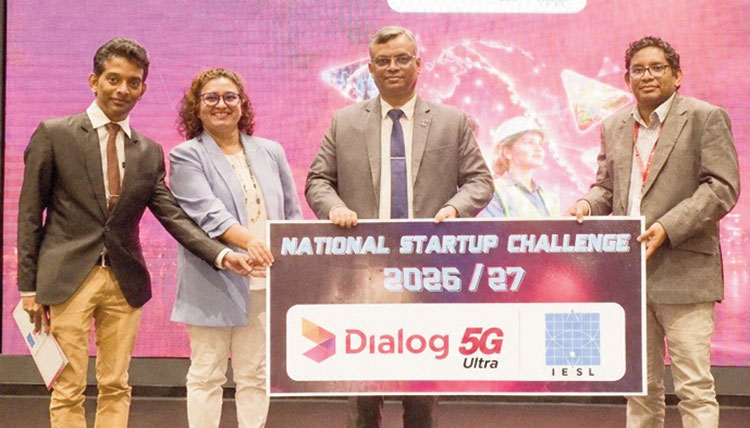
Dialog Axiata PLC, Sri Lanka’s #1 connectivity provider, joins the Institution of Engineers, Sri Lanka (IESL) to launch the IESL National Startup Challenge, creating a national pathway for aspiring entrepreneurs to transform innovative ideas into commercially viable, investment-ready startups. The initiative reflects a shared commitment to strengthening Sri Lanka’s entrepreneurship ecosystem through structured development, expert mentorship and practical support that enables promising ideas to progress towards market readiness and scale.
Launched through the IESL Entrepreneurship Forum at the Dialog Auditorium on 5 October 2026, the competition invites Engineering Undergraduates, Engineering Practitioners and participants in an Open Category for Non-Engineers to submit ideas across 12 innovation verticals aligned with national priorities, emerging technology and market trends, and inclusive innovation. Participants will progress through idea development, pitching, incubation, prototyping, validation, minimum viable product development and business scaling, supported by industry experts, mentors and ecosystem partners. The programme will culminate in a Top 10 selection, with the first-place winner receiving an award of LKR 1 million.
As title sponsor and a key ecosystem enabler, Dialog is contributing practical expertise and resources beyond sponsorship, providing technical expertise, mentors and digital resources to help participating teams develop, validate and scale their solutions. Each of the Top 10 teams will also receive a Dialog Digital Startup Support Package valued at LKR 250,000, comprising selected Dialog digital products and services.
“Dialog is committed to enabling Sri Lanka’s next generation of innovators by connecting entrepreneurial ambition with the technology, expertise and practical resources needed to turn ideas into scalable ventures. Through the IESL National Startup Challenge, Dialog is extending its digital capabilities, mentorship and ecosystem support to help promising teams progress from concept to validation and investment readiness,” said a representative of Dialog Axiata PLC.
Eng. Jasmine Nanayakkara, Chairperson of the Entrepreneurship Forum at the Institution of Engineers, Sri Lanka, added, “The IESL National Startup Challenge is designed to turn innovative ideas into viable businesses by connecting aspiring entrepreneurs with industry expertise, mentorship and continuous practical support. More importantly, it is about creating an ‘Engineer to Entrepreneur’ transformation and nurturing a stronger entrepreneurial culture within the IESL community. By encouraging our engineers and aspiring founders to create, commercialise and scale solutions, we aim to contribute to new ventures, new opportunities and meaningful job creation for Sri Lanka’s skilled and educated next generation. We are grateful to Dialog for partnering with IESL to create this pathway for innovation, entrepreneurship and national economic growth.”
Driving innovation across Sri Lanka, the National Startup Challenge also brings together a strong network of partners, including The Ceylon Chamber of Commerce as Ecosystem and Mentoring Partner, Helago as Official Mobility Partner, Helakuru as Official Digital News Partner, and Real Life as Official Climate Action Partner.
The IESL National Startup Challenge represents a collaborative effort to strengthen Sri Lanka’s innovation and entrepreneurship ecosystem by creating a structured pathway from promising ideas to market-ready businesses. Applications are now open via www.iesl.lk/announcements, giving aspiring entrepreneurs an opportunity to access the resources and funding they need to succeed. Applications close on 16th November 2026. For more information, contact mgr.pub@iesl.lk / 071 109 4393.

Keeping a home clean involves more than dealing with one kind of mess. Kitchens face grease and cooking splashes, bathrooms develop soap scum and limescale, while frequently used areas around the home collect marks, fingerprints and everyday dirt.
For households looking to simplify this routine, multi-surface cleaners offer a practical solution by allowing one product to tackle multiple cleaning needs across suitable surfaces.
One home, many everyday messes
In the kitchen, grease, splashes and burnt-on food can build up around hobs and hotplates. Cupboard doors and appliance exteriors can also collect smudges and marks through daily use.
Bathrooms present different challenges, including limescale, soap scum, toothpaste residue and water marks around sinks, washbasins and shower doors.
Even outside these rooms, surfaces such as door handles, baseboards, table mats and PVC areas can require regular attention.
Making everyday cleaning simpler
This is where the versatility of products such as CIF Cream becomes useful.
CIF Cream can help tackle a range of common household cleaning challenges across suitable surfaces, from grease and burnt-on food in the kitchen to limescale and soap scum in the bathroom.
Its uses can also extend to other suitable areas and items around the home, including cupboard doors, appliance exteriors, PVC surfaces and more, when used according to product directions.
For busy households, the benefit is straightforward: a versatile cleaner can help reduce the complexity of everyday cleaning by addressing several common cleaning needs with one product.
Consumers should always follow product instructions and check suitability before using any cleaner on a particular surface.
CIF products are now available at Cargills, Keells, Glomark and Celeste, as well as online through Daraz and uStore, at a retail price of Rs. 900 for 500ml. Shop CIF online at https://ustore.lk/collections/cif or https://www.daraz.lk/cif/
As household routines continue to evolve, multi-surface cleaning provides a simple approach to keeping different areas of the home clean — one versatile solution for many of the everyday messes that come with daily life.
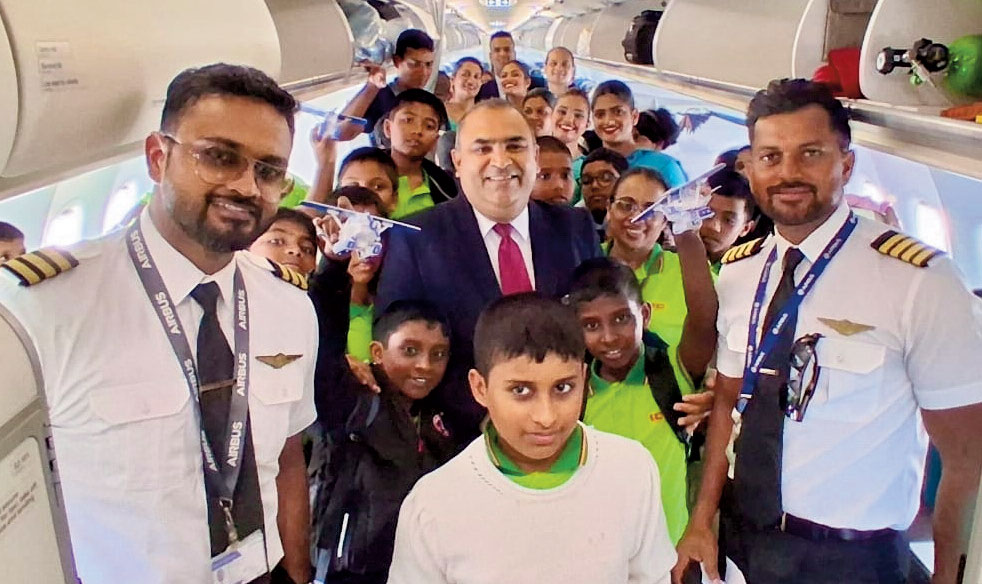
SriLankan Airlines set dreams in motion for 24 young students selected to represent Sri Lanka at the 2026 International Mathematics and Science Olympiad, held in Indonesia from 2 to 7 October 2026, helping make their journey to Indonesia and back an extra special one.
The students were selected through a four-stage national selection process covering school, zonal, provincial and national levels, with the highest-performing students progressing at each stage.
As a special initiative for Children’s Day, the Ministry of Education sponsored the air travel of all 24 students for the first time. Returning to Sri Lanka with an impressive haul of three Silver Medals and 10 Bronze Medals, the young contestants competed alongside students from 23 countries.
SriLankan Airlines was privileged to be part of their special journey, helping make their experience even more memorable as they represented Sri Lanka on the international stage.

Hurricane Isaias downgraded after making landfall in Florida

‘Cockroach’ group leaders among hundreds detained in Delhi protest

Sri Lanka hope to get out of T20I rut and keep series alive

Sri Lanka ITEC Alumni Association formally launched

Measures underway to protect Diyagama Forest as a Reserve — Deputy Minister of Environment

Showers or thundershowers will occur in most parts of the island after 1.00 p.m.

‘Dates have the highest sugar content to fight Coronavirus’

Sunday Island 27 December – Headlines

#SundayIsland 17th December – Headlines

Sunday Island – 28th March

Sunday Island Headlines – 21 March

Sunday Island – 21st February – Headlines
-

 News6 days ago
Geneva takes up Sallay’s case and govt. ignores opportunity to answer accusations
-

 Features7 days ago
The first woman in the foreign service or Ceylon Overseas Service it was then called
-

 News7 days ago
Nearly 20 Iranian tankers stranded off Lanka amid US sanctions
-

 Features5 days ago
Preventing grievances from becoming communal
-

 Sports3 days ago
Nissanka absence opens door for Sri Lanka’s young guns
-

 News4 days ago
Gnansara Thera to be assigned to prison printing section: Officials
-

 Features6 days ago
Sri Lanka Cricket Bill: Governance reform is not yet a cricket strategy
-

 News7 days ago
Lanka enters new phase of prosecutions as hurdles clear