
News
Colombo University moves to check students taking any grievances to social media raises fears

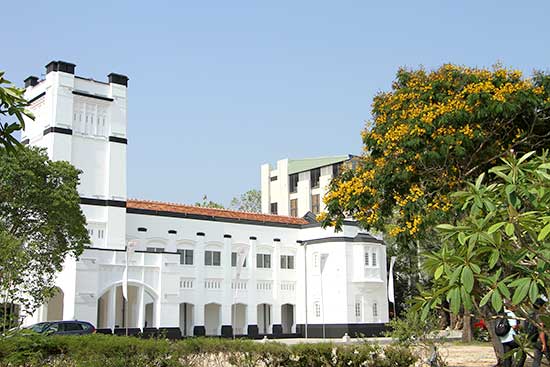
The University of Colombo has introduced a set of social media guidelines that students now say are stifling and infringing on their freedom of expression. A spokesman for the students said they would take up the issue with the Human Rights Commission of Sri Lanka shortly.
University officials were not immediately available for comment.
The guidelines issued on 28 March 2021 states that students must not openly criticise issues that arise due to the “services, rules/regulations of the university, or staff members”, on social media.
“As a registered student of the University of Colombo, you are kindly requested to protect and safeguard the reputation of our University. If you are not satisfied with some services, rules/regulations of the university, or staff members, you should not criticise openly in social media. You can communicate your concerns to your counsellors, academic coordinators/tutors, or other officials of the university and seek a feasible solution. Problems cannot be solved by criticizing on social media,” the guidelines say.
The University also warns students that legal action can be taken against them if they “have participated in false propaganda intentionally or unintentionally,” and warn students to be weary in taking part in protests organized by social media because that might “bring disrespect to the reputation of your University.”
Given below are the rest of the University’s social media guidelines:
“Every citizen has freedom of speech and expression. However, it should not be used to attack organizations, groups, or individuals by posting hate speech, sharing others’ critical or sensitive messages, expressing opinions that will create suspicion or social unrest within the wider society using social media. If you have contributed to or assisted in such activities using social media, you would face disciplinary action.
*It is very important not to disturb academic activities through social media by posting answers for questions or requesting unauthorized assistance from others when engaging in academic activities. For example, sharing answers to assignments/exam paper questions through social media is unacceptable. Disciplinary action will be taken against individuals who disturb academic activities.
* Some may assume that it is ‘safe’ to engage in wrongful activities using a bogus identity/account and this method will protect the actual person. Technology and tools are available to trace the real identity of such persons. Authorities could identify the person, the actual device, and physical location if and when necessary. Therefore, we strongly advise you not to engage in unauthorized or illegal activities using a bogus identity.
* If you publish digital contents as the University of Colombo on social media using the University name, logo, or any other university intellectual property such as scanned books, past papers, etc., prior permission from the Registrar’s office is required. If you use the University of Colombo Logo, you must follow the Logo guidelines.
* Your communications in social media must not include offensive or derogatory posts, blogs, images, videos, or comments relating to gender, ethnicity, race, nationality, disability, reassignment, sexual orientation, religious base or national security.
* You must not post someone else’s images, videos, or any other digital contents without the proper permission of the original content publisher. You should also not share any copyrighted material without proper approval from the respective publisher(s).
* It is important to recognize that online conduct is governed by the same laws, policies, and rules of conduct that apply to all day-to-day activities. The University of Colombo urges students to be aware of the potential risks when making personal information public, to think about future implications and possible consequences of all posts, and to ensure safety through responsible and conscious decisions when using social media.
* It is your responsibility, to protect your social media accounts and for being aware of third-party applications that share your personal information to the public. If you need technical advice that protects your social media accounts, the university IT experts are available to help you”


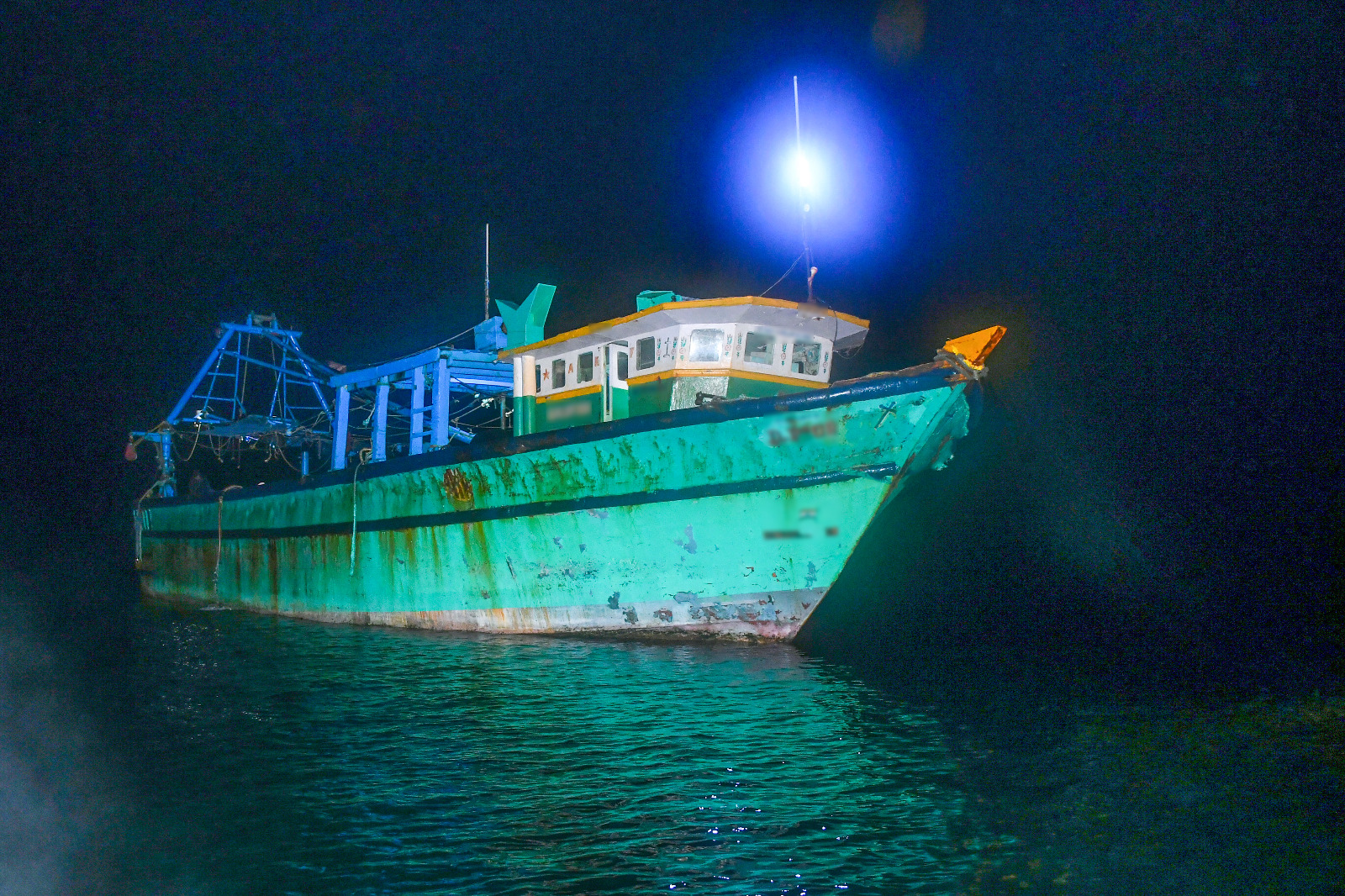
During an operation conducted in the dark hours of 22 Feb 26, the Sri Lanka Navy seized an Indian fishing boat and apprehended twelve (12) Indian fishermen while they were poaching in Sri Lankan waters, in the sea area south of Mannar.
The seized boat and the Indian fishermen were handed over to the Fisheries Inspector of Dikovita for onward legal proceedings.
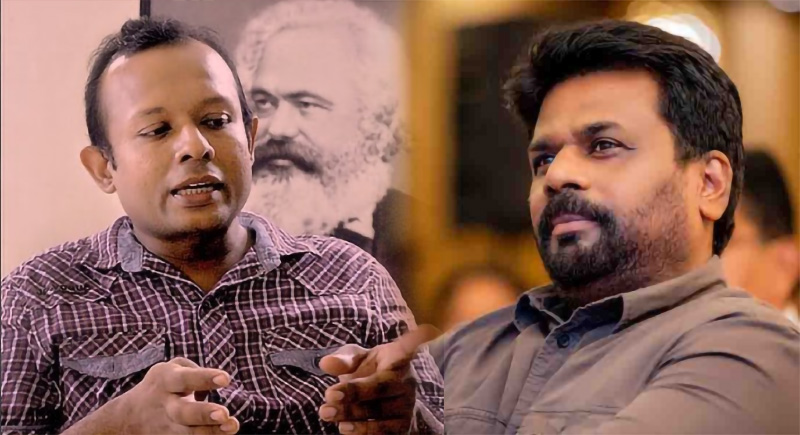
FSL assures legal backing for them
Families of those sentenced to death by the Three-member Gampaha High Trial-at-Bar, over the killing of SLPP MP Amarakeerthi Atukorale, and his police bodyguard, met a senior official of the Presidential Secretariat, yesterday (23), to seek backing for their move to appeal against the verdict.
Having made representations, they addressed the media, outside the Presidential Secretariat, where they declared their intention to move the higher court against the decision.
The SLPP MP and his security officer were killed by an Aragalaya mob on 09 May, 2022, at Nittambuwa. The same day Aragalaya mobs unleashed violence against the then government MPs across the country, torching dozens of their properties.
The Frontline Socialist Party (FSP) yesterday said that they would help the families of those sentenced to death to move court against the Gampaha High Court Trial-at-Bar decision. Responding to The Island queries, FSP spokesman Pubudu Jayagoda said that their representatives had already met the families and necessary work was being done to move the Supreme Court. Twenty three persons were acquitted and four handed six-month prison terms, suspended for five years
Jayagoda said that one of the HC judges differed in the ruling. Asked whether they received backing from any other political party and groups that had been involved in the 2022 protest campaign to defend those who had been found guilty, Jayagoda said such support was lacking.
The JVP/NPP played a significant role in the violent protest campaign that forced President Gotabaya Rajapaksa to step down. Pointing out that the Attorney General, too, was appealing against the court decision on the basis that the number of persons sentenced to death should be much higher, Jayagoda said that the Nittambuwa incident couldn’t be examined in isolation without taking into consideration the SLPP goon attack on Galle Face protesters on 09 May, 2022. (SF)

Offshore Patrol Vessel P 628 of the Sri Lanka Navy departed Baltimore, USA, for Colombo, on 20 February.
The ex-United States Coast Guard Cutter, USCGC Decisive was officially handed over to the SLN on 02 December, 2025, as the latest addition to the SLN fleet, under the Pennant Number P 628.
Measuring 64 metres in length, this ‘B-Type Reliance Class 210-foot Cutter’ is equipped with advanced technological systems and facilities, capable of conducting extensive surveillance operations spanning up to 6,000 nautical miles per patrol.
The vessel’s voyage to Colombo is historic, possibly marking the longest-ever passage undertaken by a Sri Lanka Navy ship. Covering approximately 14,775 nautical miles, the journey will see the P 628 navigate from Baltimore through the Atlantic Ocean, the Panama Canal (a first for a Sri Lankan naval vessel), the Pacific Ocean, and into the Indian Ocean, via the Straits of Malacca. The ship is expected to arrive in Sri Lanka during the first week of May, 2026.

Navy seize an Indian fishing boat poaching in Mannar seas

Fair weather will prevail except for showers in the Southern province and in Rathnapura, Monaragala and Kaluthara districts after 2.00 p.m

Families of those sentenced to death for killing MP Atukorale seek AKD’s intervention

OPV leaves Baltimore, expected in Colombo in May

Unions sound alarm over coal procurement and power sector restructuring

MAS Group moving to India: CP asks NPP govt. to act

‘Dates have the highest sugar content to fight Coronavirus’

Sunday Island 27 December – Headlines

#SundayIsland 17th December – Headlines

Sunday Island – 28th March

Sunday Island Headlines – 21 March

Sunday Island – 21st February – Headlines
-
 Features2 days ago
Why does the state threaten Its people with yet another anti-terror law?
-

 Features2 days ago
Victor Melder turns 90: Railwayman and bibliophile extraordinary
-
 Features2 days ago
Reconciliation, Mood of the Nation and the NPP Government
-

 Features1 day ago
LOVEABLE BUT LETHAL: When four-legged stars remind us of a silent killer
-
 Features2 days ago
Victor, the Friend of the Foreign Press
-
 Latest News4 days ago
New Zealand meet familiar opponents Pakistan at spin-friendly Premadasa
-

 Latest News4 days ago
Tariffs ruling is major blow to Trump’s second-term agenda
-

 Latest News4 days ago
ECB push back at Pakistan ‘shadow-ban’ reports ahead of Hundred auction