
Sports
Coe commits World Athletics support to Jamaica

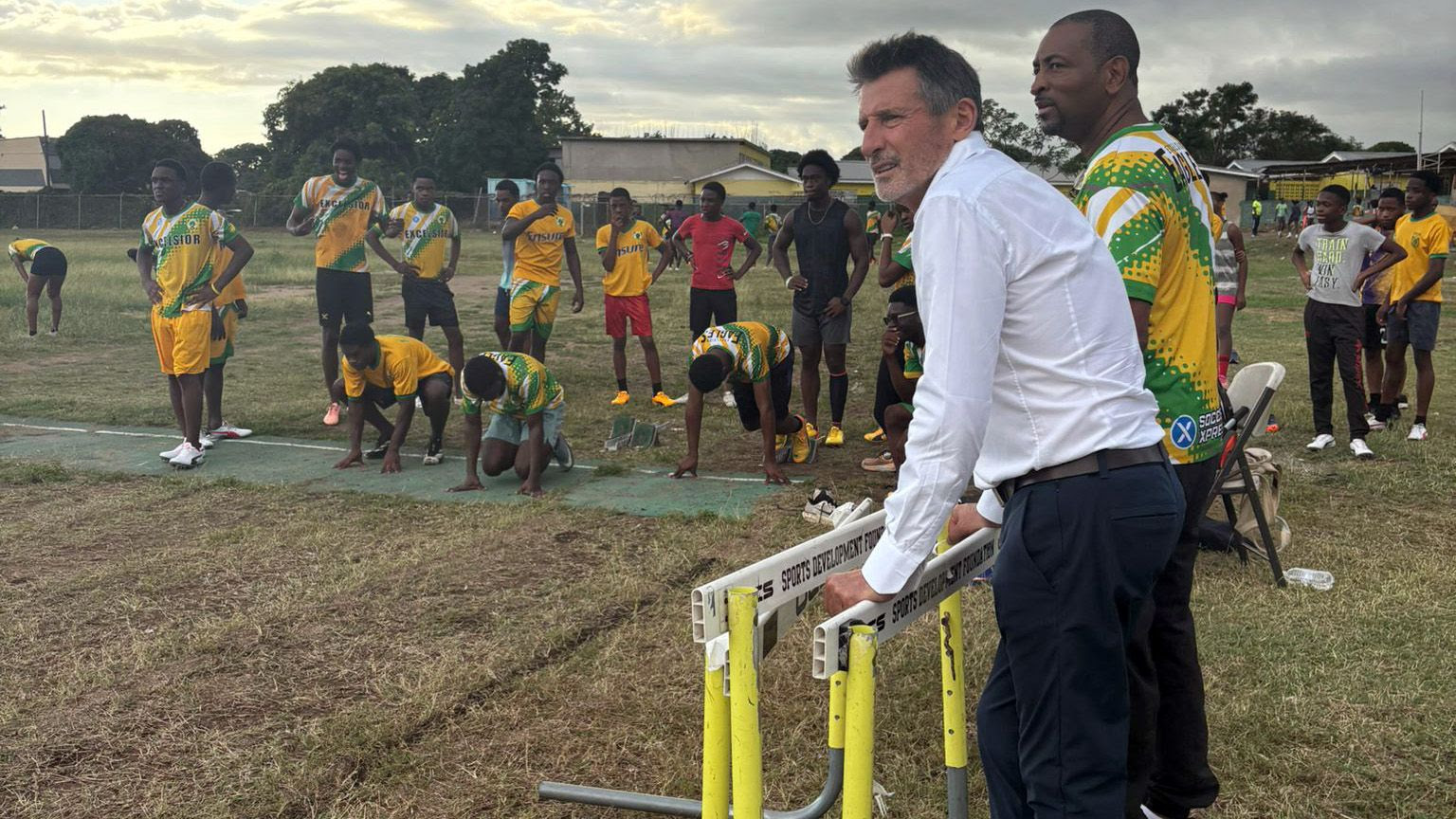
President Sebastian Coe has confirmed at the culmination of his official visit to Jamaica that World Athletics will provide financial and technical support and resources to be distributed through the National Federation in the aftermath of Hurricane Melissa.
“During my time here, we have looked at how World Athletics and the International Athletics Foundation can best support redevelopment efforts both financially and through programmes delivered in conjunction with the Jamaica Athletics Administrative Association (JAAA), and with the support of NACAC Athletics, to help athletes continue to train and compete,” said Coe.
“The International Athletics Foundation will provide financial support of US$100,000, with the distribution of funding through an agreed process as per previous solidarity funds via the JAAA, and programme support focused on ensuring athletes from the impacted western side of the island can continue to train and compete in regional and global championships, including the CARIFTA Games in Grenada in April and the World Athletics U20 Championships in Oregon, USA, in August.
“Our funding will be allocated to areas such as transport and accommodation to ensure impacted athletes have access to facilities for training and competition, and replacement of equipment, rather than infrastructure, considering that this is a local and national government responsibility.”
Coe also confirmed that World Athletics will support a new 5km road race to be launched in Jamaica with the President himself as Patron – with the objective of raising funds in the aftermath of Hurricane Melissa and encouraging the local population to benefit from becoming more active.
“We should not underestimate the power of sport, and especially athletics as the mother of all sports and Jamaica’s national pastime, to help the people overcome the challenges Hurricane Melissa has presented, and its role in helping to rebuild the nation, to help return to a semblance of normality, to re-energise the population, and to improve mental health and promote resilience in the face of such adversity,” added Coe.
On his official visit from 4-7 January, Coe made courtesy call visits to Jamaica’s Prime Minister Andrew Holness, Minister of Culture, Entertainment, Gender & Sport Olivia ‘Babsy’ Grange, Leader of the Opposition Mark Golding and Mayor of Kingston Andrew Swaby, and visited the British High Commission, accompanied in each meeting by JAAA President Garth Gayle and other members of the JAAA Executive. Coe also met Jamaica Olympic Association President Christopher Samuda and visited several schools and colleges to witness training and meet athletes and coaches.
“Jamaica is a nation synonymous with athletics and one of the powerhouses of our sport,” said Coe. “It is impossible to think of athletics without names like Usain Bolt, Shelly-Ann Fraser Pryce, Yohan Blake or Elaine Thompson-Herah.
“From Jamaica to the world, this small island nation punches far above its weight on the international scene thanks not only to the natural talent of its athletes, but also the steady leadership provided by JAAA, which, along with the support of government and other stakeholders, has ensured the infrastructure is in place for generations of athletes to enter the pipeline to elite international level.
“Athletics is deeply embedded in Jamaican culture, driving high participation, public engagement and national unity. Their athletes serve as powerful global ambassadors, strengthening Jamaica’s international brand and soft power.
“Evident from my visits to local schools over the past days, I have seen for myself the rich talent pool that points towards a continued bright future for the sport in Jamaica as it looks to not only win more global titles but also build a broader participation base and host future World Athletics events.”
Coe also thanked Jamaica’s Usain Bolt for working with World Athletics on the promotion of the inaugural Ultimate Championship.
“For a number of years our sport was dominated by Usain – a colossal figure to whom we owe an enormous debt of gratitude,” he said. “Jamaica’s own son did so much to elevate our sport on a global scale, and we are delighted that Usain has agreed to support the promotion of our new global championship. We look forward to welcoming him and many Jamaican athletes to Budapest in September 2026.”
[World Athletics]

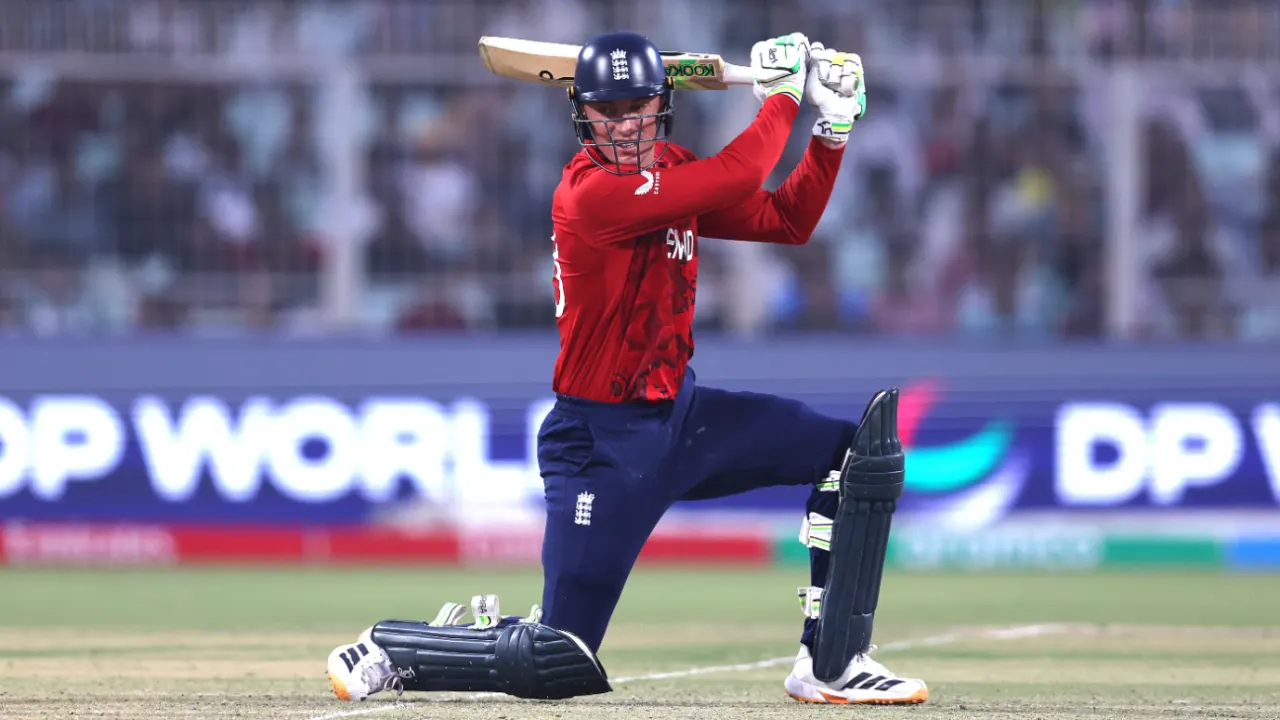
It was another nervy affair against an associate nation. But England’s Super Eight hopes remain on course after a five-wicket victory over Scotland in Eden Gardens, moving them up to second in Group C of this T20 World Cup with a game to play.
Tom Banton’s unbeaten 63 off 41 deliveries – his fourth T20I fifty – ultimately quelled a testy chase of 153, which began with openers Phil Salt and Jos Buttler falling inside the first two overs to nibbling seamers Brandon McMullen and Brad Currie.
Banton’s arrival triggered a vital 66-run stand with Jacob Bethell, and he was similarly engaging with Sam Curran for their partnership of 46 which brought the runs required below the number of balls remaining. Having managed just 4 from nine deliveries across knocks against Nepal and West Indies, Banton, who struck four fours and three sixes, watched on as Will Jacks smashed Brad Wheal for a six down the ground and then pulled the quick behind square to seal victory with 10 balls to spare.
Much like Nepal in England’s opening victory, Scotland will rue missed opportunities with the bat. They were dictating terms midway through the 13th over, with skipper Richie Berrington leading a 71-run stand with Tom Bruce. Berrington’s hard-hitting against spinners Adil Rashid and Liam Dawson which made amends for a stuttering powerplay of 42 for 3 after losing the toss. Jofra Archer was the key aggressor in those first six overs, finishing with 2 for 24 as he ticked over to 50 T20I dismissals.
When Dawson pocketed Bruce (24) and Rashid did for Berrington (49) in the space of four balls, England did not relent. Only four boundaries were scored in the remainder of the innings, with three of them to Oliver Davidson, which included a towering six over cow corner off Archer on his way to a T20I career-best 20 not out.
Having left runs out there, Scotland were always going to be up against it. Though they were gifted wickets, such as Harry Brook’s dismal flick over his shoulder to short fine leg for just 4, Banton’s brutal striking took England home in this first completed T20I between these Auld enemies.
Brief scores:
England 155 for 5 in 18.2 overs (Jacob Bethell 32, Tom Banton 63*, Sam Curran 28, Will Jacks 16*; Brandon McMullen 1-23, Brad Currie 1-21, Brad Wheal 1-23, Michael Leask 1-33, Oliver Davidson 1-12) beat Scotland 152 in 19.4 overs (Michael Jones 33, Richie Berrington 49, Tom Bruce 24, Oliver Davidson 20*; Jofra Archer 2-24, Jamie Overton 1-23, Sam Curran 1-33, Adil Rashid 3-36, Liam Dawson 2-34) by five wickets
[Cricinfo]
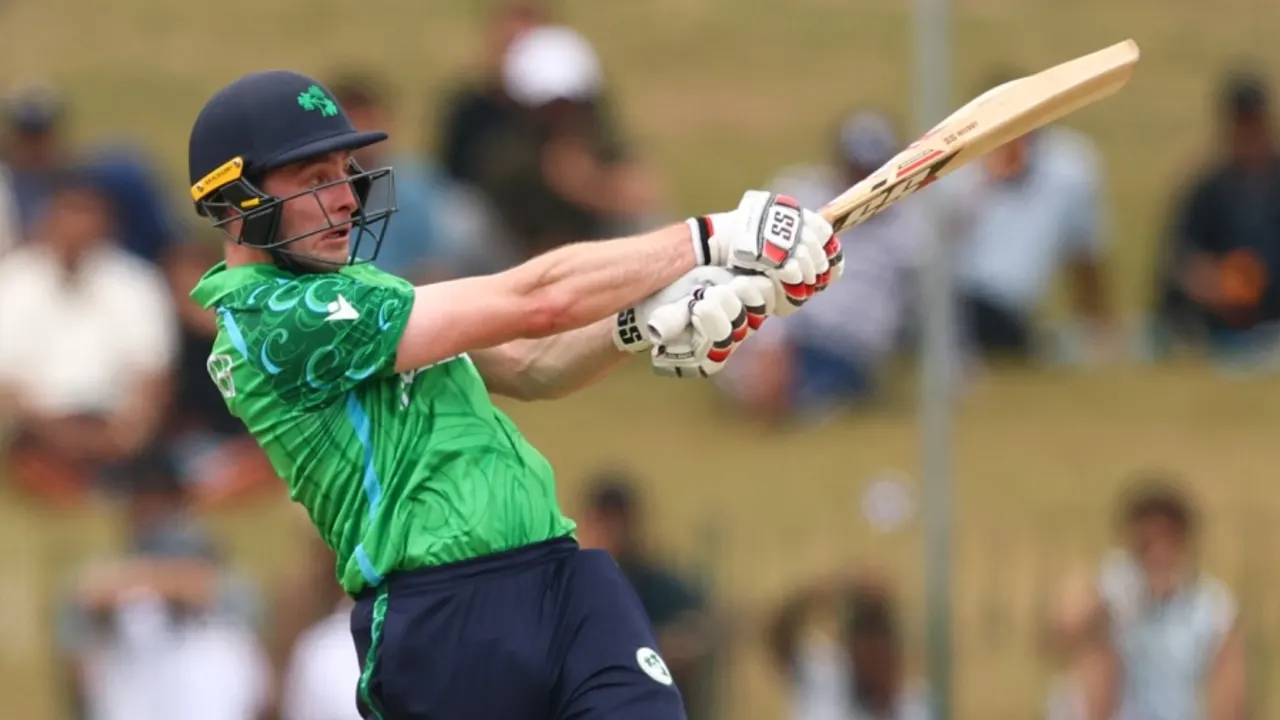
Ireland muscled the highest score of the 2026 T20 World Cup en route to a dominating win over Oman in Group C to keep their Super Eights hopes alive, at least mathematically.
Lorcan Tucker, standing in for the injured Paul Stirling, muscled 94 not out as Ireland walloped 235 for 5. They hammered eight sixes in the last three overs alone – more than Oman had in the tournament until then – and the last five overs produced 93 runs.
In response, Oman were bowled out for 139 with two overs left unused, the innings characterised by a rush of wickets following an early turbocharge from 44-year-old Aamir Kaleem, who muscled 50 off 29 balls.
Playing his first game of the competition, left-arm spinner Shakeel Ahmed struck thrice in the powerplay to leave Ireland in trouble at 45 for 3 after five overs. Each of the three wickets had a different skill at play: Tim Tector was dismissed with an arm-ball, Ross Adair was beaten in flight as he skied one to mid-off, and Harry Tector was bowled, done in by dip and turn.
There was more trouble for Ireland as Kaleem, also a left-arm spinner, struck to remove Curtis Campher in the eighth over. Two balls later, he should have had Tucker on 18, but for a missed stumping by Vinayak Shukla. Deceived in flight, Tucker seemed to have been stumped down leg, but third umpire Ahsan Raza deemed Shukla to have broken the bails with the hand in which he didn’t have the ball. Replays, though, seemed to indicate both gloves were in contact with each other. Had it been given, Ireland would have been 65 for 5.
For the first 14 overs, Oman’s mantra was pace off. And that meant Tucker had to adjust to a slow surface. Out went the agricultural heaves, out came the scoops and paddles. Tucker and Gareth Delany raised their half-century stand off just 33 deliveries, with Tucker getting to his half-century first with a ferocious sweep behind square off Kaleem. This was only the second half-century by an Irish captain, after Andy Balbirnie, in a men’s T20 World Cup.
With their spin options exhausted by 14 overs, Oman turned to their seam options in a bid to restrict Ireland. This is when Delany chose to leave his imprint on the game, muscling Jiten Ramanandi for two sixes off his first two deliveries in an 18-run over. Then he went after Faisal Shah, flat-batting a six off a slower-length ball to raise a 28-ball half-century. That was to be the start of the carnage that saw Ireland muscle 93 off the last five overs.
Tucker began the 18th over on 60 and ended it on 86 as he took apart Mohammad Nadeem with three sixes and two fours. Suddenly, a first century by an Irish batter at a men’s T20 World Cup loomed, but George Dockrell’s cameo – 35 not out off nine – provided the perfect finish. Ireland had smashed an incredible 156 off their last ten overs.
Jatinder Singh fell for his third low score, while Ashish Odedara, playing his first game, was run out taking a casual stroll. After two ordinary outings, Kaleem showed what he is capable of in a sensational powerplay take-down, reminiscent of his half-century against India at last year’s Asia Cup. When he got to a half-century, off just 28 deliveries, he became the oldest half-centurion in men’s T20 World Cup history. At 97 for 2 in the 11th over, Oman were well on track.
Then from 107 for 3, they slumped to 108 for 5 before Josh Little, the left-arm seamer, picked up the wickets of Ramanandi and Nadeem Khan to inflict further damage. By then, it looked increasingly likely Oman wouldn’t even bat their overs. And they didn’t, the margin of defeat of 96 runs, much bigger than it seemed when Kaleem set them up in the first half.
Brief scores:
Ireland 235 for 5 in 20 overs (Ross Adair 14, Harry Tector 14, Lorcan Tucker 94*, Curtis Campher 12, Gareth Delany 56, George Dockrell 35*; Shakeel 3-33) beat Oman 139 in 18 overs (Aamir Kaleem 50, Hammad Mirza 46, Sufiyan Mehmood 10; Mathew Humphreys 2-27, Barry McCarthy 2-32, Josh Little 3-16, George Dockrell 1-06) by 96 runs
[Cricinfo]

Two days out from a will-they-won’t-they India vs Pakistan contest, the weather in Colombo has largely been clear. But the Sri Lanka Department of Meteorology has warned of a low-pressure system developing in the Bay of Bengal, which indicates a high risk of rain that could disrupt the marquee World Cup game on Sunday evening.
The weather forecast for Sunday in the Khettarama area of Colombo, where the R Premadasa Stadium is located, shows warm and humid conditions to start the day, with temperatures peaking around 30° to 31°C. However, scattered thunderstorms are predicted throughout the afternoon, with a 50-70% chance of rain.
With the game set to begin at 7pm local time, some models suggest heavy thundershowers in the hours before the scheduled start, which might lead to a delayed toss, or a shortened game. While clouds are expected to linger, some forecasts indicate a slight clearing trend after 8pm, though isolated showers remain possible through the night.
The Premadasa, however, features a sophisticated drainage system and specialised ground staff protocols designed to handle Colombo’s tropical downpours. And unlike many international venues that only cover the pitch, the Premadasa has enough covers to protect the entire playing area. This prevents the outfield from soaking up water in the first place.
The staff also manually push water from one cover to the next until it reaches the perimeter drains. This method is often faster and more effective than using mechanical super soppers. Under standard conditions, the ground typically becomes fit for play within 45 to 60 minutes after heavy rain stops.
There’s also some rain expected the day before, on Saturday, which could disrupt India’s scheduled training session at the ground.
The weather in Colombo has otherwise been largely dry, making any rain unseasonal for this time of the year. So far, none of the matches in Sri Lanka of this T20 World Cup has been impacted by inclement weather, even though there have been a few close calls – such as Sri Lanka’s match against Oman, where rain was predicted but fell hours after the match ended.
Both India and Pakistan, meanwhile, currently have four points each after playing two games. But India are ahead in Group A due to a superior net run rate of 3.050 to Pakistan’s 0.932. If rain in Colombo forces a washout, both sides will get one point each as there is no reserve day for group-stage matches.
[Cricinfo]

Russia killed opposition leader Alexei Navalny using dart frog toxin, UK says

Tom Banton 63* sets up nervy win for England

Landslide Early Warnings issued to the districts of Kandy and Nuwara Eliya extended

Advisory for Severe Lightning issued to the Western, Sabaragamuwa and Southern provinces and Badulla and Nuwara-Eliya districts

Tucker 94* headlines Ireland’s thrashing of Oman

High risk of rain in marquee India vs Pakistan T20 World Cup game in Colombo

‘Dates have the highest sugar content to fight Coronavirus’

Sunday Island 27 December – Headlines

#SundayIsland 17th December – Headlines

Sunday Island – 28th March

Sunday Island Headlines – 21 March

Sunday Island – 21st February – Headlines
-

 Features7 days ago
My experience in turning around the Merchant Bank of Sri Lanka (MBSL) – Episode 3
-

 Business7 days ago
Remotely conducted Business Forum in Paris attracts reputed French companies
-
 Business7 days ago
Four runs, a thousand dreams: How a small-town school bowled its way into the record books
-

 Business7 days ago
ComBank and Hayleys Mobility redefine sustainable mobility with flexible leasing solutions
-

 Business4 days ago
Autodoc 360 relocates to reinforce commitment to premium auto care
-

 Midweek Review4 days ago
A question of national pride
-
 Opinion3 days ago
Will computers ever be intelligent?
-
 Midweek Review4 days ago
Theatre and Anthropocentrism in the age of Climate Emergency