
News
China reveals plans to resume maritime research after Lanka’s one-year ban

By Shihar Aneez
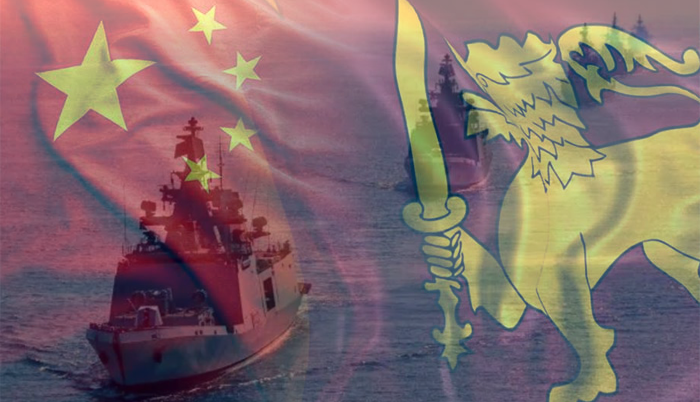
ECONOMYNEXT –China is planning to start its maritime research in the Indian Ocean, a top Beijing government official said, as a temporary one-year ban imposed due to strong Indian protests comes to an end in January 2025.
Sri Lanka’s previous government has imposed a temporary one-year ban on all foreign research vessels visiting Sri Lanka for research purposes. The move came in December last year after strong security concerns raised by India on Chinese research vessels.
Qin Boyong, Vice Chairperson of the National Committee of the Chinese People’s Political Consultative Conference (CPPCC) discussed the plans to resume maritime research when she met President Anura Kumara Dissanayake on Wednesday (18).
During the meeting, President Dissanayake highlighted the importance of completing the unfinished sections of the Central Expressway under Chinese management and expressed hopes to expedite the commencement of supply hubs and institutional projects centered around the Colombo Port City and Hambantota District, the President’s Media Division (PMD) said in a statement.
“Ms. Qin Boyong stated that there are plans to restart maritime research activities, which were temporarily halted for various reasons, along with initiating relevant projects,” the PMD said.
“Furthermore, she mentioned that Chinese companies intend to establish themselves in the Hambantota investment zone, aiming to provide Sri Lanka with better global access.”
“She also revealed that preparations are underway to warmly welcome President Anura Kumara Dissanayake during his future visit to China.”
China’s comments on resuming maritime research activities in the Indian Ocean comes two days after the Indian government expressed confidence in Sri Lanka of giving due care for the security concerns over the visits of Chinese research vessels.
Indian Foreign Secretary Shri Vikram Misri on Monday (16) said India’s understanding was that the Sri Lanka government is looking at the issue and there are a number of considerations Sri Lanka needs to take into account while India has highlighted their perspectives including the role that India plays in maritime security, maritime research.
The Foreign Secretary’s comments came during a media briefing after Sri Lanka President Anura Kumara Dissanayake met India’s Prime Minister Narendra Modi on a three-day official visit.


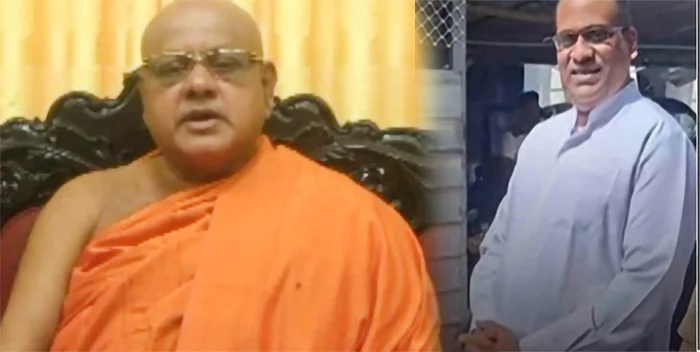
Retired Senior Professor Kotapitiye Rahula Anunayake Maha Thera has requested the Commissioner General of Prisons to allow Bodu Bala Sena General Secretary Ven. Galagodaaththe Gnanasara Thera to retain and wear his robes while in custody.
In a letter to the Prison Commissioner General yesterday (6), the senior prelate said Gnanasara Thera belonged to the Sri Jayewardenepura Kotte Sri Kalyani Samagri Dharma Maha Sangha Sabha of the Mahavihara lineage.
The letter was issued following reports that Gnanasara Thera had been produced before court in civilian attire.
Rahula Anunayake Maha Thera said he was not expressing any objection to, or opinion on, the court judgment concerning Gnanasara Thera, stressing that the supremacy of the judiciary was fully respected.
However, he said matters relating to a monk’s robes came under the authority of the monk concerned and the Maha Sangha Sabha to which he belonged.
According to the letter, the removal of a monk’s robes was an ecclesiastical matter that should be carried out with the approval of the Mahanayake Thera of the relevant Nikaya or Maha Sangha Sabha.
The senior prelate said that, in keeping with ecclesiastical law and established tradition, a monk should be permitted to retain and wear his robes, including when being taken outside the prison.
Disregarding this established practice could set a wrong precedent for the Buddhist Sasana, he warned.
Rahula Anunayake Maha Thera said the Sangha Sabha had received no report indicating that Gnanasara Thera had committed an offence under the Vinaya Pitaka or that there was any other serious ecclesiastical reason warranting the removal of his robes.
He said it was the responsibility of the relevant Sangha Sabha to conduct a disciplinary inquiry and determine whether a monk should be disrobed or allowed to retain his robes.
Accordingly, the senior prelate requested the prison authorities not to remove Gnanasara Thera’s robes and to allow him to wear them while in custody.
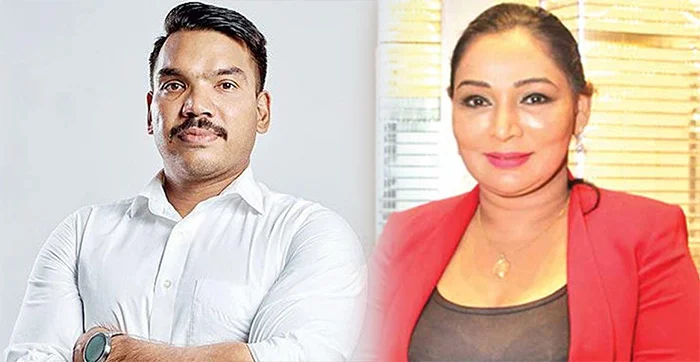
SLPP MP Namal Rajapaksa and former Krrish Group Executive Director and businesswoman, Janaki Siriwardena, who are in remand custody over the controversial ‘Krrish’ deal, were further remanded until 16 October by the Colombo Chief Magistrate’s Court yesterday.
Colombo Chief Magistrate Asanga S. Bodaragama made the order after considering submissions by officers of the Commission to Investigate Allegations of Bribery or Corruption (CIABOC) and counsel representing the suspects.
The Chief Magistrate also ordered that the decision on the suspects’ bail applications be announced on October 16.
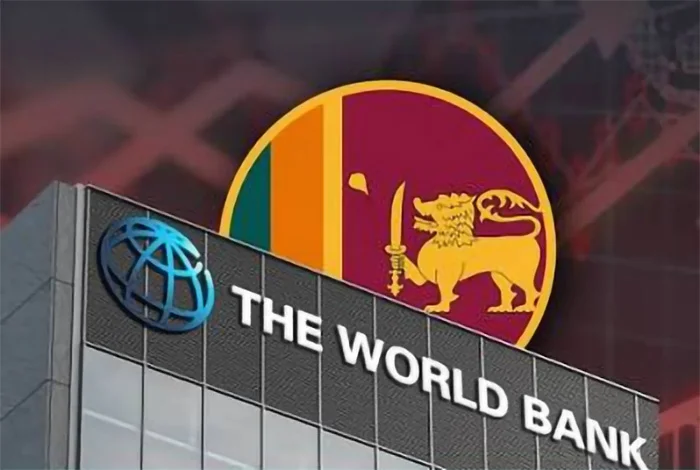
Sri Lanka’s economy reached a significant milestone, reaching pre-crisis levels. But the recovery remains incomplete and uneven, with household incomes and labour market outcomes still lagging the broader economic rebound, says the World Bank Group in its twice-yearly economic outlook.
Released yesterday, the latest Sri Lanka Development Update, From Recovery to Transformation, projects Sri Lanka’s GDP to grow by 4.4% this year, exceeding earlier projections, driven by strong industry performance and steady growth in services.
Growth is projected to slow to 4.2% in 2027 as the post-crisis rebound fades and productivity remains weak. Heightened downside risks, including prolonged volatility in global energy markets and the potential impact of El Niño, could affect productivity and food security.
“Sri Lanka’s reclassification as an upper-middle-income country, especially in a challenging global environment, is a testament to the hard work of its people and the government’s commitment to recovery. But reaching this milestone marks a beginning, not the end — the country needs to seize this momentum to transform its economy and create jobs,” said Gevorg Sargsyan, World Bank Group Country Manager for Sri Lanka. “Sri Lanka can capitalize on sectors with immense potential such as agrifood, investing in the policies, infrastructure, and enabling environment that allow farmers, businesses, and investors to drive the next phase of growth.”
Sri Lanka’s economy has expanded for twelve consecutive quarters, with real GDP increasing 4.7% in the first half of 2026 and returning to 2018 levels. Fiscal performance has also been strong, with the primary budget surplus rising sharply. However, inflation has picked up in recent months, driven by higher energy and food prices, and poverty remains well above pre-crisis levels at 16.9%.
Moving from recovery to transformation will require shifting the engine of growth away from government spending toward increased private investment, exports, and productivity growth, supported by better infrastructure, a stable environment for investment, and greater private sector involvement in key areas of the economy.
The report includes a special focus on agribusiness as a key driver of future growth, jobs, and poverty reduction. While primary agriculture accounts for about 8% of GDP, the broader agrifood system — spanning food processing, logistics, trade, and food services — contributes an estimated one-sixth of GDP and over 40% of employment.
Agribusiness also accounts for nearly 30% of goods exports, making it a vital source of foreign exchange and rural livelihoods. Sri Lanka also competes successfully in global markets in tea, coconut, cinnamon, seafood, and rubber.
Despite this strong foundation, analysis in the report shows that targeted reforms to trade policy, public spending, infrastructure, and access to finance could unlock a new wave of private investment and expand opportunities across Sri Lanka’s agricultural value chains, particularly for smallholders and rural communities.
The report recommends policy measures to establish a more predictable, export-oriented policy environment and to repurpose public spending from inefficient subsidies toward productivity-enhancing investments in agricultural research and climate-smart technologies.
These can be complemented by improvements to quality infrastructure, digital traceability, and cold-chain logistics, as well as reforms to land tenure and access to finance to unlock long-term private investment, especially for smallholders and agribusinesses.
The Sri Lanka Development Update is a companion piece to the South Asia Economic Update, a twice-yearly World Bank Group report examining economic developments and policy challenges across the South Asia region.
The October 2026 edition titled Adopting AI for Growth says growth in South Asia is expected to increase to 6.9% this year, with strong domestic demand keeping the region resilient to global shocks.
The report explores how AI adoption can help build new sources of growth for the region by boosting labor productivity, expanding export opportunities, and improving public service delivery.

Senior prelate urges authorities to allow Gnanasara Thera to wear his robes in prison

Nalanda on the cusp of reaching knockout stage as unbeaten run continues

PM ‘Rings the Bell’ at CSE to champion financial literacy and investor education

From regime change project to ‘Know BJP’ initiative

Fuel queues return

The Great AI Schism: When the Titans of Tech tell us to slow down

‘Dates have the highest sugar content to fight Coronavirus’

Sunday Island 27 December – Headlines

#SundayIsland 17th December – Headlines

Sunday Island – 28th March

Sunday Island Headlines – 21 March

Sunday Island – 21st February – Headlines
-

 Latest News7 days ago
Gold winner Tharanga gets brand-new Honda Vezel from SLAAJ
-

 News6 days ago
US-assisted ‘Ice’ detection: NPC to examine IGP’s move to transfer drug-busting team
-

 Editorial5 days ago
Colombo Port drug bust: The plot thickens
-

 News7 days ago
Civil society activist accuses govt. of favouring Ven. Gnanasara
-
 Editorial6 days ago
Drug busting, transfers and trust deficit
-

 Features3 days ago
The first woman in the foreign service or Ceylon Overseas Service it was then called
-

 Latest News4 days ago
Tharindu Rathnayake, bowlers secure Asian Games Bronze for Sri Lanka
-
 News6 days ago
Sri Lankan facing death penalty in Saudi Arabia: Mano G appeals to Crown Prince