
News
China poised for diplomatic windfall in Sri Lanka elections

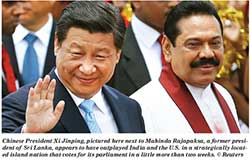
Beijing backs politicians and influential Buddhist leaders, expert says
MARWAAN MACAN-MARKAR, Asia regional correspondent, Nikkei Asian Review
BANGKOK — China is cultivating a wide swathe of political allies in Sri Lanka ahead of the nation’s general elections on Aug. 5, marking a break from throwing its lot in with one dominant political camp.
Foreign policy insiders in the small South Asian nation reckon the strategy fortifies the edge China has over geopolitical adversaries India, Japan and the U.S. when it comes to influencing a country that straddles an increasingly contested stretch of the Indian Ocean.
This diplomatic shift, the insiders say, has been marked by quiet, behind-the-scenes meetings between Chinese emissaries and the leading political parties vying for votes ahead of elections that in a little more than two weeks will determine parliament’s 225 lawmakers.
The coronavirus’s impact in Sri Lanka provided China with an opening to demonstrate its newly tuned diplomacy. Song Tao, minister of the international department of the Chinese Communist Party’s Central Committee, in June hosted a video conference with leaders of Sri Lanka’s major political parties to cultivate bipartisan bonds under the guise of fighting COVID-19.
The island nation has reported 2,674 infections and 11 deaths. According to Luo Chong, a spokesperson of the Chinese embassy in Colombo, the meeting was a goodwill gesture that has been repeated with other allies in the wake of the pandemic. “The International Department of the Communist Party of China conducted several joint-video conferences with different parties in Sri Lanka, Nepal, [the] Philippines, Indonesia and Arab counties, which is a common practice, especially under the current COVID-19 situation,” he told the Nikkei Asian Review.
The pandemic has boosted China’s influence in Sri Lanka, a veteran Sri Lankan diplomat said, referring to a $500 million loan President Gotabaya Rajapaksa desperately sought from China to help fight COVID-19.
“China is the only international player who has the funds to help with such emergencies,” the diplomat said. “Beijing was prompt because it knows which political players it is closer to in Sri Lanka — the Rajapaksas,” referring to the president and his elder brother Prime Minister Mahinda Rajapaksa, a former president.
But seasoned observers of Chinese diplomacy read more into Beijing’s preelection encounters with parties across Sri Lanka’s political spectrum.
Patrick Mendis, a visiting professor of global affairs at the National Chengchi University, based in Taiwan, said the CCP constantly adjusts its diplomacy based on previous outcomes. “It has remarkable agility to change as China learns from its past mistakes in Sri Lanka,” Mendis said. “Now, it supports not only political parties but influential Buddhist leaders, as China realizes the power of the Buddhist clergy in domestic politics.”
In 2015, China was perceived as backing then incumbent President Mahinda Rajapaksa. But Mahinda lost his reelection bid in a shock setback for the country’s most politically influential clan, the Rajapaksas, who had displayed signs of dynastic ambitions.
That 2015 poll, the second after the Rajapaksas presided over the end of a nearly 30-year Civil War, was marked by allegations that India, the regional power in South Asia, and China were bankrolling competing campaigns.
The Rajapaksa camp accused the Research and Analysis Wing, India’s spy agency, of pouring funds into a coalition of anti- Rajapaksa political parties to defeat Mahinda in his run for a third term.
Former President Maithripala Sirisena ended up winning, and his camp accused a Chinese company with investments in Sri Lanka of financing the Rajapaksa campaign.
Last year, in November, Gotabaya Rajapaksa, a former military lieutenant colonel, won a decisive mandate in the presidential poll, signaling voter appetite for a strongman leader after five years of a divisive and dysfunctional administration under an anti-Rajapaksa coalition.
While China burrowed deep into Sri Lankan politics — it has even commissioned local pollsters to gauge voter sentiment — it was also lavishing multibillion-dollar loans on the country for large infrastructure projects ranging from a new harbor and airport to highways. Not surprisingly, China accounts for 10% of Sri Lanka’s ballooning external debt of $55 billion. Compare that number to $88 billion, the size of the island’s economy
The China-funded projects have become a hot-button issue during election cycles as some Sri Lankan voters take a dislike to foreign money paying for strategic assets. “This was never the case before,” a senior South Asian diplomat said. “Foreign policy and foreign investment [used to have] bipartisan backing no matter which party won, but that has changed over the last few years, and strategic investments have become campaign fodder.”
As for Japan, for decades Sri Lanka’s largest bilateral lender and development partner, it now must deal with the Rajapaksa tilt toward China. Mere months into his first term, Gotabaya Rajapaksa has sent mixed messages to Japan about the fate of two multibillion-dollar infrastructure projects, both of which were championed by the previous coalition government.
One is an elevated light railway system through parts of Greater Colombo, the island’s largest commercial city. The new government says the rail will have to be delayed.
The other is an expanded container terminal in Colombo Port, which also has Indian and Sri Lankan backers. The tripartite agreement, signed in 2019 by the previous government, is also at the whim of the Rajapaksa government, which wants new terms. Japan appears unmoved for now. “There is no such fact that Japan and Sri Lanka have agreed to revise the plan of the LRT project,” an official at the Japanese Embassy in Colombo told Nikkei, referring to the Light Railway Transit project. “We understand that this project has so far been implemented as planned by the Sri Lankan implementing agency.”
But India’s government is fuming over the matter, especially now that the Rajapaksa camp is turning the Colombo Port container terminal project into an anti-India campaign issue.
Diplomatic sources in Colombo say India eyed a stake in the Colombo Port as a counterweight to China’s growing dominance in Sri Lanka’s maritime economy.
“The Indians don’t trust the Rajapaksas,” said a diplomat from a Western embassy in Sri Lanka’s former capital. “They see them as doubled-tongued. A reversal on the port project would see India returning to the pre-2015 days of distrusting Colombo.”
The U.S. faces a similar quandary. A $480 million grant under Washington’s so-called Millennium Challenge Corporation was partially meant to help upgrade Sri Lanka’s transport and logistics infrastructure, but it too has become an electoral football, as it was during the presidential election in November. Rajapaksa has profited from the anti-MCC campaign rhetoric of his ultranationalist constituency among the country’s Sinhala-Buddhist ethnic majority.
The U.S. may have to bite this political bullet to achieve its longer-termstrategic vision in the Indian Ocean, which includes Sri Lanka.
“Washington’s attention to Sri Lanka appears to be increasingly fueled by geostrategic concerns about China,” said Nilanthi Samaranayake, director for strategy and policy analysis at the Center for Naval Analysis, a Washington-based think tank. “[There is more] attention on Sri Lanka than ever before… [and there willbe] questions [after the elections] about which direction Sri Lankawill move in regarding its policies toward India, the U.S. and China.”


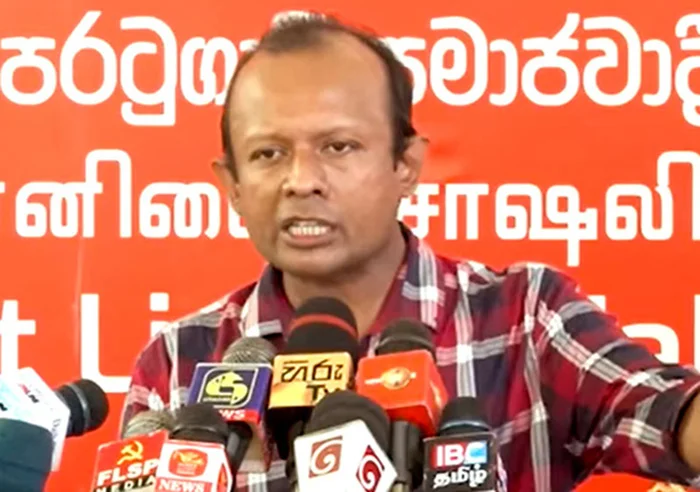
The Frontline Socialist Party (FSP) yesterday accused the government of seeking to use the proposed Protection of the State from Terrorism Act (PSTA) to suppress popular political activity, claiming that some of its provisions were more repressive than those of the Prevention of Terrorism Act (PTA).
FSP Education Secretary Pubudu Jayagoda told a media briefing, in Nugegoda, that the definition of terrorism in the Bill was so broad that it could be used to label almost any form of popular political activity as terrorism.
He said the Bill’s approach to defining terrorism was based largely on attempts to compel a government, or an international organisation, to do, or refrain from doing something, rather than on internationally recognised criteria, such as killings, causing serious bodily harm, kidnapping or acts intended to spread terror among the public.
Jayagoda also alleged that the Bill transferred substantial powers from the judiciary to the executive, while extending powers of arrest, investigation and detention to the armed forces, in addition to the police.
He claimed that the government had sought to portray the Bill as a replacement for the PTA while retaining or introducing provisions that could facilitate political victimisation and repression.
The FSP also questioned the government’s decision to proceed with the Bill, despite having previously sought public views on an earlier draft.
Jayagoda said a draft had been published earlier this year, with the period for public submissions ending on February 28, but the Bill subsequently gazetted was essentially the same draft with some provisions rearranged.
Jayagoda also referred to a letter reportedly sent by Attorney-at-Law Saliya Peiris, a member of a Committee, chaired by President’s Counsel Rienzie Arsecularatne, that had been appointed to draft the legislation. He said Peiris had stated, in the October 06 letter, that changes had been made to the draft prepared by the Committee.
“This means that even the Committee, appointed to prepare the Bill, was a deception,” Jayagoda alleged.
He said that the PSTA was fundamentally similar to the Anti-Terrorism Bill introduced by the previous government, in 2023, which the National People’s Power (NPP) opposed and challenged in court.
“If the NPP opposed that Bill then and is now bringing the same legislation before Parliament, the government must explain its position,” he said.
Jayagoda called on NPP MPs to oppose the PSTA in Parliament and urged trade unions and other groups to build a broad public movement against the legislation.
He challenged the government to an open debate on the Bill.
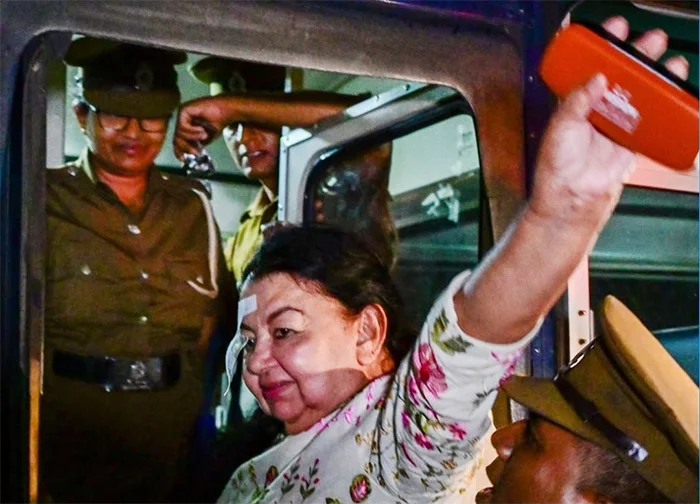
Former First Lady Shiranthi Rajapaksa was yesterday remanded until 13 October after being produced before the Colombo Magistrate’s Court following her arrest by the Commission to Investigate Allegations of Bribery or Corruption (CIABOC).
Shiranthi, wife of former President Mahinda Rajapaksa, was arrested at her residence on Poorwarama Road, Kirulapone, after CIABOC officers recorded a statement from her for nearly two hours.
According to the CIABOC, the arrest was made over allegations that Rs. 10 million obtained from the National Savings Bank through the Siriliya Saviya organisation was misappropriated.
The money was allegedly obtained to provide a Computed Tomography (CT) scanner to the children’s hospital. Investigators allege that the scanner was not provided and that the funds were instead unlawfully used.
CIABOC is investigating alleged offences under the Public Property Act and corruption-related provisions in connection with the transaction and other financial activities involving Siriliya Saviya, which was headed by Rajapaksa.
Rajapaksa returned to Sri Lanka on Monday night on a flight from Malaysia after travelling overseas for medical treatment. She left for Singapore on 16 September after being admitted to a private hospital in Colombo on 15 September following an illness.
She had been due to appear before the Financial Crimes Investigation Division (FCID) on 13 October in connection with its investigation into the financial affairs of Siriliya Saviya.
Meanwhile, her lawyers filed an anticipatory bail application before the Maligakanda Magistrate’s Court on Monday, seeking an order preventing her arrest in connection with the FCID investigation.
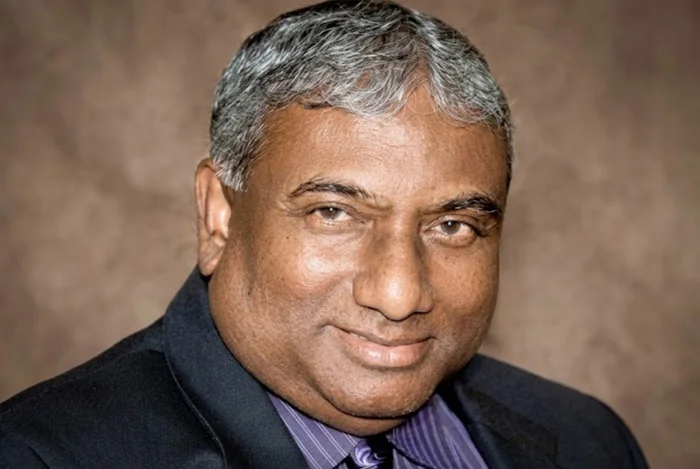
Former National Savings Bank (NSB) Chairman Pradeep Kariyawasam was yesterday granted bail by the Colombo Magistrate’s Court following his arrest by the Commission to Investigate Allegations of Bribery or Corruption (CIABOC).
Kariyawasam, husband of former Chief Justice Shirani Bandaranayake, was arrested in connection with the Bribery Commission’s investigation into the ‘Siriliya Saviya’ account linked to former First Lady Shiranthi Rajapaksa.
The investigation concerns financial activities involving the Siriliya Saviya initiative, which was headed by Rajapaksa, wife of former President Mahinda Rajapaksa.
CIABOC is continuing investigations into the alleged financial irregularities relating to the account.

Showers above 100 mm are likely at some places in the Western, Sabaragamuwa, Central, Uva and Southern provinces and in Anuradhapura district

PSTA worse than PTA: FSP

Shiranthi R remanded until 13 Oct.

Former NSB Chairman Kariyawasam granted bail

Katchatheevu row: India SC urges fishermen to avoid Sri Lankan waters

Remembering Juvenal, Coke, Acton and Machiavelli

‘Dates have the highest sugar content to fight Coronavirus’

Sunday Island 27 December – Headlines

#SundayIsland 17th December – Headlines

Sunday Island – 28th March

Sunday Island Headlines – 21 March

Sunday Island – 21st February – Headlines
-

 Editorial7 days ago
Colombo Port drug bust: The plot thickens
-

 Features5 days ago
The first woman in the foreign service or Ceylon Overseas Service it was then called
-

 Editorial6 days ago
Fuelling discontent and protest
-

 News4 days ago
Geneva takes up Sallay’s case and govt. ignores opportunity to answer accusations
-
 Foreign News5 days ago
Ten injured after car crashes into rugby supporters in Australia
-

 Latest News6 days ago
Tharindu Rathnayake, bowlers secure Asian Games Bronze for Sri Lanka
-

 News5 days ago
Nearly 20 Iranian tankers stranded off Lanka amid US sanctions
-

 Features4 days ago
Sri Lanka Cricket Bill: Governance reform is not yet a cricket strategy