
Features
Children go hungry as food prices soar

By Archana Shukla
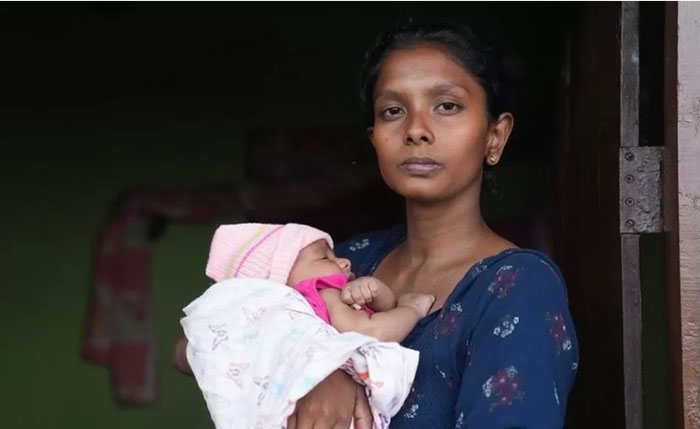
(BBC) The three-year-old is losing weight and complains of leg pains and weakness. The doctor’s diagnosis is clear – Nitisha is underfed and malnourished.But the treatment suggested is difficult to come by for her family – wholesome meals.
Like many people in Sri Lanka, this family from a tea estate village in Hanthana, in the centre of the country, have seen their finances collapse.
“We manage two meals a day and it’s the same thing – rice with potatoes or lentils. We can’t afford anything else,” says Harshini, Nitisha’s mother. For weeks, the family has not had milk or eggs, she added.
Harshini’s younger daughter – just a month old – was also born underweight. The baby lacks thyroxine, a key growth hormone. The child joins the growing list of infants born with low birth weight – a direct impact of depleting gestational nutrition.
Food has been at the centre of Sri Lanka’s economic crisis. Incomes are shrinking and food prices soaring. Families are forced to skip meals and go hungry.Many children in Nitisha’s village are becoming ill more often now. Doctors in the region say they are seeing more younger patients who are not getting enough to eat.
“Effects of malnourishment takes time to show,” according to one doctor who asked not to be identified. “Currently most underfed children are using the stored reserves in the body, but a continued nutrition insufficiency would have long term impact.”
UNICEF estimates approximately 56,000 children in the country are suffering from severe acute malnutrition.Around a third of Sri Lankan households do not have a secure source of food and almost 70% are reducing meal sizes, according to the latest World Food Program figures.
In Hanthana, 24-year-old Kanchana is in her fourth month of pregnancy and is expecting twins.
“With the twins I often get hungry, so I eat rice. Fish, eggs, fruits is better but expensive. We have to choose between paying for the tests and medicines or buying expensive food.”
In another village a few kilometres away, we met Devi. She is pregnant with her second child but is severely anaemic and underweight. Options to improve her health are limited – a rice meal and free vitamin supplements from the government clinic.
“I wanted my second pregnancy to be healthier, but this is worse. Doctor says my child’s development will be affected if I don’t eat well.”
The situation is precarious. The BBC spoke to 10 pregnant women in the area. Everyone was looking for assistance to go about their daily life. A government programme providing nutritional packets for pregnant women was suspended last year due to a lack of funds.It restarted last month, but only a few have received the benefit.
“Many of us have applied for it, but almost half my pregnancy period is over and I haven’t received even one packet,” Devi said.
Christian Skoog, Unicef’s country representative in Sri Lanka, said: “The mothers are not as nourished or as well-fed as they were before. It was already an issue, and it has gotten worse. Low birth weight is a big issue in Sri Lanka because women do not get enough nutrition during pregnancy or during gestation.”
“Most of these children, from primary grades, were coming to school without eating anything,” according to Anoma Sriyangi Dharmawardhane, Vice Principal of Horawala Maha Vidyalaya in Mathugama in Southern Sri Lanka. “Daily, at least 20-25 children were fainting during school assembly three to four months ago”.
The school started offering porridge and a midday meal programme with support of parents who volunteered to cook. It relies on donations to continue the program.Community kitchens and food handouts like these are helping to fill the gap in parts of Sri Lanka, but still many children are going hungry.
“At least 20% of children get no breakfast and go to school [on an] empty stomach,” according to S Visvalingam, President of the Food First Information & Action Network (FIAN), Sri Lanka.
For the last six months, FIAN has been organising food programmes for primary and secondary school children.Visvalingam said more students are dropping out of school, particularly in the worst-affected tea plantations areas in north and east Sri Lanka.
“These school food programmes, an assured meal a day, are helping get these children back to schools,” he said.
“The food programmes are helping, saving lives and preventing things from getting worse. But it is still a stop-gap measure,” said Skoog.
After initially denying it, Sri Lankan government officials have acknowledged the growing crisis of acute malnutrition. Recent data from the health ministry’s family health bureau showed stunting, low height for age, wasting and low weight-for-height among children has gone up significantly in the last one year.In October, the government said it would double its initiative to give out free lunches at school and hand out supplements for toddlers.
However, Visvalingam warns that Sri Lanka’s problems are likely to get worse before they get better.
“I don’t think [the] financial crisis can be resolved in the short term, and through this period the problem of nutrition is only going to get worse,” he said.




by Jehan Perera
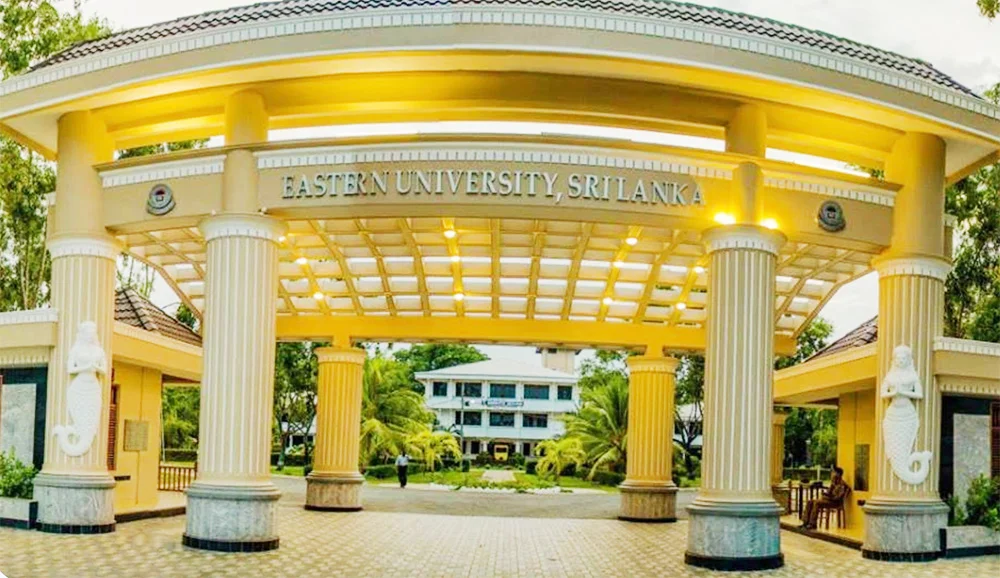
There is an important change in the way peace is being understood in Sri Lanka. The notion that peacebuilding is not simply the responsibility of governments, politicians and peace organisations, but is also a responsibility of educational institutions, appears to be permeating the consciousness of at least a section of the academic community. This was visible on International Peace Day at an event held at Eastern University by the Faculty of Health-Care Sciences. The event was unusual not least because the medical and nursing faculty of the university had decided that peacebuilding was relevant to its academic and professional responsibilities.
Peacebuilding has too often been treated as something undertaken after conflict, when the fighting has stopped and the immediate task is to rebuild relationships between communities. But peace cannot be sustained by governments and peace organisations alone. If it is to become long lasting, the values and practices of peace have to become part of the institutions through which a society educates its younger generations. Universities and other educational institutions are therefore important to peacebuilding. They are among the places where the foundations of a culture of peace can either be built or neglected.
The experience of the Faculty of Health-Care Sciences at Eastern University provides a practical example of what this can mean. Led by its Dean, Prof Thillainathan Sathaananthan, the faculty organised an event which went beyond the ordinary academic scope of a medical faculty. University academics are experts in writing project proposals and applying for research grants. On this occasion, the members of the Faculty of Health-Care Sciences used those skills to apply for a UNESCO grant that they won to conduct an International Peace Day event. The significance lies less in the Rs 200,000 grant than in the decision to use the university’s institutional capacity and resources to invest in peacebuilding. The event at Eastern University needs to be understood as more than a successful university programme. It represents a possible paradigm shift in peace thinking.
Institutional Commitment
The Peace Day event obtained the support of the university administration, including Vice Chancellor Prof P Peratheepan, and reached out to secondary schools in the vicinity to mobilise their attendance. The event itself was meticulously organised. There were cultural items including traditional and modern dance and song in the three languages, performed by combinations of solo, duet and multiple singers, dancers and actors drawn in part from nearby secondary schools. There was a panel discussion by senior academics on the general theme of peacebuilding and how to prepare for it. A discussion among the students followed, where each student spoke on behalf of a religion that was not theirs. This is significant because peacebuilding cannot remain an idea discussed by specialists at conferences. It has to become part of the way institutions educate and prepare people for life in a plural society.
The Faculty of Health-Care Sciences at Eastern University has provided a model through its Peace Medicine course modules that were introduced to the curricular as a compulsory core course over 10 years ago. Two senior academics, Dr Kuveriel Eliyas Karunakaran and Dr Thillainathan Sathaananthan, have written a book on “Peace Medicine- A Health Care Concern” that was published five years ago. Its Peace Medicine Module integrates principles of medical ethics, compassion, equity, social justice and community engagement into health education and practice. In his introduction, former Vice Chancellor of Eastern University, Prof T Jayasingam noted “This book is an introduction to a theme which had already been operating in the Faculty of Health Care Sciences as a course.”
Doctors, nurses and health workers know better than anyone the harm that war and violence does. They are the people who treat the wounds and trauma that violence leaves behind. In a hospital, a patient is not asked what their religion or ethnicity is before they are treated. Health care is one of the places where peace is practised every day. The Faculty has therefore found a way of connecting its professional responsibilities with the wider social responsibility of peacebuilding. The question is whether this experience can be replicated throughout the country, at universities and at other educational institutions, so that peacebuilding becomes part of the consciousness of education itself. If that happens on a sufficient scale, it can begin to generate a culture of peace that becomes increasingly difficult to reverse.
Local Action
The Eastern University event corresponded closely to the United Nations theme for this year’s International Day of Peace, “Invest in Peace – For Everyone, Everywhere, Every Day”, which honours the “everyday architects of peace”, people driving local action, laying the groundwork for stability and building lasting peace from the ground up. The emphasis on investment is important. An investment means that something is put in: time, courage and resources. There is no more violent conflict in Sri Lanka today. But the absence of war does not automatically produce a culture of peace. The factors that fed the country’s conflict have not disappeared from the world. Racism, corruption and the violation of laws and human rights are the raw materials of conflict. So too are unresolved grievances, discrimination and the failure to recognise the suffering of others.
A country that does not deal with its past does not escape it. The past can return in the next generation. This is why the experience of Eastern University needs to be replicated countrywide, both at universities and at other educational institutions. The objective should not be to turn every academic discipline into peace studies. Rather, peacebuilding needs to become part of the consciousness of education itself. Eastern University shows that a medical faculty can develop Peace Medicine. A law faculty can examine the relationship between justice, rights and peace. Faculties of education can prepare teachers to work in diverse communities, while the humanities and social sciences can examine the different narratives through which communities understand their histories. Every institution can find its own way of making peacebuilding relevant to what it teaches.
Sri Lanka has had many declarations, pledges and programmes in the past. What matters is whether these produce changes in behaviour and institutional practice. Peacebuilding requires confronting difficult issues rather than avoiding them. It requires respect for different identities, but also engagement across those identities. It requires dealing with grievances in the present while also addressing unresolved issues from the past. It requires truth, accountability, reparations and guarantees of non-recurrence. It requires people to learn that the rights of another community do not diminish their own rights. The International Peace Day event at Eastern University was evidence of a change in the way at least some academics in a part of the country deeply affected by war are thinking about their responsibilities. Peace needs to be invested in and the most important investment will be in the minds of those who will inherit the future.
 by Ahilan Kadirgamar
I have always noticed the little paper tags that are inside the packaging of some products that say quality assured or quality control. I often wonder who might have checked the product and stamped that tag, but I also forget the tag soon enough. Decades later, when I entered academia, I was taken aback by the emphasis placed on quality assurance in our universities. It is not something that could be forgotten and done away with; the entire university system is obsessed with quality assurance.
Beginning with the staff induction programme, quality assurance is drilled into the newly recruited lecturers. It is the norm, not seen as doing any harm and only trying to improve quality. It is accepted as given, and not questioned. Quality Assurance Cells and Committees are omnipresent and hover above the Departments and, at times, even the Faculty Boards. Quality Assurance reviews are feared by the Deans and Vice Chancellors. University life itself seems secondary to the rule of quality assurance. What do we make of this system of quality assurance and what are its implications for our university system?
Corporate speak
Universities globally have been going through major changes with neoliberal education policies. In many countries, universities increasingly became corporatised to be run like businesses in the 1980s. As state support for universities declined, cost cutting became the norm. They started hiring adjunct or part-time staff. Many public non-fee levying universities around the world began to charge fees. Decade by decade, tuition fees became more and more exorbitant, forcing students to take student loans. The total student debt in the United States now stands at close to US$ 2 trillion; which is about 20 times the GDP of Sri Lanka. As the higher education landscape transformed in the West, university administrations began to recruit Presidents, Vice Chancellors and administrative officials with corporate backgrounds and experience.
Such corporatisation of universities in the West has since been imported into countries like Sri Lanka, introducing a new corporate vocabulary, including quality assurance, graduate competencies, programme outcomes, intended learning outcomes, etc. University teaching has become secondary to documenting so-called outcomes. The teacher-student relationship, the environment of the lecture hall and even administering the university have been over-determined by the processes of ensuring quality. How did such major changes come about in such a short time? Indeed, academics of just two generation ago, would never have heard of these terms and processes in the Sri Lankan university system.
World Bank Trojan horse
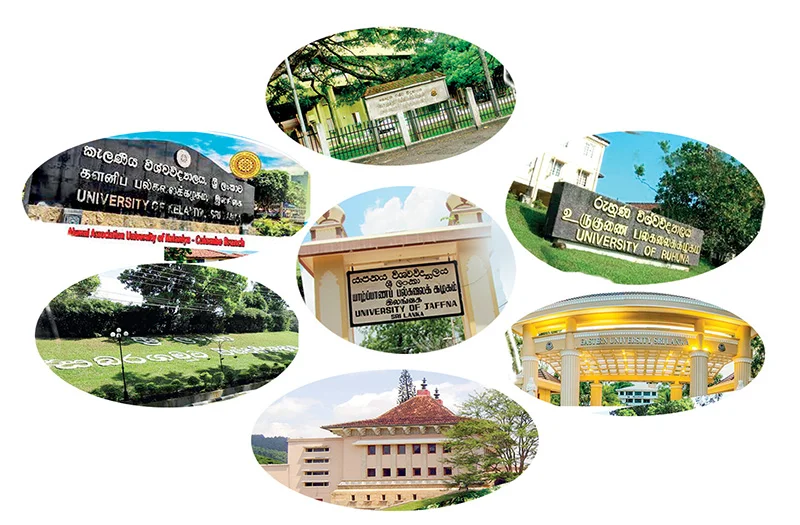
Since the early 2000s there have been a number of World Bank projects that have drastically changed the character of Sri Lankan universities. Quality assurance as a central agenda within universities, and many other changes to the working of our universities, came through these World Bank initiatives. The Improving Relevance and Quality of Undergraduate Education (IRQUE) project and Higher Education for the 21st Century (HETC) project were two such earlier projects that set up the Quality Assurance and Accreditation Unit (QAAU) under the University Grants Commission (UGC) and established systematic quality assurance reviews for state universities. The public often thinks these are grants from the World Bank to modernise our universities. However, they are not grants but loans.
The most recent such project, Accelerating Higher Education Expansion and Development (AHEAD) is a US$ 100 million loan from the World Bank implemented from 2018 to 2023, which consolidated the quality assurance structures from the earlier projects. Furthermore, these projects are implemented with tremendous arrogance, prioritising their implementation over all other concerns in the universities, when the project over six years for example accounts for just one fourth of our budget allocation for universities this year.
The AHEAD project drastically changed course curricula, sought to increase student enrolment in science, technology, engineering, mathematics (STEM) disciplines, commercialise the university research agenda and create university-business linkages. All of this was pushed to supposedly help us face development challenges. We have heard the ideological attack on our universities and even students claiming they are “unemployable graduates”. These changes to our higher education system were supposedly going to create jobs and increase employment.
The irony of the AHEAD project is that just as it was ending in 2023, apparently after having reached its targets, the Sri Lankan economy was collapsing. The World Bank often gets the direction of causality wrong. It is the economy that creates jobs for graduates, and not the training or kind of graduates that create jobs. It is decades of World Bank policies, and those of its ideological twin the IMF, that have led to such high youth unemployment, not only in Sri Lanka but also in many other countries in the global South.
Sri Lanka entered an IMF agreement in March 2023 and started a new Country Partnership Framework with the World Bank in June 2023. These programmes have little to say about, and actively discourage, government initiatives that aim to create an industrial policy or an employment creation policy. Instead, they push for austerity measures, which not only restrict the allocation for education among other sectors, but also end up contracting the economy to the detriment of increasing employment. Their goal is the commercialisation of higher education, to make universities into businesses and run them like factories.
In this context, the ideology of quality assurance is powerful. The International Organisation for Standardisation (ISO), whose different standards are necessary for marketing, is the institution that came up with the concept of “quality assurance”. It promoted quality assurance as a process of identifying defected products. Therefore, when the World Bank promotes this conceptual framing, our students are, in fact, seen as products on the assembly line, with quality assurance processes aiming to prevent the release of defected products from the university system. For the US$ 100 million we borrowed for the AHEAD project and the many more million dollars in similar World Bank projects, there is no evidence of increased employment of graduates.
Commodity fetishism
Over a century and a half ago, Karl Marx critiqued the economic analysis prevalent at that time that associated some inherent or monetary value for commodities without considering the social relations that underlie the production of those commodities. Marx called this commodity fetishism. Furthermore, he theorised that such commodity fetishism was also a reason for the alienation of human beings from the world. If our labour and what we produce is seen devoid of the social relations that underlie them, we lose our connection with the people and the world. In this process we become alienated from what we produce and the world.
We are now in a world where our students themselves are fetishised as commodities for the market. Universities are no longer communities concerned about knowledge and human growth, but mere factories producing commodities, which have to be produced without defects to be marketed. In this way, quality assurance has become the cause for the alienation of students, academics and our universities themselves, from the larger relationship with our economy and society.
Our university system does need reform. It is grossly underfunded and not providing the financial support and facilities for our students. Universities have become hierarchical spaces without the academic freedom and democratic ethos necessary for producing knowledge. Academics and students need to engage more with their communities to make their learning and research meaningful, not to mention their contribution to and integration with society. However, when it comes to even questions of governance and regulation of the universities, such concerns are merely reduced to improving quality. In our contemporary times, this singular focus on quality assurance, as opposed to addressing the larger structural issues, is crippling our universities. There may be no way out, but to put back quality assurance where it started, those little tags on goods, to perhaps be noticed but quickly forgotten.
Ahilan Kadirgamar is a political economist and Senior Lecturer, University of Jaffna.
(Kuppi is a politics and pedagogy happening on the margins of the lecture hall that parodies, subverts, and simultaneously reaffirms social hierarchies)

 The entertainment scene, globally, is agog with excitement, and, why not!
Yes, a new global star has emerged … from Thailand, and she hit the headlines by winning America’s Got Talent.
Rattikarn Amloy, known to millions by her stage name Nene Royal, was crowned the winner of America’s Got Talent (AGT) Season 21 at the live finale at Pasadena Civic Auditorium, California, taking home the USD 1 million grand prize.
The 16-year-old rocker, from the holiday island of Phuket (I’ve been to Phuket, courtesy Tourism Authority of Thailand), has struck a power chord around the world, and is the first Thai national ever to win the hit NBC show.
She beat nine other finalists, including runner-up magician Geno Ploeger, after a blistering final performance.
Nene’s story is pure rock and roll fairy-tale. She says she picked up a guitar at age seven, fell in love at the first chord, and taught herself mostly by watching videos online. That dedication earned her a music scholarship to Kajonkiet International School Phuket.
Her audition at America’s Got Talent — a swaggering, shredding rendition of The Cranberries’ classic ‘Zombie’ — exploded online, amassing over 200 million views across AGT’s platforms, more than any act this season.
She kept wowing: ‘Hysteria’ by Muse, then ‘Black Hole Sun’ by Soundgarden which earned her Spice Girl Mel B’s Golden Buzzer, sending her straight to the live shows.
For the final, she unleashed ‘Seven Nation Army’ by The White Stripes. Judge Howie Mandel shouted: “You should win. Give her the million, America.” Mel B praised her “mysterious, mystical stage presence”.
And for the grand finale, she lived every teen rocker’s dream — performing on stage, alongside US rock giants Linkin Park.
When host Terry Crews announced her as winner, the teenager collapsed to the stage floor in tears. “I’m very happy and you know I’m emotional right now,” she said.
And Thailand erupted. Her school held watch parties, posting: “You did it, congratulations, champion. We are so proud of you.”
Even Prime Minister Anutin Charnvirakul sent a personal congratulation. He had earlier hosted Nene at Government House in July, where she played guitar while he sang a Thai rock song. His office said her talent “brought pride to Thai people.”
Corporate Thailand also rallied behind her — Charoen Pokphand Foods, owned by billionaire Dhanin Chearavanont, even rented a giant billboard in Times Square, New York, to cheer her on.
With her blistering guitar solos, rock-ballad shrieks and fearless spirit, little Nene Royal has just become Thailand’s biggest new global star.
What’s more, this amazing teenager will be bringing her powerful vocals, guitar skills and signature rock-metal style to the stage, as opening act, before one of the world’s biggest rock bands, America’s Avenged Sevenfold, in Singapore, on 13 October.
Unfortunately, we are still to see a local artiste, grab the spotlight, on a global scale … like Thailand’s Nene.
Yes, they do shine, but mostly on social media, and that, too, with the aid of AI (Artificial Intellegence).

Showers above 50 mm expected in Uva, Eastern and Central provinces and in Polonnaruwa and Mullaittivu districts after 2.00 p.m.

PAFFREL raises concerns over Anti-Corruption (Amendment) Bill

First cases taken up by SC after enactment of 22A dismissed

Now NR named 4th suspect in Krrish case

Sri Lanka Red Cross Society honoured with Friend of Singapore Red Cross Award

Eastern University and the making of a culture of peace

‘Dates have the highest sugar content to fight Coronavirus’

Sunday Island 27 December – Headlines

#SundayIsland 17th December – Headlines

Sunday Island – 28th March

Sunday Island Headlines – 21 March

Sunday Island – 21st February – Headlines
-

 News6 days ago
Mastermind Naufer Moulavi among 15 found guilty
-
 Midweek Review6 days ago
Thileepan’s fast unto death: An authentic narrative that many missed
-
 Latest News5 days ago
Showers above 100 mm are likely at some places in the Western, Sabaragamuwa, Central and North-western provinces and in Galle and Matara Districts
-

 Editorial6 days ago
Big Bad Bills
-
Editorial5 days ago
Crimes punished and unpunished
-

 Features4 days ago
Beyond traditional jobs: Why Sri Lanka needs to facilitate the gig economy
-

 News6 days ago
No referendum needed for passage of 22 A: SC
-
 Latest News6 days ago
Ms. P. M. Jayadeera (Engineer) appointed Director General of Irrigation