
News
Chief Government Whip insists govt. will honour country’s debt obligations

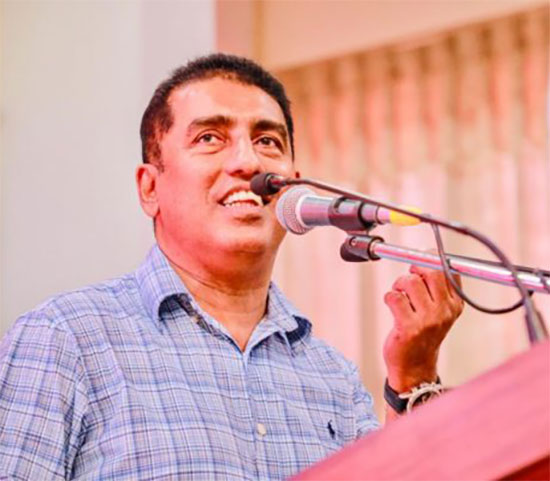
Chief Government Whip and Highways Minister Johnston Fernando said on Sunday that Sri Lanka would honour its loan obligations and settle all due installments on time.
Responding to questions of the media during an award ceremony at the Earl’s Regency in Kandy to felicitate public and private sector employees who contributed to realise the goals set by the Vistas of Prosperity and Splendour programme of President Gotabaya Rajapaksa, the Minister said that last year, too, the members of the Opposition expressed similar fears that Sri Lanka would not be able to settle its loans. “Yet, we paid our dues and we will do the same this year too. There is a challenge and we are here to face it. We will not run away from the challenges. We’ll honour our loan obligations,” the Minister said.
Minister Fernando said that people spoke of an economic crisis. “There is a shortage of US dollars. Yet that does not bar us from developing the country. We have set our goals and the government has allotted necessary funds for the development projects. It is the responsibility of each ministry to achieve the goals that have been set for that particular ministry. If we fail to do so, after another two years’ time, people would say that we did not develop this country, citing COVID-19 as a reason. We must realise the goals that had been set in the President’s policy manifesto.”
Responding to a question by a journalist that there were queues of people to purchase essential food items, the Minister said: “Queues are temporary. There had been queues during the Yahapalana government’s time, too. People were in the queues waiting for fuel shipments. There was a shortage of foreign exchange reserves. Because of the COVID-19 pandemic, we brought down many Lankans from abroad. Of them around 150,000 were still here. They used to send money home. Now that revenue was not coming. That was one of the reasons for the shortage of dollars. That was not a sign of the collapse of the economy as Opposition leader Sajith Premadasa was trying to convince the people. We would not let this country go bankrupt. As I said there is a challenge before us and we are confident that we can face this successfully,” the Minister said.
Asked to comment on social media reports that the government had issued a Cabinet paper to postpone local government and provincial council elections, the Minister said that there was no such Cabinet paper. “I have not seen such a Cabinet paper. Let’s wait and see whether such a cabinet paper will be presented but I can assure you there is no such thing I heard until now,” the Minister said.

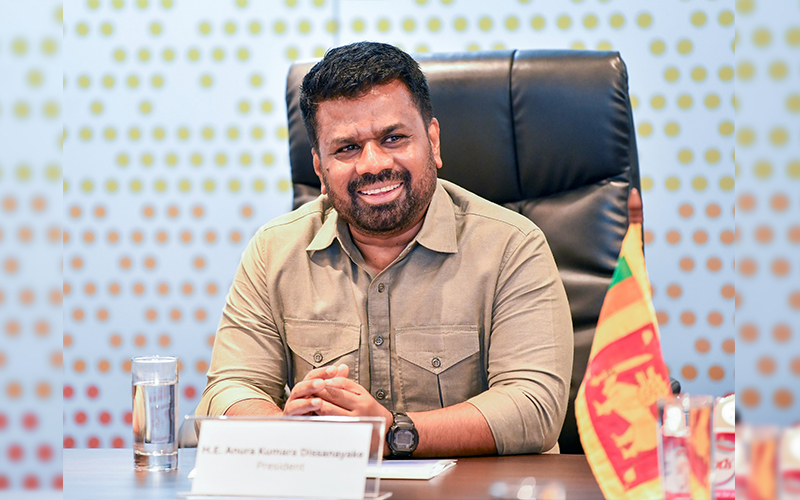
President Anura Kumara Dissanayake yesterday called for an immediate and peaceful resolution of the escalating Middle East conflict, warning that the crisis could have far-reaching repercussions on the global economy, including Sri Lanka.
Addressing Parliament, the President stressed that no military conflict benefited humanity, particularly at a time when destructive military technologies were rapidly advancing.
“Any military conflict does not create a favourable situation for any group of people,” he said, urging all parties to make urgent commitments towards peace. “As Sri Lanka, our position is that all parties involved in this war must, as soon as possible, take steps toward a peaceful world.”
He cautioned that Sri Lanka could not remain insulated from the fallout from the conflict, noting that disruptions to global oil and gas supplies, threats to migrant workers in the Middle East, and potential shocks to tourism, remittances, shipping and aviation were real concerns.
A national programme was being formulated to mitigate the impact, he said, adding that its success would hinge on broader international efforts to restore stability, the President said.
Acknowledging public anxiety shaped by past economic hardships, President Dissanayake said social stability could not be ensured through rhetoric alone but required tangible guarantees that citizens would not face another crisis.
While noting that the government had successfully navigated multiple challenges since assuming office, he described the Middle East situation as distinct due to the uncertainty surrounding its duration and outcome.
The government, he said, was closely monitoring developments. The Central Bank had conducted a review with a report on the likely economic impact expected shortly. The Ministry of Finance is also preparing an assessment of the potential effects on public life, alongside measures to ensure the uninterrupted provision of essential services locally and for Sri Lankans overseas.
“The primary responsibility for finding a path out of the crisis rests with the Government,” he said, calling on Parliament and the public to collectively confront the challenge under a unified national plan.
Providing a detailed account of the country’s energy reserves, the President said storage capacity rather than supply remained the key constraint. Excluding the Indian Oil Corporation tanks in Trincomalee, total storage capacity at Kolonnawa and Muthurajawela stands at approximately 150,000 metric tons.
Diesel stocks were currently sufficient for 33 days, with refining contributing around 1,800 metric tons daily. Petrol reserves will last 27 days, with a 35,000 metric ton shipment due on March 7 or 8 expected to extend availability to around 40 days.
Aviation fuel stocks are adequate for 49 days, supported by both daily refining and imports. Scheduled shipments include vessels from RM Parks on March 14, Sinopec on March 17, IOC on March 21 and the Ceylon Petroleum Corporation on March 28.
Crude oil supplies were sufficient to operate the refinery for 26 days, with an additional shipment expected to extend operations by a further 18 days, the President said.
“Because of this, there is no crisis regarding oil,” the President assured Parliament.
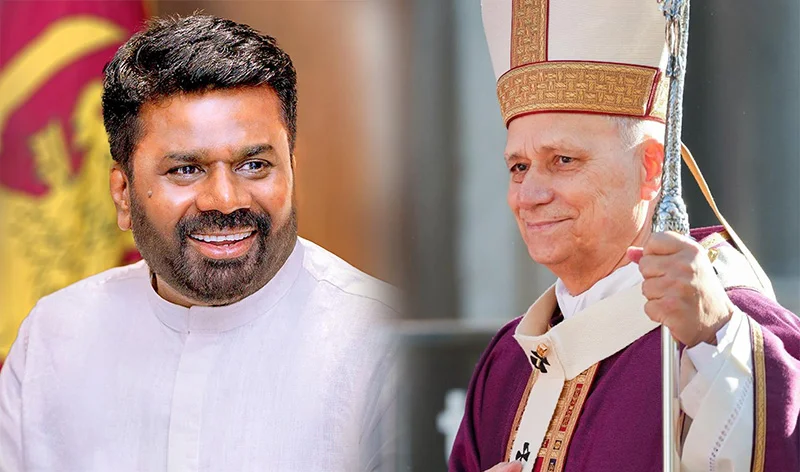
President Anura Kumara Dissanayake has invited His Holiness Pope Leo XIV to visit Sri Lanka.
The official invitation was handed over by Minister Bimal Ratnayaka to the Vatican’s Under Secretary for Relations with the States, at the Vatican, yesterday, during the Minister’s official visit to Italy, the President’s Media Division said.
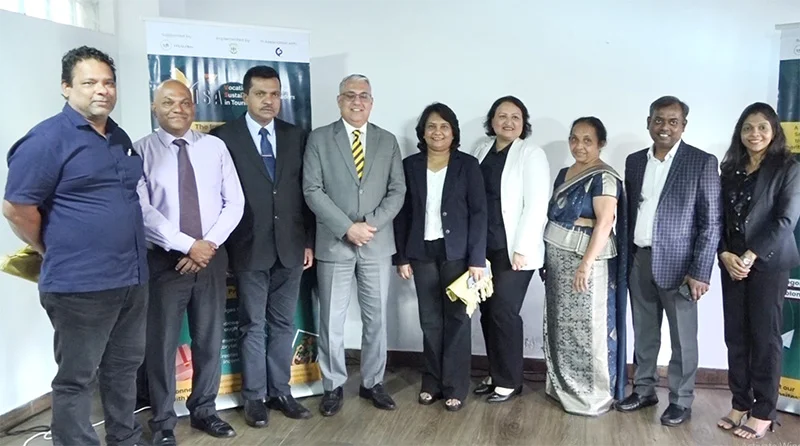
The government is in the process of drafting a new Tourism Act to address legal loopholes that currently prevent the prosecution of foreign nationals who engage in unauthorised activities while on tourist visas. Speaking at a certificate awarding ceremony for the Vocational Initiative for Sustainable Ambassadors in Tourism (VISA) project at the Royal Kandyan Hotel, Suranjith Wavita, a member of the Presidential Task Force for Tourism Development, stated that the current Tourism Act No. 38 of 2005 was flawed as it does not prescribe specific punishments, beyond deportation, for such offenders.
Wavita highlighted that a significant number of foreigners, including Chinese nationals, had been deported over the past three months for working as illegal tour guides and engaging in various trading activities. He explained that due to a shortage of Chinese-speaking local guides, travel agents often brought in “Tour Leaders” from abroad on tourist visas, which was a serious violation. The proposed new legislation aimed to empower the Tourist Police Division to arrest and produce such violators, ensuring stricter enforcement than mere deportation.
The new Act is being formulated by a committee of experts, based on various proposals and ideas to make it mandatory for anyone involved in the tourism industry to be registered and properly trained. To facilitate this, the government has already lowered the basic qualifications required for registration, allowing more locals to enter the profession legally and prevent the negative impact of unauthorised operators on the industry’s future.
Discussing the industry’s growth, Wavita noted that Sri Lanka was now aiming for an annual target of three million foreign tourists. He specifically mentioned the success of the 311-km “Pekoe Trail” in the central highlands, which attracts around 500 tourists daily and helps channel tourism income into plantation-based communities.
He also emphasised the importance of environmental protection, noting that since 25% of Sri Lanka’s flora is endemic, some foreigners enter the country with the intention of “biopiracy,” making the role of trained local guides crucial in safeguarding natural resources.
The VISA training project was implemented by the National Cleaner Production Centre (NCPC) and ASSIST, with the support of VFS Global. The event saw the participation of high-ranking officials, including Manpreet Singh Aurora (Senior General Manager, VFS Global), H.C.P. Jayaweera (Director General of National Botanical Gardens), and Samantha Kumarasena (CEO, NCPC).
Wavita concluded by praising the increasing participation of women in the tourism sector, describing it as a vital contribution to both the industry’s progress and the national economy.
By S.K. Samaranayake

AKD warns of far reaching economic consequences of Middle East war

Pope invited to visit Sri Lanka

New Tourism Act to strengthen legal action against visa violators

Court of Appeal grants interim relief, allows foreigners to drive three-wheelers

War in Middle East sends shockwaves through Sri Lanka’s export sector

Semi-final showdowns set stage for Gujarat coronation

‘Dates have the highest sugar content to fight Coronavirus’

Sunday Island 27 December – Headlines

#SundayIsland 17th December – Headlines

Sunday Island – 28th March

Sunday Island Headlines – 21 March

Sunday Island – 21st February – Headlines
-

 Opinion5 days ago
Jamming and re-setting the world: What is the role of Donald Trump?
-
 Features5 days ago
An innocent bystander or a passive onlooker?
-
 Features2 days ago
Brilliant Navy officer no more
-
 Features6 days ago
Ratmalana Airport: The Truth, The Whole Truth, And Nothing But The Truth
-

 Opinion2 days ago
Sri Lanka – world’s worst facilities for cricket fans
-
 Business6 days ago
IRCSL transforms Sri Lanka’s insurance industry with first-ever Centralized Insurance Data Repository
-

 Business5 days ago
An efficacious strategy to boost exports of Sri Lanka in medium term
-
 Features3 days ago
Overseas visits to drum up foreign assistance for Sri Lanka