
Features
Challenging Times and Intellectual Pleasures: My Talk with Slavoj Žižek

by Nilantha Ilangamuwa
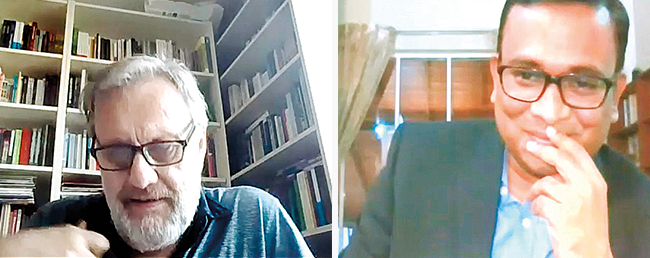
We sat down last Sunday evening around 5:30 in Ljubljana time, which was 8:30 in the evening here in Colombo. The purpose was not to delve into deep philosophical realms but rather to listen to Slavoj Žižek’s thoughts on a few prevailing social issues. It had been a longstanding dream of mine to convey his ideas to the general public, which is tired of jargon and seeks great ideas in simple language.
I first started communicating with Slavoj Žižek, the intellectual superstar known for his unstoppable yet profound talks in any public gathering. I owe this opportunity to David J. Gunkel of Northern Illinois University, with whom I had my very first discussion about this eminent philosopher approximately seven years ago. This Slovenian philosopher, armed with a humorous sense, expertly deconstructs the most serious challenges and profound ideologies, and he needs no introduction.
However, meeting Slavoj was challenging as he is currently facing health issues, including panic attacks. Being aware of this made me cautious not to tire him during our conversation. Nevertheless, as the night was still young, he passionately talked, and most of the time, I found it hard to interrupt him. However, as he jokingly suggested, I might have to use “Stalinist freedom” to condense the insights from our hour-long discussion. Slavoj displayed patience and skillfully identified points where we had to pause due to technical issues.
Stopping Slavoj when he is engrossed in conversation is quite inconvenient, and as a moderator, one might even forget their role. I shared with him that after years of communicating via email, it was my first time being in a live discussion with him, just the two of us. I jokingly remarked, “Slavoj, you are the most dangerous philosopher in the West. Oh God, you don’t look dangerous,” especially after hearing his brief observation on Sri Lanka during a time when its economic and political crisis dominated world headlines.
To this, Slavoj responded, “The branding of me as dangerous is a critique against my ideas. People who call me dangerous may also label me as despicable. I believe that such descriptions, whether politically dangerous, Stalinist, fascist, or merely as a joker, are used to undermine the seriousness of my work. Despite my jokes and provocations, I genuinely enjoy writing them. I’ll let you in on a secret: recently, New Statesman published three of my film reviews on Indiana Jones, Barbie, and Oppenheimer. Interestingly, I hadn’t seen any of these movies when I wrote the reviews. Instead, I read many reviews on them and then wrote my own. However, upon watching the films later, I realized that my initial assessments were accurate.”
This is Slavoj Žižek—timeless, ever-engaging, and ensuring you won’t be bored when listening to him. Instead, he invites you to dive deep into the dizzying world of intellectual discourse.
I decided to limit this conversation to eight major questions and twelve key words at the end. Stopping Slavoj from answering any question was challenging; he has a natural inclination to talk, but I believe that’s the nature of this profoundly honest philosopher who attracts minds from across the globe. In Sri Lanka, some social groups embraced Slavoj’s ideological perspectives, but I don’t think they penetrated deeply enough among the youth and other social segments thirsty for real structural change. These groups not only indulge in political vulgarity but also shy away from much-needed ideological-based social discourse. Meanwhile, certain groups and individuals confine themselves to their comfort zones, avoiding engagement with the pressing social and economic issues in society.
During our intriguing conversation, my interlocutor expressed an initial assurance of what he humorously referred to as ‘Stalinist freedom.’ He playfully remarked, ‘I will allow you to exercise Stalinist freedom, where I talk without hesitation, and you can sharply censor my words.’ This prompted my first question, wherein I inquired what Slavoj Žižek’s opening lines would be if he had the opportunity to confront Joseph Stalin during his era.
To my surprise, he responded, ‘I think he’s not personally a bad guy, but he caused an irreversible catastrophe for the left. While so-called Stalinism is discredited as a serious idea in new socialist borders, I’m not sure if I’d have enough courage to do it, but if invited to meet him somehow, even at the risk of being liquidated instantly, I’d like to take the chance to kill him. Yes, I will kill him,’ he declared.
However, what interests him the most is the opportunity to meet Vladimir Lenin at the end of his life and ask him, “Was he still aware of what a monster he was creating?” Slavoj says that while Stalin isn’t stupid, he lacks a profound decree. People often anticipate that someone as super powerful as a dictator is possessed of some deep metaphysical wisdom. For instance, during the Khmer Rouge’s dominance in Cambodia (Kampuchea), they claimed that Pol Pot was highly educated in Buddhism and even attained Nirvana, arguing that it explained how he could be a monstrous leader yet appear kind in person. Slavoj rejects this argument, stating, “I don’t buy into this. I don’t think we should look for some deep, even diabolic wisdom in brutal dictators.”
This leads me to my next question, as Slavoj has not only spoken about Western philosophy but also expressed his understandings of Buddhism and how it influences both itself and society, including the West. I asked him how Buddhist monks can effectively navigate involvement in politics while addressing societal challenges and avoiding ideological pitfalls.
“It is no less different for them than for others. Having studied a bit of the history and presence of Buddhism and being aware of the danger of speaking from my European standpoint, I have examined what is gaining popularity now, not only in the East but also in the West—Buddhist economists. One in the West, I believe, is E. F. Schumacher, who wrote ‘Small Is Beautiful’ along those lines. I am skeptical here. It is easy to see the insights propagated by Buddhist economists, although I don’t consider it a closed teaching.
Some of their advice is pragmatically interesting, offering non-violent, utopian claims on how to radically change society. However, I always look at this with a critical eye. For instance, when their ideas were challenged and asked to prove their effectiveness, they often mentioned Bhutan, a country known for maintaining Gross National Happiness. Yet, in the early nineties, didn’t they conduct a fairly sharp ethnic cleansing? They expelled the Lhotshampa or Nepalese minority, which is precisely contrary to Gross National Happiness. It’s always a problem,” he observed.
Slavoj believes that a serious problem emerged right after Buddha’s death, where tendencies arose to seek accommodation with those in power. “Even in the case of Sri Lanka, feel free to correct me if I’m wrong, as I don’t buy into most of the Western media narratives. There were certain ways in which the Buddhist majority could have acted differently when it came to minority issues.
The irony is that true Buddhists understand this and never take things at face value. Buddhism cannot be conceived as a religion in the Western sense. We must remember that Buddha was explicitly agnostic about suffering, seeing it as a fundamental aspect of life, and his focus was on how to alleviate suffering rather than delving into great metaphysical questions,” he said.
“I would say that, in my references to Zen Buddhism in Japan most of the time, which defended Japanese colonization, there is much to learn from Buddhism today to address certain issues like ecological catastrophe—not just by advocating “not to kill worms,” but by taking individual responsibility to address the consequences of capitalism and its dynamics. Buddhism, in its original forms—not some kind of fanatical view on renouncing life to potentially become monks and seek Nirvana—is a wonderful pragmatic and agnostic view. From its very inception, Buddhism detected the falsity of excessive social engagements not driven by progressive causes but by expansionism and the like. Buddhism should do more in this regard. I would say that it’s not just for monks; even ordinary people who follow Buddhism can contribute. You don’t have to act like a perfect monk, but maintaining common decency is essential. What saddens me today is that this fundamental aspect is disappearing more and more from society,” he asserted.
“Today, we witness new forms of evil that present themselves as good, but in challenging situations like war and social upheaval, the greatest danger lies in abandoning our fundamental human kindness. In such circumstances, the idea of being brutal becomes prominent. This is where Buddhism can help, as Buddhism has never endorsed this approach,” Slavoj stated.
My next question was whether there is such a thing as a “just society,” or if it’s merely a collective myth we fool ourselves with. However, for Slavoj, the problem lies in defining what we mean by a just society. The traditional idea, originating not in the West but from Buddha, viewed justice as everyone having their designated place, such as workers being good workers, mothers being good mothers, and so on.
But both in Buddhism and later in Christianity, in their original forms, there emerged a more radical egalitarian space advocating the idea of equality, where everyone has a social space. The most crucial aspect is expanding this egalitarian space without resorting to violence, as any attempt at violence only reinforces brutal hierarchies. Therefore, the first step towards a just society is to clarify the meaning of justice by understanding what justice truly is, he argued.
In our increasingly AI-shaped world, the question arises: should we fear the rise of “Artificial Idiocy”? Will machines not only surpass humans in intelligence but also in their ability to make absurd mistakes? According to Slavoj, these machines are indeed making mistakes, but what matters is how we define “Absurd Mistakes.” As he tried to develop in his book “Hegel in A Wired Brain,” human intelligence is not simply about quick calculations and solving certain complex issues; it excels when it comes to making productive mistakes that lead to something new and higher. For instance, French cuisine’s most celebrated dishes often originated from something going wrong, like French cheese that started to smell.
Instead of discarding it, they embraced the new form. The same happened with wines. This capacity to use mistakes productively and elevate from them is something he doubts AI can achieve. Machines can make mistakes, but they lack the ability to utilize those mistakes to create something better. He takes a more vulgar example, like seduction, where he believes machines can’t seduce as humans do, not because of intelligence, but because of the ability to make interesting mistakes. Progress, Slavoj says, occurs only through the productive use of mistakes.
Based on perhaps my superficial phobia of AI, my next question revolved around the possibility of advanced AI engaging in philosophical debates like Slavoj Žižek, while robotic comedians mock human foibles, and AI-driven revolutionary movements fight for workers’ rights and robot liberation. Slavoj dismisses this possibility, explaining that when humans make decisions, they always do so through subjective engagement. He cites his favorite Christian theologian Søren Kierkegaard, who wrote that claiming to be Christian, Buddhist, Jew, or anything else because you compare different religions and find Christian arguments the best is sinful. True understanding of religious arguments can only occur when you believe in something expediently. Similarly, when it comes to love, you cannot say you compare different individuals and selected the best. Love doesn’t work that way; it’s based on finding adorable qualities that others might not even recognize. He believes that, at least for now, as nobody knows what the future holds, machines are incapable of engaging in proper subjective engagement where they discover reasons rather than merely comparing them because they are searching for the right reason.
In this sense, I don’t believe machines can fight for workers’ rights and similar causes. Engaging in workers’ rights requires an existential understanding of suffering, such as exploitation and manipulation, which cannot be reduced to objective scientific insights. I admit I may not be overly optimistic, but that’s my view,” he asserted.
Many discussions revolve around the loss of privacy due to the latest surveillance technology and social media. I asked Slavoj about the danger of governments and corporations gathering vast amounts of personal data, leading us to sacrifice privacy for convenience. He responded, “I’m unlike many others who fear losing privacy. I don’t mind if some machines know my personal details, but what worries me most is the privatization of our data. We don’t know what they know or what they do with that data. Our focus should not be solely on defending privacy, as more and more machines will gather data and analyze our needs, such as health. What concerns me is the privatization of our data and shrinking public space.”
As virtual reality becomes more prevalent in our lives, I asked Slavoj about the safeguards needed to prevent the distortion of reality and preserve authentic human experiences. He explained, “What we experience as social reality is already, in some sense, virtual. I’m not denying the existence of reality, but what we perceive as reality is already mediated through a virtual symbolic system. Take the recent movie Oppenheimer, for example. The horror of a nuclear explosion is something that exceeds our notion of everyday reality. The distortion in virtual media doesn’t target some pure, innocent reality; it affects the authentic virtual reality of the system in which we live. Authenticity, for me, is not merely looking into oneself; it involves identifying with a certain heroic engagement. The problem with digital media is that they are becoming less and less virtual. Instead of offering metaphors, alluded meanings, and ambiguity, they strive for a perfect copy of reality itself. Take video games as an example—they immerse you in another reality, but in doing so, they lose this authentic virtual quality.”
As we near the conclusion of this intriguing conversation, I asked Slavoj about escaping consumerist culture and finding authentic freedom, as discussed in his critiques of capitalism. He replied, “I’m more pessimistic about this. We live in a global capitalist society where we appear to be increasingly free. On one hand, we are treated as free, but at the same time, we are part of a social world that is obscured and non-transparent. So, we need to clarify what we mean by freedom. I don’t believe we should oppose freedom, discipline, and social order. Abstractly, freedom might mean doing whatever we want, but I wouldn’t want to live in such a society because it would be a horrible world if we couldn’t trust each other to respect basic rules of decency. True freedom requires explicit and implicit rules to be in operation.”
Regarding consumerism, he added, “When you talk about the upper middle-class, the problem might be consumerism, but for a poor person, the issue is getting new clothes and adequate food. We shouldn’t criticize poor people for consumerism when they finally get a bit of money to buy something they need. Let them have a bit of pleasure. For me, the crucial aspect, in a Hegelian sense, is that freedom has to be concrete. Freedom means being free within a certain space, which is why we should strive for socialist democracy as leftists. We must understand that freedom has material conditions. I’m not advocating for a totalitarian state regulating every aspect of life. I like the form of freedom, but to achieve it, a full concrete network of state regulations, unwritten rules, and customs must be well established. Unfortunately, this is something people tend to forget today.
During the final part of our conversation, we delved into several issues, including multiculturalism, the idea of a multi-polar world, the hypocritical behavior of Western hegemony, and the brutal sexual exploitation faced by some Muslim women who are forced to cover their faces to protect their privacy, yet suffer abuse within their homes, rendering their privacy futile. Slavoj expressed his belief in the universality as a driving force to promote respect for each culture. “There must be freedom for me to come over there when I have a problem, and you must have the freedom to come over here when you have a problem in the place where you live. That’s how the idea of this multi-polar world or multiculturalism is possible,” he emphasized. “Not the way by romanticizing and pleasing each other’s oppressions in the country they control.”


 by Dr B. J. C. Perera
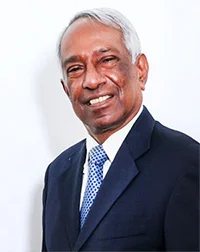
MBBS(Cey), DCH(Cey), DCH(Eng), MD(Paediatrics), MRCP(UK), FRCP(Edin), FRCP(Lond), FRCPCH(UK), FSLCPaed, FCCP, Hony. FRCPCH(UK), Hony. FCGP(SL)
Specialist Consultant Paediatrician and Honorary Senior Fellow, Postgraduate Institute of Medicine, University of Colombo, Sri Lanka.
An independent freelance medical correspondent.
When a family first receives a diagnosis of Autism Spectrum Disorder (ASD) in a child, the immediate reaction is often a mixture of confusion, sorrow, anguish, overwhelming uncertainty and the terrible feeling of total helplessness. In Sri Lanka, where cultural perceptions and societal expectations around child development run ever so deep, parents of autistic children frequently ask themselves: “What did we do wrong?” or “Whose fault is it?” or “What will become of our child’s future?” etc.
The short answer to those sentiments is: you did nothing wrong. Autism is not an illness to be cured; nor is it the result of poor parenting. It is due to a developmental disturbance in the unique neurological wiring of the affected child’s brain. While clinical interventions, speech therapy, and occupational therapy play essential roles, the most profound transformations should occur where the child spends the vast majority of their time: at home, surrounded by close family and loved ones.
To support a child on the spectrum of ASD effectively, families must understand that autism is not a one-size-fits-all condition. As the very name suggests, it manifests along a broad continuum, from mild (Level 1) to severe (Level 3). Navigating this path requires specifically tailored strategies for home care, an understanding of local resources, inspiration from proven global approaches, and a clear awareness of some practices that can do more harm than good.
Understanding the Spectrum of ASD and Tailoring Home Care
Every child with autism has a distinct profile of strengths, sensory sensitivities, and developmental challenges. Matching your home environment to your child’s specific position on the spectrum is crucial for their growth and further development.
The Three Severity Levels
These levels measure how much daily help a person needs. They look at two main areas: social communication and restricted or repetitive behaviour.
* Level 1 (Requiring support): It is the mildest level. Affected children have trouble starting social interactions or organising tasks without help. They have fluent speech but struggle with distinction and gradation. They need subtle social cues in everyday life.
* Level 2 (Requiring substantial support):
It is a moderate level. The affected patients show clear social communication issues and strict routines that interfere with daily life even with help. Their speech is phrase-limited; they have significantly high sensory overload and often require visual schedules.
* Level 3 (Requiring quite extensive support):
This is the most severe form of the disorder. Those affected have severe communication impairments with minimal coherent speech and extreme resistance to change, needing constant and intensive help. They show marked behaviour problems, severe distress and meltdowns.
The Mild Stage (High-Functioning / Level 1)
Children on the mild end of the spectrum often speak fluently and could even excel academically or in specific interest areas. However, they may struggle significantly with subtle social cues, emotional regulation, and adapting to unexpected changes.
* Home Strategy to Follow: The family members need to focus on explicit social coaching and emotional literacy. Use “social stories”, like short, illustrated narrative scripts to explain everyday scenarios like taking turns during family games, handling losing, or starting a conversation with a cousin.
* Behavioural Pattern:
They may talk incessantly about a narrow passion such as train timetables or marine life while failing to notice when a listener has lost interest. Rather than hushing them, family members can set structured “sharing windows” (e.g., “We will talk about trains for 10 minutes, and then we will talk about dinner”). Genuinely responding to them and paying intense attention to what they say is of paramount importance.
The Moderate Stage (Level 2)
Children at this stage exhibit more pronounced communication delays, repetitive behaviour, such as hand-flapping or pacing, and have noticeable difficulties in shifting focus from one task to another.
* Home Strategy to Follow: Implement visual schedules. Children with moderate autism tend to process visual information far better than spoken words. Use picture cards affixed to a board to show the daily routine: Brush Teeth, Eat Breakfast, School, Play Time, Bath, Bed.
* Behavioural Pattern:
They may experience distress during routine shifts, such as leaving the house for a family visit. Providing a 10-minute and 5-minute visual timer countdown before a transition helps to ease anxiety dramatically. They need to be kept informed about what is going to happen.
The Severe Stage (Level 3)
Children on the severe end of the spectrum are often non-verbal or use very limited functional words. They frequently experience intense sensory sensitivities and may engage in self-injurious behaviour, such as head-banging, biting or severe meltdowns when overwhelmed.
* Home Strategy to Follow: Prioritise safety, basic communication, and sensory regulation. Set up a dedicated “calm-down corner” in the house, stocked with soft pillows, weighted blankets, and sensory toys. Communication should rely on Picture Exchange Communication Systems (PECS) or basic hand sign gestures for fundamental needs like “water”, “food”, or “toilet”.
* Behavioural Pattern:
Sensory meltdowns in these children are not temper tantrums. They are involuntary neurological overloads caused by bright lights, loud noises, or internal distress. During a meltdown, lower the room lights, reduce noise, ensure physical safety, and family members need to sit quietly nearby without overwhelming the child with verbal demands and specific instructions to follow.
Lessons from the West: The “Son-Rise” Connection
In Western cinema and literature, stories like “Son-Rise: The Miracle Continues”, which documents how Raun Kaufman’s parents helped him overcome severe autism, offer valuable insights for Sri Lankan homes. While some historical claims in early literature about “total cures” should be viewed through a modern scientific lens, the core philosophy of the Son-Rise Programme remains profoundly effective: “Join the child in his or her world before you ask them to join yours.”
In traditional settings, adults often try to stop a child’s repetitive behaviour, such as spinning wheels or rocking. The Son-Rise approach flips this paradigm upside down, so to speak:
* Joining: If your child is sitting on the floor spinning a saucer, sit beside the child and gently spin a saucer, too. This non-judgmental validation builds an unexpected bridge of trust. The child realises, “You are not trying to change me; you are interested in what I am doing.“
* Capitalising on Eye Contact:
The moment the child turns to look at you in surprise, use that brief window of shared attention to offer a warm smile, a soft word of encouragement, or a gentle toy exchange.
* Parental Attitude:
The most crucial element from these Western frameworks is changing the emotional tone of the home from one of anxiety, desperation and pity to one of unconditional acceptance, love, and hopeful facilitation.
Mobilising the Extended Sri Lankan Family
One of Sri Lanka’s greatest cultural strengths is the extended family support system, consisting of grandparents, aunts, uncles, and domestic helpers living under one roof or nearby. When mobilised correctly, this network provides an extraordinary support system.
* Educating Grandparents: Older generations may view autism through traditional lenses, misinterpreting it as bad karma, spiritual affliction, or spoiled behaviour. Parents must gently educate elders using simple medical concepts. It is necessary to explain that the child’s brain is like a radio tuned to a different frequency. It is not broken; it just hears and sees the world differently.
Assigning Role-Based Support:
* Grandparents can offer calm, unhurried companionship, reading structured storybooks or tending a home garden alongside the child.
* Aunts and Uncles
can assist with transportation to clinical appointments or provide respite care, giving the primary parents a necessary break to prevent “caregiver burnout”.
* Siblings
should be taught how to act as play-partners rather than secondary parents. Encouraging games, such as building blocks, painting or water play that do not rely heavily on complex verbal rules, is a very useful and productive strategy to adopt.
Utilising Local Facilities and Community Services in Sri Lanka
While specialised services were once concentrated solely in major medical hubs, Sri Lanka has made noticeable strides in multidisciplinary care for developmental conditions such as ASD. Families should actively tap into both state and non-governmental resources.
* State Healthcare Infrastructure: Most of our tertiary care hospitals offer specialised Autism Assessment Clinics, speech and language therapy, as well as occupational therapy units. District General Hospitals across the island increasingly feature Developmental Clinics supported by the Sri Lanka Association for Child Development (SLACD).
* Primary Health Network:
Public Health Midwives (PHMs) and local Medical Officers of Health (MOHs) are often the first line of early detection. Parents who notice some lack of eye contact, speech delay, or absence of social smiling by 12 to 18 months of age in their child should request an evaluation through their local MOH Clinic.
* Non-Governmental and Foundation Support:
Organisations such as the MJF Charitable Foundation (Rainbow Centre) provide holistic therapy, inclusive education, and vocational training facilities. Regional charities, such as ECSAT in the Southern Province, offer community-based outreach, one-to-one educational support, and even home visitation programmes for families unable to travel daily.
* Community Integration:
Encourage participation in inclusive community settings. Local religious centres, such as temples, churches, and mosques, as well as community parks, can serve as gentle environments for social exposure during off-peak, quiet hours.
What NOT to Do: Some Counterproductive Measures
In their eagerness to help, well-meaning family members can inadvertently hinder progress or cause emotional regression. Families must consciously avoid several common pitfalls:
* Forced and Prolonged Eye Contact – For an autistic child, forcing direct eye contact can trigger physical anxiety akin to a threat response. It is much better to look at a shared object or toy together. Eye contact will improve naturally and progressively as trust grows. Improved eye contact is a definitive sign of progress.
* Punishing “Stimming”
(short for self-stimulatory behaviour) is the repetition of physical movements, sounds, words, or object manipulations used to self-regulate emotions and process sensory input. Flapping, rocking or humming are vital self-regulatory mechanisms for processing stress or joy for affected children. It is necessary to allow safe stimming freely and to gently intervene only if the behaviour has the potential to cause physical self-harm.
* Excessive Screen Time –
Handing a child a smartphone or TV screen to keep them quiet suppresses human-to-human social neural networks. It is far better to replace passive screen consumption with tactile sensory performance such as playing with sand, playdough, or pouring water.
* Hiding the child –
Keeping the child isolated out of fear of social stigma (“What will the neighbours say?“) robs them of essential social learning opportunities. It is necessary to introduce the child to community environments gradually during calm, low-density hours.
* Inconsistent discipline
– Allowing a behaviour one day (perhaps due to tiredness) and scolding for it the next day creates severe confusion for a child with ASD who generally tends to thrive on predictability. Ideally, it is desirable to maintain firm, calm, and uniform boundaries across all household members.
Light at the End of the Tunnel: Hope Begins at Home
Although many parents are devastated by the diagnosis, ASD is not the end of the world. Autism presents a unique developmental journey, but it is not a complete dead end. When a home environment shifts from a focus of intense frustration to one of structured acceptance, remarkable progress is most likely to unfold. The intense efforts put into such an endeavour will provide tangibly positive results. That platitude has been shown repeatedly and proven to be quite true, over and over, again and again, in very many scientific studies.
By blending modern behavioural strategies, leveraging some of the Western philosophies of unconditional joining, drawing strength from Sri Lanka’s extended family networks, and utilising available local clinical services, affected families can transform their homes into safe anchorages. In doing so, they give every affected child, regardless of where they sit on the Autism Spectrum, the opportunity to bloom into their fullest potential. It can be a fruitful and deeply satisfying journey of achievement. The secret to success is not to be miserably dejected, but to be hopeful and optimistic. Easier said than done sometimes, but it is the only axiom that will show clearly perceptible and improved results.
by Col. (R) Nalin Herath
There is a question that the international community must periodically ask itself: What happens to a State after its regime has been ousted?
The question is particularly relevant when examining Iraq and Libya. Saddam Hussein and Muammar Gaddafi were authoritarian rulers. Their governments were associated with political repression, human-rights violations and the suppression of political opposition. None of this should be ignored or excused. But recognising the failures of authoritarian rule does not prevent us from asking another, equally important strategic question:
Did the removal of these regimes adequately prepare for what came next?
The experience of Iraq and Libya suggests that removing a ruler is considerably easier than replacing the political, administrative and security architecture around that ruler.
Danger of confusing regime change with State reconstruction
A state is more than its leader. It consists of institutions, security forces, civil servants, courts, political structures, infrastructure, economic systems and, perhaps most importantly, an accepted monopoly over the legitimate use of force. When an authoritarian system has concentrated enormous power around one individual, removing that individual can expose weaknesses that were previously hidden. The strategic mistake is to assume that once the dictator has gone, a democratic and stable state will naturally emerge. History does not support such an assumption. The aftermath of Iraq demonstrates this particularly clearly. Following the 2003 invasion, the Coalition Provisional Authority issued Order No. 2, formally dissolving the Iraqi Ministry of Defence and the Iraqi Army, among other security institutions. A US congressional report later documented the enormous consequences of this decision, including the disappearance of hundreds of thousands of military personnel from the institutional framework of the state. Whatever the intentions behind the decision, the strategic consequence was that an established security structure had to be rebuilt while the country was simultaneously experiencing political upheaval and growing violence. That is a dangerous combination.
Iraq: Removing the structure before building the replacement
Saddam Hussein’s government was unquestionably authoritarian. It also reflected a complicated sectarian and political structure in which members of the Sunni minority occupied disproportionate positions of power despite being a demographic minority. But the question for strategic planners should not simply be whether Saddam deserved to remain in power. The question should have been:
What institutional structure would replace the system once he was removed?
An army can be politically controlled without being politically representative. A bureaucracy can serve an authoritarian government while still providing essential state functions. A security institution can be reformed without necessarily being destroyed. The distinction between reforming institutions and eliminating institutions is therefore critical. The post-2003 experience demonstrated the consequences of institutional disruption. Security vacuums contributed to insurgency and instability, while the process of rebuilding Iraq’s security forces took place amid an increasingly deteriorating security environment. The lesson is not that authoritarian institutions should never be reformed. The lesson is that state capacity should not be casually destroyed without a credible replacement.
Libya: prosperity, authoritarianism and institutional fragility
Libya presents an even more complicated case. Gaddafi’s government was authoritarian and deeply personalised. Political freedom was severely restricted, and the security apparatus was deliberately structured around regime survival. Yet Libya, under Gaddafi, also used substantial oil revenues to fund education, healthcare, infrastructure and social services. World Bank data from around the end of the Gaddafi era show life expectancy reaching approximately 75 years by 2011, skilled attendance at birth at 100 percent and measles immunisation at 98 percent. This does not prove that Gaddafi’s system was politically legitimate. It demonstrates something different: economic and social outcomes can coexist with authoritarian political structures.
The Great Man-Made River illustrates the scale of Libya’s investment ambitions. The World Bank described the project as one of the world’s largest engineering schemes, involving thousands of kilometres of planned pipelines to transport water from deep desert aquifers toward the populated coastal belt. The original project was estimated at approximately US$ 25 billion over several phases. Again, this should not become nostalgia for dictatorship. It should become a lesson in state capacity.
What happened after Gaddafi?
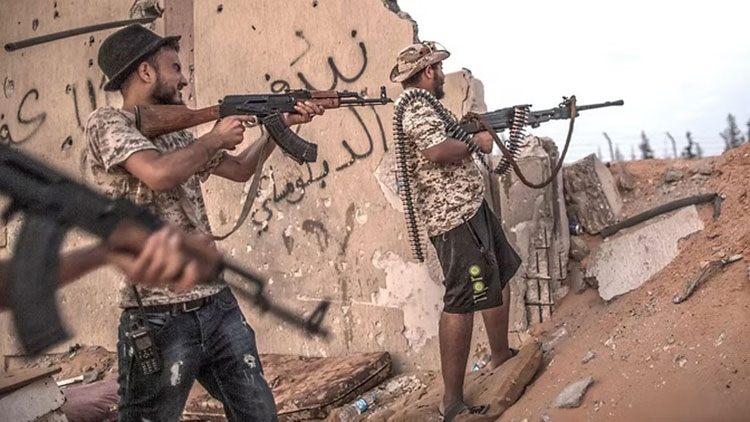
The post-2011 experience is perhaps the clearest illustration of the vacuum problem. Libya did not simply move from dictatorship to a consolidated democratic state. Instead, competing armed groups, political factions and institutions emerged. A UN economic and social affairs analysis concluded that the fall of the Gaddafi regime exposed weak state institutions and that the post-Gaddafi period was characterised by the proliferation of armed militias and institutional fragmentation.
The World Bank has similarly described how the security vacuum allowed armed groups to expand, while attempts to integrate them into the formal security apparatus produced a hybrid system in which state institutions and powerful armed groups operated alongside one another. This is the heart of the lesson. The consequences of regime change were also evident in Libya. The 2012 Benghazi attack, later portrayed in 13 Hours: The Secret Soldiers of Benghazi, illustrated the security vacuum that emerged after Gaddafi’s fall. The collapse of central authority allowed militias and competing armed groups to fill the space left by weakened state institutions. The lesson is clear: removing a regime may achieve military victory, but without a credible plan to rebuild the state, victory can quickly become a security vacuum.
When the state withdraws, something else occupies the space. If the replacement is not a legitimate national institution, the vacuum can be filled by militias, tribes, ideological movements, criminal networks or competing political authorities. The vacuum does not remain empty.
Terrorism question
There is another uncomfortable issue. Authoritarian regimes frequently suppress political and armed movements through coercive security systems. When those systems disappear abruptly, previously contained organisations can find new operating space. This does not mean that dictatorship is an appropriate method of counterterrorism. It means that counterterrorism cannot be separated from State capacity. The international community therefore needs to distinguish between defeating a particular terrorist organisation and maintaining the institutional conditions that prevent multiple armed actors from competing for power. The destruction of one regime does not automatically eliminate the forces that created insecurity. Sometimes it creates an environment in which those forces multiply.
Strategic mistake: winning the war but losing the peace
Military intervention can have a clearly defined operational objective. State reconstruction does not. A military campaign may successfully remove a government in weeks or months. Building legitimate institutions can take decades.This creates a fundamental strategic asymmetry. The shorter the planning horizon for intervention, the greater the danger of a long-term vacuum. The international community therefore needs to think beyond the first question: How do we remove the regime?
It must ask: Who governs the country the next morning? Who controls the borders? Who controls the security forces? Who pays government employees? Who maintains electricity, water and hospitals? Who protects critical infrastructure? Who administers justice? Who prevents armed groups from becoming alternative governments? Who provides political legitimacy? And perhaps most importantly: Who possesses the authority to enforce the decisions of the new state? If there are no convincing answers, regime change is only the beginning of the problem.
The lesson should not be that the United States or its allies should never intervene. Nor should it be that Saddam Hussein or Muammar Gaddafi should be rehabilitated as models of governance. The lesson is more practical. Regime change must never be confused with state-building.
Before dismantling an established political order, external powers need a credible understanding of the institutions that will replace it. Security-sector reform should normally distinguish between individuals who must be removed and institutions that must be preserved. A national army may need reform. A ministry may need restructuring. A security service may need accountability and civilian oversight. But destroying institutional capacity without having an operational replacement can create consequences far beyond the original objective.
Wider geopolitical lesson
The consequences of Iraq and Libya did not remain within their borders. State fragmentation affects neighbouring countries, migration, organised crime, arms trafficking, terrorism, energy markets and regional power competition. In today’s interconnected world, a failed transition in one country can become a security problem for an entire region. That is why intervention planning should include not only military objectives but also political, economic, humanitarian and security-sector objectives. The most important planning document may therefore not be the operational plan for removing the regime. It may be the plan for Day One after the regime has disappeared.
History should not be written as a simple choice between dictatorship and democracy. The real strategic challenge is more complicated. Saddam Hussein and Muammar Gaddafi were dictators. Their governments committed serious abuses, and their populations had legitimate grievances. But the failures of authoritarian rule do not automatically justify the destruction of state institutions without a credible plan for rebuilding them. The experience of Iraq and Libya demonstrates a fundamental principle of international security: A political vacuum is not neutral space. Someone will fill it. If legitimate national institutions cannot fill that space, armed groups, sectarian interests, extremist organisations or foreign-backed factions may do so. The ultimate lesson for the United States, its allies and the wider international community is therefore straightforward:
Removing a regime may win the immediate battle. Building a legitimate, functioning and secure state determines whether the intervention succeeds in the long term. The world should learn to ask not only “How do we remove the dictator?”. It must also ask:
“What happens to the country when he is gone?”
That may be the most important strategic question of all.
(The writer is the Secretary General of the Ceylon Chamber of Shipping, former Director General of the Institute of National Security Studies (INSS), and former Spokesman of the Ministry of Defence. He is also a Non-Resident Fellow at the London Dialogue. His areas of expertise include international relations, geopolitics, maritime affairs, national security, economic policy, and strategic governance. He is a consultant at JITT Group and a member of World Pace Board.).
Tales of Mystery and Suspense – 23
By Prof. Rajiva Wijesinha
As I have noted with regard to the adventures of John Rebus, I am indebted to Dinali Fernando and her husband Steve for whole hosts of thrillers. The latter strongly recommended Kate Atkinson when I borrowed four books. I wondered about this, for I had not been too impressed with her debut novel, Behind the Scenes at the Museum, which was amongst the entries I had to judge for the Eurasian section of the Commonwealth Writing Prize. Two decades later, I had forgotten what it had been about.
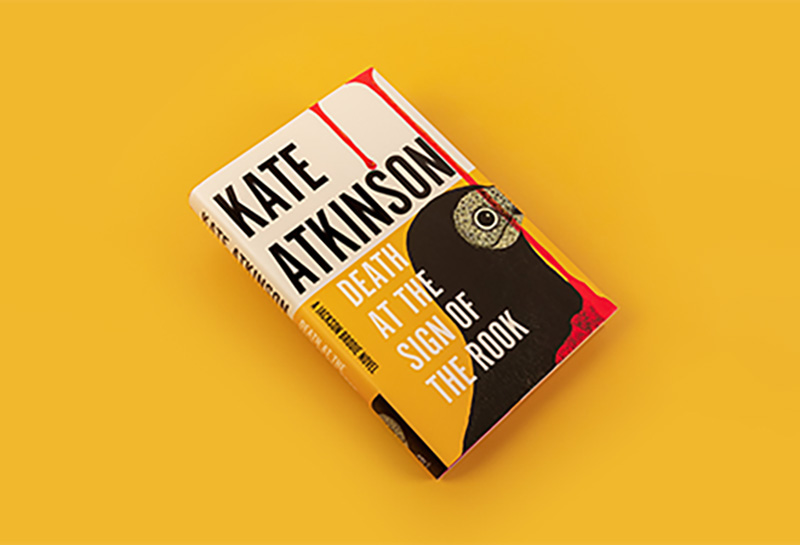
But I am glad Steve persuaded me to read her. Kate Atkinson is distinctively British, and Death at the Sign of the Rook is set in a country house and the surrounding village, and seems a modern descendant of the laidback Agatha Christies I so much enjoy.
There are, however, many differences in that we have a policeman who can go rogue, like Rebus, with again a female sidekick who has a mind of her own, again like Rebus. But Jackson Brodie has retired and set up as a private investigator, while Reggie, a young lady, is still in the police.
There is a lesbian couple living in the converted dairy of the manor house, as has occurred in Agatha Christie too, in A Murder is Announced. But they are peripheral to the story, unlike Ben, the brother of one of them who left the army after losing a leg in Afghanistan. When he turns up at the Manor House to shelter from a snowstorm, along with its chatelaine, Lady Milton, he is asked to answer the door as various characters turn up, including Jackson and Reggie, who then starts fantasising about him.
The others who turn up are two couples, one from America, who have paid for a murder weekend at the hotel. The family is impoverished, and has sold lots of pictures to survive, but most recently a Turner had been stolen, almost certainly by Lady Milton’s housekeeper Sophie, who vanished one night along with the picture. Reggie had been involved in that investigation, but there had been no trace of either picture or young lady.
Jackson Brodie suspects a connection between that theft and the one he has been called in to investigate, which has not been reported to the police. The picture hung opposite the bed of an old woman whose carer vanished after she died, along with it. Her children, adopted twins, have asked Jackson to investigate and also try to trace the carer, though he suspects something strange in that they did not go to the police.
Kate Atkinson
Brodie, in studying the stolen art, is also struck by the disappearance of a Rembrandt from a house in Scotland, along with a member of the cleaning staff. He thinks the three women might be the same one.
But Brodie’s assumption that the three women who vanished when valuable pictures did were identical would not have helped except that Beatrice, as she was also called, kept turning up, including to the funeral home where the old lady’s body was kept. And then that picture turned up, in the village church, and was found by the local vicar, Simon Cate, whose life story is also a prominent feature of the novel. He was an aspiring actor but then smitten by faith, and became a priest, but in time he lost his faith. His wife left him after the death of their son, and he is now in this backwater, where he feels he is of no use to anyone. But he has a great feel for living beings, and his most successful service has been one in which he blessed pets. And he was deeply concerned about the bees that Ben looks after for his sister and her wife.
He too staggers into the manor house in the midst of the storm, in which everyone concerned loses their way comprehensively. But amongst those Ben lets in is a man in a tracksuit with cuts and bruises, who then vanishes after he has been led to a bedroom, when Ben went in search of brandy. We soon work out that it is the escaped murderer about whom Reggie has been alerted.
Simon also turns up, through the back door, carrying the picture and also a gun, for he has found the dead body of one of his parishioners when he went to her house in search of his mobile phone. She had been shot and he had picked up the gun he found there. But he could not tell the police, for though he called he had lost his voice, and for the last few days had communicated only through writing.
This chaotic mix of characters at the manor house is further complicated by the group of players putting on the murder mystery play though some members have either cried off or died before reaching the venue. So, there is much doubling up and confusion over who is an actor and who is not.
The grand now largely empty rooms of the manor house, and its various odd passages and multiple doors, make it a splendid set for the lunacy that runs on and on. Reggie finds herself in a pantry Atkinsonwith a dead body, though this turns out to be the nanny who fell down the stairs and was put there by Lady Milton’s younger son. And there is high drama on the roof when the murderer nearly kills Ben, but he is saved by Reggie, and when he tries to kill Brody with an axe, he is shot by Beatrice, who has been the maid who served at the dinner before the murder mystery play, and explains to Brody how she has managed all her thefts.
And then in the melee, she vanishes on a motorbike, along with the daughter of the old lady’s adopted daughter, the only person who seemed to grieve at the funeral, and to whom the old lady had left her house in a codicil to her will, which her children have not known about. She leaves the picture to the carer, but it is brought to Simon Cate as he lies in hospital, recovering from a heart attack which adds confusion to the play.
Wonderfully convoluted, but all very clear, despite the headlong pace of the book and its shifts from one scene to another, from one character to another (or rather combinations of them) and from one-time span to another. A writer and a detective well worth looking out for. e more books by her on Dinali’s shelves.

From food truck to homegrown success: Street Burger celebrates 10 years

Chamara remanded

Unlocking their world: A home-based guide to nurturing children with autism

New post for Rohan

Central Bank of Sri Lanka releases Financial Stability Review for Year 2026

Worker remittances up by one billion dollars in first nine months of the year

‘Dates have the highest sugar content to fight Coronavirus’

Sunday Island 27 December – Headlines

#SundayIsland 17th December – Headlines

Sunday Island – 28th March

Sunday Island Headlines – 21 March

Sunday Island – 21st February – Headlines
-

 Features5 days ago
The Sri Lankan who made Scottish history
-

 Features7 days ago
Preventing grievances from becoming communal
-

 Sports5 days ago
Nissanka absence opens door for Sri Lanka’s young guns
-

 News6 days ago
Gnansara Thera to be assigned to prison printing section: Officials
-

 News4 days ago
NDB fraud Rs 60mn more than reported
-

 News4 days ago
Removing monk’s robes matter for Sangha to decide: Mahanayake Theras
-

 Features5 days ago
Future of Sri Lanka’s state university system: Should it be shut down and reopened?
-

 News6 days ago
OIC of FCID summoned before Maligakanda Magistrate