
Sports
Chahar, Axar and Prasidh keep Zimbabwe down to a modest total


India Tour of Zimbabwe, 2022
Deepak Chahar picked up a three-wicket haul on his India return while Prasidh Krishna and Axar Patel also bagged three wickets apiece to bowl Zimbabwe out for 189 in the opening ODI at the Harare Sports Club on Thursday (August 18). Making good use of the conditions after KL Rahul opted to bowl, Chahar did the bulk of the damage at the start while Prasidh and Axar delivered regular strikes in the middle overs to limit the hosts to a sub-par total. The score could have been even lower had it not been for a record 70-run partnership for the ninth wicket between Brad Evans and Richard Ngarava but it was still a shoddy batting performance as the first innings ended with 57 balls still remaining.
With a generous amount of swing and bounce on offer in the morning, Chahar and Mohammed Siraj bowled a testing spell to the Zimbabwe openers. Runs came mainly via extras in the first few overs before Tadiwanashe Marumani struck the first four by driving a Chahar delivery past mid-off. Having gone past the outside edge multiple times and losing a review for a leg-before decision, Chahar finally bagged the wicket of Innocent Kaia with a short delivery, with ‘keeper Sanju Samson juggling before holding on to the ball. Marumani fell shortly after, attempting a drive without much footwork and ended up edging behind. Siraj got the better of Sean Williams with a short of a length delivery to get the batter to edge to first slip, while Chahar bagged his third wicket by trapping Wesley Madhevere in front as Zimbabwe slipped to 31 for 4 in the 11th over.
Zimbabwe captain Regis Chakabva took the attack back to India by scoring a flurry of boundaries. Meanwhile, the visitors lost their second review when Chahar, who bowled his seventh straight over, rapped Sikandar Raza on the pads and replays revealed that the ball was missing the stumps. Chakabva and Raza built a steady partnership but their association came to an end on 35 when Prasidh found the outside edge of the in-form Raza in the 17th over. Chakabva had a lucky break when he reviewed a leg-before decision in a Kuldeep Yadav over after being given out. There was a faint edge according to replays but it was after the ball had passed the bat, but the third umpire thought otherwise. At the other end, Ryan Burl played some confident-looking shots but fell to a short-ball ploy from Prasidh, leaving Zimbabwe six down.
The first wicket to spin came in the 27th over when Chakabva, looking to play the cut shot, was bowled by Axar for 35. The left-arm spinner also picked up the wicket of Luke Jongwe, beating the inside edge to dismiss him LBW. While India would have hoped to wrap up the innings quickly, it did not materialise as Evans and Ngarava put on a fighting half-century partnership. The pair rotated the strike well, scored boundaries from time to time while Evans also struck the first six of the innings when he sent a Kuldeep delivery over the midwicket fence as they raised Zimbabwe’s highest ninth wicket stand against India. Ngarava also struck a six, sending an Axar delivery wide of long-on, before a yorker from Prasidh ended his stay. Axar dismissed last man Victor Nyauchi, with Shubman Gill taking a sharp catch at slip, as Zimbabwe’s innings ended with 9.3 overs still remaining.
Brief scores:
Zimbabwe 189 in 40.3 overs (Regis Chakabva 35, Richard Ngarava 34; Brad Evans 33*; Deepak Chahar 3-27, Axar Patel 3-24, Prasidh Krishna 3-50) vs India.



Harry Brook admits he was fortunate to keep his job as white-ball captain following a latte night alteraction with a nightclub bouncer in New Zealand, and says he is in the process of regaining the trust of his team.
Brook, now in Sri Lanka for England’s ODI series which gets underway on Thursday, was speaking for the first time since news broke that he had been disciplined for the incident in Wellington in October, for which he was fined £30,000 and put on a final warning for his off-field conduct.
“Obviously I made a terrible mistake,” Brook said. “Not only as a player, but as a captain. It’s very unprofessional and I should be leading from the front. “I’ve learnt from my mistakes, I’ve reflected a lot on what’s happened and I know it wasn’t the right thing to do. I want to say sorry to my team-mates, to all the fans that travel far and wide to watch, spend a lot of money on coming out to watch us play cricket and supporting us, and to the ECB for putting them in a tricky situation, and it’ll never happen again. I’m extremely sorry.”
Brook, along with a number of other England players, had been out drinking the night before the third ODI against New Zealand, with the match the final competitive fixture for England before the Ashes began three weeks later.
Brook, who says he then went on his own to a nightclub, says he was “clocked” by a bouncer when attempting to get in.
“We went out for a couple of drinks beforehand and then I took it upon myself to go out for a few more and I was on my own there,” Brook said. “I was trying to get into a club and the bouncer just clocked me, unfortunately. Like I said, I shouldn’t have been in that situation from the start. I wasn’t absolutely leathered, I’d had one too many drinks.”
Brook reported his actions to the management mid-game the next day, and came close to being sacked from his position as captain as a result.
“It was definitely going through my mind,” Brook said of the potential that he would lose his job, before adding that he had not at any stage considered resigning. “Never came into my mind. I left that decision to the hierarchy and, look, if they’d have sacked me from being captain, then I’d have been perfectly fine with it, as long as I was still playing cricket for England.
“Probably, yeah,” he added, when asked if he felt lucky to keep his job. “I think I’ve got a little bit of work to do to try and regain the trust of the players. I said sorry to them yesterday. I felt like I needed to say sorry for my actions. It’s not acceptable as a player, but as a captain it’s really not acceptable to do what I did in New Zealand. I’ll be the first person to say that. I hold my hands up.”
In the aftermath of the incident, which was kept private by England until after the Ashes had concluded, Brook sought help from Test captain Ben Stokes, who himself was involved in a high-profile nightclub fight in 2018.
“He obviously wasn’t best pleased at what I’d done,” Brook said. “But he tried to help me through it and he knows exactly what it feels like to be in this situation. We had a few conversations, but we quickly moved on.”
The news broke amid allegations of a drinking culture in English cricket, after players were regularly seen drinking alcohol during England’s tour of Australia.
“No, there’s no drinking culture at all,” Brook said. “Like I said, everybody has the ability to say no. If you want a drink, if you don’t want a drink, you’re allowed to make that decision yourself.
“It wasn’t just drinking [in Australia]. We weren’t just going out and getting leathered every day. We were having a few drinks here and there. We were playing plenty of golf, going to nice cafes, having coffees but we had a few drinks here and there. I don’t think that’s a bad thing. It’s just what human beings do.”
Despite this, England have introduced a curfew for their tour of Sri Lanka, with playing staff not allowed out past midnight.
“That’s been made as a group decision,” Brook said. “We think that it’s the best thing going forward, for the time being, to be able to put us in situations where we can win games of cricket and perform to the best of our ability.”
England play three ODIs against Sri Lanka, starting on Thursday in Colombo, before playing three T20Is ahead of next month’s World Cup. England have struggled of late in the 50-over format, losing 11 of their past 15 matches. That poor run of form will add extra pressure to the position of head coach Brendon McCullum, whom Brook threw his support behind, calling him “the best head coach I’ve had by a million miles”.
England have made a number of changes to their team since their last outing against New Zealand three months ago, with the return of Zak Crawley to the top of the order the most noticeable change. Crawley replaces Jamie Smith as opener, and will play his first List A game in over two years, having last played for England in December 2023. Elsewhere, Liam Dawson has been selected as the second spinner to accompany Adil Rashid in the middle-overs.
England : Zak Crawley, Ben Duckett, Joe Root, Jacob Bethell, Harry Brook (capt), Jos Buttler (wk), Will Jacks, Sam Curran, Jamie Overton, Liam Dawson, Adil Rashid
[Cricinfo]
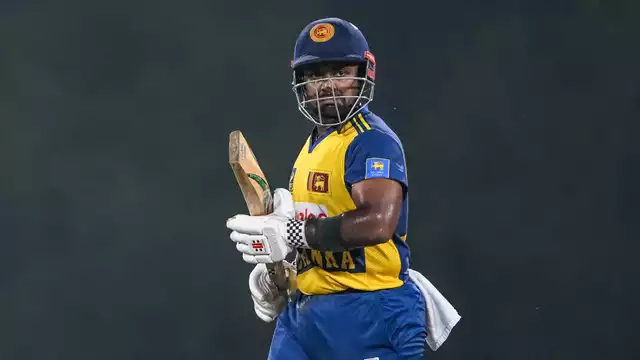
Charith Asalanka (Captain), Pathum Nissanka, Kamil Mishara, Kusal Mendis, Sadeera Samarawickrama, Pavan Rathnayake, Dhananjaya de Silva, Janith Liyanage, Kamindu Mendis, Dunith Wellalage, Wanindu Hasaranga, Jeffrey Vandersay, Maheesh Theekshana, Milan Rathnayake, Asitha Fernando, Pramod Madushan, Eshan Malinga.

On Tuesday, a day before the ICC is expected to take a final call on Bangladesh’s participation at the 2026 men’s T20 World Cup, the PCB wrote to the governing body stating that it supports the BCB’s stance on not wanting to play in India at a time of political turmoil in the neighbourhood. ESPNcricinfo has learned that that PCB also copied the members of the ICC Board in it.
It is understood that the ICC has called a Board meeting on Wednesday to address the matter of the BCB asking for Bangladesh’s matches to be shifted to Sri Lanka because of security concerns in India. It could not be ascertained if the PCB’s email led to the Board meeting being called.
The timing of the PCB email could raise eyebrows, but it is understood that it will not impact the ICC’s stance so far, of not changing the World Cup schedule and allowing Bangladesh to play in Sri Lanka, co-hosts of the tournament with India. The ICC has been firm on this and has conveyed the same to the BCB during its interactions last week.
The BCB, with the Bangladesh government’s support, has refused to travel to India for the team’s group-stage games.
The ICC and the BCB have met several times to discuss the issue, most recently in Dhaka last weekend. But neither side has shifted their stances – the ICC insisting matches must go ahead as planned and the BCB that it cannot send its team to India. January 21 – Wednesday – had been set as a deadline for a decision, less than three weeks before the start of the tournament.
The PCB’s late involvement in the matter comes on the back of a week of speculation around their possible ways out of the impasse. There were unverified reports that the PCB had offered to stage Bangladesh’s games in Pakistan and, more dramatically, that the PCB was reviewing Pakistan’s participation in the World Cup, contingent on what happens with Bangladesh.
The PCB has not commented publicly on the matter, or responded to ESPNcricinfo’s queries.
The stand-off began when the BCCI instructed Kolkata Knight Riders (KKR) to remove Mustafizur Rahman from their squad for IPL 2026. The reasons for that have never been fully explained, though a worsening of political ties between Bangladesh and India has been cited. That prompted the Bangladesh government to formally state that the Bangladesh team would not play its matches in India.
The situation has spiralled since then, even leading to a player boycott in Bangladesh, which affected the ongoing BPL, after a senior BCB official spoke disparagingly of the country’s premier players when asked about the financial implications for the BCB if Bangladesh ended up staying away from the T20 World Cup altogether
(Cricinfo)

Sri Lanka is an example of hope, recovery and resilience in a world of conflict – PM

Brook needs to ‘regain trust of players’ after New Zealand nightclub incident

Navy seizes 02 Indian fishing boats poaching in northern waters

Prime Minister participates in high-level bilateral meetings at World Economic Forum

Dushmantha Chameera, Dhananjaya de Silva return for England ODIs

T20 World Cup crisis: PCB writes to ICC supporting Bangladesh’s stance

‘Dates have the highest sugar content to fight Coronavirus’

Sunday Island 27 December – Headlines

#SundayIsland 17th December – Headlines

Sunday Island – 28th March

Sunday Island Headlines – 21 March

Sunday Island – 21st February – Headlines
-

 Editorial4 days ago
Illusory rule of law
-
 News5 days ago
UNDP’s assessment confirms widespread economic fallout from Cyclone Ditwah
-

 Business7 days ago
Koaloo.Fi and Stredge forge strategic partnership to offer businesses sustainable supply chain solutions
-

 Editorial5 days ago
Crime and cops
-

 Features4 days ago
Daydreams on a winter’s day
-

 Editorial6 days ago
The Chakka Clash
-

 Features4 days ago
Surprise move of both the Minister and myself from Agriculture to Education
-

 Features3 days ago
Extended mind thesis:A Buddhist perspective