
Sports
CH rugby captain Madusanka wants to shape the careers of youth


By A Special Sports Correspondent
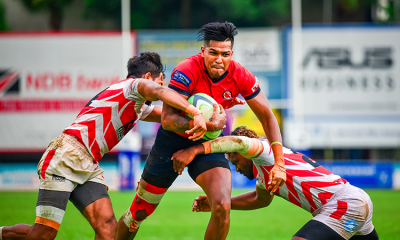
Colombo Hockey & Football Club (CH&FC) is making a massive effort to finish among the top four teams in the on-going inter-club league rugby tournament. CH&FC skipper Prasath Madusanka is spearheading that effort despite the Maitland Crescent Club not allowing space at the club’s ground for rugby practices. The club’s ground is exclusively used for cricket and hockey only at present. However, the club’s players receive all the other backing from the club to pursue rugby; the officials of the club are hiring out Race Course grounds for regular practices at a cost. Despite the challenges staring in their faces the CH&FC players are training hard to finish high on the points table after the conclusion of the second round.
As much as Madusanka focuses on his game he has an eye on the youngsters who have joined the club after having had promising school rugby seasons. “We are now forced to play with school leavers and even play them in the starting line-up. That’s a huge opportunity for them,” said Madusanka. He added that the seniors have a responsibility towards shaping the rugby futures of young talent before the former hang up their boots.
Madusanka, who plays hooker, said that he was happy with the contributions made by the new recruits. But he said that club rugby teaches many lessons and the ‘young blood’ must be receptive to them. “Sometimes I get dazed for a few seconds just after breaking up from a scrum. That’s how hard and brutal club rugby is at present,” explained Madusanka who is at present easily the best hooker in the country. He has held on to his place in the club and national side, the latter since making his debut in the Asian Five Nations in 2015.
The year 2015 was one of his finest; he has memories of being picked as the highest try scorer in the league rugby season. He played for Havelocks Sports Club that season.
He couldn’t refuse a tempting offer CH&FC made to him when he was at Havelocks. Madusanka looks back at that past and said that he switches clubs due to better benefits offered by the Gymkhana Club (CH&FC). He reminisced how the crossover was initiated by CH&FC player Rohitha Rajapakse.
However Madusanka warns that it’s increasingly hard for rugby players who are gainfully employed to at private companies to continue playing serious rugby. This he said is because private companies demand so much at work from employees who are also committed rugby players. According to him so many talented rugby players have already left the country in search of employment. It’s in this backdrop that Madusanka reminded this writer that CH&FC is one club that continued to pay half of the players’ salaries during the covid pandemic and the following financial crisis during which period there was no rugby.
When he looks back at the journey, he has made in club rugby he cherishes making one correct decision. “The importance of managing my office work with the same enthusiasm I show for rugby was drilled into my mind by Milanga Chandiram and I’m ever so grateful to him for guiding me,” said Madusanka who works as a Senior Marketing Executive at Sri Lankan Insurance. He has served this company for 11 long years. He recalled how helpful rugby contacts have been in bringing business to his company.
As much as he cherishes the moments he plays for CH&FC Madusanka loves the time he spends with the national team and represents the country at international tournaments. His first overseas tournament with the national team was in 2015 for the Asian Five Nations where Sri Lanka finished as runners-up. He said that his dream is to be a member of the national team that wins this tournament in the future.
He has trained hard to cement his place in the national side. He remembers taking over as hooker from Achala Perera and Dulanjana. Rugby critics have said that he is one of the most potential try scorers for any team he represents when attacking the goal line from 10 metres out. These are some of his thoughts on playing in the pivotal position of hooker. “You have to be very experienced and so accustomed to playing in this position before start really contributing to the game and the team. And the good thing is that hookers have a longer spanning rugby career compared to those playing in other positions. But hookers have also have some much to do in the set pieces,” said Madusanka. He said that with age and experience he has taught himself to have the same satisfaction as the try scorer if he feeds that try with any kind of help.
Another important factor in this sportsman’s career is that he has a supportive wife and two loving kids. His wife Kithma Chamodi has gifted him with two lovely sons, Yewen (6) and Yehan (1). Yewen who schools at Isipathana College has already taken to rugby and represents the school’s under 10 team in tag rugby tournaments. He is probably the youngest kid out their playing under 10 tag rugby at age 6!
Now aged 30 Madusanka sees the challenges ahead of rugby. According to him the popularity of all sports has taken a dip and it’s of concern for him. “Right now rugby is second to cricket in this island in the popularity ratings. But I don’t for how long that will last. The spectator interest for rugby is also thinning and this could be due to the high prices of tickets at club rugby matches. CH&FC not charging a gate at matches they host at Race Course must be lauded at a time like this,” concluded Madusanka


by Reemus Fernando
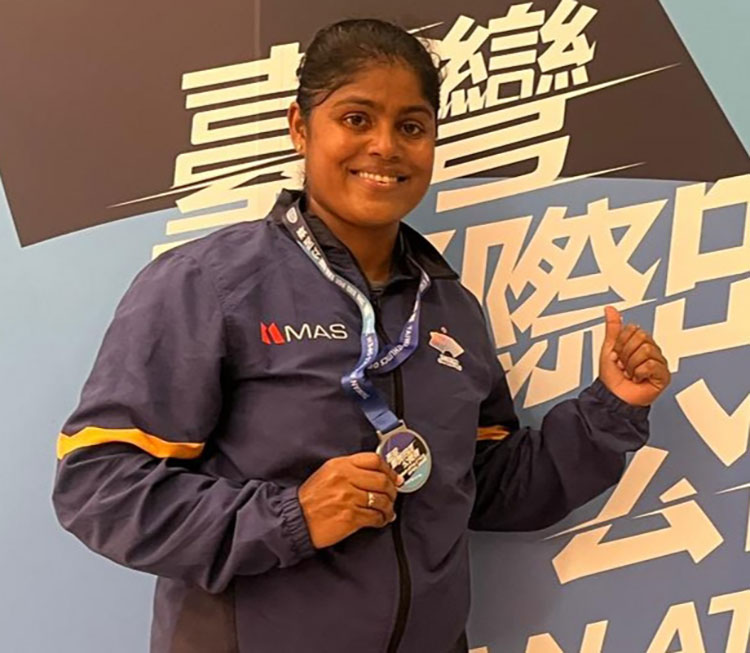
Rumesh Tharanga’s remarkable rise has forced enthusiasts to pin their hopes entirely on the World Ultimate Javelin Champion for a gold medal at the ongoing Asian Games in Nagoya, Japan. In Sri Lanka’s athletics contingent of more than twenty athletes, there are two other javelin throwers: former national record holder Sumedha Ranasinghe and women’s national javelin record holder Dilhani Lekamge.
Lekamge heads into today’s competition with a realistic opportunity to add another major continental medal to her collection, although the women’s javelin field is expected to be highly competitive.
The experienced Sri Lankan thrower already knows what it takes to reach the Asian Games podium. At the 2023 Hangzhou Games, Lekamge produced a 61.57m throw to win silver behind India’s Annu Rani, while China’s Huihui Lyu took bronze.
Her current form also provides encouragement. Lekamge has been on the rise, throwing 56.79m to win silver at the Asian Throwing Championships in South Korea in May, before producing a significantly better 58.98m at the World Athletics Continental Tour Silver meeting in Bhubaneswar in August. That effort placed her second, just 15cm behind Brazil’s Jucilene Sales de Lima.
At the recently held National Championships, she went further, clearing 59.46m.
The veteran’s 61.57m national record, set in Hangzhou in 2023, remains a significant benchmark. If she can reproduce anything close to that distance in Nagoya, she would put herself firmly into medal contention.
The Asian field has developed considerably in recent times. At the 2025 Asian Championships, China’s Su Lingdan won with 63.29m, Japan’s Momone Ueda was second with 59.39m and Sae Takemoto third with 58.94m, while Lekamge finished sixth with 55.53m.
This season, China and Japan have dominated Asian rankings, their throwers accounting for eight of the top ten performances recorded by female athletes.
Hence the challenge is clear for the athlete trained by Pradeep Nishantha.
”She is in good form. She has peaked well, and if she can deliver her best, she will win a medal,” Nishantha told The Sunday Island.
Lekamge needs to match the level that carried her beyond 60 metres while maintaining the consistency she showed in Bhubaneswar and at the National Championships.
Lekamge, who turns 40 in less than three months, brings something equally valuable to the competition — extensive experience at major championships. Her Asian Games silver, Asian Championships medals and two top-eight Commonwealth Games finishes underline her ability to perform at major events.
With the women’s javelin competition set to feature several throwers capable of approaching or exceeding the 60-metre mark, Lekamge’s medal prospects could ultimately hinge on one big throw. Her silver-winning feat at the last edition did not receive the attention it deserved. Whether the evergreen javelin thrower wins another podium finish at these Games or not, her perseverance in a less rewarding career should be celebrated.
by Rex Clementine
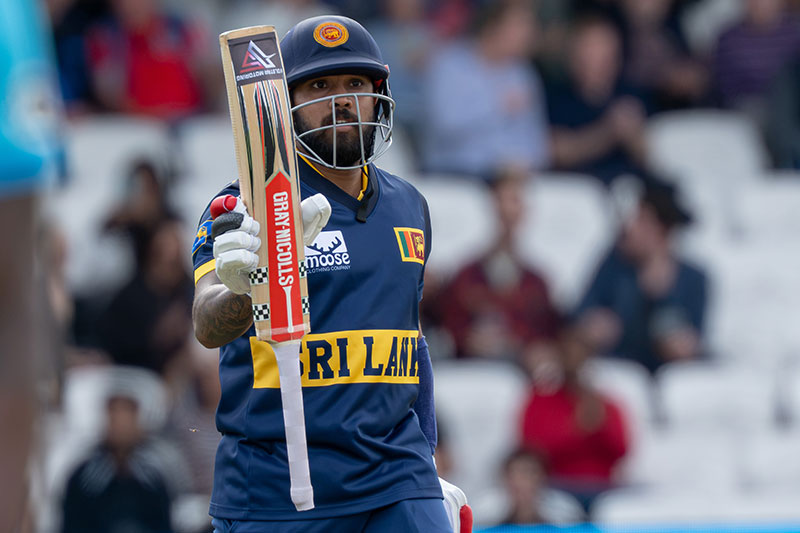
After four straight drubbings, there is finally a pulse in Sri Lanka’s campaign in England. Their come from behind victory at Headingley not only kept the three match ODI series alive but also offered a timely reminder that this side, for all its recent shortcomings, still has some fight left in it.
England needed 71 runs from the final 80 balls and appeared to have the game firmly within their grasp. Then came a remarkable exhibition of reverse swing. Sri Lanka conceded just 54 runs during that period, squeezing the life out of the chase to secure a hard fought 16 run win.
Dunith Wellalage showed that there are new strings to his bow. Long regarded as a clever left-arm spinner with plenty of batting ability, he demonstrated greater maturity with the ball and considerable muscle with the bat.
More importantly, after the misery of the T20 series, Sri Lanka breathed life back into their tour by making some bold calls. They need more of the same if they are to arrest this wretched run that has left supporters frustrated and disillusioned.
Take Maheesh Theekshana. Not so long ago, he was the number one ranked ODI bowler in the world. He remains fourth in the rankings currently, so leaving him out at Headingley was no small decision.
For too long, Sri Lankan selectors have been reluctant to move away from established names, even when performances demanded it. Their continued reliance on Dasun Shanaka is a case in point. So too was the decision to hand Niroshan Dickwella yet another lifeline after all those scandals.
But in backing the relatively unknown leg-spinner Sachindu Colombage, the selectors have shown that they are capable of thinking outside the box. That sort of courage needs to become the rule rather than the exception.
Another, much harder, decision is looming.
What do they do with Wanindu Hasaranga?
Hasaranga remains one of Sri Lanka’s most gifted white ball cricketers, but his recurring fitness problems can no longer be brushed aside. Ahead of virtually every major tournament there seems to be an injury concern. Sri Lanka felt the pinch again during February’s T20 World Cup when he was withdrawn with a hamstring injury.
Now the same problem appears to have resurfaced.
With the 50 over World Cup little more than a year away, Sri Lanka have to decide whether they can continue building their plans around a player whose availability has become increasingly difficult to predict. It may be time for a golden handshake and to look beyond him rather than arrive at another World Cup scrambling for alternatives.
There are indications, too, that the management, having patiently watched events unfold, is prepared to read the riot act. Test captain Dhananjaya de Silva is not the only established player whose position should come under scrutiny. Reputation cannot continue to provide immunity when performances are not forthcoming.
ODI cricket remains Sri Lanka’s strongest format in terms of the rankings and that gives them something tangible to build on. If they move purposefully from here, identify the right personnel and give them clearly defined roles, there is no reason why they cannot travel to South Africa next November believing they can make a serious impression at the World Cup.
Winning this series in England would provide a considerable morale boost. There are more ODIs to come in Pakistan and New Zealand before next year’s Asia Cup, giving the selectors enough cricket to assemble the pieces of the jigsaw before the sport’s showpiece event.
The key word, however, is continuity.
Sri Lanka have made a mockery of World Cup planning in the last two editions.
In 2019, several players were recalled despite not having played ODI cricket for more than two years, while some had been out of the international game for nearly four years. Four years later, Sri Lanka went to the 2023 World Cup with a non playing captain, while a hastily conceived youth policy spectacularly backfired.
There is nothing inherently wrong with a youth policy. Sidath Wettimuny showed years ago how regeneration should be handled: identify talent, back it and give players enough time to grow into their roles. What Sri Lankan cricket has lacked in recent years is not talent but clarity and continuity.
The selectors should perhaps identify a core group of around 20 players now and ask one simple question of each of them: can this player help us win games in South Africa?
Every subsequent selection should be made with that World Cup in mind.
Not long ago, Milan Rathnayake was being groomed as a seam bowling all-rounder, with the thinking that his skill set could provide the balance required in South African conditions. That experiment appears to have been quietly abandoned. If the selectors have changed their minds, there should at least be a cricketing rationale behind it. Otherwise, you are left wondering what happened to the long term plan.
Headingley showed what can happen when Sri Lanka are prepared to make brave calls. One victory, of course, does not erase four successive hammerings. But it can provide a starting point.
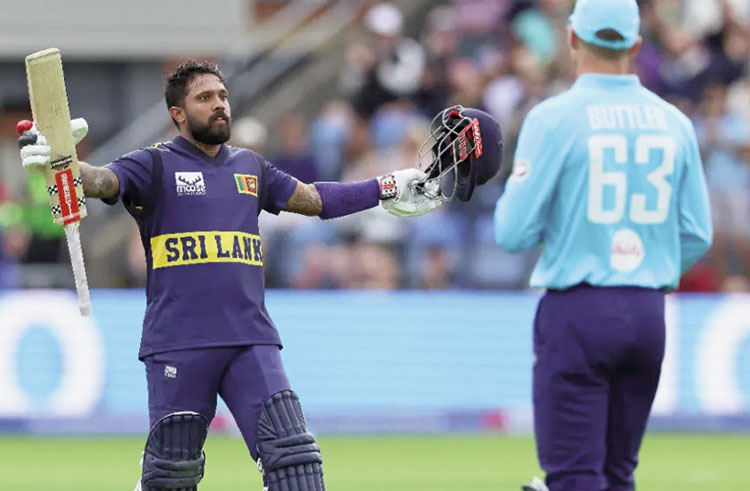
Seven years on from their last away ODI victory against England. – also at Headingley – Sri Lanka repeated the trick, and kept the series alive, ahead of the decider at The Oval on Sunday with a hard fought 16-run win.
On a true surface that offered plenty of runs, Sri Lanka executed their plan A with the kind of gusto that has been sorely lacking across this tour. Kusal Mendis’ seventh ODI ton led the way, and he was sufficiently backed up by the likes of Pathum Nissanka (25), Kamindu Mendis (54), Pavan Rathnayake (48) and Janith Liyanage (32).
Then with the ball, Sri Lanka survived a potentially game-breaking opening stand, a Jos Buttler onslaught, and a Will Jacks rearguard salvo to snag what seemed at times a rather improbable win. Dunith Wellalage took many of the plaudits, with his 3 for 49 paving the way for Sri Lanka’s fightback with the ball, as did Asitha Fernando for a spell of exemplary death bowling.
Arguably the defining moment of the chase, however, came when Buttler had to retire hurt on 67 from 45 balls with what the ECB described as a hamstring “twinge”. Though he later limped back out to resume his innings, he was visibly hampered as he lasted just four more balls. In between whiles, a chase that had been cruising at 253 for 4 skidded off course. England had needed 68 off 75 at the moment of Buttler’s injury. They managed just 52 for 5 in the remainder of their innings.
The common consensus at the halfway point was that Sri Lanka’s 321 for 6 was par for the course, but considering it was their highest first-innings total against England in ODIs since 2018 – and just their third score of 320 or more since the start of 2024 – it was still cause for minor celebration.
The broadcaster’s win predictor at the start of the England chase – 70-30 in favour of the hosts – highlighted just what they thought of this type of surface, and the type of batting England possessed. That England had never actually chased a total this high against Sri Lanka mattered less so.
And once Ben Duckett and Tom Banton had blitzed 82 runs inside the opening powerplay – two fewer, incidentally, than Sri Lanka managed in their final 10 – on the way to a substantial opening stand of 143 off 119, the result all but seemed a formality.
The breakthrough came utterly against the run of play too, as Wellalage found a foothole outside the left-hander’s off stump and ripped one through bat and pad, as Duckett reached out in vain for the flashy drive.
Then, at the end of Wellalage’s next over, Banton waltzed right past another one that gripped on the surface as Kusal swiftly dislodged the bails. And just like that both openers were back in the pavilion.
Even so, Sri Lanka might not have dared believe, given how far ahead of the game England were at this point. But when Wellalage struck a third time in three overs, this time trapping their serial tormentor, Harry Brook, leg before – a decision upheld on review – the old muscle memory of spin-strangled chases under lights at the Khettarama in Colombo perhaps began to stir. Particularly with the pitch also beginning to exude some hallmarks of those dry Colombo pitches.
But, just as swiftly as Sri Lanka had thought about clawing their way back in, England reclaimed control of the chase. And they were led unerringly by Buttler. Across partnerships of 46 from 28 with Joe Root, and 51 from 56 with Will Jacks, Buttler was in utter command of the contest. But then, in the 38th over, his hamstring went, and after battling on for two more balls, he limped off.
At that point, the required rate was less than a run-a-ball with six wickets in hand. By the time he was forced to return to the middle, the equation had flipped to 27 needed off 14. In between whiles, Sri Lanka throttled like they’ve never throttled before, giving up just one boundary in the 60 deliveries between Buttler walking off and walking back on.
With England seven-down by this point, the odds had firmly shifted in favour of Sri Lanka, but with Jacks and Buttler both capable of knocking off the required runs with just a few swings, the game was still in the balance. A six to the end the 48th over proved as much. But that would be the last boundary of the game as Eshan Malinga and Dilshan Madushanka squeezed through the final two overs to complete a famous victory.
What the result showed more than anything else is that, while Sri Lanka might be quite a way off the pinnacle of T20 cricket, in ODIs – as they have shown over recent years – they certainly have the capacity to kick it with the best, albeit not on as consistent a basis as they would like. Most of their best performances however have come at home, and on that front Thursday’s performance might be particularly heartening.
Sri Lanka’s best white-ball batting efforts in recent times have invariably coincided with significant input from either Nissanka or Kusal, and that trend wasn’t about to change here. Nissanka had looked promising during 33-ball 25, but his time in the middle was cut short by a fuller one from Atkinson that nipped back and trapped him lbw – a tight call that was held up upon review after replays showed umpire’s call on wickets hitting.
This brought Kusal to the crease, and he along with his namesake, Kamindu, proceeded to put on a 137-run stand from 120 deliveries, an innings-defining partnership that set the platform for Sri Lanka’s highest first-innings total against England in ODIs since 2018.
But it was one that might have been snuffed out before it had ever found its legs had Atkinson held on to a skier off Kusal when the Lankan skipper was on 18. Sri Lanka ensured they would exact the full toll for that drop, as Kusal proceeded to dine on a much more welcoming surface than the one at Chester-le-Street in the first ODI.
In the 20 overs between the 10th over – when Kusal entered – and the start of the 30th over – when Kamindu was caught at long-on – 11 of them saw Sri Lanka manage at least one boundary. And it meant that Sri Lanka’s 200 came up in the 32nd over, at which point a score in the region of 340 was on the cards.
The near seven-an-over scoring between the two Mendises owed much to one particularly expensive over taken off Josh Tongue, in which Kusal banished him for three fours and a six. Nineteen came off it – it was Sri Lanka’s most fruitful of the entire tour, such has been the dour nature of their batting efforts.
It was also a boundary that brought up Kusal’s century, a sumptuous drive through the covers off a luckless Jamie Overton, off whose bowling it was that Kusal had been dropped.
Following Kamindu’s dismissal there was a run-a-ball stand of 40 between Kusal and Pavan Rathnayake, but the former was unable to see the game through to the death overs, finding deep midwicket instead with an attempted slog sweep off Rehan. This brought about Sri Lanka’s first real lull in scoring, as they trudged to 237 for 4 by the end of the 40th over.
The innings seemed at a crossroads at this point, but Rathnayake and then Liyanage ensured that Sri Lanka would not completely squander the platform their skipper had helped set. Better sides might have managed to push for maybe 20-30 runs more, but that is a problem for another day; for now, Sri Lanka will savour a rare perfect evening.
Scores:
Sri Lanka 321 for 6 in 50 overs
(Kamindu Mendis 54, Kusal Mendis 121, Pavan Rathnayake 48; Gus Atkinson 2-55, Rehan Ahmed 2-48 ) beat England 305 for 9 in 50 overs (Tom Banton 73, Ben Duckett 67, Jos Buttler 69, Will Jacks 52; Dilshan Madushanka 2-54, Eshan Malinga 2-50, Dunith Wellalage 3-49) by 16 runs
[Cricinfo]

Father’s horoscope reading on the worst time in my life seemed coming true

Lanka’s exports surpass US$12 Bn in first eight months of 2026

Brewing new opportunities: Australia’s MDF and Kahawatte Plantations partner to grow Sri Lanka’s specialty coffee sector

The Cinnamon Captain’s Circuit

Ceylinco Life agent among three global finalists for award

From labyrinth to economic liberty: Transforming Sri Lanka’s future through National Business Facilitation Centre

‘Dates have the highest sugar content to fight Coronavirus’

Sunday Island 27 December – Headlines

#SundayIsland 17th December – Headlines

Sunday Island – 28th March

Sunday Island Headlines – 21 March

Sunday Island – 21st February – Headlines
-

 News7 days ago
Namal Rajapaksa Buddhist gambit fails, bail denied
-

 News7 days ago
Vehicle prices drop by up to Rs. 1 mn, says importers’ body
-

 News7 days ago
Govt monitors reported Saudi death sentence – Foreign Ministry
-

 News6 days ago
Hatton youth protest against reported death sentence for Lankan in Saudi Arabia
-

 News4 days ago
Mastermind Naufer Moulavi among 15 found guilty
-

 News5 days ago
Protest against setting up of cement factory in highly populated area near BIA
-
 News6 days ago
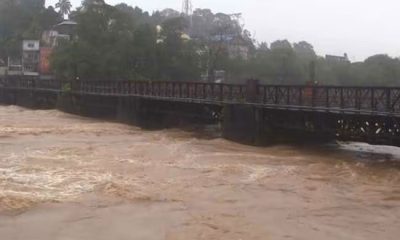
Mahaweli rises as heavy rain triggers flood, landslide fears
-

 Latest News7 days ago
Landslide Red Alerts issued to the districts of Kandy, Kegalle and Nuwara Eliya