
Opinion
Celebrating what went well or denouncing what went wrong?

By Chani Imbulgoda
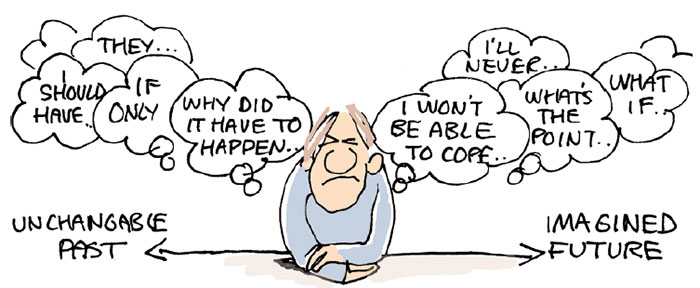
“We suffer today, because leaders in the past have failed to govern this country properly”. Oh, the predecessor has not done things well, they all have let the place go haywire”. Familiar excuses… When one takes over the leadership be it the country, be it an organisation, or be it a new position. We, naturally, incline to blame the past, criticize the leadership and highlight what went wrong. We start new reforms, new policies, new practices… condemning the past. We have a tendency to look back through the rearview mirror… only to criticise what went wrong, and start everything all over. Why don’t we give some credit to the past and celebrate what went well, as well?
It is said that those who cannot remember the past are condemned to repeat it. While Tolstoy’s ‘War and Peace’, I wondered how much similarity we can evidence today. Tolstoy describes how the war was waged in early 1800, and how Russia suffered. After two centuries, we witness how Russia repeats it over Ukraine. No lessons learnt from the past. We just passed a civil riot; strikes, protests continue; and controlling and curbing protests are not rare. As a country, have we forgotten our gloomy days in recent past? Bombs, killing, destructions from northern point Pedro to southern Dondra, youth insurrection, misdirection and all the blood we witnessed… It seems that we, rather than learning the lessons unlearned it.
Bringing the beauty of learning from the past, American author, Judith Glaser suggests looking at the past, finding new meaning from significant events, following them and creating successful behaviour patterns. Have we forgotten our glorious past where this country was recognised as the jade of the Indian Ocean? This was known as a prosperous country during the reigns of ancient kingdoms. Once the granary of the East, and even before that, crowned as the Kingdom of mighty by king Ravana, who deemed to be the first to fly an aircraft. I recall my friend in university days who used to say that “there is no future without past”. As Santayana, Glazer and my friend say “we need to look back and learn from our past in moving forward. In the early 19th century, we submitted our sovereignty to colonial masters by conspiring against our own breed. We made Sinhala only policy in 1956 and we opened the economy in 1977, letting our strengths blown out by foreign winds. Lots of lessons are on the stake, if we really want to take. An upcoming book “What Went Wrong” by a bureaucrat, Mr. Chandrasena Maliyadde, a former Secretary to Government Ministries discusses how Sri Lanka failed in many aspects, including public service and University education. There are books on historic accounts, newspapers and media that bring present contexts, and futuristic projections…it is left for us to make our soup adding right mix of past, present and future to taste the soup.
Past is a repository of knowledge!
Reflect on the qualities and competencies possessed by today’s youth with yesteryear’s generation. Do we miss something in the new generation? A state university officer once lamented that those young officers joining the university did not look at the overall picture when making decisions … fair enough, I have noticed a many young staff, and even some old hands think only about the fraction of work they deemed responsible … ignoring the whole process involved. We often pin the blame on the education system. During the good old days, school curricula consisted of lessons on morals and ethics, lessons on history. More importantly, formal education kept space for youngsters to think, there were no tuition classes, and no online assignments to complete. There was time for friends … time to play; time to enjoy nature, and time to talk with parents. Those days youngsters were a part of the real world, nature and ancestors who educate the wholeness of life. Aren’t we missing something in our education system? It is time to look back and look ahead, and look across. Finland, known to be one of the best countries for education in the world, avail time for students to engage with nature; no tough competitive exams, they learn being humane, they learn to be balanced humans. There was a propaganda “Nearest School is the Best School”. In the present context where everything has become expensive, exercise books to transport fees. Safety and security of both male, female children are at stake. Much concerns over drugs, and sex, it is time to revisit and refresh this propaganda tagline. There is a shortage of papers, there was a shortage of fuel and electricity, we never know what is in stock for us in the coming months. We cannot afford to have marker pens and whiteboards in schools now. Time to think about the rock slate which we could use several times and learn well and hard way. I believe more the hard work put in tiring both the hand and head, higher the productivity. Considering the wellbeing of individuals, rising cost and scarcity of essentials and medical drugs, and sustainability of our environment, time has come to think of our past styles of commuting, cycling. Cycling reduces air pollution; cycling makes you fitter. In effect, we will not be compelled to depend on many vehicles imported and perhaps medicine too. We have reached the point where we have to bridge the past with the future. We need to learn from the past and blend it with the future, appropriately without forgetting the present and its context.
Learn from the past, but don’t
stick to it.
When we see a roadblock, a cavity on the road or a commotion or congestion, we naturally turn to the rearview mirror. But we do not turn the car and go back to where we started. No doubt we learn lessons from the past, but we can never create the past again. If you drive constantly looking back from the rearview mirror, you would not proceed much far! Buddha has said that “you can’t have a better tomorrow if you think about yesterday all the time”. One of the key accusations during recent public agitations, and the rebel was that youth do not get opportunities. The anxiety developed over rejection or blocking paths for youth, to be hatred towards old. We often miss fresh blood in decision making bodies, especially when it comes to public sector institutions, owing to too much credit being given to the past. Long number of years in service overshadows competence. When recruiting people for positions, we look at the conduct and experience of the applicant in the past, and make our decision; sometimes a decision to show the door would completely sabotage the future of the applicant. We come across people who wag their past records when they make important decisions for the future. People like to boast about their glorious past and want to create yesterday in tomorrow. I recall an incident that took place at a staff meeting where I work. When the senior officers celebrating past glory, a few newcomers openly challenged and declared they get demotivated in effect. If we cling too much to the past, we will end up spoiling both our present and future.
Change is inescapable. Everything gets changed, context, requirements, and mindsets. History cannot be restored as it was, only lessons and practices can be brought and tried after careful analysis. We normally cling to one of the two paradoxes; one school of thought is glued to the history, experience, and the way things happened. They hardly see goodness in novelty. On the other extreme, the school of thought is forward-looking they ignore the past, condemn the history and embrace novelty. In a car, we have a larger windscreen, two side glasses and a tiny rearview mirror. Why? When we are moving, we need to look at the future with a much broader view, assess the present, and from time to time look back and ensure we are alright.
Past is always a scapegoat for those who don’t want to strive to achieve success. We as a nation today suffer a lot and I believe in owing up to the blame game we play with the past and egoistic attitude and our unwillingness to learn from the past. I always advocate seeing what went well in the past, success stories teach us lessons, where failures are more appealing to worry and enjoy at the same time.
(The writer is a holder of a senior position in a state
University with international experience and exposure and an MBA from Postgraduate Institute of Management (PIM), Sri Lanka and currently reading for her PhD related to reasons of reform failures at PIM. She can be reached at cv5imbulgoda@gmail.com)


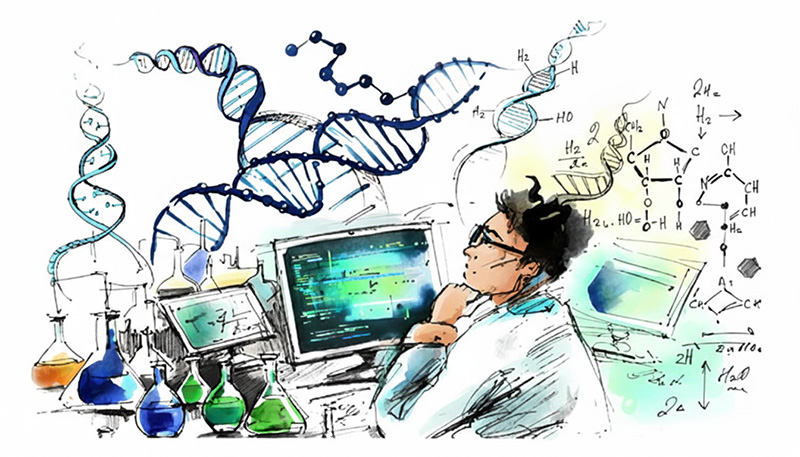
The scientific community in the English-speaking world publishes its research findings using technical and scientific English (naturally!). It has its own particular vocabulary. Many words are exclusive for a particular technology as they are specialised technical terms. Also, the inclusion in research papers of mathematical and statistical terms and calculations is important where they support the overall findings.
There is a whole array of specialist publications, journals, papers and letters serving the scientific community world-wide. These publications are by subscription only but can easily be found in university libraries upon request.
Academics quote the number of their research papers published with pride. They are the status symbols of personal achievement par excellence! And most importantly, these are used to help justify the continuation of funding for the upcoming academic year.
Such writings are carefully crafted works of precision and clarity. Not a word is out of place. All words used are nuanced to fit exactly the meaning of what the authors of the paper wish to convey. No word is superfluous (= extra, not needed); all is well manicured to convey the message accurately to a knowledgeable, receptive reader. As a result, people from all around the world are using the Internet to access these research findings thus establishing the English language as a major form of information dissemination.
Reporting is best when it is measurable and can be quantified. Figures mean a lot in the scientific world. Sizes, quantities, ranges of acceptance, figures of probability, etc., all are used to lend authority to the research findings.
Before a paper can be accepted for publication it must be submitted to a panel for peer review. This is where several experts in the subject or speciality form a panel to assess the work and approve or reject it. Careers depend on well-presented reports.
Preparation Before Starting Research
There is a standard procedure for a researcher to follow before any practical work is done. It is necessary to evaluate the current status of work in this subject. This requires reading all the relevant, available literature, books, papers, etc., on this subject. This is done for the student to get ‘up to speed’ and in tune with the preceding research work in this field. During this process new avenues for research and investigation may open up for investigation.
Much research is done incorporating the ‘design of experiments’ statistical approach. Research these days rely heavily on statistics to prove an argument and the researcher has to be familiar and conversant with these statistical techniques of inquiry and evaluation to add weight to his or her findings.
We are all much richer due to the investigations done in the English-speaking world by the investigative scientific community using English as a tool of communication. In scientific research, the best progress in innovation, it seems, is when students can all collaborate. Then the best ideas develop and come out.
Sri Lankans should not exclude themselves from this process of knowledge creation and dissemination. Sri Lanka needs to enter this scientific world and issue its own publications in good English. Sri Lanka needs experts who have mastered this form of scientific communication and who can participate in the progress of science!
The most wonderful opportunities open up from time to time for graduates of the STEM subjects (science, technology, engineering and mathematics) mainly in companies using modern technology. The reputation of Sri Lanka depends on having a horse in this race – quite apart from the need to provide suitable careers for its own population. People have ambitions and need to be able rise up intellectually and get ahead. Therefore, students in the STEM subjects need to be able to read, analyse and compare several different research papers, i.e., students need to have critical thinking skills – in English. Often, these skills have to be communicated. Students need to be able to write to this high standard of English.
Students need to be able to put their thoughts on paper in a logical, meaningful way, their thoughts backed up by facts and figures according to the principles of the academic, research world. But natural speakers of English have difficulties in mastering this type of English and doing analyses and critical thinking – therefore, it must be multiple times more difficult for Sri Lankans to master this specialised form if English. Therefore, special attention needs to be paid to overcoming this disadvantage.
In addition, the researcher needs to have knowledge of the “design of experiments,” and be familiar with everyday statistics, e.g., the bell curve, ranges of probability, etc.
How can this high-quality English (and basic stats) possibly be taught in Sri Lanka when most campuses focus on the simple passing of grammar exams?
Sri Lanka needs teachers with knowledge of this advanced, specialist form of English supported with statistical “design of experiments” knowledge. Secondly, this knowledge has to be organised and systematized and imparted over a sufficient time period to students with ability and maturity. Over to you NIE, Maharagama!
by Priyantha Hettige
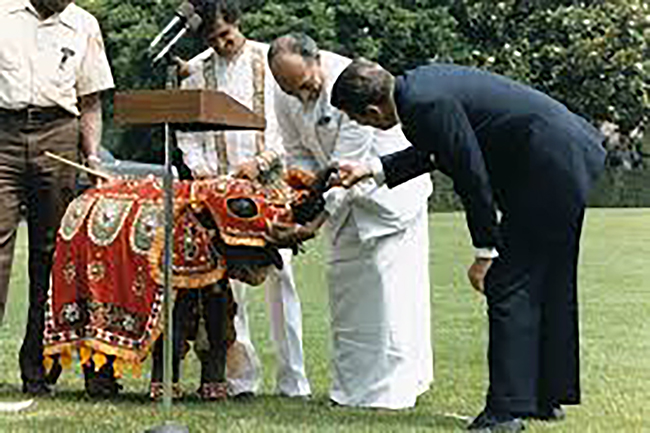
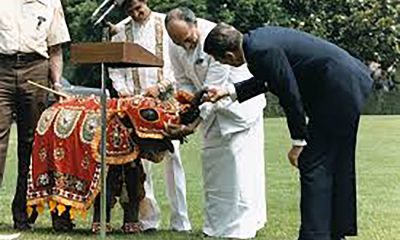
When President J. R. Jayewardene stood at the White House in 1981 at the invitation of U.S. President Ronald Reagan, he did more than conduct diplomacy; he reminded his audience that Sri Lanka’s engagement with the wider world stretches back nearly two thousand years. In his remarks, Jayewardene referred to ancient explorers and scholars who had written about the island, noting that figures such as Pliny the Elder had already described Sri Lanka, then known as Taprobane, in the first century AD.
Pliny the Elder (c. AD 23–79), writing his Naturalis Historia around AD 77, drew on accounts from Indo-Roman trade during the reign of Emperor Claudius (AD 41–54) and recorded observations about Sri Lanka’s stars, shadows, and natural wealth, making his work one of the earliest Roman sources to place the island clearly within the tropical world. About a century later, Claudius Ptolemy (c. AD 100–170), working in Alexandria, transformed such descriptive knowledge into mathematical geography in his Geographia (c. AD 150), assigning latitudes and longitudes to Taprobane and firmly embedding Sri Lanka within a global coordinate system, even if his estimates exaggerated the island’s size.
These early timelines matter because they show continuity rather than coincidence: Sri Lanka was already known to the classical world when much of Europe remained unmapped. The data preserved by Pliny and systematised by Ptolemy did not fade with the Roman Empire; from the seventh century onward, Arab and Persian geographers, who knew the island as Serendib, refined these earlier measurements using stellar altitudes and navigational instruments such as the astrolabe, passing this accumulated knowledge to later European explorers. By the time the Portuguese reached Sri Lanka in the early sixteenth century, they sailed not into ignorance but into a space long defined by ancient texts, stars, winds, and inherited coordinates.
Jayewardene, widely regarded as a walking library, understood this intellectual inheritance instinctively; his reading spanned Sri Lankan chronicles, British constitutional history, and American political traditions, allowing him to speak of his country not as a small postcolonial state but as a civilisation long present in global history. The contrast with the present is difficult to ignore. In an era when leadership is often reduced to sound bites, the absence of such historically grounded voices is keenly felt. Jayewardene’s 1981 remarks stand as a reminder that knowledge of history, especially deep, comparative history, is not an academic indulgence but a source of authority, confidence, and national dignity on the world stage. Ultimately, the absence of such leaders today underscores the importance of teaching our youth history deeply and critically, for without historical understanding, both leadership and citizenship are reduced to the present moment alone.
Anura Samantilleke
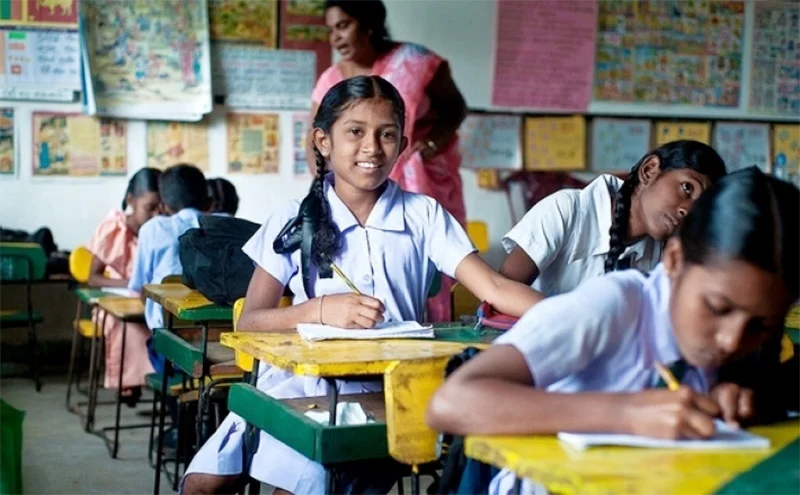
One of the major initiatives of the NPP government is reforming the country’s education system. Immediately after coming to power, the government started the process of bringing about “transformational” changes to general education. The budgetary allocation to education has been increased to 2% of GDP (from 1.8% in 2023). Although this increase is not sufficient, the government has pledged to build infrastructure, recruit more teachers, increase facilities at schools and identified education reforms as an urgent need. These are all welcome moves. However, it is with deep concern that we express our views on the general education reforms that are currently underway.
The government’s approach to education reform has been hasty and lacking in transparency and public consultation. Announcements regarding the reforms planned for January 2026 were made in July 2025. In August, 2025, a set of slides was circulated, initially through unofficial sources. It was only in November 2025, just three months ahead of implementation, that an official policy document, Transforming General Education in Sri Lanka 2025, was released. The Ministry of Education held a series of meetings about the reforms. However, by this time the modules had already been written, published, and teacher training commenced.
The new general education policy shows a discrepancy between its conceptual approach and content. The objectives of the curriculum reforms include: to promote “critical thinking”, “multiple intelligences”, “a deeper understanding of the social and political value of the humanities and social sciences” and embed the “values of equity, inclusivity and social justice” (p. 9). Yet, the new curriculum places minimal emphasis on social sciences and humanities, and leaves little time for critical thinking or for molding social justice-oriented citizens. Subjects such as environment, history and civics, are left out at the primary level, while at the junior secondary level, civics and history are allocated only 10 and 20 hours per term. The increase in the number of “essential subjects” to 15 restricts the hours available for fundamentals like mathematics and language; only 30 hours are allocated to mathematics and the mother tongue, per term, at junior secondary level. Learning the second national language and about our conflict-ridden history are still not priorities despite the government’s pledge to address ethnic cohesion. The time allocation for Entrepreneurship and Financial Literacy, now an essential subject, is on par with the second national language, geography and civics. At the senior secondary level (O/L), social sciences and humanities are only electives. If the government is committed to the objectives that it has laid out, there should be a serious re-think of what subjects will be taught at each grade, the time allocated to each, their progress across different levels, and their weight in the overall curriculum.
A positive aspect of the reforms is the importance given to vocational training. A curriculum that recognises differences in students, whether in terms of their interest in subject matter, styles of learning, or their respective needs, and caters to those diverse needs, would make education more pluralistic and therefore democratic. However, there must be some caution placed on how difference is treated, and this should not be reflected in vocational training alone, but in all aspects of the curriculum. For instance, will the history curriculum account for different narratives of history, including the recent history of Sri Lanka and the histories of minorities and marginalised communities? Will the family structures depicted in textbooks go beyond conventional conceptions of the nuclear family? Addressing these areas too would allow students to feel more represented in curricula and enable them to move through their years of schooling in ways that are unconstrained by stereotypes and unjust barriers.
The textbooks for the Grade 6 modules on the National Institute of Education (NIE) website appear to have not gone through rigorous review. They contain rampant typographical errors and include (some undeclared) AI-generated content, including images that seem distant from the student experience. Some textbooks contain incorrect or misleading information. The Global Studies textbook associates specific facial features, hair colour, and skin colour, with particular countries and regions, and refers to Indigenous peoples in offensive terms long rejected by these communities (e.g. “Pygmies”, “Eskimos”). Nigerians are portrayed as poor/agricultural and with no electricity. The Entrepreneurship and Financial Literacy textbook introduces students to “world famous entrepreneurs”, mostly men, and equates success with business acumen. Such content contradicts the policy’s stated commitment to “values of equity, inclusivity and social justice” (p. 9). Is this the kind of content we want in our textbooks?
The “career interest test” proposed at the end of Grade 9 is deeply troubling. It is inappropriate to direct children to choose their career paths at the age of fourteen, when the vocational pathways, beyond secondary education, remain underdeveloped. Students should be provided adequate time to explore what interests them before they are asked to make educational choices that have a bearing on career paths, especially when we consider the highly stratified nature of occupations in Sri Lanka. Furthermore, the curriculum must counter the stereotyping of jobs and vocations to ensure that students from certain backgrounds are not intentionally placed in paths of study simply because of what their parents’ vocations or economic conditions are; they must also not be constrained by gendered understandings of career pathways.
The modules encourage digital literacy and exposure to new communication technologies. On the surface, this initiative seems progressive and timely. However, there are multiple aspects such as access, quality of content and age-appropriateness that need consideration before uncritical acceptance of digitality. Not all teachers will know how to use communication technologies ethically and responsibly. Given that many schools lack even basic infrastructure, the digital divide will be stark. There is the question of how to provide digital devices to all students, which will surely fall on the shoulders of parents. These problems will widen the gap in access to digital literacy, as well as education, between well-resourced and other schools.
The NIE is responsible for conceptualising, developing, writing and reviewing the general education curriculum. Although the Institution was established for the worthy cause of supporting the country’s general education system, currently the NIE appears to be ill-equipped and under-staffed, and seems to lack the experience and expertise required for writing, developing and reviewing curricula and textbooks. It is clear by now that the NIE’s structure and mandate need to be reviewed and re-invigorated.
In light of these issues, the recent Cabinet decision to postpone implementation of the reforms for Grade 6 to 2027 is welcome. The proposed general education reforms have resulted in a backlash from opposition parties and teachers’ and student unions, much of it, legitimately, focusing on the lack of transparency and consultation in the process and some of it on the quality and substance of the content. Embedded within this pushback are highly problematic gendered and misogynistic attacks on the Minister of Education. However, we understand the problems in the new curriculum as reflecting long standing and systemic issues plaguing the education sector and the state apparatus. They cannot be seen apart from the errors and highly questionable content in the old curriculum, itself a product of years of reduced state funding for education, conditionalities imposed by external funding agencies, and the consequent erosion of state institutions. With the NPP government in charge of educational reforms, we had expectations of a stronger democratic process underpinning the reforms to education, and attention to issues that have been neglected in previous reform efforts.
With these considerations in mind, we, the undersigned, urgently request the Government to consider the following:
* postpone implementation and holistically review the new curriculum, including at primary level.
* adopt a consultative process on educational reforms by holding public sittings across the country .
* review the larger institutional structure of the educational apparatus of the state and bring greater coordination within its constituent parts
* review the NIE’s mandate and strengthen its capacity to develop curricula, such as through appointexternal scholars an open and transparent process, to advise and review curriculum content and textbooks.
* consider the new policy and curriculum to be live documents and make space for building consensus in policy formulation and curriculum development to ensure alignment of the curriculum with policy.
* ensure textbooks (other than in language subjects) appear in draft form in both Sinhala and Tamil at an early stage so that writers and reviewers from all communities can participate in the process of scrutiny and revision from the very beginning.
* formulate a plan for addressing difficulties in implementation and future development of the sector, such as resource disparities, teacher training needs, and student needs.
A.M. Navaratna Bandara,
formerly, University of Peradeniya
Ahilan Kadirgamar,
University of Jaffna
Ahilan Packiyanathan,
University of Jaffna
Arumugam Saravanabawan,
University of Jaffna
Aruni Samarakoon,
University of Ruhuna
Ayomi Irugalbandara,
The Open University of Sri Lanka.
Buddhima Padmasiri,
The Open University of Sri Lanka
Camena Guneratne,
The Open University of Sri Lanka
Charudaththe B.Illangasinghe,
University of the Visual & Performing Arts
Chulani Kodikara,
formerly, University of Colombo
Chulantha Jayawardena,
University of Moratuwa
Dayani Gunathilaka,
formerly, Uva Wellassa University of Sri Lanka
Dayapala Thiranagama,
formerly, University of Kelaniya
Dhanuka Bandara,
University of Jaffna
Dinali Fernando,
University of Kelaniya
Erandika de Silva,
formerly, University of Jaffna
G.Thirukkumaran,
University of Jaffna
Gameela Samarasinghe,
University of Colombo
Gayathri M. Hewagama,
University of Peradeniya
Geethika Dharmasinghe,
University of Colombo
F. H. Abdul Rauf,
South Eastern University of Sri Lanka
H. Sriyananda,
Emeritus Professor, The Open University of Sri Lanka
Hasini Lecamwasam,
University of Peradeniya
(Rev.) J.C. Paul Rohan,
University of Jaffna
James Robinson,
University of Jaffna
Kanapathy Gajapathy,
University of Jaffna
Kanishka Werawella,
University of Colombo
Kasun Gajasinghe, formerly,
University of Peradeniya
Kaushalya Herath,
formerly, University of Moratuwa
Kaushalya Perera,
University of Colombo
Kethakie Nagahawatte,
formerly, University of Colombo
Krishan Siriwardhana,
University of Colombo
Krishmi Abesinghe Mallawa Arachchige,
formerly, University of Peradeniya
L. Raguram,
University of Jaffna
Liyanage Amarakeerthi,
University of Peradeniya
Madhara Karunarathne,
University of Peradeniya
Madushani Randeniya,
University of Peradeniya
Mahendran Thiruvarangan,
University of Jaffna
Manikya Kodithuwakku,
The Open University of Sri Lanka
Muttukrishna Sarvananthan,
University of Jaffna
Nadeesh de Silva,
The Open University of Sri Lanka
Nath Gunawardena,
University of Colombo
Nicola Perera,
University of Colombo
Nimal Savitri Kumar,
Emeritus Professor, University of Peradeniya
Nira Wickramasinghe,
formerly, University of Colombo
Nirmal Ranjith Dewasiri,
University of Colombo
P. Iyngaran,
University of Jaffna
Pathujan Srinagaruban,
University of Jaffna
Pavithra Ekanayake,
University of Peradeniya
Piyanjali de Zoysa,
University of Colombo
Prabha Manuratne,
University of Kelaniya
Pradeep Peiris,
University of Colombo
Pradeepa Korale-Gedara,
formerly, University of Peradeniya
Prageeth R. Weerathunga,
Rajarata University of Sri Lanka
Priyantha Fonseka,
University of Peradeniya
Rajendra Surenthirakumaran,
University of Jaffna
Ramesh Ramasamy,
University of Peradeniya
Ramila Usoof,
University of Peradeniya
Ramya Kumar,
University of Jaffna
Rivindu de Zoysa,
University of Colombo
Rukshaan Ibrahim,
formerly, University of Jaffna
Rumala Morel,
University of Peradeniya
Rupika S. Rajakaruna,
University of Peradeniya
S. Jeevasuthan,
University of Jaffna
S. Rajashanthan,
University of Jaffna
S. Vijayakumar,
University of Jaffna
Sabreena Niles,
University of Kelaniya
Sanjayan Rajasingham,
University of Jaffna
Sarala Emmanuel,
The Open University of Sri Lanka
Sasinindu Patabendige,
formerly, University of Jaffna
Savitri Goonesekere,
Emeritus Professor, University of Colombo
Selvaraj Vishvika,
University of Peradeniya
Shamala Kumar,
University of Peradeniya
Sivamohan Sumathy,
formerly, University of Peradeniya
Sivagnanam Jeyasankar,
Eastern University Sri Lanka
Sivanandam Sivasegaram,
formerly, University of Peradeniya
Sudesh Mantillake,
University of Peradeniya
Suhanya Aravinthon,
University of Jaffna
Sumedha Madawala,
University of Peradeniya
Tasneem Hamead,
formerly, University of Colombo.
Thamotharampillai Sanathanan,
University of Jaffna
Tharakabhanu de Alwis,
University of Peradeniya
Tharmarajah Manoranjan,
University of Jaffna
Thavachchelvi Rasan,
University of Jaffna
Thirunavukkarasu Vigneswaran,
University of Jaffna
Timaandra Wijesuriya,
University of Jaffna
Udari Abeyasinghe,
University of Peradeniya
Unnathi Samaraweera,
University of Colombo
Vasanthi Thevanesam,
Professor Emeritus, University of Peradeniya
Vathilingam Vijayabaskar,
University of Jaffna
Vihanga Perera,
University of Sri Jayewardenepura
Vijaya Kumar,
Emeritus Professor, University of Peradeniya
Viraji Jayaweera,
University of Peradeniya
Yathursha Ulakentheran,
formerly, University of Jaffna.

Our focus is on economic stability through fiscal discipline, sustainable debt management, and reforms that enhance productivity and growth – PM

Spotless England meet unbeaten Australia in Under-19 World Cup semi-final

Kamindu in, Dhananjaya out as Sri Lanka flip-flop with T20 World Cup selection

China executes four more Myanmar mafia members

No decision yet on ICC meeting to discuss Pakistan boycott

Shoulder injury casts doubt over Eshan Malinga’s T20 World Cup

‘Dates have the highest sugar content to fight Coronavirus’

Sunday Island 27 December – Headlines

#SundayIsland 17th December – Headlines

Sunday Island – 28th March

Sunday Island Headlines – 21 March

Sunday Island – 21st February – Headlines
-
 Business5 days ago
Climate risks, poverty, and recovery financing in focus at CEPA policy panel
-
 Opinion4 days ago
Sri Lanka, the Stars,and statesmen
-

 Business3 days ago
Hayleys Mobility ushering in a new era of premium sustainable mobility
-
 Business3 days ago
Advice Lab unveils new 13,000+ sqft office, marking major expansion in financial services BPO to Australia
-
 Business3 days ago
Arpico NextGen Mattress gains recognition for innovation
-
 Business2 days ago
Altair issues over 100+ title deeds post ownership change
-

 Business2 days ago
Sri Lanka opens first country pavilion at London exhibition
-

 Editorial3 days ago
Govt. provoking TUs