
Midweek Review
Celebrating 50 years of Lanka-Singapore diplomatic ties with fugitive Mahendran harboured there

By Shamindra Ferdinando
UNP leader and yahapalana Prime Minister Ranil Wickremesinghe was a political devil and the earlier administration in which he served as PM, akin to a mismatched wedding, former President Maithripala Sirisena told the Presidential Commission of Inquiry (PCoI) investigating the Easter Sunday attacks.
SLFP leader Sirisena told the PCoI that disputes arose between him and Wickremesinghe within the first week of establishing the yahapalana government.
“Within the first week Wickremesinghe wanted to appoint Arjuna Mahendran as the Governor of the Central Bank. I wasn’t happy because Mahendran was a citizen of Singapore. However, Wickremesinghe insisted that Singaporean of Sri Lankan origin Mahendran was the ideal person and since I also did not want to create a conflict, within a week of coming to power, I let it happen,” Sirisena said.
The ex-President said that their relationship further deteriorated after he appointed the Presidential Commission of Inquiry, in January 2017, to investigate the Central Bank Treasury Bond Scams. Mahendran sought refuge in Singapore about a year after the appointment of the PCoI. The Commission comprised Supreme Court Justice K.T. Chitrasiri, the late SC Justice P S Jayawardena and retired Deputy Auditor General V. Kandasamy. Sumathipala Udugamsuriya functioned as its Secretary.
President Sirisena couldn’t convince Singapore to hand over Mahendran to Sri Lanka though he repeatedly vowed to get him.
Mahendran was indicted in June 2019 for causing losses to the government. The Treasury bond scams, the October 2015 Geneva betrayal, in between the two scams and the Easter Sunday carnage, sealed the fate of yahapalana partners, the UNP and the SLFP.
The Joint Opposition/Sri Lanka Podujana Peramuna in the run-up to the 2019 presidential and 2020 parliamentary elections, vowed to bring back Mahendran. Recalling how the LTTE financier, living in Malaysia had been brought back in 2009, some JO/SLPP spokespersons vowed to bring back Mahendran.
In spite of a change of government, in Nov 2019, the government hadn’t been able to secure Mahendran’s arrest. Singapore continues to ignore Sri Lanka’s request to hand over Mahendran. It would be pertinent to mention the previous yahapalana administration entered into Free Trade Agreement with Singapore in January 2018. The agreement followed just six rounds of talks beginning July 2016.
Singapore has indicated that handing over of Mahendran is very much unlikely. The Colombo High Court Trial-at-Bar last month ordered the Treasury bond scam case to proceed in spite of the absence of Mahendran and Ajahan Gardiya Punchihewa. Both are abroad. The bench comprised High Court Judges Damith Thotawatte, Manjula Tilakaratne and Mohamed Irshadeen.
This directive was given when the case in respect of the misappropriation of Treasury bonds worth Rs 36 bn at the Central Bank bond auction on March 29, 2016 was taken up in court. It was the far larger second Treasury bond scam perpetrated by Mahendran with the connivance of the then government, the first being the Feb 27, 2015 scam. Altogether, the Attorney General has moved court against 10 persons, including Mahendran for misappropriation of Rs 688 mn in the Treasury bond issue held on Feb 27, 2015. The suspects included Mahendran’s affluent son-in-law Arjun Aloysius, who actually carried out the scams though his firm PTL.
We have grave suspicions about the squeaky clean image that Singapore has been putting out to the world, especially after how it picked up a Supreme Court Judge from here after he went into quiet retirement soon after then President Chandrika Kumaratunga went around the country accusing him of helping an LTTE man to escape justice here. (VINCENDIRAJAN FLED THE COUNTRY NO SOONER HE WAS GIVEN BAIL). And presto that tainted SC Judge was appointed to a respected arbitration panel there. So we cannot believe that a country like Singapore, whose intelligence gathering is second to none didn’t know about our judge’s background or was he picked because of his sordid background?
Stamp launch
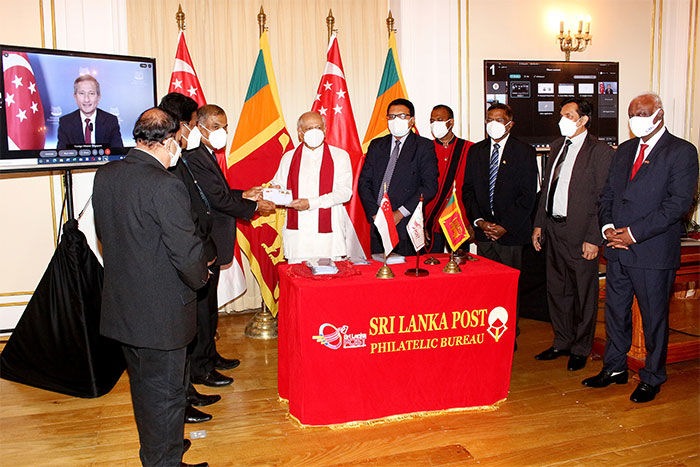
Let me reproduce a statement headlined ‘Joint stamp launches in Sri Lanka and Singapore to commemorate 50 years of diplomatic ties’ issued by the Foreign Ministry on July 27, 2021. The following is the text of the statement verbatim: “A joint stamp release ceremony was held at the Foreign Ministry, Sri Lanka, on 27 July to mark the 50th anniversary of the establishment of diplomatic ties with Singapore which took place on the same day in 1970. This milestone event was held with the participation of the Foreign Minister Dinesh Gunawardena and Minister for Foreign Affairs of Singapore Dr. Vivian Balakrishnan, joining virtually.
The two stamps ceremonially unveiled at the event, were especially designed for the occasion to depict the theme “Marine Conservation”, and showcase the restoration of Coral Ecosystem in Sri Lanka, and Mangroves in Singapore and reflects the shared interest and commitment of both countries in protecting the marine environment.
Speaking at the occasion, Foreign Minister Dinesh Gunawardena highlighted the long standing friendly relations between the two countries, nurtured by deep rooted linkages at community and societal levels. He recalled his meeting with Minister Balakrishnan when both were holding different portfolios and the discussions held on tackling challenges posed by climate change across the globe. Minister Gunawardena said further that the unveiling of commemorative postage stamps to mark the 50th anniversary of diplomatic ties, undoubtedly shows the great warmth and friendship that exist between the two countries.
The Minister of Foreign Affairs of Singapore Dr. Vivian Balakrishnan, in his remarks, spoke on the warm and long-standing nature of Singapore-Sri Lanka relations. He noted the close and meaningful cooperation between our two countries, including during this COVID-19 period.
The event was attended by the former Sri Lanka High Commissioners who served in Singapore, Chitranganee Wagiswara, Nimal Weerarathna, Ferial Ashraff and Consul of Singapore in Sri Lanka Dr. Jayantha Dharmadasa, Singaporean business community in Sri Lanka, Secretary of the Ministry of Mass Media, Officials of the Foreign Ministry and the Department of Posts.
Meanwhile, in Singapore, a ceremony was held at the Shangri La a few hours prior to the Colombo event where High Commissioner of Sri Lanka to Singapore Sashikala Premawardhane and Non-Resident High Commissioner of Singapore Chandra Das unveiled the two stamps in the presence of Director-General of the South Asia and Sub-Saharan Africa Directorate of the Ministry of Foreign Affairs of Singapore Gilbert Oh. Deputy Director of Postal & Consumer Policy, Infocomm Media Development Authority of Singapore (IMDA) Ruth Wong, and Vice President Philately & Stamps Peggy Teo together with several other officials of MFA, IMDB, SingPost and the High Commission of Sri Lanka.
The Foreign Ministry extends its appreciation and congratulations to the Government of Singapore, Ministry of Foreign Affairs of Singapore, Infocomm Media Development Authority of Singapore, SingPost, and the Department of Post of Sri Lanka and to the High Commission of Sri Lanka in Singapore for the successful issuance of the commemorative stamps marking 50 years of friendship between Sri Lanka and Singapore.”
A Singaporean of Sri Lankan origin
 Even if Mahendran attended the event at Shangri La, Singapore, the public shouldn’t be surprised. Whatever, the government spokespersons say, Singaporean Mahendran obviously received assurance that he would enjoy the protection of Singapore, regardless of Sri Lanka’s push to bring the fugitive to justice. Examination of Sri Lanka’s pathetic failure to get hold of Mahendran should be examined against the backdrop of celebration of 50 years of diplomatic ties.
Why does Singapore continue to protect Mahendran? Did the incumbent regime here make a genuine effort to get Mahendran back to Colombo? What is the responsibility of Sri Lanka Parliament as regards the failure on the part of the government to convince Singapore to hand over Mahendran? UNP leader Ranil Wickremesinghe, who orchestrated Mahendran’s appointment as the Governor of the CBSL, immediately after the 2015 presidential election, is now back in parliament as the UNP’s solitary National List MP of that party. Have we heard any government lawmaker demanding an explanation from Wickremesinghe over accountability on his part regarding the Treasury bond scams and Mahendran taking refuge in Singapore? The CBSL was under Wickremesinghe at the time Mahendran perpetrated the Treasury bond scams, the court hadn’t been moved against him. The main Opposition Samagi Jana Balavegaya (SJB) is not in a position to attack Wickremesinghe over the Treasury bond scam as it consists of former UNP lawmakers who backed the UNP leader’s stand on bond scams.
The JO/SLPP and the SJB have conveniently forgotten the Treasury bond scams. The then President Sirisena, who paved the way for the much bigger second Treasury bond scam in March 2016 by dissolving Parliament in late June 2015 to save the UNP government reeling under the first scam. By the time, Sirisena received the PCoI report in late Dec 2017 or soon thereafter Mahendran was away. Mahendran couldn’t have left the country without the top UNP leadership’s knowledge. Wickremesinghe knew Mahendran was leaving. In fact, President Sirisena and Wickremesinghe hadn’t been able to agree on many contentious issues, including the Free Trade Agreement with Singapore though the President finally gave in.
The incumbent government owes the country an explanation why Mahendran couldn’t be extradited in spite of making representations to Singapore. In early Dec 2020, the then Attorney General Dappula de Livera submitted a note of clarification to Singapore as regards the request to Mahendran.
The Attorney General tendered the extradition request to the Defence Ministry and the Foreign Affairs Ministry in 2019 for necessary authentication and transmission to the Singaporean government after the Permanent High Court at Bar issued an arrest warrant on Mahendran.
Singapore’s Ministry of Foreign Affairs subsequently informed that the Singapore Government would consider the extradition request once the necessary supporting information and documents were received.
In September 2019, the Ministry of Foreign Affairs forwarded the extradition request on Arjuna Mahendran, to the Sri Lankan High Commission in Singapore. The extradition request was then forwarded to the Government of Singapore for necessary action.
However, Singapore has declined to hand over Mahendran. Singapore is believed to have questioned the basis of the ongoing investigation into the Treasury bond scams. Speaker Lakshman Yapa Abeywardena should hold the debate on the much delayed Treasury bond scams in Parliament without further delay. The failure on the part of Parliament to debate the PCoI report on the Treasury bond scams cannot be justified or tolerated under any circumstances. Those political parties represented in Parliament should be ashamed for their failure to debate the report for well over three years.
How can we forget the fact that Wickremesinghe made a desperate bid to extend Mahendran’s term in spite of accusations relating to the 2015 and 2016 Treasury bond scams? Under heavy pressure to replace Mahendran, Wickremesinghe pushed for Charitha Ratwatte’s appointment as Governor.
In spite of issuance of Interpol red notice on Mahendran, in relation to the ongoing investigation into Treasury bond scams, he remains safe in Singapore, the number one destination for Sri Lankan lawmakers and even Presidents to seek medical treatment. President Sirisena was in Singapore when the Easter Sunday suicide bombers mounted near simultaneous attacks in Colombo, Negombo and Batticaloa. Sirisena claimed that he was in Singapore for a medical checkup when he received a message from Colombo about the carnage.
Chronology of events
Jan. 8, 2015:
Presidential election
Jan.9, 2015:
Maithripala Sirisena sworn in as President (now SLPP lawmaker, representing Polonnaruwa district)
Jan.9, 2015:
Ranil Wickremesinghe sworn in as Prime Minister (now solitary UNP MP in Parliament)
Jan.23, 2015:
Then Finance Minister Ravi K recommended Arjuna Mahendan as Governor, CBSL (No longer in Parliament)
Jan. 26, 2015:
President Sirisena appointed Singaporean Mahendran as Governor, CBSL (privileged life in Singapore)
Feb. 26, 2015:
Mahendran met ministers, Ravi K, Kabir H (now SJM lawmaker) and UNP Chairman Malik S (not engaged in active politics now) at CBSL, allegedly to discuss a massive fund requirement of Rs 18 bn (All three politicians were present when President Sirisena lambasted the UNP over treasury bond scams on Dec 16, 2018 at the Presidential Secretariat in the presence of PM Wickremesinghe and Mrs. Wickremesinghe.)
Feb 27, 2015:
First bond scam perpetrated. Within hours, those who mattered knew how PTL had carried out the operation in connivance with Mahendran.PTL is a fully owned subsidiary of Perpetual Capital (Pvt.) Limited, owned by Geoffrey Joseph Aloysius and Arjun Joseph Aloysius. The Central Bank was under the purview of Premier Wickremesinghe, though previously it functioned under the Finance Ministry.
President Sirisena directed his party to lodge a complaint with the CIABOC. The high profile institution, handling of that particular inquiry, should be examined for obvious reasons.
March 10, 2015:
Wickremesinghe, following consultations with Sirisena, appointed a three-member committee to probe the issuance of treasury bonds. The committee comprised those considered UNP loyalists i.e. Attorneys-at-law Gamini Pitipana, Mahesh Kalugampitiya and Chandimal Mendis.
May 21, 2015:
The Joint Opposition requested Speaker Chamal R to call a special debate on the bond scam.
May 22, 2015:
Special Sub Committee of CoPE appointed to probe the Feb 27, 2015 issuance of treasury bonds. The 13-member Sub Committee had its inaugural meeting on the same day under the chairmanship of Dew Gunasekera.
May 26, 2015:
Probe commenced with Treasury Secretary Dr. R.H.S. Samaratunga and Director General, Department of Treasury M.S.D. Ranasiri was questioned (Later it was revealed Samaratunga took part in a discussion when Ravi K issued controversial directives to state bank officials pertaining to issuance of treasury bonds).
June 18, 23, 2015:
CoPE questioned Mahendran. The Singaporean was the last to appear before the committee.
June 25, 2015:
Wickremesinghe alleged CoPE denied him an opportunity to appear before the watchdog. (In terms of the Standing Orders, ministers cannot be summoned before COPE.)
June 26, 2015:
Sirisena dissolved Parliament to thwart CoPE presenting its report on Treasury bond scam. General election set for Aug. 17, 2015. The dissolution prevented Dew Gunasekera from presenting his report on the first Treasury bond scam. In a related action, UNP Deputy Justice Minister Sujeewa Senasinghe moved court to bar Gunasekera from releasing his report to the media.
June 28, 2015:
The writer in an exclusive story based on Dew Gunasekera’s suppressed report headlined ‘COPE inquiry finds Mahendran had intervened in bond issue’ in the June 28 edition of The Sunday Island dealt with Mahendran’s clear complicity in the first scam.
July 3, 2015:
Dew Gunasekera declared that Sirisena could take tangible action on what he called ‘dossier of evidence’ produced by his committee. Gunasekera asserted that Sirisena could call for a copy of the 447-page report from the Secretary General of parliament W.B.D. Dissanayake. President Sirisena chose not to do anything.
Aug. 17, 2015:
Parliamentary polls.
Nov. 27, 2016:
COPE reconstituted with JVP MP Sunil Handunetti as its Chairman.
March 29, 2016:
The second far bigger bond scam perpetrated. The Central Bank was still under Premier Wickremesinghe.
June 29, 2016: Sirisena visited the CBSL much to the discomfort of Wickremesinghe and Mahendran. Recently, President Sirisena revealed how Wickremesinghe tried to discourage him from visiting CBSL.
July 2, 2016:
Renowned economist Dr. Indrajith Coomaraswamy succeed Mahendran as Governor of CBSL after Wickremesinghe made an abortive bid, with the support of Karunanayake, to secure Sirisena’s approval for Charitha Ratwatte to be appointed to the post.
January 27, 2017:
Sirisena appoints P-CoI consisting of Supreme Court Judges Kankanithanthri T. Chitrasiri and Prasanna Sujeewa Jayawardena and former Senior Deputy Auditor General Kandasamy Velupillai to probe bond scams.
Aug. 2, 2017:
Karunanayake was humiliated at PCoI over the lease of a fifth-floor super luxury condominium apartment at the Monarch Residencies that was allegedly paid for by Arjun Aloysius.
Aug. 10, 2017:
Foreign Minister Karunanayake resigned in the wake of shocking revelations at the PCoI. Karunanayake received the foreign ministry portfolio on May 25, 2017. Karunanayake switched portfolios with Mangala Samaraweera.
Nov 16, 2017:
Evidence at the Bond Commission revealed how Arjun Aloysius had been in touch with some members of the COPE during its hearings. Aloysius had spoken a total of 227 times to Sujeewa Senasinghe, 18 times to Dayasiri Jayasekara, 176 times to Harshana Rajakaruna and 73 times to Hector Appuhamy during the period commencing January 2015.
Nov 20, 2017:
Wickremesinghe received kid glove treatment at PCoI with AG Jayantha Jayasuriya (now Chief Justice) specially assigned to question him. But Wickremesinghe’s affidavits received by PCoI in response to questions sent to him by it and the AG’s department and PM’s responses to AG Jayasuriya established the UNP’s leader’s complicity and failure to thwart the scams beyond doubt.
Dec 30, 2017:
PCoI report handed over to Sirisena.
Jan. 4, 2018:
Sirisena, in a special statement to the nation regarding the P-CoI report mounted a devastating attack on the UNP over Treasury bond scams in the run-up to the Feb. 10 local government polls.
Feb 04, 2018:
Arjun Aloysius and Chief Executive Officer of PTL Kasun Palisena arrested. Subsequently, they were granted bail.
Feb. 10, 2018:
UNP and SLFP suffered debilitating setbacks at the long delayed local government polls. Their sidekick JVP too suffered heavy defeat.
March 28, 2018:
Sirisena removed the Central Bank and the Securities and Exchange Commission from Wickremesinghe’s purview 1,125 days after the first bond scam and 727 days after the second bond scam.
April 04, 2018:
Wickremesinghe comfortably defeats a No-Confidence Motion (NCM) moved by the Joint Opposition and the SLFP against him by a majority of 46 votes.

The sinking of an Iranian frigate in India’s backyard, closer to Sri Lanka’s southern coast, in early March this year, a few days after the eruption of war after the unprovoked Israeli-US attack on Iran, posed quite a significant challenge for India and Sri Lanka. They grappled with the escalating situation. No one wanted to blame the US for the death of over 100 unarmed Iranian Navy personnel.
By Shamindra Ferdinando
Reference was made at the Media Fest 2026 to the false claim regarding the resignation of Prime Minister Ranil Wickremesinghe at the height of protests in Colombo, in July, 2022, to highlight the failure on the part of the non-traditional media to report the developing situation accurately.
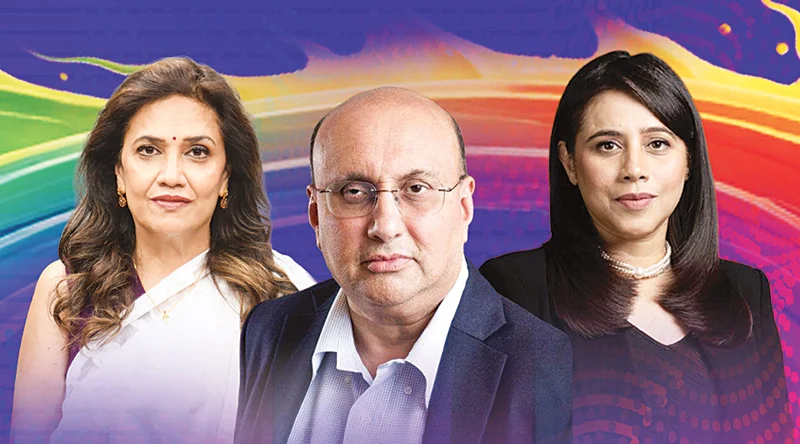
The fictitious claim received the attention during the second session of Media Fest 2026, organised by the Sri Lanka-India Media Friendship Association (SLIMFA) on 11 July, 2026, at the Taj Samudra. The panel consisted of Ashok Malik, Nisthar Cassim (President, SLIMFA), Vimukthi Karunarathne, Jamila Hussain and Robert Anthony. It was moderated by Kalani Kumarasinghe.
The panel paid attention to the challenge the traditional media, particularly the print, faced in covering the well-orchestrated campaign, especially with foreign inputs to oust President Gotabaya Rajapaksa. Essentially, the finger was pointed at the non-traditional media for being inaccurate, hasty and irresponsible. Reference was also made to the recent Negombo Prison riot, that claimed the lives of 31, to stress the importance of the traditional media as the preferred or truthful news provider.
The stimulating discussion took place after Malik, the former policy advisor/additional secretary in the Ministry of External Affairs of India, dealt with holistic media strategy. Malik, who had been a frequent visitor to Colombo over the years, had served the Ministry of External Affairs during the violent crisis in Colombo. Malik had been with the Ministry from October 2019 to August 2022, the month Wickremesinghe received the parliamentary backing to succeed forcefully ousted Gotabaya Rajapaksa through extra parliamentary means.
The SLIMFA was inaugurated in May 2024 under the patronage of the Indian High Commission. The first ever Media Fest was held also at the Taj Samudra over a period of two days, in April, 2025. Indian High Commissioner in Colombo, Santosh Jha, was present throughout the programme held on 11 July. This year’s focus was on the theme ‘Staying Relevant in a Changing World.’
The two other sessions were addressed by Editor Asian News International, Ms. Smita Prakash, and Managing Editor, India Today Ms Marya Shakil. They dealt with trust, truth and the battle for credibility and the shifting of the audience, respectively. Their perspectives facilitated an exciting dialogue with the panelists and members of the audience making useful contributions.
Passing reference was made to the West Asia conflict that disrupted global energy markets in March, following the unprovoked Israeli-US attack on Iran, as well as the conclusion of Sri Lanka’s successful war against separatist terrorist, the Liberation Tigers of Tamil Eelam (LTTE), in May, 2009. Prakash found fault with the Western media coverage of India while Indika Sakalasooriya, Communications Manager at SLYCAN Trust, emphasised that in spite of accusations directed at others, there had been occasions traditional media, too, could be faulted for deceiving the world.
Sakalasooriya cited the high profile accusations directed at Saddam Hussein’s Iraq, by the Western media, regarding their purported Weapons of Mass Destruction (WMDs) project to justify the March 2003 invasion of that country. The US-led coalition caused massive destruction. The Western powers hanged Hussein after what amounted to a kangaroo court trial.
It would have been better if Sakalasooriya mentioned how the US propagated lies to build a case against Iraq, particularly against the backdrop of false accusations that have surfaced directed at Iran to justify the Febuary 28, 2026, unprovoked attack on that nation with a proud history.
In a speech in Cincinnati, Ohio, on 7 October, 2002, US President George W. Bush confidently declared that Iraq “possesses and produces chemical and biological weapons. It is seeking nuclear weapons.”
The US President then vowed that Hussein had to be stopped. “The Iraqi dictator must not be permitted to threaten America and the world with horrible poisons and diseases and gases and atomic weapons,” international news agencies quoted President Bush as having said.
The truth is that the mainstream media, whatever the accusations directed at social media platforms now, then played ball with respective governments in support of their narrow political-military-economic objectives as always. The British and US media, however much they publicly proclaim to be independent, then blindly propagated the lie that Iraq posed an immediate threat to them and, therefore, had to be dealt with.
Perhaps none of those in the relevant panel moderated, by Chief Executive Officer of Advocata Institute, Dhananath Fernando, remembered how Ranil Wickremesinghe, in his capacity as Prime Minister, justified the US invasion. Addressing the UN General Assembly in September, 2003, well over a year after the US failure to find evidence of the WMD project, Wickremesinghe described the US as a reluctant ‘world policeman’ forced to intervene in Iraq due to the failure on the part of the US to deal with Iraq.
Reportage of July 2022 events
An intense social media campaign backed the violent protest campaign here against President Gotabaya Rajapaksa. Then US Ambassador Julie Chung issued several statements on Twitter (now X) warning the government and the military against using force to bring protests to an end. Interested parties exploited her interventions to intensify pressure on the government. The situation eventually turned so bad, Chung had to finally warn the public that accounts impersonating her were spreading misinformation and fake tweets. The US Embassy here, on multiple occasions, urged the public to verify information on the official US Embassy and verified X accounts. But during that chaotic period, the public was so drunk on misinformation, weren’t bothered at all regarding the accuracy and the vast majority was not interested in verifying statements.
The reference to false claims about Wickremesinghe’s resignation, during the panel discussion, should have attracted comments and observations for obvious reasons. Both the US and India have been accused of backing the operation that compelled President Gotabaya Rajapaksa to leave office.
President Wickremesinghe, in June, 2024, claimed that pressure was brought on him to resign in the immediate aftermath of protesters setting ablaze his Kollupitiya private residence on 9 July, 2022. The declaration was made at a function in London to mark the 40th anniversary of the International Democrats Union (IDU).
Prof. Sunanda Maddumabandara, who served as the Senior Advisor (Media) to President Ranil Wickremesinghe (July 2022 to September 2024) in late 2025 declared that the then Indian High Commissioner in Colombo, Gopal Baglay, asked Speaker Mahinda Yapa Abeywardena to take over as the interim president. Maddumabandara contradicted previous claims that it was US Ambassador Chung who intervened on behalf of the regime change project. Prof. Maddumabandara’s revelations in “Aragalaye Balaya” (The Power of the Aragalaya) launched in the presence of both Wickremesinghe and Abeywardena didn’t receive the media attention. Interestingly both traditional and non-traditional media conveniently ignored the author’s claim. Abeywardena remained silent though he must have told the author what transpired between him and Baglay, now New Delhi’s High Commissioner in Australia.
Those who constantly targeted Chung over her support to the anti-Gotabaya Rajapaksa campaign turned a blind eye to Prof. Maddumabandara’s shocking disclosure. The author quoted Abeywardena as having revealed that Baglay promised to bring the blockade on the Speaker’s official residence to an immediate end if he agreed to accept the Presidency. But, Wickremesinghe had strenuously refused to step down though, following a meeting chaired by Abeywardena, a section of the media reported that he would resign.
Sri Lanka lacked the political will to inquire into external interventions that led to the fall of President Gotabaya Rajapaksa’s government. Abeywardena, who revealed direct intervention and how intense pressure was brought on him, did absolutely nothing to activate an investigation. Wickremesinghe, who succeeded Gotabaya Rajapaksa in July, 2022, refrained from launching an inquiry. Having fully backed the campaign against Rajapaksa, Wickremesinghe ended up in the President’s Office. Therefore, his decision to keep quiet is understandable.
The Wickremesinghe-Rajapaksa government terminated a case filed by SLPP parliamentarians against the failure on the part of the government to protect their property.
The JVP-led NPP that won both the presidential and unbeatable 2/3 majority at the parliamentary elections, in 2024, simply forgot the case of foreign interventions. Since the change of government in September, 2024, Sri Lanka has entered into new partnerships with India and the US. The public is totally in the dark as to what they are.
The finalisation of seven MoUs between India and Sri Lanka, in April, 2025, and the subsequent sale of controlling stake in the strategic Colombo Dockyard Limited (CDL) to Mazagon Dock Shipbuilders Limited, affiliated with the Indian Defence Ministry, raised the Indo-Lanka relations to a higher level. The inclusion of a MoU on Defence underscored the bilateral relationship, while India stepped-up assistance to the Sri Lankan military. The recent donation of military stores, estimated to be worth USD 5.5 mn in support of the 1,000-plus Lankan contingent for Haiti, deployment under UN command, as authoritative sources confirmed recently, that agreements in their entirety could not be disclosed under any circumstances thereby underscoring India’s status. The reference was clearly aimed at the controversy that the seven MoUs, including the one on defence, hadn’t been revealed to the public, and the Parliament, too, remained in the dark.
India paid USD 52.96 mn for Japan’s Onomichi Dockyard, previously the majority owner of the Colombo Dockyard.
Terrorists/gunmen
Altogether there were three panels moderated by Dilrukshi Handuneththi, Kalani Kumarasinghe and Dhananath Fernando and some of the panelists questioned the way Western media covered major events. One pointed out how the Indian media couldn’t immediately report the assassination of Indian Premier India Gandhi on 31 October, 1984, as they couldn’t do so until the President made an official statement regarding the killing of a sitting PM, whereas the Western media didn’t have such obstacles.
The despicable western media practice of describing terrorists as gunmen and militants were also mentioned. Unfortunately, no one bothered to remind the audience of the India-led terrorist project that destroyed Sri Lanka, caused the deaths of nearly 1,500 Indian soldiers and her son Rajiv Gandhi, former Prime Minister, as well. The writer, at one point, felt the need to remind the gathering of the need to discuss issues in Sri Lanka context.
Ms Smita Prakash, in her thought-provoking address, discussed the challenge the mainstream Indian media faced in reporting ‘Operation Sindoor’ following the terrorist attack on Pahalgam on 22 April, 2025. India directly blamed Pakistan and launched large-scale offensive action on 7 May. The gathering was told that similar challenges were experienced in covering the unprecedented war between Israel-US combine against Iran this year.
When the new West Asia war erupted, India found the situation quite embarrassing, particularly against the backdrop of Prime Minister Narendra Modi visiting Tel Aviv, just days before the attack on Tehran. India remained silent for several days before Foreign Secretary, Vikram Misri, on 5 March, signed the condolence book at the Iranian Embassy, in Delhi, on behalf of the Government of India. Misri offered condolences on the death of the Supreme Leader of Iran, Ayatollah Ali Khamenei.
Over a week later India had no option but to get in touch with the Iranian leadership to secure energy supplies amidst turmoil over disruption of services. The Indian media coverage of the West Asia war obviously took into consideration the developing situation at home as the Modi government carefully navigated the crisis situation. Towards the end of the major confrontations before Iran and US agreed on a ceasefire, the US attacked three vessels crewed by Indians in the Hormuz strait.
Both traditional and non-traditional media have to deal with social media platforms where users can post messages, images and videos. US President Donald Trump shared posts on his social media platform Truth Social on a regular basis that made all other media irrelevant. The impact of the US President’s posts made a huge impact during the West Asia war as he continuously bypassed all official channels to go directly to the people. His regular posts caused uncertainty, increased tensions and undermined efforts to deal with the developing situations, sensibly.
Following recent exchanges and Iranian vows to avenge the death of their Supreme leader, President Trump wrote in a post on his Truth Social account:”1,000 missiles are locked and loaded and aimed at the Islamic Republic of Iran, with thousands more to immediately follow, should the Iranian government act on its threat.” He then signed off the post with the phrase “praise be to Allah”, which he also did in a post threatening Iran last April.
Perhaps, SLIMFA-arranged discussions should have paid attention to the impact of social media platforms in the hands of world leaders and governments. All countries (governments), regardless of their size and influence, use social media to advance their agenda. There is no need for breaking news on television channels or news flash in print media as they can directly go to the public.
The unprecedented transformation of the media landscape, in the wake of proliferation of social media with both governments as well as big business at the receiving end, sometimes. Platforms have emerged as central hubs for global news. The reportage of the West Asia war, as well as other developments at global level, proved the advent of social media and the dependence of major news agencies on social media platforms.
The Western media coverage of the Russia-Ukraine war repeatedly exposed their bias. The UK’s BBC declined to visit the site of a Ukrainian drone attack on a student dormitory in Starobelsk in the Lugansk Republic, in May this year. The CNN, too, declared its inability to join the visit arranged by Russia. One need not be an expert to understand their response as the world knows the Ukraine is being used by Western powers for war with Russia, a claim not denied by them.
Drop in voter enthusiasm
Top award-winning journalist Marya Shakil explained the devastating impact of the smartphone on the Indian electorate.
Recalling her coverage of elections in the Uttar Pradesh, in 2017, the two-time recipient of the prestigious Ramnath Goenka Award for Politics and Government asserted that the younger generation, now addicted to smartphones, may not be interested in politics. Shakil based her claim largely on a boy she found aimlessly scrolling near a political rally and covering election in Bihar last year.
Having displaced a range of figures to prove the continuing decline in the traditional media, Shakil engaged the audience in an exciting conversation that underscored the responsibility on the part of the traditional media to address the issues at hand and face challenges. She reiterated that regardless of expansion and massive profits accrued by non-traditional media, including influencers, at the expense of the traditional media, the latter still remained trustworthy.
Shakil’s assertion regarding declining voter interest, as shown by that boy she ran into during Uttar Pradesh polls coverage. must be examined taking into how smartphones can be a destructive tool. During the discussions, references were made to the violent overthrow of governments in Pakistan (April, 2022), Bangladesh (August, 2024) and Nepal (September, 2025) though Sri Lanka (July, 2024) was not mentioned in that particular context. However, Jamila Hussain referred to the challenging task of covering the campaign against President Gotabaya Rajapaksa.
In those externally backed protest operations against democratically elected governments, sections of the media, both traditional (print/electronic) and non-traditional, played significant roles. Sri Lanka is not an exception. President Gotabaya Rajapaksa didn’t realise what was going on until it was too late. If not for the intervention made by the Navy at the 11th hour, the President and the First Lady could have been trapped at the President’s House when protesters took control of it.
It would be pertinent to mention what Indian National Security Advisor (NSA) Ajith Doval said about the overthrow of governments. Speaking at the Sardar Patel Memorial Lecture, in New Delhi, on 31 October, 2025, Doval attributed recent political instability and “non-constitutional regime changes” in neighbouring countries to deficiencies in governance.
Declaring that the quality of governance is the fundamental determinant of political stability, Doval, who held at influential post since 2014, when the BJP formed government, stressed: “The rise and fall of empires, monarchies, oligarchies, aristocracies, or democracies is, in essence, a history of their governance.”
Commenting on political upheavals in the region, Doval declared: “In the recent cases of regime change through non-constitutional methods in Bangladesh, Sri Lanka, Nepal, and others, these were actually cases of bad governance. And that is how governance matters.” Is it his opinion that it is India’s sole right to decide what is good governance and bad governance in the region?
Doval’s opinion cannot be examined without taking into consideration their partnership with the US as well as joint US-Japan-India-Australia (Quad) response to the Chinese challenge. Years ago, Gotabaya Rajapaksa disclosed how Doval demanded the cancellation of all major Chinese projects here, including the handing over of the Hambantota Port to China on a 99-year-lease and the Colombo Port City project.
Although India failed to disrupt major Chinese projects here, New Delhi has consolidated its position in Sri Lanka. Taking control of the CDL, as well as the inauguration of the Colombo West International Terminal (CWIT), in April, 2025, boosted their position here. The consortium operating the $800 million CWITT includes India’s Adani Ports & SEZ Ltd, John Keels and the Sri Lanka Ports Authority (SLPA).
The irony is that the JVP, once opposed to everything and anything connected to Delhi, has ended up in a cozy relationship with Modi’s India and got close to the US in a manner that no one believed possible a decade ago.
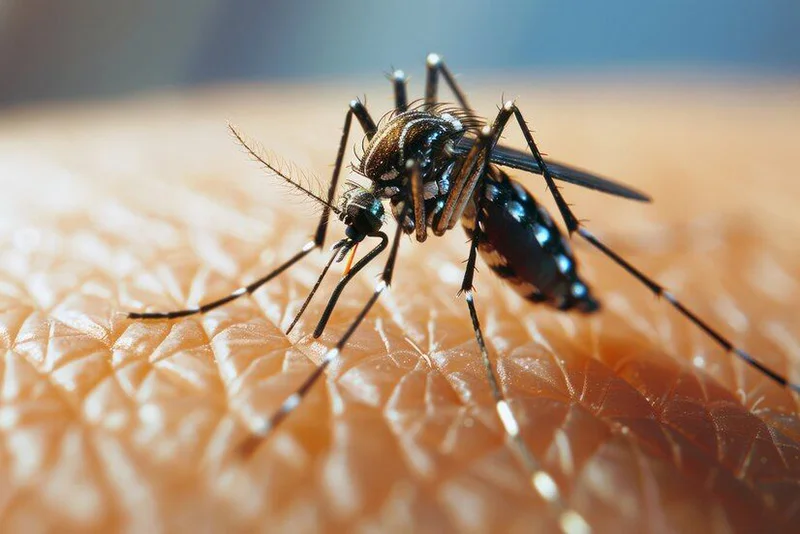
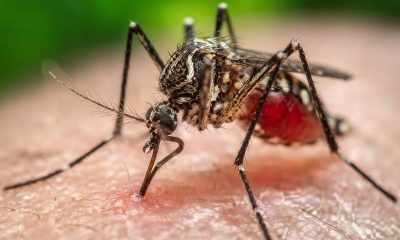
Sri Lanka is once again facing a significant dengue challenge. With rising numbers of suspected and confirmed cases reported across the country, especially during the rainy season, dengue has become not only a public health concern but also a major pressure point for the hospital system. In many affected districts, outpatient departments, emergency treatment units and medical wards are crowded with patients who need assessment, blood investigations and close observation.
Dengue is a disease that can change rapidly. A patient who appears stable in the early days of fever may enter a critical stage within a short period. This is why doctors are cautious, and why many patients are advised to return repeatedly for review. However, in a lower-middle-income country such as Sri Lanka, where public hospitals already function with limited beds, staff shortages and high patient loads, depending only on hospital-based care during an outbreak is not sustainable.
As a specialist in Health Informatics, I believe Sri Lanka needs a practical remote health monitoring system to support dengue care. Such a system can help identify patients who truly need admission, while safely monitoring stable patients at home. This will reduce unnecessary hospital overcrowding and allow hospital resources to be used for patients who are seriously ill.
Not every patient diagnosed with dengue needs immediate admission. Some patients are clinically stable but still require close monitoring, especially during the critical phase of the illness. At present, many such patients are sent home with advice to return if they develop warning symptoms. While this is clinically reasonable, it places a heavy responsibility on families, and danger signs may be missed or recognized late.
A remote monitoring system can close this gap. Once a patient is diagnosed with dengue at a hospital, clinic or laboratory, the patient can be registered into a digital platform. Basic details such as age, day of fever, symptoms, risk factors, etc can be entered. Based on this information, patients can be categorized into low-risk, moderate-risk or high-risk groups according to national clinical guidance.
Patients who are suitable for home care can then be followed up through structured phone calls, SMS, WhatsApp-based forms or a simple mobile application. They or their caregivers can report temperature, pulse, blood pressure if available, vomiting, abdominal pain, dizziness, bleeding symptoms, urine output, fluid intake, and general well-being.
These data can be monitored by a dedicated panel of doctors through a centralized digital dashboard, allowing timely clinical review and appropriate decision-making. Such a system is not intended to replace existing clinical care, but to strengthen the health system by supporting early identification of at-risk patients, improving follow-up, and reducing the unnecessary burden on already crowded hospitals.
Depending on the severity, the patient can be advised to visit the nearest hospital, referred to the area Medical Officer of Health, or connected to an ambulance service. This creates a safer pathway from home to hospital before the condition becomes critical.
The same system can also be used for patients discharged from the hospital. A few days of remote follow-up after discharge can provide reassurance, detect late complications, and reduce unnecessary readmissions.
Sri Lanka already has a strong public health network, including hospitals, MOH offices, public health inspectors and dengue control units. What is needed now is better digital coordination. A low-cost, well-designed remote monitoring system can connect patients, doctors, hospitals and emergency services in a timely manner.
Dengue prevention will always depend on mosquito control, clean environments and community participation. But during an outbreak, timely information can save lives. Remote health monitoring offers Sri Lanka a practical way to protect patients, reduce hospital pressure and deliver the right care at the right time.
by Dr. Harsha Jayakody
Board-certified specialist in Health Informatics
MBBS (Sri Lanka), MBA in Health Admin (Malaysia), MSc in Biomedical Informatics (Sri Lanka), MD in Health Informatics (Sri Lanka)
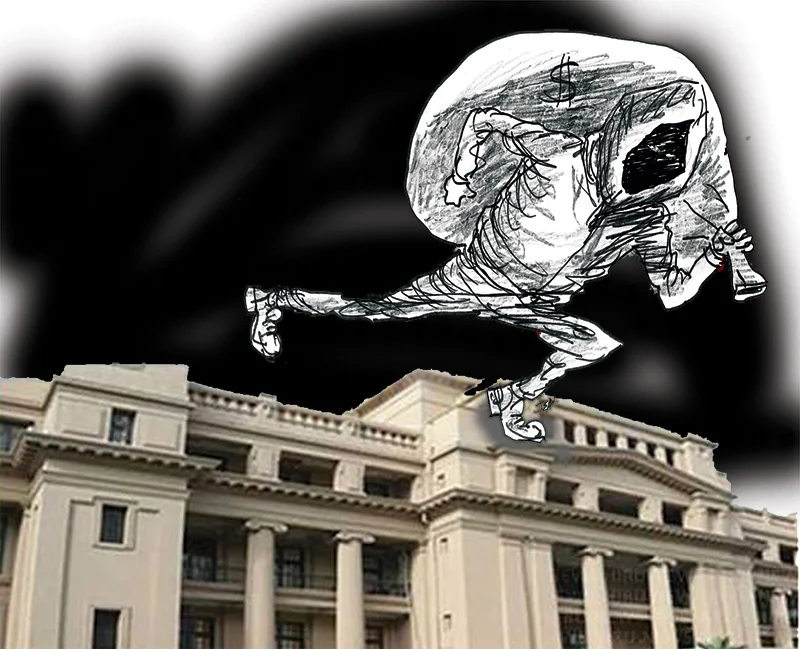
The latest deplorable revelations in the Committee on Public Finance (COPF) report ‘The Fraud Linked to Cybercrime in the US Dollar 2.5 Million Debt Repayment to Australia’, presented to parliament on July 10th tells a tale of irresponsibility, incompetence and disregard for the most important of tasks that are bestowed on a Ministry that is of paramount importance to a country striving to come out of a serious economic crisis.
Every new crisis adds a burden on the backs of the innocent citizens paying for the sins of those who caused it. This time, as in other times, the crisis was caused by those who sit high above the citizenry, governing the country or running its affairs; by those who perpetrated the fraud deliberately, and no less by those who enabled it through incompetence, inattention and perhaps ignorance.
The incredible ease with which the shameful theft of 2.5 million US Dollars occurred in the Ministry of Finance reveals that this theft was facilitated by a series of lapses by those in charge of its processes, as COPF discovered, and was most certainly avoidable.
Ten fraudulent transactions had been allowed to pass through the precincts of the Finance Ministry and the Central Bank of Sri Lanka, before it was discovered that they were the unwitting pawns in a straightforward cybercrime. Two institutions that ordinary citizens hold in high trust and esteem had their pockets picked in broad daylight.
Transition Errors
This whole unsavoury affair starts with a transition.
In order to better manage foreign debt, the government, “in keeping with international standards”, decided to institute a new unit to take care of all things to do with foreign debt within the Ministry of Finance. It is called the Public Debt Management Office (PMOD). It took away those duties from the Central Bank (CBSL), which handled the tasks earlier.
COPF says that “the fraud linked to cybercrime under consideration happened within this process.” It certainly did.
The process of transition from CBSL to PMOD had holes the size of 2.5 million US dollars. And the irresponsible handling of this transition has so far led to the death of a young bureaucrat, so let’s not treat this casually or lightly. Those who undertook to oversee this process to a successful finish must surely examine their own part in this tragic story.
Non-Actions Have Consequences
The transition took 18 months. November 2024 to March 2026. Long enough to ensure that the CBSL had passed on its processes, training and experience to a new team at the PMOD to a satisfactory standard.
One wouldn’t think that an old and respected institution with what we assume were its tested systems and processes, passing on its expertise to a brand-new unit specifically set up to deal with an important set of tasks, would get it wrong. But it did.
COPF was not happy:
* The Committee found no document that provided a detailed guideline or terms of reference for this complex, multifaceted transition process involving multiple institutions.
* There are no KPIs available to judge whether the transition was completed in an adequate manner.
* Even the guidelines that govern the operations of the PDMO were only published on 19 September 2025, 10 months after the establishment of the office.
* The MoU between the CBSL and PDMO on their areas of collaboration was only signed on 9 March 2026, almost at the end of the official transition period.
It looks like there was inadequate planning from the very start. Every mistake, every slipshod move, every skipping of essential steps in the process, is what the citizen ends up paying for, and even dying for.
The COPF report shows a 4-step CBSL process through which debt repayments transit, from receiving and checking invoices to confirming payment details through to the final payment.
Each is carried out by a separate section.
Each stage is part of an internal controls system, where important checks are carried out to prevent errors and/or fraud.
After the transition to PDMO, there seems to have been a serious lack of internal controls with the checks necessary to prevent fraud.
The COPF specifically faults the PDMO for not securing its IT infrastructure:
* PDMO’s outdated IT system which “left it at complete risk of cyberattacks”.
* Shortfalls in IT infrastructure and cybersecurity measures at the MoF, including the ERD, were highlighted in a comprehensive audit carried out by KPMG…in December 2024.
* Fraud linked to cybercrime in question commenced in mid-November 2025, only a month after the server system stopped receiving Microsoft security updates.
Early Warnings
The COPF report highlights the fact that early in January 2026 a cybersecurity threat was discovered during a debt repayment to be made to the Export-Import (EXIM) Bank of India:
“When CBSL attempted to make payment to the account details provided by the PDMO, with JP Morgan as intermediary, the payment was rejected by JPMorgan’s Global Fraud Prevention Operations team. Contact was made by PDMO officials with an EXIM Bank of India team, allowing the MoF to confirm that fraudulent payment instructions had been provided.”
The details of the attempted fraud are an exact copy of the one that succeeded later with the Australian payment, which failed in the case of India:
“Payment was then made to the correct account, verified through communication with the EXIM Bank of India. This suspicious activity was reported to the Criminal Investigation Department (CID) and SL-CERT on 9th January 2026. The ERD IT Officer’s complaint to SL-CERT mentioned that the suspected fraudulent email address used the domain eximbenkindia.in (while the correct domain appears to be eximbankindia.in).”
This was not the end of it. There was more!
When the cybersecurity threat regarding the Indian payment was reported to the Secretary of the Treasury triggering an investigation by the Director General of the ERD, a veritable treasure trove of fraudulent emails was discovered:
“Payment instructions received via email for several other due payments, including for payments to the United Kingdom (USD 1,294,605.99), Germany (EUR 4,059,987.81) and Belgium (EUR 60,974.88) were further identified as fraudulent.”
What would have happened if not for the JP Morgan team in India? Would these also have gone through, to a thieving scammer? In the event, the report says:
“UK was suspended immediately. Communications initiated by the suspicious party were identified and investigative authorities were alerted. The payment related to Belgium was made to the correct account.”
That’s two saved. What happened to the German payment of Euro 4,059,987.81? Did we pay it to a scammer?
So, it is in the process of verifying these fraudulent payment details that the Ministry of Finance was “alerted on 23rd March 2026 to communications from Export Finance Australia of non-receipt of debt repayments due in previous months.”
The report reproduces the email exchanges on the same set of Australian invoices from 3 different email addresses:
* @exportfinance.gov.au
* @exportfinance-au.com
* @exportfinanceau.com
The communications from these different email accounts were on-going from October 2025, but the fraud was discovered only in March 2026. By then the damage was done. Payments had already been made to the fraudulent account.
This is especially worrying because the COPF report says that after the debt restructure in October 2025, “The MoF officials said in Committee that the existing account details for Export Finance Australia repayments had not been changed in the revised agreement.”
The COPF makes the important observation that the system of internal controls at the MoF are grossly inadequate, citing one example:
“The final payment authorisation within MoF has historically been done by a Director with authority over the Debt Servicing function, at ERD and now PDMO, without any verification process by more senior officials, highlighting weak internal controls.”
The report lists some measures that have been taken by the MoF to prevent any recurrence. However, they add:
“These measures pertain to establishing and strengthening internal controls and ensuring basic cybersecurity within the Ministry of Finance. They should have been in place as a baseline…”
Me Sir? No Sir, Not I Sir!
The views expressed by both the MoF and the CBSL as to who was responsible for these blunders make interesting reading because they reveal more about them than they realize.
COPF says that at the 8th June discussions:
“The Ministry of Finance was of the view that the CBSL should have been more vigilant and taken proactive measures…CBSL was of the view that there was no legal responsibility under the FTRA for its role as banker to the government.”
The practiced passing of the buck between these two institutions is unsavoury, if revealing. Shouldn’t they have carried out an immediate review of their own conduct to discover where each might have failed, individually and together?
The AG has concurred with the CBSL in its view regarding CBSL’s legal responsibility. However, since CBSL had been doing the job until now, had undertaken the training of the new team and transition of the processes, they had a professional responsibility to ensure that adequate systems were in place to mitigate the risks that they, rather than a brand-new team, were far more experienced at identifying.
Isn’t it fair and reasonable to expect that the CBSL would regard it as their responsibility to give adequate training which includes the right internal controls and monitoring, and to see the process through to implementation to their total satisfaction?
As for the MoF, COPF says:
“The MoF was of the view that during the period in which the PDMO officials created the SSIs for the repayments on fraudulent invoices in November 2025, PDD-CBSL officials continued to oversee the process.”
Why did the MoF think they were ready to takeover from the CBSL and run the show, when they admitted to COPF that “PDMO staff did not have a proper understanding of international fund transfer processes and AML concerns, which limited their ability to act upon limited information provided by CBSL staff on such matters.” Shouldn’t they have dealt with this before they went ‘live’, as it were?
It gets even more alarming when the CBSL tells COPF that
* “internal controls within the MoF for payment verification are dysfunctional”
* “CBSL cannot ensure verification through its payments process, acknowledging that even the CBSL PDD would have failed to prevent a fraud linked to cybercrime in such a scenario.”
What were the Ministers doing, while their systems got so dysfunctional that according to CBSL, a fraud couldn’t have been prevented?
What happened in this inadequately conceived and planned transition resulted in more than a substantial financial loss. The MoF suspended 4 officials pending investigations into the fraud. One of those officials, Ranga Rajapaksa, an Assistant Director of the External Resources Department (ERD) was found dead on April 30, 2026, at his residence in Kuliyapitiya. A post-mortem ruled the death a suicide.
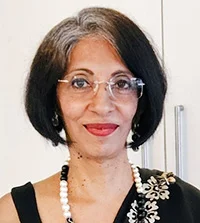 [Sanja de Silva Jayatilleka was a member of the team that transitioned GlaxoSmithKline UK’s Financial Services from Britain to India, overseeing the training, testing, final transitioning and post-transition support of the Compliance and Control function.]
by Sanja de Silva Jayatilleka

Showers will occur in the Western, Sabaragamuwa and North-western provinces and in Kandy, Nuwara-Eliya, Galle and Matara districts

Merchant Shipping Secretariat probes bribery scandal

Theft of USD 2.5 mn: Dinana Dakuna claims COPF trying to protect mastermind

COPF chief slams security sticker scam

CAA urged to protect soap users

Man who resisted search shot and arrested

‘Dates have the highest sugar content to fight Coronavirus’

Sunday Island 27 December – Headlines

#SundayIsland 17th December – Headlines

Sunday Island – 28th March

Sunday Island Headlines – 21 March

Sunday Island – 21st February – Headlines
-
 Business1 day ago
‘Giving up was never an option’: The fisherman who fought back after losing millions in SL
-
 Features1 day ago
Two memorable excerpts from a former SLAF commander’s memoir
-
 Latest News2 days ago
Davis cup Asia/Oceania Group IV 2026 to be held in Colombo from 20th to 25th July
-
 Features1 day ago
Erdoğan’s New Republic
-
 Life style1 day ago
Taste of the Swiss Alps comes to Colombo
-
 Features5 days ago
Dirty Money
-
 News2 days ago
Dengue outbreak gallops ahead: Infections surpasses 73,455, leaving 50 dead
-
 News2 days ago
Evidence recorded in money laundering case against Yoshitha Rajapaksa