
Business
CEAT inflates radial tyre production to 600,000 units a year


CEAT Kelani Holdings has announced a production increase of 84,000 radial tyres per year for passenger cars and vans, in its second expansion in this segment within the past four months.
The expansion will see Sri Lanka’s top tyre brand take annual radial tyre production to 600,000 – an increase of 16 per cent over current production of 516,000 radials, and further ease pressure on supply attributed to government-imposed restrictions on the import of certain sizes to conserve foreign exchange.
The production increase comes with the addition of two more tyre presses and a tyre building machine at the CEAT Kelani manufacturing complex in Kelaniya, supplementing the two new tyre presses commissioned in March this year under Phase 1 of the expansion plan.
With monthly radial tyre production ramping up to 50,000 units in the most in-demand sizes, availability is expected to improve for tyres that fit many makes of cars and vans including Suzuki Alto, Maruti Suzuki Alto, Maruti Suzuki Omni, Tata Ace Ex2, Hyundai- Eon, Mitsubishi Minicab, Toyota HiAce, Nissan Vanette, Lanka Ashok Leyland Dost, Tata Winger, Nissan Urvan, Kia K2500, Suzuki- Super Carry, Maruti Suzuki, Super Carry, Piaggio Porter, Toyota Town Ace, Toyota Lite Ace, Suzuki Wagon R, Daihatsu Mira ES, Nissan Dayz, Nissan Note, Honda Freed and Toyota Avanza.
Besides the volume increases they provide, the new presses installed under the expansion project are hydraulic, significantly improving the uniformity, ride and handling parameters and the overall aesthetics of the radial tyres they produce.
 Commenting on this latest expansion, CEAT Kelani Managing Director Mr Ravi Dadlani said: “The CEAT brand supplied nearly half of Sri Lanka’s pneumatic tyre requirements for several years before the pandemic. The disruption of transport logistics worldwide due to the pandemic combined with the temporary import restrictions on certain categories and sizes of tyres, required us to accelerate production to help meet the domestic shortfall. As a result, we have increased radial tyre production by as much as 32 per cent since March this year, which could be considered an admirable response to the situation.”
CEAT Kelani Holdings increased capacity utilisation across all its manufacturing plants last year, to supply the additional domestic requirements of truck, bus, three-wheeler, car, and van tyres in the absence of imports. In August last year, the Company increased production to supply 100 per cent of the passenger bus and goods transport sectors’ tyre needs through domestic production, potentially saving Sri Lanka Rs 11 billion a year in foreign exchange.
CEAT Kelani also achieved an 85 per cent increase in the production of tyres for the ‘two-wheeler’ segment over just three months between June and September 2020 and pushed production of tyres for motorcycles and scooters from 27,000 units a month in June 2020 to 41,000 per month in July and August and 50,000 per month from September 2020 onwards. This was expected to result in a further saving of Rs 350 million a year for the country.
The CEAT brand has been ranked the most valuable consumer brand in the country’s ‘Motor’ segment in the 2021 Brand Finance rankings and as one of the top five brands in Sri Lanka overall in terms of brand strength score.
Sri Lanka’s largest pneumatic tyre manufacturer, CEAT Kelani Holdings is considered one of the most successful India – Sri Lanka joint ventures in the manufacturing sector. The joint venture’s cumulative investment in Sri Lanka to date totals Rs 8 billion and its manufacturing operations encompass tyres in the radial (passenger cars, vans and SUVs), commercial (Bias-ply and radial), motorcycle, three-wheeler and agricultural vehicle segments.

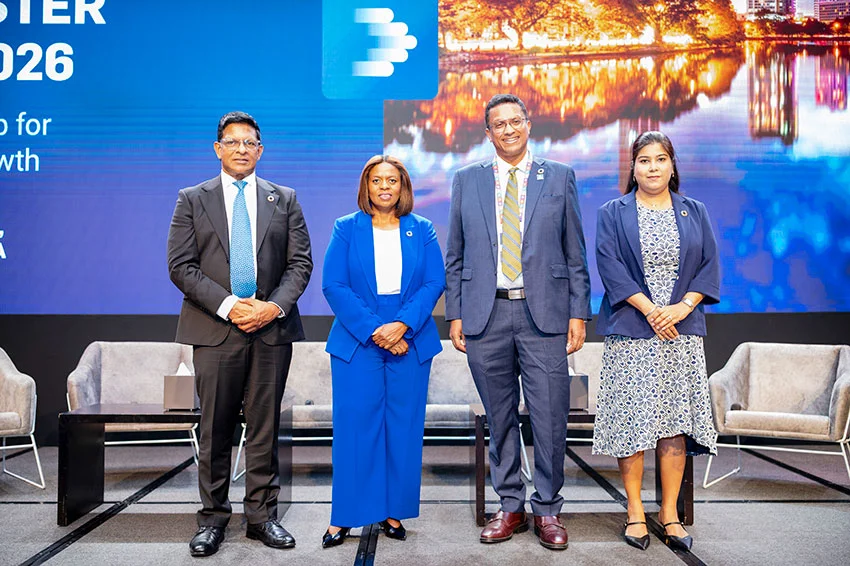
More than 200 senior business leaders, policymakers, investors, sustainability practitioners and United Nations representatives convened in Colombo on 11–12 August for Forward Faster Now | APAC 2026: Driving Business Leadership for Sustainable and Inclusive Growth—the United Nations Global Compact’s flagship regional forum in Asia-Pacific.
Hosted by UN Global Compact Network Sri Lanka and organized by the UN Global Compact APAC Hub in collaboration with 14 Global Compact Country Networks, the forum strengthened regional collaboration and demonstrated the growing role of business leadership in advancing sustainable and inclusive growth across Asia-Pacific.
More than 80 high-level speakers from across the region contributed to the two-day programme, bringing together expertise from business, finance, government, the United Nations and civil society. The forum also convened an exceptional audience of CEOs, C-Suite, Board Directors, Heads of UN agencies and senior decision-makers, creating one of the region’s most significant platforms for cross-sector dialogue on sustainable business.
Across plenary dialogues, leadership panels and action-oriented workshops, participants explored the issues shaping the future of business in Asia-Pacific, including climate action, sustainable finance, gender equality, resilient supply chains, water stewardship, governance and integrity, digital innovation, human rights due diligence, circular economy solutions and ESG data for decision-making. Rather than focusing solely on ambition, Forward Faster Now challenged businesses to move from broad sustainability goals to target setting, practical decisions, stronger systems and action that can deliver progress at scale.
A defining milestone of the forum was the visit of Sanda Ojiambo, Assistant Secretary-General, CEO and Executive Director of the UN Global Compact. Her presence in Sri Lanka underscored the country’s growing role within the regional sustainability agenda and reinforced the importance of private sector leadership in delivering the Sustainable Development Goals.
Beyond the public programme, her visit included a series of bilateral engagements and strategic convenings with business and institutional leaders, deepening relationships and opening new avenues for engagement between the UN Global Compact and stakeholders in Sri Lanka.
The event also marked the launch of three significant initiatives by UN Global Compact Network Sri Lanka that will extend the impact of the convening well beyond the event itself. The Responsible Business Coalition was introduced as a new partnership to embed sustainability, and strengthen governance by bringing together Sri Lanka’s leading professional and industry associations to embed the Ten Principles of the UN Global Compact into their existing convening, training and thought-leadership channels, moving responsible business from a standalone function to a shared C-Suite and Board responsibility.
Business
Sri Lanka Insurance Corporation General celebrates ‘One Team, One Vision’ sales excellence at Annual Awards 2025
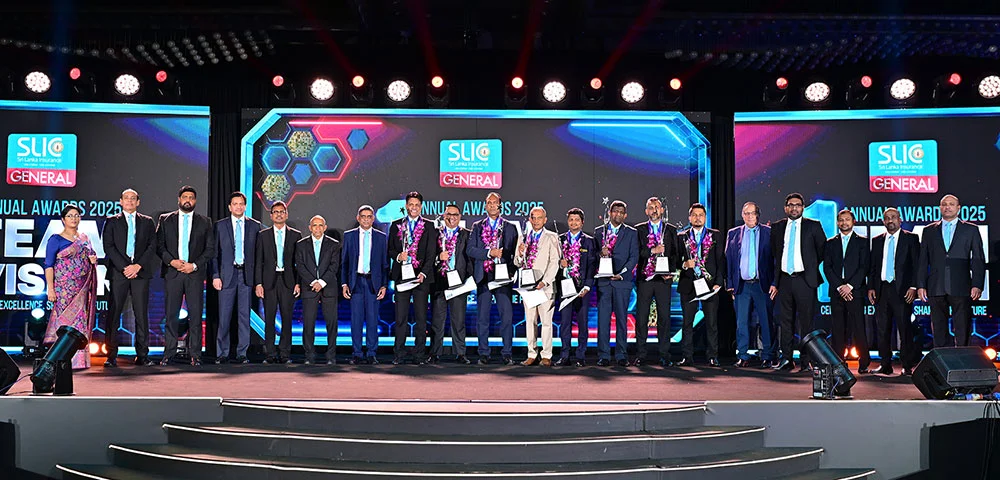
The Sri Lanka Insurance Corporation General Ltd. (SLICGL) team gathered to honour its top-performing sales professionals at the Annual Sales Awards 2025, held under the theme ‘One Team, One Vision’ on 20th August at the Monarch Imperial.
The evening convened sales leaders and high achievers throughout the island to celebrate a year of sustained performance, customer trust, and commitment which has kept SLICGL at the forefront of Sri Lanka’s general insurance sector.
Affirming SLICGL’s appreciation for the people driving success on the ground, the Sales Awards 2025 recognised those who went beyond targets, deepened client relationships, and contributed directly to the company’s continued expansion.
The event drew an unprecedented audience of over 700 participants. This year’s celebrations recognised a record number of winners, more than double the achievements honoured last year covering a diverse range of award categories reflecting excellence at every level of the business.
Nusith Kumaratunga, Chairman, Sri Lanka Insurance Corporation graced the event as the Chief Guest together with the Board of Directors and senior management of SLICGL also present as invited guests, encouraging and commending the winners for their outstanding achievements.
The award winners at this year’s ceremony included Insurance Advisors, Marketing Executives, Branch Managers, Regional Managers, and members of the Head Office Sales Channels, who were recognised and celebrated for their outstanding achievements in multiple categories.
Business
Sri Lanka to host SEARIC Summit 2026 for the first time, welcoming over 500 youth leaders from across South East Asia
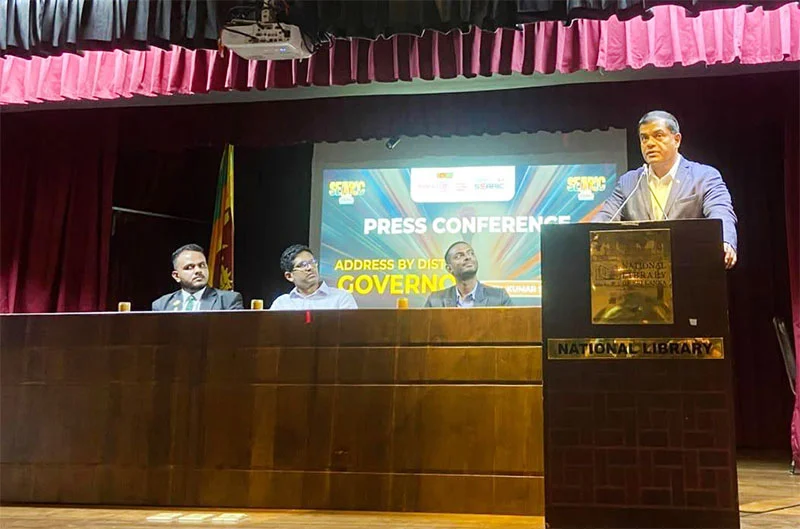
Sri Lanka is set to host the SEARIC Summit 2026 from 11 to 13 September 2026 at the Pegasus Reef Hotel, marking the first time the country will host the flagship regional gathering of the South East Asia Rotaract Information Centre (SEARIC).
Hosted by Rotaract in Rotary International District 3220 (RID 3220) – Sri Lanka & Maldives, the three-day summit is expected to bring together more than 500 delegates from six countries, creating a regional platform for leadership development, knowledge exchange, cultural understanding and collaboration among young leaders. The South-East Asia Rotaract Information Centre (SEARIC) serves as a regional platform connecting Rotaract districts across South East Asia. It facilitates collaboration, information exchange, cultural understanding and joint initiatives among Rotaractors across the region. The annual SEARIC Summit serves as the network’s flagship gathering, bringing together Rotaractors and Rotarians from participating countries for shared learning, fellowship, cultural exchange and collective growth.
Under the theme “The Role of Technology in the Future of Careers and Services,” SEARIC Summit Sri Lanka 2026 will explore the rapidly changing relationship between technology, careers, leadership and community service. As emerging technologies continue to transform industries and the way people work, the summit will provide a platform for young leaders to examine how technology can be used not only to prepare for the future of work, but also to strengthen the way communities are served. Across three days, delegates will participate in leadership and professional development sessions, discussions, cultural experiences, networking opportunities and community-focused programming, with the central theme reflected throughout the summit programme.
Beyond the Rotaract movement, the event also contributes to Sri Lanka’s broader positioning as a destination for international conferences, youth leadership programmes and regional collaboration. With hundreds of international delegates travelling to the country, the summit provides an opportunity to showcase Sri Lanka’s hospitality, culture and potential as a host destination for future international gatherings. The event further creates a platform for young leaders from across South East Asia to connect with Sri Lankan counterparts, exchange ideas and explore opportunities for cross-border collaboration.

More than 360 dead, 1,400 missing in Nepal and Tibet after Himalayan floods

Bosnian Serb convicted war criminal Ratko Mladic dies

Prince of Wales to celebrate 150th anniversary with six-a-side cricket

Unyielding Dinusha, spirited tail hold off India to save Colombo Test

US golfer Gogel gets six-month ban for betting

UAE’s Asif Khan handed 15-month ban for using a banned substance

‘Dates have the highest sugar content to fight Coronavirus’

Sunday Island 27 December – Headlines

#SundayIsland 17th December – Headlines

Sunday Island – 28th March

Sunday Island Headlines – 21 March

Sunday Island – 21st February – Headlines
-
 News7 days ago
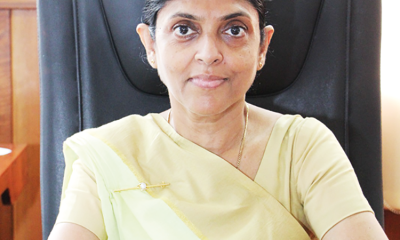
Country’s first woman Surveyor General appointed
-

 Business6 days ago
SriLankan Airlines makes ShakthiSAT Mission possible for talented Sri Lankan student
-

 Features7 days ago
Medical education in Sri Lanka: Then and now
-

 Latest News7 days ago
Imran Khan moved to private hospital amid deteriorating health
-

 Latest News7 days ago
Government has declared 21, 22 and 23 August 2026 as national days of mourning
-

 Features5 days ago
My secondary schooling after Royal Primary
-

 Features5 days ago
From the First to the 22nd: A short history of Amendment Politics and Reform Frustrations
-
 News7 days ago
22A: Opp. demands all available SC judges hear petitions