
Business
CBSL stresses need for all to remain focused until crisis resolution

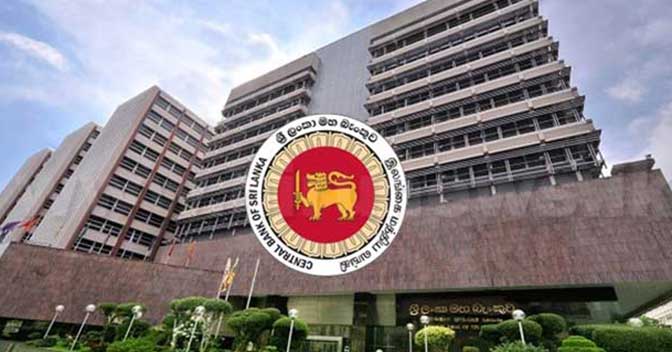
The Central Bank said yesterday it will remain committed to achieving its mandate through appropriate policy measures but reiterated the need for steadfast commitment by all to remaining in focus until the crisis is overcome through collective efforts in this crucial moment of Sri Lanka’s socioeconomic history.It said an efficient implementation of the identified near-term stabilisation measures and the medium to long term structural reforms both by the Central Bank and the Government is vital to position Sri Lanka on a fast track to recovery on a sustained basis.
Nevertheless, formulating macroeconomic policies and recovery strategies during a crisis is fraught with enormous uncertainties. This requires timely adjustments to policies and strategies as new information becomes available,” CBSL said in releasing its monetary and financial sector policies for 2023 and beyond.
Following is the full text of the CBSL statement.
Sri Lanka encountered the most challenging year in 2022 in the post-independence economy.
Headwinds due to consecutive economic shocks in recent years, including the Easter Sunday attacks in 2019, the outbreak of COVID-19 in 2020, and its protracted impact on activity in the aftermath in 2021, the socioeconomic and political crisis in 2022amidst catastrophic balance of payments (BOP) pressures, along with unprecedented policy tradeoffs, have severely affected economic activity, inflicting unimaginable hardships to individuals and businesses.
Livelihoods were lost, while real incomes suffered the most. Structural economic impediments that existed across various spheres of the economy over decades were compounded by these economic shocks, along with ill-timed policy choices, thereby loosening the macroeconomic balance and resulting in a sudden and multipronged setback for the nation.
The Government and the Central Bank were compelled to implement painful, but unavoidable policy measures during 2022 aimed at restoring macroeconomic balance.
Monetary policy was tightened by an unprecedented adjustment in interest rates to prevent inflationary pressures from worsening while arresting any adverse inflation expectations over the near to medium term. A temporary suspension of selected foreign debt was announced amidst the dire foreign exchange shortage while initiating measures to consolidate public debt with the envisaged support from an extended fund facility (EFF) arrangement from the International Monetary Fund (IMF).
Foreign exchange outflows, which were spared due to the suspension of certain debt servicing, helped make the immediately required operational space to contain the burgeoning BOP pressures, along with inflows of foreign exchange from friendly nations and multilateral sources. Foreign exchange outflows were further contained by several other measures,
including the prioritisation of imports. These measures ensured the availability of foreign exchange for essential imports, including fuel, coal, cooking gas, medicine, and food items, among others, thereby relieving socioeconomic unrest to a greater extent.
Meanwhile, exchange rate stability was restored by a consultation process with market participants, following a significant overshooting in early 2022. Further measures were initiated to improve foreign exchange liquidity in the domestic foreign exchange market with the repatriation and conversion requirements of foreign exchange, thereby disincentivising activity in the grey market.
Meanwhile, an array of measures was implemented to preserve stability in the financial system, thereby avoiding any far-reaching consequences on the entire socioeconomic structure. Further, the Government has embarked on long-overdue reforms to rectify structural deficiencies in fiscal operations, as well as other sectors of the economy, that are imperative in ensuring a sustained recovery of the economy.
In parallel with the implementation of near-term economic stabilisation measures, negotiations with the IMF for an EFF arrangement were initiated by the Government and a Staff Level Agreement was reached in September 2022.
Meanwhile, measures are underway to secure financing assurances from official creditors for the debt restructuring process aimed at ensuring medium term public debt sustainability. With significant progress being made at present in relation to the interaction with the Sri Lankan creditors, the envisaged IMF facility is expected to materialise in early 2023.
The near-term economic stabilisation measures implemented thus far are unprecedented. The sacrifice made by individuals and businesses during these difficult times would be meaningful only when economic stability is restored over the medium to long term.
Towards that end, collective and coordinated efforts are needed from all corners of society to ensure that the economy makes a sustainable recovery.
The outlook for the economy for 2023 and beyond and the major aspirations of the Monetary Board of the Central Bank for regaining macroeconomic stability are laid out below Inflation and economic growth
I. The rapid acceleration of inflation that began from early 2022, turned around in October 2022, supported by the tight monetary policy measures implemented to contain inflationary pressures, the fiscal consolidation efforts and supply side policies of the Government, along with the relative easing of price pressures globally, among others
II. Headline inflation is expected to move along a disinflationary path with a deceleration in the first half of 2023 and reaching the desired levels of inflation towards the end of 2023. If any upside risks to inflation emerge in the period ahead, that would be addressed through appropriate policy measures
III. Inflation expectations remain well anchored along the projected disinflation path
IV. The Sri Lankan economy, which is projected to register a real contraction of around 8% in 2022, is expected to record a gradual recovery from the second half of 2023 and sustain the growth momentum beyond
Monetary policy and interest rates
I. The monetary policy will remain focused on ensuring price stability over the medium term
II. The forthcoming Central Banking Act, of which the draft has already been approved by the Cabinet of Ministers, will further strengthen the independence and accountability of the Central Bank, thereby reinforcing its core objective of ensuring price stability within the flexible inflation targeting (FIT) framework
III. The Central Bank will start publishing a forward-looking Monetary Policy Report to better inform the public on the outlook of the economy, thereby further improving the transparency of monetary policy actions
IV. The excessively high levels of interest rates observed at present are expected to moderate in the period ahead as money market liquidity conditions improve and the risk premia attached to debt restructuring concerns assuage
V. As guided by the near-term inflation outlook, market interest rates could adjust downward, yet maintain reasonably tight monetary conditions until inflationary pressures are sufficiently contained
VI. The Central Bank has already requested the banking and non-banking sector institutions to avoid unhealthy competition for raising deposits by offering high rates of interest, which has led to excessive adjustments in all market interest rates, including the lending rates, well above the adjustment of policy interest rates. The market interest rate structure (of both deposit and lending interest rates) is expected to moderate in the period ahead with improving market liquidity conditions. If such adjustment would take longer time than anticipated, the Central Bank will consider taking administrative measures, as appropriate
VII. Further flexibility in the determination of the exchange rate will be restored in line with the medium to long-term equilibrium levels that help foster competitiveness
Financial sector
I. Ensuring financial system stability also remains at the forefront of the Central Bank’s reform and stabilisation plan
II. The Central Bank ensures liquidity support to fulfil cashflow requirements of banking institutions to enhance the resilience of the financial sector
III. The proposed Banking (Special Provisions) Act is expected to provide the required legal framework to ensure that the banks are adequately capitalised, and upgrade their resolution framework, safeguard the interests of depositors, and strengthen the regulatory powers of the Central Bank
IV. Existing regulations relating to capital and liquidity will be reviewed in order to preserve the capital and liquidity levels of the banking sector to withstand emerging risks. Moreover, the current regulation on single borrower exposure limits will also be reviewed to reduce the sovereign-bank nexus
V. Consolidation of financial institutions in both the banking and non-banking financial sectors will be carried out/facilitated to improve capital with the benefit of economies of scale, synergy, and efficiency, while enhancing the financial strength, resilience and overall stability of those entities and their ability to cater to the growing demands of the business community in the period ahead
VI. Amendments to the Finance Business Act No. 42 of 2011 and the Finance Leasing Act No. 56 of 2000 in line with the market developments will be introduced aiming at ensuring stability of the non-bank financial sector. Moreover, the proposed Microfinance and Credit Regulatory Authority Act will improve the market conduct and consumer protection of overall non-banking sector customers. Further, measures will be prioritised to bring the Licensed Micro-Finance Companies (LMFCs) and unregulated moneylenders under the regulatory purview
Foreign exchange management
I. Cross border and domestic foreign exchange transactions monitoring system (i.e., International Transactions Reporting System – ITRS) introduced in 2022 will be further optimised to enhance data coverage in the external sector, improve regulatory monitoring and support informed decision making
II. The demand management measures imposed on curtailing certain imports will be assessed vis-à-vis the foreign exchange liquidity and monetary conditions
An efficient implementation of the identified near-term stabilisation measures and the medium to long term structural reforms both by the Central Bank and the Government is vital to position Sri Lanka on a fast track to recovery on a sustained basis.
Nevertheless, formulating macroeconomic policies and recovery strategies during a crisis is fraught with enormous uncertainties. This requires timely adjustments to policies and strategies as new information becomes available.
The Central Bank will remain committed to achieving its mandate through appropriate policy measures while closely observing developments to take corrective policy and regulatory measures. The Central Bank appreciates the unwavering support, cooperation, and sacrifice of the financial sector participants, the business community, and the public at this crucial moment of Sri Lanka’s socioeconomic history, and reiterates the need for steadfast commitment to remaining in focus until the crisis is overcome through collective efforts.


Sri Lanka’s economic growth for 2026 will be around 4-5 percent, Central Bank Governor Dr. Nandalal Weerasinghe said.
The Governor indicated the estimated economic growth while announcing the Central Bank’s policy agenda for this year, last Thursday.
‘The Central Bank’s 2026 growth estimation is higher than the growth prediction of the IMF and the World Bank and is achievable, the Governor told the media while announcing the Central Bank’s policy agenda for 2026.
Dr. Weerasinghe added: ‘The Central Bank will introduce a benchmark intra-day reference exchange rate this year to ensure transparency in the foreign exchange market.
‘The absence of a reference exchange rate has held back the expansion of the Sri Lankan forex market and discouraged the trading of rupee-denominated derivatives Governor said.
‘The Central Bank last year carried out the necessary preliminary work to implement the benchmark spot exchange rate.
‘The benchmark intra-day reference exchange rate will be introduced in 2026 to foster a transparent foreign exchange market.
‘This benchmark will guide market participants, help reduce volatility and promote more competitive pricing on a given date, thereby enabling the introduction of more innovative products in the foreign exchange market.
‘Sri Lanka’s foreign exchange market has limited derivatives like currency swaps and options aiming to deepen markets and attract inflows.
‘However, these instruments failed after a lack of reliable reference exchange rate amid concerns over excessive speculation, rupee over-appreciation risks and interventions distorting clean floating rates.’
Meanwhile, currency dealers welcomed the move and said it will help to deepen the market.
“This will expand the market with more products and promote rupee-denominated derivatives, a currency dealer from a local bank said.
“It is something the market wanted to fix in derivative prices. This is a pricing mechanism for the rupee, he added.
By Hiran H Senewiratne ✍️
Business
Sevalanka Foundation and The Coca-Cola Foundation support flood-affected communities in Biyagama, Sri Lanka

With funding support from The Coca-Cola Foundation (TCCF), the Sevalanka Foundation has launched a humanitarian relief programme to support flood-affected communities in Biyagama. The initiative focuses on restoring access to safe water, healthcare services, and essential public facilities during the critical recovery period following the Cyclone Ditwah.
Working closely with the Divisional Secretariat, the program prioritizes the cleaning and rehabilitation of contaminated dug and tube wells, helping address the urgent post-flood challenge of access to safe water. This intervention will also support the cleaning and reopening of essential public spaces, including schools, and Grama Niladhari (GN) offices, enabling authorities and communities to resume daily activities safely. The Sevalanka Foundation and TCCF, as part of the initial response, have also donated water pumps to the Divisional Secretariat to support immediate water extraction and clean-up efforts.
In addition, as the second main component of the project, and based on the guidance of the Medical Officer of Health (MOH), support is being provided to MOH-operated healthcare facilities to restore access to emergency and essential medical services. This support includes sanitization, debris removal, hazard stabilization, and the provision of emergency medical supplies such essential medicines and hygiene products. Medical camps staffed by doctors and senior nurses will be conducted through MOH offices to provide prioritized groups of persons with health, nutrition and hygiene related relief items.


CSE activities were extremely bullish yesterday mainly due to the UK government’s announcement on tariff free access for local apparel sector exports into the UK coupled with Central Bank Governor Dr Nandalal Weerasinghe’s positive outlook on the economy this year.
Amid those developments the turnover level also improved and the All Share Price Index moved up to the 23500 mark during the trading day.
The All Share Price Index went up by 127.17 points, while the S and P SL20 rose by 56.75 points. Turnover stood at Rs 8.5 billion with 18 crossings.
Top seven crossings were: LOLC Holdings two million shares crossed to the tune of Rs 1.18 billion; its shares traded at Rs 575, Renuka Agri 45 million shares crossed to the tune of Rs 594 million; its share price was Rs 13.20, Sampath Bank 1.4 million shares crossed for Rs 215 million and its shares traded at Rs 154.35, Renuka Holdings 1.5 million shares crossed for Rs 75 million; its shares traded at Rs 50, Hayleys 200,000 shares crossed to the tune of Rs 41.3 million; its shares traded at Rs 207, Tokyo Cement (Non-Voting) 400,000 shares crossed for Rs 37.8 million; its shares sold at Rs 50 and NTB 100,000 shares crossed for Rs 326 million; its shares sold at Rs 326.
In the retail market top seven companies that contributed to the turnover were; LOLC Rs 340 million (591,000 shares traded), Sampath Bank Rs 310 million (two million shares traded), Renuka Agri Foods Rs 275 million (19.4 million shares traded), ACL Cables Rs 238 million (2.3 million shares traded), Overseas Realty Rs 215 million (4.9 million shares traded), CIC Holdings (Non Voting) Rs 180 million (6.3 million shares traded) and Wealth Trust Equity Rs 132 million (8.2 million shares traded). During the day 269.3 million share volumes changed hands in 47852 transactions.
It is said the banking and financial sectors performed well, especially Sampath Bank, while a top diversified company, LOLC Holdings, also performed well.
Yesterday, the rupee opened at Rs 309.15/30 to the US dollar in the spot market relatively flat from Rs 309.10/50 the previous day, having depreciated in recent weeks, dealers said, while bond yields opened higher.
The telegraphic transfer rates for the dollar were 305.8500 buying, 312.8500 selling; the British pound was 409.7568 buying, and 421.1186 selling, and the euro was 354.0809 buying, 365.4441 selling.
By Hiran H Senewiratne ✍️

Heavy showers above 100 mm are likely at some places in the Northern province

De Klerk comes clutch as RCB steal last-ball thriller against Mumbai Indians

Speaker bars Parliamentary probe into Judicial Service Commission

Elephant calf killed in collision with lorry on Anuradhapura–Padeniya Road

Devananda granted bail

Opposition Leader asserts that Speaker’s ruling amounts to violation of Constitution and sovereignty of the people

‘Dates have the highest sugar content to fight Coronavirus’

Sunday Island 27 December – Headlines

#SundayIsland 17th December – Headlines

Sunday Island – 28th March

Sunday Island Headlines – 21 March

Sunday Island – 21st February – Headlines
-

 News4 days ago
Interception of SL fishing craft by Seychelles: Trawler owners demand international investigation
-

 News4 days ago
Broad support emerges for Faiszer’s sweeping proposals on long- delayed divorce and personal law reforms
-

 Opinion1 day ago
The minstrel monk and Rafiki, the old mandrill in The Lion King – II
-

 Features1 day ago
The Venezuela Model:The new ugly and dangerous world order
-

 News3 days ago
Prez seeks Harsha’s help to address CC’s concerns over appointment of AG
-

 News5 days ago
Private airline crew member nabbed with contraband gold
-

 Latest News2 days ago
Warning for deep depression over South-east Bay of Bengal Sea area
-

 News2 days ago
Indian Army Chief here