
News
CBK plan to get country on an even keel


Former president Chandrika Kumaratunga made the following proposals to tackle the enormous problems no confronting the country. She has said her draft must be perfected in legal terms.
This proposal is made in the present context of the major political crisis facing the country. The Government has totally failed to deliver proper governance, resulting in the complete breakdown of the economy. The country has no Government. The vast majority of the citizens are out on the streets demanding the resignation of the President and the entire Government in a peaceful but powerful movement. Peoples’ power seems to have taken over the country.
This proposal is an attempt to find a resolution to the immediate problems arising from the situation. We have taken into serious consideration the need for a creation of a Government with the participation of Civil Society.
The present situation does not permit an election to be held immediately. It seems evident that an interim government is needed, in order to bring back political and social stability, and to resolve the most urgent economic issues.
The most feasible option is that of an interim Government that will function for a maximum period of six months, with the responsibility to restore order and stabilize the economy before calling for Parliamentary elections.
The proposal below has been worked out after dialogue with representatives of civil society, academics and the youthful protesters on the one hand, and taking into consideration the Constitutional stipulations as well as the existing Parliamentary situation, on the other.
PROPOSAL
1. An Interim Government will be formed for a maximum of six months.
2. (i) The Head of the Government shall be the Prime Minister elected from among the Members of Parliament, who enjoys the confidence of the majority of Parliament.
(ii) The Prime Minister will be the Head of Government and Head of the Cabinet.
(iii) The Cabinet of Ministers will be charged with the direction and control of the Government.
They shall be collectively responsible and answerable to Parliament.
3. The Cabinet will comprise of 12 Ministers from among the Members of the present Parliament as per Article 42 of the Constitution.
4. The Interim Government shall bring amendments to the Constitution which will :-
(a) abolish the office of the Executive President and replace it with that of a Head of State who will be the nominal President.
5. Strengthen the Constitutional Council and Independent Commissions.
The independence of all these Institutions from political influences shall be guaranteed.
Chairman of the Constitutional Council will be the Speaker of the Houses of Parliament. The Prime Minister and the Leader of the Opposition will be members, together with seven others who will be distinguished citizens from the professions and academia.
The Chairman of the Council of State will be one of the seven members.
Members of Parliament, Pradeshiya Sabhas and Local Government bodies shall not be members of the Constitutional Council.
All members of the Constitutional Council shall be selected from those who have no allegations of corruption or other wrong doing.
The members of the Independent Commissions shall be appointed by the Constitutional Council, selected by consensus, from among persons who have recognized expertise in their professions with no allegations of wrong doing.
The President of the Republic and the Leader of the Opposition shall nominate one member each. One-third of the total number of members shall be below 40 years of age and one-third of the total members shall be women.
6. There will be a Council of State for National Policy (COS).
The Cabinet shall act in consultation with the Council of State on all matters relating to the drafting and implementation of Policy, Laws and Regulations.
(a) The Council of State will promote democratic governance and prevent authoritarianism through the effective participation of citizens in decision making and implementation of government policy.
(b) Provision is made for 40% of the members of the Council to comprise of youth, permitting effective youth participation in the government.
(c) The Council of State shall act in close collaboration with the Cabinet of Ministers and other relevant government institutions in the performance of its duties.
(d)The Cabinet of Ministers is deemed to consult the COS on important laws and policies, before they are presented to Parliament and/or implemented.
(e) The Council of State will review important laws and policies before they are presented to Parliament by the government. It may also propose laws to the Cabinet and Government.
The Council of State will review policies of the Government, especially regarding Constitutional Amendments; the Economy; Governance, Education and matters relating to anti-corruption and transparency in government. The Council may also present proposals to the Government on the Economy and economic development and social matters.
(f) The Council of State will promote dialogue between the Government and the various sectors of civil society- professionals, business/private sector, academics and NGOs in the process of Government policy formulation and implementation.
7. The membership of the Council of State shall comprise of representatives of all ethnic and religious communities in Sri Lanka.
The term of office of the members of the Council will be five years and shall be concurrent with the term of office of the Parliament.
Elected members of political parties, individual MPs, Provincial Councillors and members of Local Government bodies will not be eligible for membership of the Council of State.
(i) The Council of State will be comprised of 36 members of which 27 shall be nominated by Civil Society Organizations, the professions, business and private sector, academics and NGOs and nine members nominated by the PM and Leader of the Opposition.
The 27 Civil Society representatives will be nominated as follows: –
(ii) A total of 16 members will be from the professional associations in the following fields on the basis of one /two representatives from each association:
a) The Legal Profession – 02
b) The Medical Profession – 02
c) Accountants – 02
d) IT Professionals – 1/2
e) Engineers – 01
f) Surveyors &Valuers – 02
g) Teachers& Principals – 02
h) Retired Senior Public servants – 03
Other professions
(iii) Representation from the following fields will be as follows:
a) Artists – 02
b) Private sector- 05
c) Academics – 02
d) NGOs – 02
(iv)not less than 40% of the total no.of members shall be below the age of 40 years, (15)
(v) 40 % of the total shall be women as per 6 (ii)and (iii) above. (15)

Latest News
Cabinet approves relief meaures to persons affected due to the War situation in the Middle East

Approval has been granted at the Cabinet Meeting held on 30-03-2026 to provide relief by granting up to rupees 20/- per litre of 92 Octane Petrol, and up to rupees 100/- per litre of Auto Diesel utilized for public transport to minimize the impact on the day today life of the people and the entire economy as a result of escalation of fuel prices due to the war situation in the Middle East region.
Apart from that, the Cabinet of Ministers approved the resolution furnished by the President in his capacity as the Minister of Finance, Planning and Economic Development to grant the following relief for low – income generators, electricity consumers, farmers, fisheries community, and small tea planters who have been exposed to the direct impact of the energy price hike:
(i) Provision of an additional special allowance for April 2026 to low-income generating categories registered under the ‘Aswesuma’ Programme, irrespective of family size: • Providing rupees 7,500/- to a family in the extremely poor category
Providing rupees 5,000/- to a family in the poor category
Providing rupees 2,500/- to a family in the transitional category
(ii) Instead of transferring the additional cost borne for engaging thermal power plants for generating electricity due to the fuel price hike and prevailing dry weather circumstances to the electricity consumers, the additional cost is to be borne by the Government for a period of 03 months so that a relief can be provided to the electricity consumers utilizing below 90 units.
(iii) Increasing the fertilizer subsidiary of rupees 25,000/- per hectare given at present up to rupees 30,000/- per hectare for the Yala season and increasing the fertilizer subsidiary of rupees 15,000/- per hectare given for additional crops that are cultivated in the paddy fields up to rupees 18,000/- per hectare for the Yala season.
(iv) Provide a 50 kg sack of Urea required for the Yala season at a fixed price of Rupees 10,200/- for farmers through Agrarian Services Centres.
(v) Provide a subsidiary of Rupees 50/- per liter for up to 25 liters per day per single-day fishing vessel, for a maximum of 25 days per month, for a period of three (3) months.
(vi) Provide a one-time payment of Rupees 150,000/- per multi-day fishing vessel engaged in fishing activities during the next three (3) months.
(vii) Provide an additional one-time fertilizer allowance of Rs. 5,000 per 50 kg bag of fertilizer to small tea cultivators, in addition to the existing Rs. 4,000 fertilizer subsidy provided by the Sri Lanka Tea Board.
Under the Finance Act No. 35 of 2018 a tax has been imposed on the telecommunication towers and accordingly an annual tax amount of Rs. 200,000/- is levied from mobile network operators who possess telecommunication towers. However, it has been proposed in the Budget for 2026 that the said tax shall not be levied for a period of five (5) years in respect of telecommunication towers newly erected on or after 2026-01-01.
Accordingly, the Legal Draftsman has formulated a draft bill to amend the Finance Act No. 35 of 2018 including the provisions for taking necessary action, and the Attorney General has granted the clearance in the regard.
Hence, the Cabinet of Ministers approved the resolution furnished by the President in his capacity as the Minister of Finance, Planning and Economic Development to publish the said draft bill in the Government Gazette Notification and thereafter submit the same to the Parliament for its concurrence.
The cabinet of Ministers has approved the resolution furnished by the President in his capacity as the Minister of Finance, Planning, and Economic Development to publish the Value Added Tax (Amendment) Bill in the Government Gazette and thereafter submit it for the concurrence of the Parliament.

Cabinet approves relief meaures to persons affected due to the War situation in the Middle East

Amendments to the Finance Act No. 35 of 2018 to be Gazetted

Value Added Tax (Amendment) Bill to be Gazetted

H.M.J.M.Herath appointed Commissioner General of Registration of Persons

Water Resources Board Act, No. 29 of 1964, to be amended

Securing public sector employment opportunities for Athletes demonstrating National-Level sporting excellence

‘Dates have the highest sugar content to fight Coronavirus’

Sunday Island 27 December – Headlines

#SundayIsland 17th December – Headlines

Sunday Island – 28th March

Sunday Island Headlines – 21 March

Sunday Island – 21st February – Headlines
-

 Features3 days ago
Ranjith Siyambalapitiya turns custodian of a rare living collection
-

 News6 days ago
2025 GCE AL: 62% qualify for Uni entrance; results of 111 suspended
-

 News3 days ago
Global ‘Walk for Peace’ to be held in Lanka
-

 Business7 days ago
Hour of reckoning comes for SL’s power sector
-

 Editorial6 days ago
Search for Easter Sunday terror mastermind
-
 Opinion5 days ago
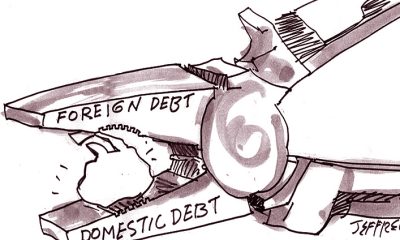
Hidden truth of Sri Lanka’s debt story: The untold narrative behind the report
-
Editorial7 days ago
Ideological confusion and identity crisis
-

 Opinion6 days ago
Is there hope for Palestine?