
News
CB Governor says he preferred to avoid domestic debt restructuring


By Rathindra Kuruwita
Ghas said that it was still his position that it is better if Sri Lanka could avoid restructuring its domestic debt.Dr. Weerasinghe, addressing the media, at the Central Bank on Thursday, said that the CBSL position was that because of high inflation, the country’s domestic debt had undergone restructuring in a way.
“At that time, we felt that there was no need to restructure domestic debt because that had already happened as a result of inflation. I still say it is better if we can avoid restructuring our domestic debt because it is already restructured.” He said that position had been changed due to the ongoing negotiation process,” he said.
Once the President of Sri Lanka reached a staff-level agreement with the IMF, the country was committed to sovereign debt sustainability. The country has agreed to certain debt targets for the next 10 years.
“When we ask our external creditors to make a significant contribution and take a cut, the external creditors want some more contributions from domestic lenders. This is a process of negotiations. There are two choices: you can hold on to a position and get nothing done, or compromise and get things done. We compromised while protecting the interests of the Central Bank,” he said.
Market interest rates have already declined in response to measures already taken to ease monetary conditions, Dr. Weerasinghe said.The interest rates on Treasury bonds issued by Sri Lanka were high in the past few years, but the rates have been coming down. The rates were high because of the uncertainty in the country.
“Last week, the interest rates of Treasury bonds touched the policy rates, just below 14 percent. As we have always said, the uncertain premium would collapse if there was stability and clarity about domestic debt restructuring,” he said.
When questioned by a journalist why the CBSL had sold Treasury bills on Thursday (06) worth over 130 billion rupees well above the policy rate, the Governor said that it had been a weekly bond auction to meet government expenditure requirements.
“We can’t decide on government cash flow operations and delay cash flows, anticipating policies to take effect. This amounts to market manipulation. If the government wants, it can ask us not to raise funds right now. Can the government wait, expecting interest rates to go down?” he said.
Dr. Weerasinghe said that in the future, the interest rate structure would return to normal with benchmark rates moving closer to policy rates.
“We hope that the rates will normalise so the economy will benefit. We will not hesitate to take on more administrative tasks to make sure this happens,” he said.
The Governor said that financial institutions had brought down interest rates on credit cards by 2 percent.
“We want to see rates for lending, especially for Small and Medium enterprises, lower faster,” he said.
The Governor said that with the drop in interest rates of Treasury bills, EPF would have to look at alternative investments. The EPF was able to make significant investments because there was a lot of demand for funds from the government, he said.
“Going forward, medium and long term investments strategies have to change for such funds,” he said.
The Governor also dismissed allegations that the EPF would lose 12 trillion rupees by 2038 as the government had decided, in the domestic debt restructuring proposals, only to pay an interest rate of nine percent instead of the average market rate for Treasury bills, which is 13.5 percent.
“Those assessments misrepresent the facts, figures, and reality. The argument is that the average interest payment for Treasury bills is 13.5 percent. I don’t know how that number even came up. However, EPF’s average yield on their medium and long-term fund is 11.5 percent. That’s why EPF paid nine percent interest to its beneficiaries,” he said.
Those who claim the EPF will lose 12 trillion rupees by 2038 assume that 13.5 percent interest can be made from investing Treasury bonds until then, he said.
“The inflation must be around 15–18 percent until 2038 to ensure a 13.5 percent interest rate for Treasury bonds. So, obviously, these are manipulated numbers. The assumption is that our debt will not be sustainable,” Dr. Weerasinghe said.
The Governor said that the Central Bank was responsible for the stability of the financial system, the Central Bank balance sheet, and being the custodian of the EPF.Dr. Weerasinghe said that the markets and international rating agencies had responded positively to domestic debt restructuring.
“We have finalised domestic debt restructuring, and this is important when it comes to dealing with foreign creditors. We are also having discussions with them. The discussions with the Paris Club are on. We have shared data analysis and proposals. We are making progress on the bilateral discussions with non-Paris Club countries like China. Discussions with Chinese banks are ongoing. When it comes to ISB holders, we had several rounds of discussions. Our advisor, Lazard, is conducting discussions with them. We hope that this process will make progress. We would like to expedite the process and reach agreements with both bilateral and ISB creditors before the first IMF review. This is our first objective,” he said.
The IMF, ADB and World Bank have approved another 900 million dollars in the near future, he said.
The Governor added that imports had stabilised at around 1.4 billion dollars a month. Exports stand at around 1 billion dollars. There is a gap of about 400 million dollars between the two.
“We can fill the gap with our worker remittances and tourism. There can be a balance. Even if imports go up to 1.6 or 1.7 billion dollars, we have a buffer,” he said.
Sri Lanka has already met the reserve levels agreed with the IMF. This will give investors more confidence and strengthen their ability to intervene in the market.
“All targets, except revenue targets, have been met. That’s because import tax collection was low due to lower imports. This is why we have recommended that the government relax import restrictions so that they can collect revenue. Value Added Tax and Income Tax are in line with expectations,” he said.
What import restrictions were relaxed and when that would be done would be decided by the Ministry of Finance, Dr. Weerasinghe said. The Central Bank had recommended relaxing restrictions on about 900 items, he added.
“Restrictions on about 300 items, including motor vehicles, remained,” he said.Sri Lankan economy would grow by the end of 2023, the Governor added. The economy contracted in the first two quarters of 2023.






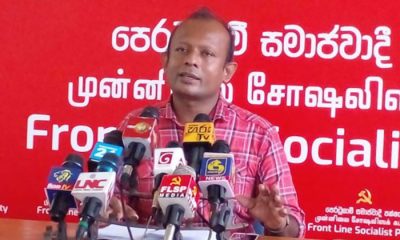




Convenor of the Samagi Joint Trade Union Alliance affiliated with the Samagi Jana Balawegaya, Ananda Palitha, yesterday (16) said that the Ceylon Electricity Board was seeking to raise electricity tariffs by 13.56% percent although it had earned a profit of more than Rs 22,000 mn.
The CEB recently submitted its proposal to the Public Utilities Commission of Sri Lanka (PUCSL) for an electricity tariff revision for the second quarter of this year – the period effective from April 1 to June 30.
Palitha alleged that the PUCSL, in spite of knowing the massive profit earned by the CEB, at the expense of the hapless public, had chosen to allow the state enterprise to propose an additional burden.
The economic, technical and safety regulator of the electricity industry, and the designated regulator for petroleum and water services industries, should exercise its powers in terms of the PUCSL Act No. 35 of 2002 and the Sri Lanka Electricity Act No. 20 of 2009 to provide relief, the veteran trade unionist said.
Palitha emphasised that the PUCSL had the right to intervene on behalf of electricity consumers but, unfortunately, chose to facilitate the CEB’s despicable strategy. “The proposal to increase tariffs by 13.56% was meant to divert attention. The real issue at hand is the percentage of electricity tariff reduction,” Palitha said. The former UNPer found fault with the Opposition for failing to expose the CEB.
Taking into consideration the Rs 22,000 millionplus profit, the PUCSL could order the CEB to grant relief to consumers, Palitha said, adding that the CEB and PUCSL, together, deprived electricity consumers tariff reduction in the first quarter of this year, too.
In January this year, the CEB asked for a 11.59% tariff increase though it was enjoying Rs 22,000 mn profit at that time, the trade unionist said.
Palitha said that as the PUCSL received all data available to the CEB it was fully aware of the finances of the state enterprise.
In January, 2025, regardless of the NPP government floating the idea regarding as much as a 37% tariff increase, the PUCSL granted a 20% tariff reduction (25% of Rs 22,000 mn profit), Palitha said.
According to him, as a result of relief granted to the consumers, the profits had been reduced to Rs 16,000 mn but by June 2025 profits had increased to Rs 18,000 mn and there was a need to grant tariff reduction. But, the NPP, having always lashed out at the International Monetary Fund (IMF) in the run up to the presidential election, held in September 2024, started playing a different tune.
Responding to The Island queries, Palitha said that contrary to claims that the CEB proposed a 13.56% tariff increase to cover up losses caused by the importation of low-quality coal for the Norochcholai Lakvijaya coal-fired power plant, the current strategy seemed to have been adopted at the behest of the IMF.
Instead of granting tariff reduction for the third quarter in 2025, the PUCSL ordered an 18% increase, Palitha said. The trade unionist claimed that the Finance Ministry, at the behest of the IMF, directed both the CEB and the PUCSL to increase electricity tariffs by 20% in violation of the relevant Acts, he said.
Then in Oct, 2025, the CEB proposed a 6.8 % tariff increase at a time its profits were around Rs 22,000 mn. The CEB and PUCSL staged a drama over that proposal and finally, on the false pretext of the CEB’s failure to furnish its proposal on time, the revision was dropped, Palitha said. The SJB activist pointed out that the Opposition failed to highlight that consumers had been deprived of downward revision in spite of massive profits earned by the Board. “In fact, when Energy Minister Kumara Jayakody met trade unions, he very clearly declared that they were considering electricity power reduction, perhaps by 10%, 12% or 15%. But in the end nothing happened.”
Now the same drama is being enacted by the government, the CEB and the PUCSL, Palitha said.
By Shamindra Ferdinando
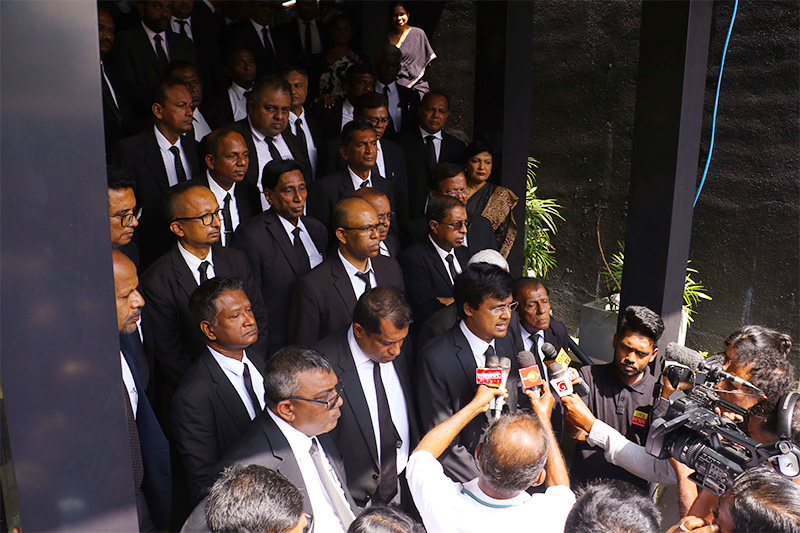
Members of the BASL yesterday (16) staged a protest march over the murder of a lawyer and his wife in Akuregoda, Thalangama, last week. The BASL staged a protest march from the Supreme Court Complex to the BASL Head Office.
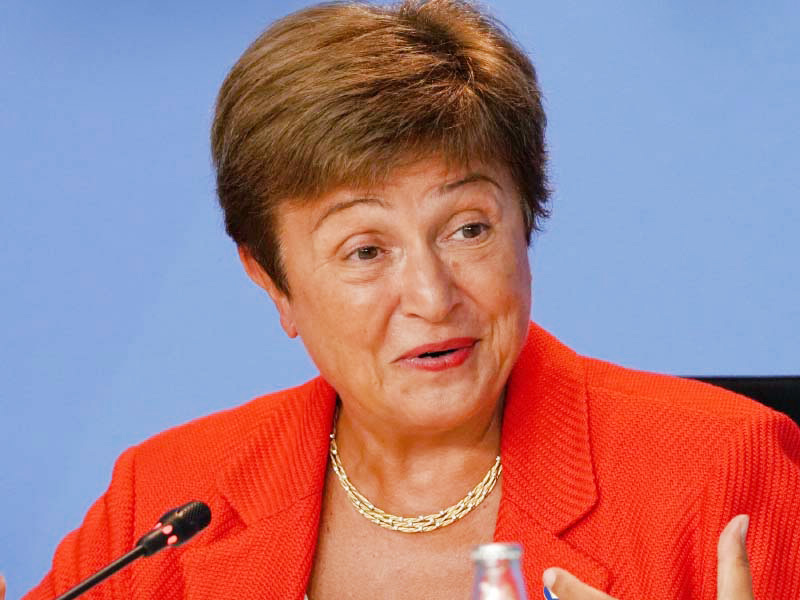
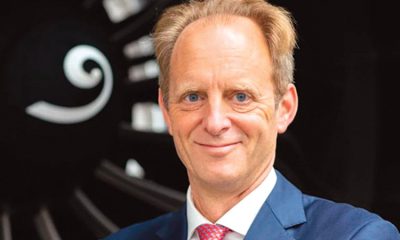
Managing Director of the International Monetary Fund (IMF) Kristalina Georgieva arrived in Colombo yesterday (16) for top level discussions with the government. She is scheduled to leave tomorrow (18) after meeting government authorities and key stakeholders, observing firsthand the impact of Cyclone Ditwah, and discussing ways in which the IMF could support recovery efforts and contribute to building a more resilient future for all Sri Lankans, sources said.

Incoming Bangladesh PM Tarique Rahman, lawmakers sworn into parliament

Samra’s record 110 in vain as Phillips and Ravindra put New Zealand in Super Eights

Canada reacts as cheating row rocks curling superpower

Long queues and confusion mar first day of India’s landmark AI summit

Ancient bone may prove legendary war elephant crossing of Alps

Nepal, Scotland chase win to close out what-if tournament

‘Dates have the highest sugar content to fight Coronavirus’

Sunday Island 27 December – Headlines

#SundayIsland 17th December – Headlines

Sunday Island – 28th March

Sunday Island Headlines – 21 March

Sunday Island – 21st February – Headlines
-

 Life style2 days ago
Marriot new GM Suranga
-

 Business1 day ago
Ministry of Brands to launch Sri Lanka’s first off-price retail destination
-

 Features2 days ago
Monks’ march, in America and Sri Lanka
-

 Midweek Review6 days ago
A question of national pride
-
 Business6 days ago
Autodoc 360 relocates to reinforce commitment to premium auto care
-
 Opinion5 days ago
Will computers ever be intelligent?
-

 Features2 days ago
The Rise of Takaichi
-

 Features2 days ago
Wetlands of Sri Lanka: